

The Vayro Ring is promoted as a breakthrough wearable that promises better sleep, reduced stress, improved energy, easier weight loss, headache relief, and even enhanced circulation. According to its website, it works through a mix of magnetic therapy and acupressure, delivering all these benefits without electronics, sensors, or apps.
At first glance, the marketing looks polished, convincing, and backed by glowing reviews. The images show smiling customers, dramatic before and after results, and claims of real scientific principles behind the design. But does any of it stand up to scrutiny?
This investigation dives into the real origins of the Vayro Ring, how the business operates, and whether the results it claims are even possible. The findings may surprise you.
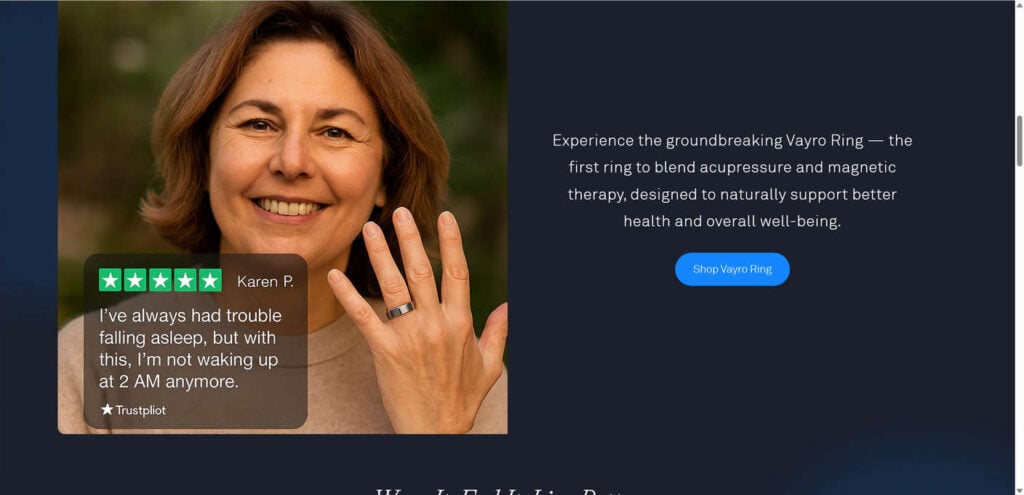
Overview
The Vayro Ring is advertised as the first health and wellness ring combining magnetic therapy and acupressure. The brand claims that wearing the ring throughout the day can support the body’s natural energy flow, improve sleep patterns, and reduce stress levels without the need for medication or digital devices.
On the website, several major promises are highlighted:
• Helps with fat loss
• Reduces stress and anxiety
• Improves sleep quality
• Relieves headaches and migraine
• Enhances circulation
• Increases energy levels
• Works through “natural magnetic fields”
These promises appeal to people tired of dealing with stress, sleep problems, or low energy. The idea of a small ring fixing all these issues through non-invasive methods can be extremely persuasive. However, a closer look reveals several critical concerns.
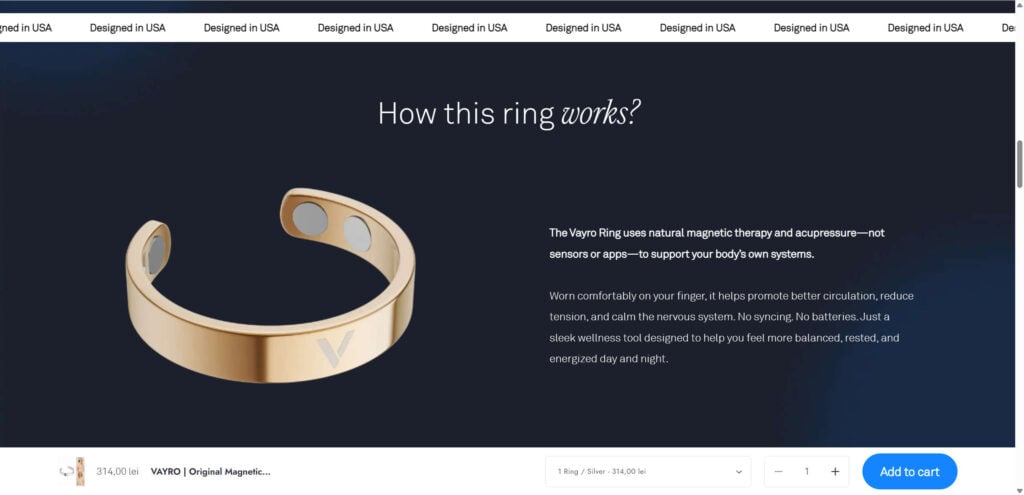
Claims Based on Unverified Science
The product revolves around two ideas: magnetic therapy and acupressure. While both concepts exist, mainstream medical science does not support the level of benefits Vayro claims. Most peer reviewed studies on magnetic therapy show little to no measurable health benefit beyond placebo effect.
Acupressure can offer genuine relief for mild discomfort. However, a small ring pressing gently on the skin is unlikely to activate real therapeutic acupoints in a meaningful, consistent way, especially for complex issues like chronic stress, disrupted sleep cycles, or weight loss.
The website does not link to any scientific studies. It provides no technical details, no magnet strength ratings, no acupressure mapping, and no clinical testing data. Instead, it uses broad statements such as “supports the body’s natural energy flow,” which are vague and difficult to falsify.
Before and After Photos Are AI Generated
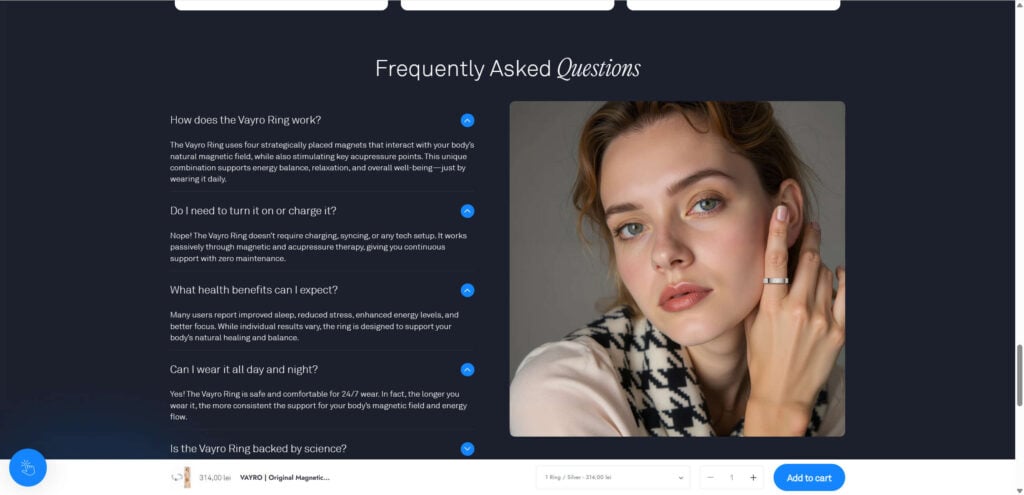
The photos of customers showing dramatic weight loss or improved appearance do not match real human imaging patterns. Many of them have signs commonly seen in AI generation tools, such as:
• Unnatural finger shapes
• Blurred edges
• Inconsistencies in lighting
• Perfectly symmetrical facial features
• Repeated backgrounds
• Reused faces across multiple ads
In addition, the same AI-created women appear on multiple unrelated product websites, suggesting the images were generated specifically for marketing rather than reflecting real customer experiences.
The Customer Reviews Are Not From Real Trustpilot Accounts
On the Vayro homepage, testimonials appear to be embedded from Trustpilot. But when traced or reverse searched, the profiles do not exist. The 5-star graphics are inserted manually and do not link to an actual Trustpilot listing.
Real third party review platforms show little to no mention of Vayro, and there is no active company page with publicly verified reviews. This suggests the reviews are manufactured to support the marketing narrative.
The Product is a Generic Magnetic Ring Sold for $1 on Chinese Marketplaces
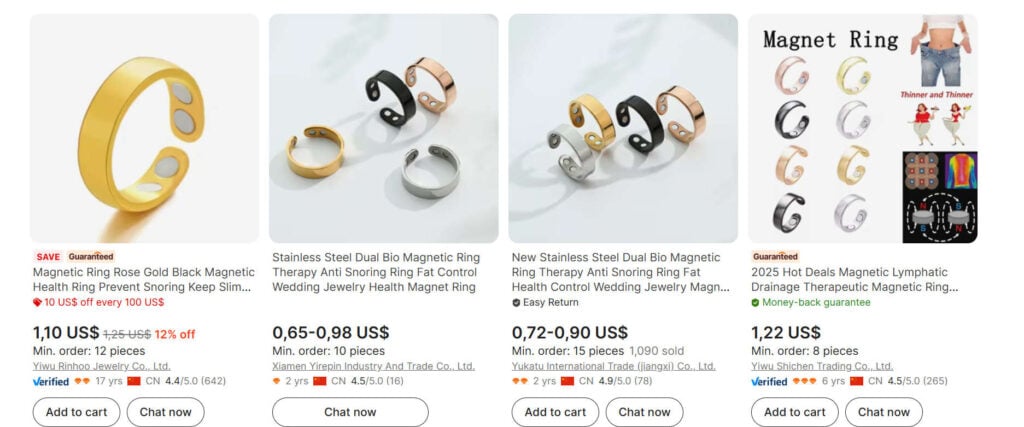
When the ring design is reverse searched, it matches generic magnetic rings available on Alibaba, AliExpress, and 1688 for approximately $0.60 to $1.20 per unit. The same manufacturers offer bulk orders for low cost jewelry and magnetic accessories, many marketed for snoring, weight loss, or circulation.
This confirms that the Vayro Ring is not an original product, nor is it designed or manufactured in the United States despite what the website claims. Instead, it is a rebranded piece of inexpensive jewelry.
The Website Uses Artificial Scarcity and Urgency Tactics
The website includes timers that reset on every refresh, claims of limited stock, and a discount code that “expires in minutes,” even though the countdown restarts again and again. These tactics are common in short-lived dropshipping websites where the goal is maximizing revenue before customers begin requesting refunds.
The “Designed in USA” Label is Misleading
The Vayro Ring is identical to dozens of rings distributed from Yiwu, Shenzhen, and Guangzhou manufacturers. The claim that it is “Designed in USA” is a marketing label intended to imply quality and legitimacy, but the ring is not produced, assembled, or packaged in the United States.
The Checkout Process Reveals Telltale Signs of a Temporary Store
Several elements point to a short-term operation:
• No company address
• No phone number
• No registered business owner
• No warehouse information
• No certifications for magnets or coatings
• No long-term customer support structure
When combined with the AI-generated images and exaggerated claims, these signs show that the brand is built for quick sales, not long-term trust.
The Price Markup is Extremely High
At $60 to $80 per ring, the markup is more than 3000% compared to the $0.60 wholesale cost. This is not inherently unethical, but the problem emerges when the marketed benefits are unsupported, and the company structure makes refunds extremely difficult.
Returns Are Functionally Impossible
The return policy allows returns only if the product is unused, unwashed, and in its original packaging. In other words, you cannot try the product and send it back. And all returns must be shipped to a warehouse in China, with customers responsible for shipping fees, which can exceed the price of the ring itself.
This structure discourages refunds and protects the seller’s profit.
No Clinical Trials, No FDA Approval, and No Medical Backing
Despite implying scientific credibility, the brand provides:
• No clinical trial data
• No FDA registration
• No regulatory filings
• No real doctor endorsements
Every “doctor recommendation” shown is either AI generated or a stock photo pulled from royalty free databases.
Overall, the overview shows a pattern: the Vayro Ring relies on sophisticated marketing but lacks real substance, scientific validity, or transparency. This leads us into the next major section: how the dropshipping operation behind the ring actually works.
How The Dropshipping Operation Works
Dropshipping is a legitimate business model when used honestly, but it becomes problematic when sellers rely on exaggerated claims, AI generated testimonials, and nearly impossible return policies. The Vayro Ring follows a familiar blueprint used by short-term high-profit wellness dropshippers.
Below is a detailed, step-by-step breakdown of how the entire operation works.
Step 1. Selecting a Cheap Generic Product
Dropshippers commonly search Chinese marketplaces like AliExpress, Alibaba, or 1688 to find low-cost items that can be marketed as health, weight loss, or stress-relief tools. Generic magnetic rings are popular because they:
• Look premium
• Are inexpensive to produce
• Are easy to ship
• Have no electronic components
• Can be marketed with pseudo-science
The rings selected for Vayro cost between $0.60 and $1.20. They are made from basic stainless steel with glued-in magnets.
Step 2. Rebranding the Product with a Premium Identity
Once the product is chosen, the dropshipper creates a high-end brand around it. This includes:
• A new name (Vayro)
• A luxury-style logo
• Professionally designed landing pages
• Scientific-sounding explanations
• Emotional customer stories
• AI-generated before and after images
The rebranding is done entirely online. No manufacturing changes are made. The rings shipped are identical to the $1 versions available to anyone.
Step 3. Building a High-Converting Sales Funnel
The website uses persuasive design to appear like a premium wellness brand. Common elements include:
• Minimalist layout
• Dark background to convey seriousness
• Blue color accents implying technology or science
• Claims of being “Designed in USA”
• High quality AI faces to build trust
• Fake Trustpilot visuals
• AI testimonials with perfect grammar and polished photos
The site never shows a company address or real medical certifications.
Step 4. Using AI to Generate Photos and Reviews
AI models such as Midjourney, DALL·E, and Stable Diffusion are frequently used to generate:
• Attractive women wearing the ring
• Middle-aged customers giving testimonials
• Dramatic weight loss transformations
• Close-up shots of hands with perfect nails
• Fake “doctor” headshots
These images reduce costs and avoid copyright issues while creating a false appearance of widespread customer satisfaction.
Step 5. Running Paid Ads Targeting Pain Points
The marketing focuses on issues that are common and emotionally charged:
• Insomnia
• Stress
• Weight gain
• Anxiety
• Fatigue
• Migraines
Many people would like simple solutions to these issues. Ads make promises such as “Wake up refreshed every morning” or “Lose weight naturally without effort.”
These claims are unverified but extremely convincing to vulnerable consumers.
Step 6. Setting High Markups for Maximum Profit
After rebranding the ring, dropshippers price it between $60 and $80. They also use bundles:
• Buy 2 get a discount
• Buy 3 for maximum savings
• “Free gifts” that cost pennies to source
Since the ring itself costs around $1, even one sale produces enormous profit.
Step 7. Shipping Directly from China (Despite Claiming Otherwise)
The website frequently implies that the product ships from the United States, but tracking shows packages originate from:
• Yiwu
• Shenzhen
• Guangzhou
• Hangzhou
Delivery typically takes 7 to 21 days. Customers expecting fast shipping feel misled but often wait because the package is already in transit.
Step 8. Making Returns Cost-Prohibitive
Return policies are worded to minimize successful refunds. The requirements typically include:
• Item must be unused
• Item must be unwashed
• Item must be in original packaging
• Customer must pay shipping
• Returns must be sent to a Chinese address
International return shipping can cost $20 to $40, often more than the product itself. This causes most customers to abandon refund attempts.
Step 9. Limiting Customer Support Access
Customer support is usually:
• Email only
• Slow to respond
• Outsourced
• Script-based
• Designed to delay refunds
Many customers report unanswered emails or circular responses. The delay helps the seller run ads longer before negative feedback becomes overwhelming.
Step 10. Recycling the Brand When Complaints Accumulate
When refunds, disputes, or chargebacks increase, the entire store can be shut down and relaunched under a different name. The same ring may appear again as:
• Vayro Ring
• ZenFlow Magnetic Ring
• AcuBalance Ring
• DreamAura Magnetic Ring
• SleepEase Acupressure Band
The cycle repeats, and the seller continues profiting with minimal accountability.
What To Do If You Have Bought This
If you already purchased the Vayro Ring, there are steps you can take to protect yourself financially and ensure the seller cannot charge you again.
1. Save All Documentation
Keep copies of:
• Order confirmation
• Website screenshots
• Product claims
• Photos of the delivered ring
• All emails exchanged
This information is essential if you file a dispute.
2. Contact the Seller Immediately for a Refund
Explain clearly:
• The product is not as described
• Claims were misleading
• Images were AI generated
• The ring does not provide the advertised benefits
Request a full refund.
If they refuse, move to the next step.
3. Do Not Pay to Ship the Product Back to China
International return shipping costs more than the product. If the seller demands this, it is usually a sign of a dropshipping refund-avoidance tactic.
Instead, escalate the situation.
4. File a Dispute With Your Payment Provider
Payment providers typically side with the buyer for misleading advertising. File a claim under:
• Item not as described
• Fraudulent product representation
• Unauthorized recurring charges (if applicable)
Here’s how to proceed:
• Credit card: Contact the issuing bank
• Paypal: Open a dispute under “Significantly Not as Described”
• Debit card: File a chargeback if allowed
Attach all documentation and screenshots.
5. Monitor Your Bank Account
Dropshippers have occasionally been reported to attempt:
• Duplicate charges
• Subscription charges
• Additional “shipping fees”
If anything suspicious appears, contact your bank immediately.
6. Leave Honest Reviews to Warn Others
Consider posting on:
• Trustpilot
• Reddit
• Google Reviews
• Consumer protection forums
Sharing your experience can prevent others from falling into the same trap.
7. Report the Website If Necessary
You can submit reports to:
• Federal Trade Commission (FTC)
• Better Business Bureau (BBB)
• Payment processor fraud department
These reports help track fraudulent activity.
8. Seek Legitimate Health Solutions If Needed
If you purchased the ring hoping for relief from:
• Insomnia
• Stress
• Anxiety
• Headaches
• Weight loss
Consider evidence based alternatives:
• Cognitive behavioral therapy for insomnia
• Breathing techniques
• Light therapy
• Dietitian guidance
• Professional massage or acupressure
• Medical evaluations for sleep disorders
These approaches have real science behind them.
The Bottom Line
The Vayro Ring markets itself as a revolutionary wellness tool, but the product is actually a low-cost magnetic ring sourced from China for about $1 and rebranded with exaggerated claims. The images showing customer results are AI generated, the reviews are fabricated, and the science behind the ring’s benefits is unsupported.
The company uses pressure-based marketing, countdown timers, fake Trustpilot visuals, and vague “Designed in USA” branding to create credibility. Meanwhile, returns are made nearly impossible through Chinese return addresses and strict unused-condition requirements.
For consumers seeking genuine help with sleep issues, stress, or wellness, the Vayro Ring offers no proven health benefits. The product is primarily an example of sophisticated dropshipping marketing rather than legitimate health technology.

Join the discussion
0 commentsShare your experience or ask a question about this article.
Community experiences
Did this happen to you?
Your experience could help someone recognize the same scam. Submit a private report for our team to review.
I experienced this tooReports are reviewed before publication. Sharing publicly is always your choice.
Discussion
Start the conversation
Have a question or something useful to share? Add the first comment.