

Alisanda Seaweed Spray is promoted as a fast, natural solution for instant male enhancement, bold claims, and dramatic results that supposedly appear in under a minute. Ads promise rock-solid performance, boosted confidence, and long-lasting results without pills, prescriptions, or side effects. But when you dig deeper, the story behind this spray becomes far more concerning. What looks like an impressive male enhancement breakthrough is actually a typical dropshipping setup that relies on exaggerated promises, AI-generated photos, and nearly impossible return policies. Before spending your money, it is essential to understand what you are really buying.
Overview
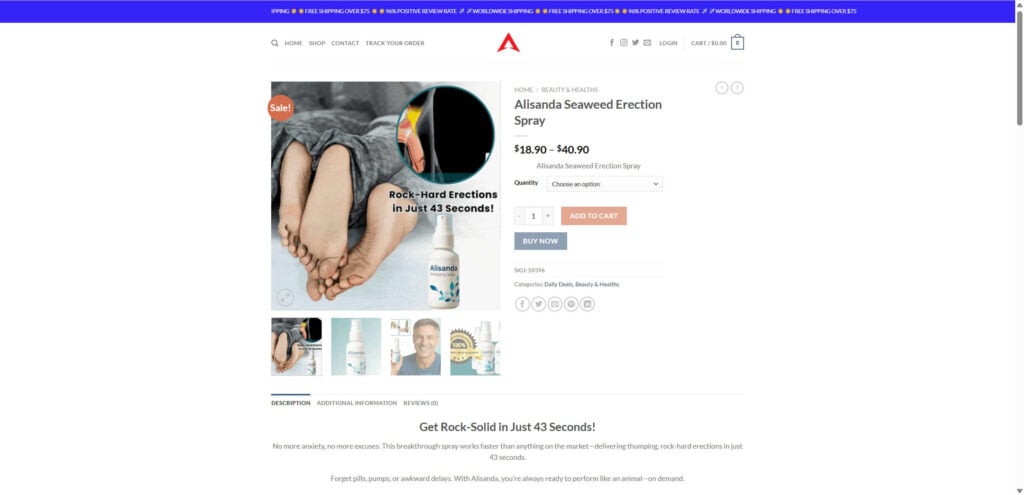
Alisanda Seaweed Spray appears on various online stores marketed as a revolutionary male enhancement product. Its promotional pages use aggressive marketing, dramatic before-and-after images, and emotional messaging designed to convince shoppers that the spray can instantly solve erectile performance issues. The promises are big, the language is persuasive, and the visual presentation is crafted to appear professional. However, beneath the surface, all signs point to a low-quality dropshipping product originating from China and rebranded with new labels.
The sales pages use bold claims such as “Rock-hard erections in just 43 seconds” or “Dominate the bedroom for up to 4 hours.” These types of statements are a red flag in the male enhancement niche. Legitimate medical products do not promise exact timeframes for an erection, nor do they compare themselves directly to prescription medications. When companies do make these types of claims, they must provide clinical data, medical testing results, or regulatory approvals. The sellers of Alisanda Seaweed Spray provide none of this. Instead, they rely on generic descriptions and vague ingredients.
Another red flag is the use of stock images, AI-generated photos, and edited visuals. Many of the men pictured holding the spray do not exist or are AI-generated models. Others are stock photos that have been edited by adding the product label into their hands. This tactic is common in dropshipping operations, particularly in the male enhancement and weight loss niches, because sellers do not have real customers and cannot show genuine results. The imagery is manufactured to create trust, even though the people pictured have never used the product.
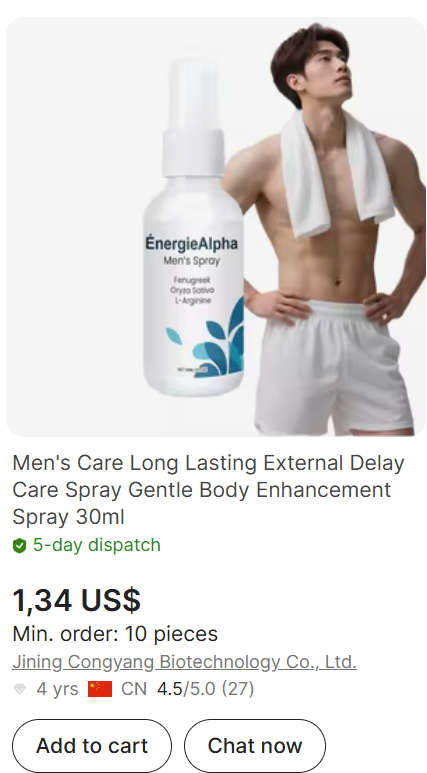
The product itself is available on Chinese marketplaces such as AliExpress for around $1 to $3 per bottle when purchased in bulk. These listings use generic names such as “Men’s Care Delay Spray” or “Gentle Body Enhancement Spray.” The formula is identical across many brands, which indicates that the manufacturer is mass-producing a basic topical spray that sellers can rebrand to their liking. In other words, the product is not unique, specialized, or backed by research. It is simply repackaged for resale with a new label and inflated claims.
The customer reviews on the promotional website are another indication of unreliability. Many of the reviews are written in identical styles, with overly enthusiastic wording, unrealistic stories, and impossible results. Some reviews reference experiences that contradict the claims made elsewhere on the page. Others use names and profile photos that are recognizable stock assets. These reviews are fabricated to give the illusion of popularity and effectiveness. In dropshipping scams, fake reviews are a standard practice meant to reduce customer hesitation.
The price markup is also significant. While the original spray costs roughly $1 to $3 on Chinese sourcing sites, the resellers charge $18 to $40 for a single bottle, sometimes even more. They justify this markup by presenting the product as premium or medically advanced, even though no testing or certification is provided. This pricing model is common in dropshipping setups where sellers maximize their margins on low-cost imports.
When it comes to returns, the problems escalate. Most stores selling Alisanda Seaweed Spray require customers to ship returns back to China, even if the product was purchased on a site that appears to be US-based or EU-based. Returning a package to China often costs more than the product itself, and tracking can be unreliable. Additionally, these sellers frequently ignore support messages or provide vague answers to delay refunds. Some stores deliberately provide an incorrect return address or fail to confirm receipt of the returned package. This makes refunds practically impossible.
Shipping times are another concern. While the websites claim fast delivery, many orders take several weeks to arrive. Since these products come from overseas warehouses, delays are frequent. Customers who attempt to track their packages often discover that tracking numbers do not update for long periods, and support teams provide little assistance.
The website layout and branding techniques reinforce the dropshipping nature of the operation. Common traits include:
- Reused Shopify themes.
- Pop-ups that display fake purchase notifications.
- Countdown timers that reset on every visit.
- Claims of limited stock to rush the buyer.
- “Sale” tags applied permanently.
- Generic policies copied from other sites.
These tactics are designed to create urgency and push the shopper into making a fast decision without thinking critically.
Another troubling sign is the medical positioning of the spray. Sellers suggest that the product works like a prescription medication and that it can solve erectile difficulties quickly and safely. However, products sold outside of regulated medical systems cannot legally make these statements. They provide no ingredient analysis, no side effect warnings, and no clinical references. For a product that is meant to be applied to sensitive areas of the body, the lack of safety documentation is concerning.
In addition, the sellers behind these websites tend to change store names frequently. If one domain receives complaints or negative reviews, they shut it down and create a new one using the same product photos, identical descriptions, and the same pricing structure. This pattern is common among low-quality dropshipping operations, especially in sensitive categories such as testosterone boosters, hair loss solutions, and male enhancement sprays.
The overall marketing strategy for Alisanda Seaweed Spray is built around exaggeration, emotional manipulation, and unrealistic promises. Buyers are targeted through social media ads, TikTok videos, and YouTube shorts that rely on shock value titles and dramatic claims. Instead of relying on clinical evidence, the sellers rely on storytelling, fabricated testimonials, and AI-generated visuals. Everything is designed to bypass skepticism and encourage impulsive purchases.
When analyzed closely, the spray does not appear to offer any unique advantage beyond temporary skin-numbing effects common in inexpensive delay sprays. It does not solve underlying issues, improve health, or provide long-lasting benefits. In many cases, the sensation caused by such sprays can lead to discomfort or unintended side effects. Without proper regulation, consumers have no guarantee of purity, safety, or consistency in the formula.
In short, Alisanda Seaweed Spray is a rebranded, low-cost product originating from Chinese marketplaces and inflated into a premium male enhancement solution through exaggerated marketing. Its presentation is polished, but the reality behind the scenes is typical of a dropshipping operation that prioritizes profit over quality, transparency, or customer satisfaction.
How the Dropshipping Operation Works
The sales funnel behind Alisanda Seaweed Spray follows the same pattern used by most dropshipping operations that focus on male enhancement products. Understanding how this system works can help you recognize the red flags before making a purchase. Here is a detailed, step-by-step look at the entire process from product sourcing to customer delivery.
Step 1: Finding a Cheap Generic Product in China
Dropshippers begin by browsing suppliers on platforms such as AliExpress, Alibaba, and 1688. These marketplaces offer thousands of low-cost cosmetic sprays, gels, and oils that can be marketed for various purposes. The male enhancement niche is especially full of generic products labeled as “Men’s Delay Spray,” “Long Lasting Spray,” or “Energy Spray.”
Manufacturers price these items very low, typically around $1 to $3 per bottle, especially when purchased in bulk. The product images on these marketplaces are minimal, and the listings provide vague descriptions. Since the manufacturer allows custom labeling, resellers can rebrand the product however they choose. This creates an opportunity for sellers to fabricate a new identity around the spray, complete with bold promises.
Step 2: Rebranding the Product
The next step is creating a brand name, such as Alisanda, EnergieAlpha, or other similar names that sound scientific or natural. The seller then designs a custom label, which is often just a simple graphic containing abstract shapes and colors. They apply this label to the bottle digitally, using AI or Photoshop, and prepare promotional images for their website.
These images typically show:
- A man holding the product and smiling.
- Before-and-after comparisons showing dramatic improvements.
- Couples appearing happy in bed.
- Claims like “Rock hard in 43 seconds.”
- Medical-themed icons that imply scientific approval.
Most of the people shown are AI-generated or taken from stock photo sites. The product packaging shown in these images is usually digital and does not match real-life bottles perfectly.
Step 3: Building a Shopify Store
Dropshippers create an online store using Shopify or WooCommerce. They choose a generic theme and fill the product page with exaggerated descriptions and emotional sales copy. The goal is to make the page appear trustworthy while pushing the buyer toward a purchase as quickly as possible.
Typical techniques include:
- Countdown timers.
- Constant “10 people are viewing this item” pop-ups.
- Fake limited stock warnings.
- “Sale” tags that never expire.
- Inflated original prices to exaggerate the discount.
The seller then adds fake reviews to create social proof. These “customer reviews” often include AI-generated profile pictures and stories written by the seller. Many of them mention instant results, increased confidence, or shocked partners. Some even use copy-paste templates that appear across multiple unrelated stores.
Step 4: Running Social Media Ads
To drive traffic, the dropshipper runs ads on TikTok, Facebook, Instagram, and Google. These ads rely on shock value and curiosity:
- “Men are rushing to buy this new seaweed spray.”
- “Women can’t believe how well this natural formula works.”
- “Better than pills.”
The ads often show clips of fake testimonials or AI-generated imagery. Some ads use suggestive cartoons, graphics, or animated before-and-after images to draw attention.
Because platforms have strict rules regarding adult products, sellers often disguise the spray as a “performance booster,” “vitality spray,” or “energy spray.”
Step 5: Receiving an Order
Once a customer places an order, the dropshipper receives the payment immediately. They do not keep inventory. Instead, they forward the order details to the supplier in China, usually through AliExpress or a private agent. The supplier then packages the generic spray and ships it directly to the customer.
This is the core of dropshipping: the seller never touches the product.
Step 6: Shipping Delays
Because orders ship from China, delivery times can range from 10 to 30 days or longer. Many customers expect fast delivery because the websites appear to be US-based or EU-based, which leads to frustration.
Tracking information is often unreliable. Numbers may not update for days or weeks. Some packages never arrive, and sellers provide little assistance.
Step 7: Customer Receives a Low-Quality Product
When the product finally arrives, customers notice that:
- The bottle is smaller than expected.
- The label printing is cheap.
- The packaging does not match the website photos.
- Instructions are vague or poorly translated.
- The product has little to no effect.
Many customers report irritation, discomfort, or no noticeable improvement at all. In some cases, the spray contains basic numbing agents used in inexpensive delay products, which can cause unpleasant sensations.
Step 8: Attempting a Return
When customers try to return the product, they face major obstacles:
- Sellers demand that returns be sent to China.
- The return address is expensive to ship to.
- Shipping costs exceed the cost of the product.
- Packages often get lost or rejected.
- Customer service is slow or unresponsive.
Some sellers claim the product must be unused and unopened, which makes returns impossible for anyone who tried the spray. Others simply stop responding after the buyer provides proof of shipment.
Step 9: The Seller Moves to a New Website
Once complaints accumulate or the store gains negative reviews, the dropshipper closes the domain and opens a new one. They reuse the same product photos, the same text, and the same fake reviews. The cycle repeats, targeting new customers.
This rotating-website strategy keeps complaints from following the seller and allows them to continue selling without accountability.
What to Do if You Have Bought This
If you already purchased Alisanda Seaweed Spray, here are the steps you should take to protect yourself and increase your chances of getting your money back.
1. Document Everything
Gather the following:
- Order confirmation emails.
- Screenshots of the website.
- Screenshots of claims made on the product page.
- Photos of the product you received.
- Shipping labels and tracking numbers.
Documentation makes refund requests stronger.
2. Contact the Seller Immediately
Send a clear, direct message requesting a refund. Include your order number and state that the product is not as advertised. Many sellers will attempt to delay the process, so keep your communication short and assertive.
3. Do Not Ship Anything Back Until You Confirm the Return Address
If the seller provides a return address in China, calculate the shipping cost first. In most cases, it exceeds the product price. If shipping is more expensive than the purchase, use this fact when requesting a refund from your payment provider.
4. File a Chargeback
If the seller refuses to cooperate, file a chargeback with your bank or credit card company. Provide:
- Order proof.
- Evidence that the item is misrepresented.
- Screenshots of inflated claims.
- Proof that the return address is unreasonable.
Banks often rule in the customer’s favor.
5. If You Paid with PayPal, Open a Dispute
Choose “Item Not as Described” and upload your evidence. PayPal disputes usually favor buyers when a product is misrepresented or when the seller requires returns to China.
6. Report the Website
You can report fraudulent or misleading websites to:
- Better Business Bureau.
- Federal Trade Commission (USA).
- Your local consumer protection agency.
This helps others avoid the same issue.
7. Stop Using the Spray
Since there is no testing or safety documentation, discontinue use immediately. If you experience irritation or discomfort, seek medical advice.
8. Warn Others
Share your experience in online reviews or forums. Dropshipping operations rely on silence from unhappy customers.
The Bottom Line
Alisanda Seaweed Spray is not a medically supported male enhancement product. It is a rebranded, generic spray sourced from Chinese marketplaces for around $1 and sold for $18 to $40 through exaggerated claims, AI-generated images, fake testimonials, and urgent sales tactics. The entire operation follows a familiar dropshipping pattern designed to maximize profit while offering minimal transparency, questionable safety, and almost impossible return conditions.
If you are considering buying this spray, you should avoid it. There is no clinical evidence, no real customer success stories, and no guarantee of safety. If you have already purchased it, follow the steps above to seek a refund and protect yourself from further issues.
This product is not worth your money, your time, or the risk.

Join the discussion
0 commentsShare your experience or ask a question about this article.
Community experiences
Did this happen to you?
Your experience could help someone recognize the same scam. Submit a private report for our team to review.
I experienced this tooReports are reviewed before publication. Sharing publicly is always your choice.
Discussion
Start the conversation
Have a question or something useful to share? Add the first comment.