

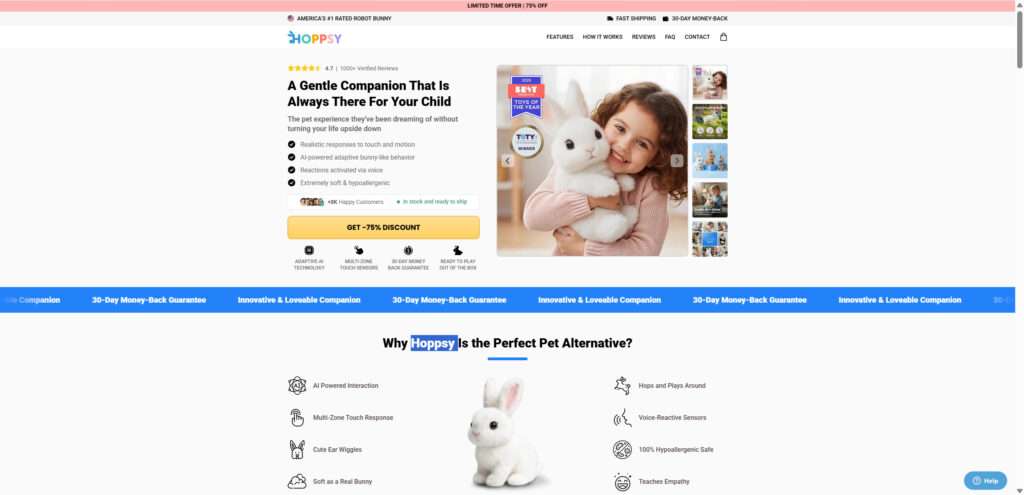
Hoppsy Bunny is being promoted online as an “AI-powered robot bunny” that reacts like a real pet. The ads are cute, the product page looks polished, and the promise is simple: a lifelike bunny companion for kids, without the work of a real animal.
But Hoppsy Bunny follows the exact same pattern seen with Rabsy Bunny and other rebranded “AI pet” offers. The name changes. The animal changes. The pitch stays the same.
What you’re looking at is a familiar funnel designed to sell a generic plush rabbit at a premium price, using big “AI” claims, staged-looking social proof, and refund friction that makes getting your money back harder than it should be.
This article breaks down how the Hoppsy Bunny offer works, what the red flags look like, and what to do if you already ordered.
Scam Overview
What Hoppsy Bunny claims to be
Hoppsy Bunny is typically presented as a lifelike robotic companion for children. The product page usually claims (directly or by implication) that the bunny:
- Responds to touch and interaction
- Behaves like a real bunny (hopping/walking, ear movement, “cute reactions”)
- Has “AI-powered” behavior or “smart” interaction
- Doesn’t need an app or setup
- Provides companionship and emotional comfort for kids
The marketing aims to move you from “toy” to “robot pet” in a few seconds.
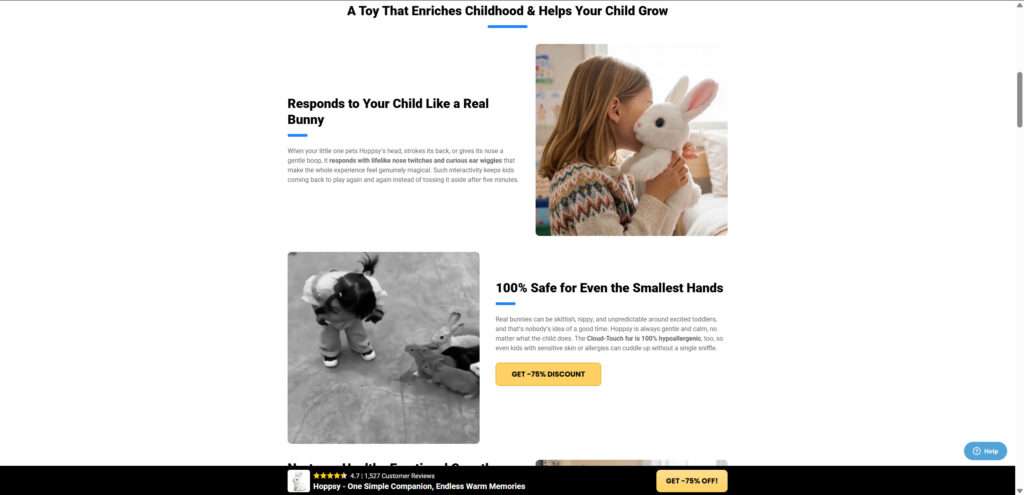
Why this looks like the same scam as Rabsy Bunny
Hoppsy Bunny is not a new concept. It’s the same offer rewrapped.
This is a common tactic in scam-adjacent dropshipping campaigns:
- Run ads under Brand A (Rabsy)
- Collect orders until complaints grow
- Reappear under Brand B (Hoppsy) with the same structure, same claims, and similar visuals
- Repeat
If you noticed checkout pages, product images, or wording that feel recycled, that’s not an accident. Rebranding is how this type of operation survives.
The trust signals are designed to “feel” real, not prove anything
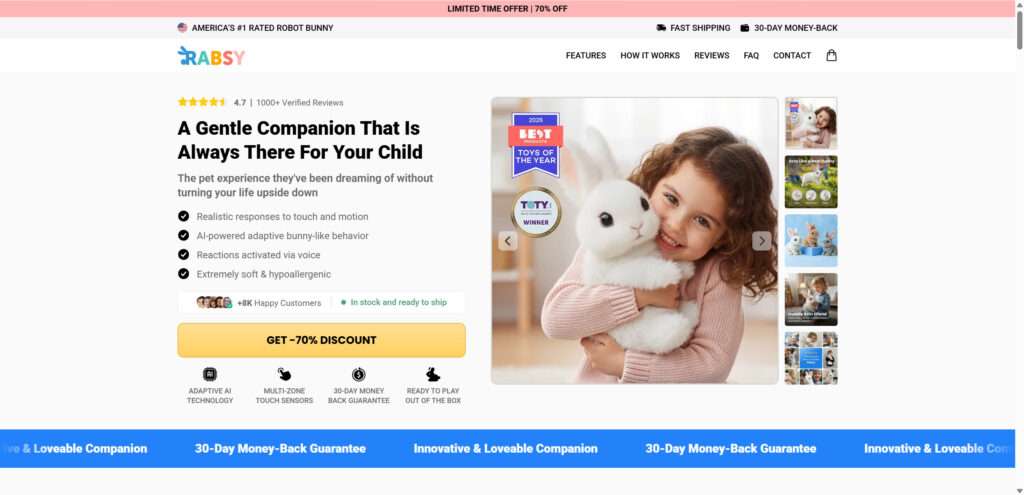
Hoppsy Bunny-style pages often include the same confidence boosters:
- “Award winner” badges that aren’t tied to a verifiable award organization
- “#1 rated” claims without any independent ranking source
- A large star rating (for example 4.7/5) paired with a huge review count
- “Verified buyer reviews” displayed only on the seller’s site
These elements can be manufactured easily. If the reviews and awards aren’t linked to an independent platform you can verify, treat them as marketing, not evidence.
Scarcity pressure is doing most of the selling
These funnels usually push urgency in multiple places:
- “Limited time offer” banners (often 70%+ off)
- “Only X left” inventory counters
- Sticky discount bars that follow you down the page
- Bundle pricing that nudges you into buying 2–3 units
This is the conversion strategy: make you feel like waiting equals missing out, so you don’t stop to research.
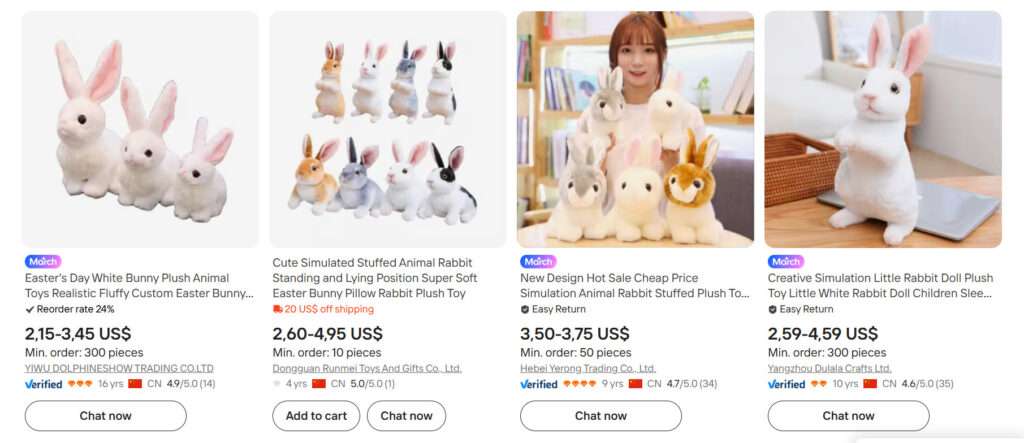
It strongly resembles a generic wholesale plush rabbit
One of the biggest concerns with Hoppsy Bunny is that the rabbit design being sold looks extremely similar to mass-produced plush rabbits sold in bulk through wholesale marketplaces.
That doesn’t prove the seller uses any specific supplier. But it does establish a key point:
This “lifelike plush bunny” design is widely available as a generic product.
And this is not the first time this type of claim has been used.
We’ve seen the same playbook with “AI robot puppies,” “AI cats,” and other “smart pet” toys. The scam is always the same:
- Big “AI” claims with vague or missing specs
- A cheap, generic plush product behind the scenes
- Bundles and “best seller” packages to increase the order size
- A “money-back guarantee” that turns into expensive returns, delays, or partial refund offers
When the underlying item looks like a standard wholesale plush rabbit, the “AI robot bunny” story starts looking like marketing meant to justify a premium price.
The “AI” claim is the biggest red flag when there’s no technical proof
If a toy truly has sensor-driven interaction and real movement, you should be able to find clear details such as:
- What exactly moves (ears, legs, head) and how
- Battery type, runtime, and safety info
- Certifications tied to a real manufacturer
- Demonstrations that aren’t just curated ad clips
- A real company identity with a support footprint
Hoppsy Bunny pages tend to emphasize emotional promises and visuals, not verifiable engineering details.
How the Hoppsy Bunny Scam Works
1) They lead with emotion, not specs
The pitch is designed for parents, grandparents, and gift buyers. It sells a feeling:
- A child bonding with a “pet”
- Comfort and companionship
- “Better than screens”
- “Teaches empathy” style messaging
It’s persuasive because it’s not framed as a toy purchase. It’s framed as something meaningful.
2) They use “AI” as a shortcut to credibility
“AI-powered” is doing a lot of work here.
It signals “smart” without requiring the seller to explain anything. Most buyers won’t ask what hardware is inside a plush rabbit. They’ll assume the tech exists because the page says it does and the video looks convincing.
3) They stack trust signals that can’t be audited
Next comes the credibility layer:
- Large star ratings and high review counts
- “Verified reviews” hosted only on the store site
- Badges that resemble awards
- Testimonials that read like scripts
This reduces your instinct to leave the page and search for real reviews.
4) They add urgency so you buy before you verify
Scarcity is a tool, not a fact.
“Only 63 left” style counters and 70%+ discounts are used to force a quick decision. Even if the inventory claim is meaningless, it works because it creates pressure.
5) They push bundle pricing to raise the average order value
These funnels almost always encourage multi-unit purchases:
- 2-pack and 3-pack pricing that looks “smart” compared to the single unit
- Labels like “best seller”
- “Buy more, save more” framing
This is how a cheap product becomes a profitable order.
6) Fulfillment often comes from low-cost supply chains
Instead of a premium “robot bunny,” buyers often receive a basic plush product. It may look cute, but it doesn’t match the implied robotic behavior from the ads.
Shipping timelines often match overseas fulfillment patterns (longer delivery, limited tracking updates, generic packaging).
7) Returns are structured to discourage you from trying
The store highlights a money-back guarantee, but the process typically becomes difficult in practice:
- Slow responses
- Partial refund offers (“keep it and we’ll refund 20–40%”)
- Return shipping that costs too much (sometimes international)
- Long timelines that push you past dispute windows
This is where many buyers lose leverage: they spend too long negotiating instead of escalating through their payment provider.
8) The brand disappears and reappears under a new name
When complaints build, the funnel can be rebuilt quickly:
- New domain
- New brand name (Hoppsy, Rabsy, and others)
- Same assets and claims
That’s why “same scam, different name” is a useful way to think about it.
What To Do If You Bought Hoppsy Bunny
If Hoppsy Bunny isn’t what was advertised, treat it as an “item not as described” case and move fast.
1) Save evidence immediately
Do this before the product page changes.
- Screenshot the key claims (AI-powered, reacts, walks/hops, award winner, #1 rated, money-back guarantee)
- Save the page as a PDF (print-to-PDF works well)
- Screenshot the ad and the account that promoted it (if you can still view it)
- Keep your confirmation email, invoice, and tracking page
2) Document what arrived
Make your evidence simple and clear.
- Photos of the item, packaging, labels, and any included paperwork
- A short video showing the bunny does not do what the ad implied
- If the page implied electronics, photograph any battery compartment or the absence of one
3) Send one written refund request
Keep it short and direct.
Suggested message:
“Item not as described. I’m requesting a full refund for order #[ORDER].”
Avoid long arguments. Don’t negotiate for days.
4) If they stall or offer partial refunds, file a dispute
Use your card issuer or payment provider and choose:
- “Item not as described”
- “Misrepresentation”
Attach your screenshots and photos. This is usually more effective than going back and forth with support.
5) Avoid expensive returns unless your bank requires it
Many returns are designed to be financially pointless.
If your bank requires a return for the dispute, ask exactly what proof they need before spending money on shipping.
6) Monitor your card for extra charges
Watch for:
- Small “test” charges
- Repeat charges from a different merchant name
- Subscription-style billing
If anything looks wrong, contact your bank immediately and consider replacing the card.
7) Report the ads
Report the promotion on the platform where you saw it (Facebook/TikTok/YouTube). It helps reduce how long these campaigns run.
How to Spot Similar “AI Pet” Scams Before You Buy
Use this checklist any time you see a “smart pet” toy in viral ads:
- Huge discounts (70%+) paired with urgency and countdowns
- Award badges with no verifiable award source
- Reviews shown only on the seller’s site
- Vague “AI-powered” language without hardware details
- No real company identity, address, or registration
- Bundle pressure (“best seller” 3-pack) as the main pricing hook
- Visuals that closely match generic wholesale plush listings
- Brand name inconsistencies between the ad, site, and checkout
The more of these you see, the higher the risk.
The Bottom Line
Hoppsy Bunny is marketed as a lifelike “AI-powered” robot bunny that reacts like a real pet.
But the sales funnel fits a familiar, misleading dropshipping pattern: unverified award-style badges, aggressive scarcity pressure, site-controlled review widgets, heavy bundle pushing, and a product presentation that closely resembles generic wholesale plush rabbits sold cheaply in bulk.
If you want a truly interactive robotic pet, stick with established brands that publish clear specs, offer real warranty support, and have independent reviews on reputable platforms. For Hoppsy Bunny specifically, the lower-risk choice is to skip it.
FAQ
Is Hoppsy Bunny a real AI robot bunny?
In most cases, no. The offer is marketed with “AI-powered” language, but the pages typically don’t provide verifiable technical proof (hardware specs, certifications, manufacturer identity) that you’d expect for a true interactive robot.
Does Hoppsy Bunny actually hop, walk, or move like in the ads?
Be skeptical. Many ads and icons imply hopping/walking or reactive movement, but these campaigns often rely on edited or staged clips. Without clear mechanical details and independent reviews, assume the movement claims may be exaggerated.
What do people usually receive after ordering?
Often a basic plush rabbit that does not match the “robot” expectations created by the marketing. Packaging is commonly minimal and instructions may be generic or missing.
Why does the bunny look so realistic in the videos?
Short-form ads can be digitally enhanced, tightly edited, or filmed using a different product than the one being sold. The video is designed to sell a feeling, not verify engineering.
Is Hoppsy Bunny the same scam as Rabsy Bunny?
It appears to follow the same playbook: similar claims, similar page structure, and the same “AI pet” positioning. These operations frequently rebrand—new name, same assets, same tactics.
Why does the checkout sometimes show a different brand name?
A mismatched brand name at checkout can indicate a shared funnel, rebranding, or a network using multiple storefront identities. It’s a common red flag in dropshipping scam campaigns.
Are the awards and “#1 rated” claims real?
Usually not verifiable. If an award badge isn’t linked to a legitimate award organization, it should be treated as a graphic meant to increase trust.
Are the reviews on the Hoppsy site trustworthy?
Not necessarily. Reviews hosted only on the seller’s site can be filtered, edited, or fabricated. Prefer independent reviews on platforms that can be audited (Trustpilot, Google, major retailers).
Why are they pushing bundles (2-pack / 3-pack) so hard?
Because bundle pricing increases the order size. It’s a common tactic in these funnels: make the single unit feel “expensive,” then label the 3-pack as “best seller” so you buy more.
Can I get a refund from the seller?
Sometimes, but it’s often difficult. Many buyers report partial refund offers, long delays, or return requirements that involve expensive international shipping.
Should I return it if they ask me to ship it back overseas?
Be careful. International return shipping can cost more than the product. Check with your bank/payment provider first—many disputes can proceed without an expensive return.
What’s the fastest way to get your money back?
File a dispute/chargeback with your card issuer or payment provider using “item not as described” or “misrepresentation,” and include screenshots of the claims plus photos/video of what you received.
What evidence should I collect for a dispute?
- Screenshots/PDF of the product page claims and guarantee
- Screenshots of the ad (if possible)
- Order confirmation and tracking
- Photos of the product, packaging, labels
- A short video showing it does not perform the advertised functions
How can I avoid scams like this next time?
Be cautious when the same “AI pet” concept keeps reappearing under new names
Search the product name + “scam” / “reviews” before buying
Avoid huge “today only” discounts and “only X left” counters
Look for a real company identity (address, registration, warranty terms)
Prefer products with independent reviews and clear specs








