


An Instagram post offers quick money without much explanation. You don’t need experience or an interview, and the person replying seems more interested in your bank account than your work.
The real consequences can begin after money arrives. For one young man in Britain, the first sign was an ATM that kept his card.
Overview
The Instagram Offer That Left Derai Without a Bank Account
At 19, Derai was looking for extra money to move from Manchester to London. In The Guardian’s account, he described replying to an Instagram post that offered quick cash.
He said he passed bank details and identification to a recruiter, then received money in his account. When he tried to withdraw it, the ATM retained his card.
His account was closed, and the reporting says a Cifas fraud marker made it difficult to open another account.
That changed how he could receive ordinary wages, not just the disputed money.
The Guardian reported that the marker was removed after about ten months following an appeal to the Financial Ombudsman.
That was his outcome, not a timetable or a promise for anyone else.
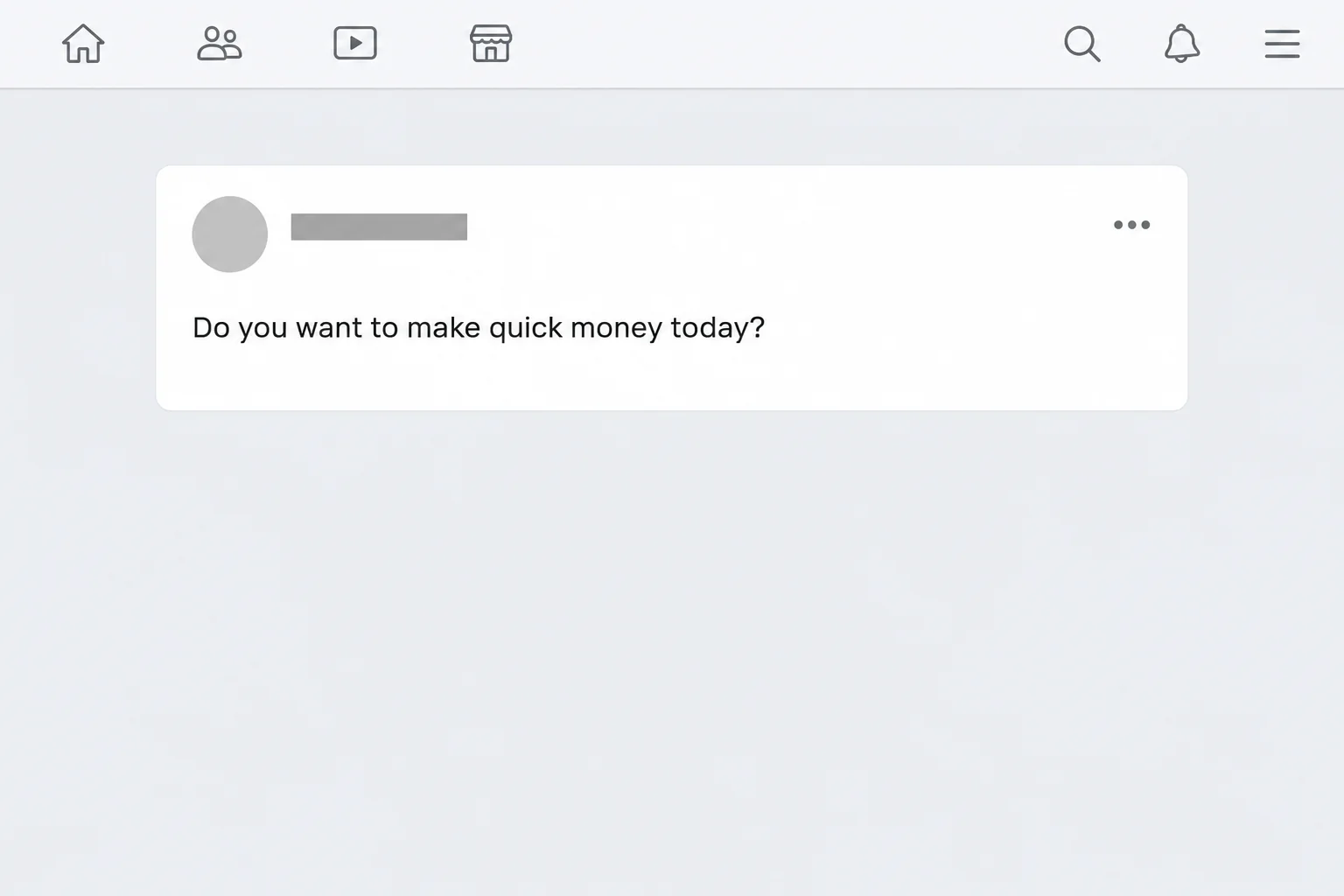
The lead image recreates the quick cash pitch described in the report. It isn’t a recovered post or a screenshot of a live account.
Why an Incoming Payment Is Not an Ordinary Job
A money mule receives or moves money for somebody else. In the fraud pattern discussed here, the incoming funds are stolen or associated with other financial crime.
The recruiter makes the role sound like a quick favor, a job, or an easy commission.
But the account being used is yours, and the bank will ask about your activity.
Some people know what they’re helping with, while others are misled. That distinction matters when describing what happened, but neither situation is a reason to move unfamiliar money yourself.
The Financial Conduct Authority’s money mule findings describe how firms detect suspicious activity and respond. A bank seeing a transfer may have information the recipient doesn’t.
What to Do Before Any Money Moves Again
- If the offer hasn’t gone further, decline it without sharing your identity or bank details.
- If funds already arrived, don’t withdraw them, spend them, or send them to the recruiter.
- Reach the bank through an independently verified channel and explain what you were asked to do.
- Keep the social media conversation and transaction references in a private record.
- If the bank closes the account, ask what happened before assuming there is a fraud marker.
If you’re helping a friend or family member, ask whether a transfer is pending first.
You can talk through what the recruiter said once the bank knows there may be a problem.
How the Instagram Money Mule Scam Works
Step 1: The Offer Sells Fast Earnings Without Explaining the Work
The post Derai saw promised quick money. The pitch didn’t have to compete with a real job description, pay schedule, or application because the speed was the attraction.
A recruiter can make the offer sound like a way to fund something practical. Money for rent, a trip, or a move can make a quick offer feel timely.
Ask what an employer is paying you to do before giving them anything. If the answer is that they need to use your account, that isn’t normal payroll.
A person arranging an agreed salary can explain the work and their relationship to you. Having a bank account shouldn’t be the only thing that qualifies you to be hired.
Step 2: The Request Shifts From a Job to Your Account
Derai told The Guardian he was asked to provide bank details and identification.
That moved the conversation from a vague offer to information that could be used to involve him directly.
An employer may eventually need payment or identity details. That happens after you know who the employer is and can verify why the information is required.
The question isn’t whether legitimate employers ask for any of the same information. It’s whether a verified employer actually has a reason to ask you for it at this stage.
Keep identification documents out of conversations that started from an unverified social media post. If you already shared them, tell your bank the types of documents the other person received.
Step 3: Money Arrives Before You Know Who It Belongs To
An incoming transfer may make the offer look real. It tells you that money arrived, but it does not prove the recruiter owned it or was entitled to send it.
In some cases the next instruction is to take cash out or forward part of the balance. Don’t treat either action as a test you need to complete.
Even a request to send it back can move the funds to the wrong place.
Tell the bank which destination the recruiter gave you and let the bank handle the transfer.
If you already moved it, still contact the bank. Write down what was received and what was sent as two different transactions, even if you were told they were linked.
Step 4: The Bank’s Response Outlasts the Recruiter’s Messages
In Derai’s account, the ATM retained his card and his bank account closed. The practical problem continued after the recruiter was no longer the person he needed to speak to.
A bank can restrict access or close an account without the customer knowing immediately whether information was reported to a fraud prevention agency.
Asking about the closure and requesting a copy of a possible marker are separate actions. Keep track of which organization has answered each question so you can follow up properly.
If your next wages are due soon, tell your employer’s payroll team what has changed. Ask what options are available before redirecting the payment.
Make a short list of the bills tied to the account. Contact the providers directly if a scheduled payment may not go through.
Don’t hide the account use from your bank or try to continue through somebody else’s account.
A clear timeline helps a reviewer understand what you were told and what actually happened.
How to Check and Challenge a UK Fraud Marker
Find Out Whether There Is a Record
A fraud marker is a record made in a fraud prevention database.
The Financial Ombudsman explains that markers can relate to suspected involvement or to victims of fraud or identity theft.
A marker is not a criminal conviction. And if you’re told that a bank closed your account, that alone doesn’t identify which database, if any, has information about you.
For Cifas, use its official data subject access request page.
Start the free request in your own name, provide the identification the form requires, and keep a copy of its acknowledgment.
When the answer comes back, look for the organization that filed any matching record and the information it recorded.
If nothing is returned, ask the bank what happened rather than assuming.
Complain to the Firm That Filed It
Use the financial business’s official complaint channel and explain which entry you dispute. Include the account or case reference and what you believe the firm got wrong.
Send evidence of what you saw, what the recruiter promised, and when you first contacted the bank. Distinguish messages you still have from details you remember but can’t independently verify.
Tell the firm what you want corrected, then ask for a written final response. Keep its acknowledgment or complaint number along with the date you first made the complaint.
The Financial Ombudsman says it can consider complaints about a financial business that supplied the information, not complaints against a fraud prevention agency itself.
Use the Financial Ombudsman If You’re Eligible and Still Disagree
If the firm’s final response doesn’t resolve a fraud-marker complaint, check the Ombudsman’s official process.
Its guidance also explains the route if the firm hasn’t sent a final response within eight weeks.
Use the complaint form through the Ombudsman’s own site. Identify the business, explain the record and the problem it caused, and attach the complaint and response if you have them.
Check the date and the applicable referral deadline on the firm’s final response. Save the confirmation after submitting and respond to any request from your assigned case handler.
There’s no reason to pay a person from social media to erase a marker. They cannot guarantee what the firm or Ombudsman will decide.
What to Do if You Have Fallen Victim to This Scam
Stop using the money and contact your bank.
Leave any unfamiliar balance where it is, even if the recruiter says you can keep some. Call your bank through the app or the number you already trust.
Explain how the offer began and state whether money is expected, already received, or already moved. Ask the bank what to do with transactions that are still pending.
Tell the bank which personal information you shared.
Say whether the recruiter received only account details or also an ID image, login information, or access codes. Don’t repeat the secrets in a report or email.
If someone accessed your account, follow the bank’s guidance on securing it from a device you trust. Protect any separate account that reused the password.
Save evidence without agreeing to further instructions.
Keep the ad, profile identifier, messages, and receipts privately. Put the dates in order, including when you supplied details and when the bank took action.
If you can’t find the original post, keep what remains. There is no need to ask the recruiter for a new message or a screenshot.
Ask what happened before assuming it was a marker.
Request a written explanation the bank can provide, its next steps, and the contact for a complaint. If it names a fraud database, note the agency and relevant dates.
Use the database’s official access request route to see what it holds. Submit any documents only through the verified process, not through contacts offered by the recruiter.
Report the recruitment and get support if someone is pressuring you.
Report the social profile using the platform’s tools. Use the appropriate official fraud-reporting service for your location and keep the report number.
If a young person is involved, help them reach the bank and a trusted adult without blaming them. Call local emergency services if anyone is in immediate danger.
Keep the complaint separate from day-to-day banking problems.
Ask the bank how it will handle wages, direct debits, and any remaining legitimate balance. A bank complaint and a fraud marker review may not finish at the same time.
Keep one record of deadlines and references. If your complaint remains unresolved, check the official Ombudsman route rather than opening accounts with someone else’s information.
Frequently Asked Questions
Why Would Someone Pay Me Before I Do Any Work?
Money can appear before you’ve done any recognizable work. It can still belong to someone who was deceived, so its arrival doesn’t make the arrangement legitimate.
If you’re told to move it, leave it alone and contact the bank. Let the bank verify who sent it and what action is appropriate.
Does Giving Someone My Account Details Make Me a Money Mule?
Sharing account details doesn’t establish that any funds moved. It does give the recruiter information that could put your account at risk, so tell the bank what you shared.
If funds did arrive, report that fact separately. Explain what the recruiter asked you to do with them and what, if anything, you already did.
Can I Return the Money to Get Out of the Arrangement?
Don’t send it back using account details supplied by the recruiter. The account they name may be different from the account the money actually came from.
Tell your bank the transfer happened and ask how it will handle it. Save any proposed return details as evidence instead of using them.
Does an Account Closure Mean I Have a Cifas Marker?
An account closure alone doesn’t answer that question. Ask the financial business what it can explain and use a subject access request to check what Cifas holds.
Keep both answers for your records. They concern different decisions and may have different complaint routes.
Can the Financial Ombudsman Remove Every Unfair Marker?
The service reviews eligible complaints and can tell a financial business to put things right where appropriate. It looks at the facts and evidence in the individual case.
Derai’s reported outcome does not guarantee removal for anyone else. Start with a written complaint to the firm and keep the evidence that supports your own account.
How Can I Help a Teenager Who Has Already Replied?
Ask whether they sent information, received money, or felt threatened. Offer to sit with them while they contact their own bank and put the facts in order.
Don’t ask for their passwords or make a payment on their behalf. Contact the police or emergency services if the situation involves immediate danger.
The Bottom Line
A social media job should pay you for work, not for letting someone move money through your account. Turn down offers that use your banking as the job.
If money has already arrived, leave it untouched and call your bank. If you later learn of a fraud marker, get the record and follow the official complaint route.

Join the discussion
0 commentsShare your experience or ask a question about this article.
Community experiences
Did this happen to you?
Your experience could help someone recognize the same scam. Submit a private report for our team to review.
I experienced this tooReports are reviewed before publication. Sharing publicly is always your choice.
Discussion
Start the conversation
Have a question or something useful to share? Add the first comment.