

A folder can change between two clicks. Familiar documents remain visible, yet every name carries an unfamiliar ending and every program refuses to open them.
InWatch ransomware leaves several precise clues behind. Reading those clues carefully helps separate urgent containment from decisions that should never be made under pressure.

Overview
InWatch appends .InWatch to encrypted files
InWatch is Windows ransomware identified through malware samples submitted for analysis. It encrypts accessible data and adds the extension .InWatch after each original filename.
A photograph named holiday.jpg becomes holiday.jpg.InWatch. A spreadsheet can become accounts.xlsx.InWatch, preserving its old name while making the contents unreadable.
The added ending is an identifier, not the encryption itself. Removing .InWatch from a filename does not restore the original bytes or recover access.
Multiple unrelated file types failing together indicates a broad encryption event. One damaged document can be corruption, while hundreds of renamed files demand immediate containment.
The ransom demand appears in read_it.txt
After encryption, the examined sample created a text file named read_it.txt. The note tells victims that access supposedly depends on the attacker.
The reviewed message demanded $30, described the amount as 0.00139 BTC, and directed contact through Telegram using the alias ALEXA BLISS.
No free test decryption was offered. The note also provided no meaningful proof that payment would produce a working key or functional recovery tool.
A small demand can feel less risky than professional response. That calculation ignores the absence of guarantees, possible repeat demands, and continued malware on the computer.
Removal and file recovery are separate jobs
Removing InWatch can stop further malicious activity, but it does not reverse encryption already applied to documents, photographs, databases, archives, or project files.
Recovery normally depends on a clean backup, a verified decryptor, an unaffected version history, or limited file-recovery possibilities. None should be tested on original evidence.
The system must be trustworthy before restored data is attached. An active ransomware process can encrypt a freshly connected backup within minutes.
Businesses should treat encryption as a possible wider intrusion. Credential theft, remote access, or another loader may have preceded the visible file damage.
- Encrypted names end with the .InWatch extension.
- The ransom note is called read_it.txt.
- The observed demand was $30 or 0.00139 BTC.
- The note named the Telegram alias ALEXA BLISS.
- Payment does not guarantee a working decryptor.
- Cleaning the computer does not decrypt existing files.
Do not use the price as evidence that the incident is minor. Personal archives and small businesses can suffer serious loss from an inexpensive ransom demand.
Do not contact the Telegram account from a personal profile. That conversation confirms an active victim and can expose more identifying information to the operator.
Record the note, payment details, alias, and file examples before cleanup. These artifacts can assist identification, reporting, insurance review, and later decryptor searches.

How the InWatch Ransomware Attack Works
Step 1: A malicious file reaches the computer
Ransomware commonly arrives through unexpected attachments, archives, fake updates, pirated programs, cracks, misleading advertisements, compromised downloads, or another Trojan already present.
The exact entry method can differ between InWatch incidents. Finding the extension does not prove that every victim opened the same email or downloaded identical software.
Attackers often disguise executables as invoices, delivery documents, installers, or media. Hidden file extensions can make Invoice.pdf.exe appear to be a simple PDF.
A password-protected archive may be used to avoid inspection. The accompanying message supplies the password and encourages the recipient to extract and run the payload.
Step 2: The payload executes with the victim’s access
Once opened, the program inherits permissions available to that account. Administrator approval can expand its reach to protected locations, services, and security settings.
The ransomware may run without a visible installer. A brief window, fake error, or apparently failed document can distract from activity occurring in the background.
Other malware may establish the initial foothold and retrieve InWatch later. That possibility is why investigators search for loaders, remote tools, and credential theft.
Execution time matters. Correlate the earliest renamed file with downloads, email attachments, new processes, scheduled tasks, and security alerts around the same period.
Step 3: Writable locations are discovered
The process searches local folders and other storage visible to the infected user. Documents, images, spreadsheets, archives, databases, and work projects provide leverage.
Mapped drives, shared folders, attached disks, and synchronized cloud directories may also be reachable. Damage depends on permissions and what remained connected during execution.
Ransomware often avoids critical Windows components so the computer continues running and can display the payment message. A usable desktop does not mean limited impact.
Cloud synchronization can upload encrypted versions over healthy files. Pause affected clients and preserve version history before routine syncing removes useful recovery points.
Step 4: Files are encrypted and renamed
InWatch transforms file contents so normal applications cannot interpret them. It then adds .InWatch, giving victims a visible label for the damaged data.
The operation may complete quickly on modern storage. High disk activity, widespread modification times, or opening errors can appear only after substantial encryption has finished.
Renaming the file back changes only its label. Repair tools that promise instant recovery from an extension change may damage evidence or charge for ineffective results.
Keep untouched copies before testing anything. Future analysis or a later decryptor may require original encrypted structure that a repair attempt could overwrite.
Step 5: read_it.txt delivers the payment instructions
The note reframes deliberate damage as a paid recovery service. It names the amount, cryptocurrency equivalent, and a Telegram route controlled by the operator.
The $30 figure reduces resistance and may encourage quick payment without professional help. Cryptocurrency also limits ordinary chargeback options once the transfer confirms.
The note does not establish ownership of a working key. A criminal can copy payment text into any sample without building a reliable decryption process.
Contact may trigger additional instructions, wallet addresses, deadlines, or fees. Every new claim still comes from the party that caused the loss.
Step 6: Pressure shifts the victim toward irreversible payment
Telegram creates a private channel where the attacker controls timing and information. The victim cannot independently verify previous recovery outcomes or promised support.
A wallet transfer may reveal transaction information while confirming willingness to pay. The operator can demand more after claiming the original amount covered only one step.
Even a functioning decryptor may be slow, unstable, or incomplete. It can fail on large files, damaged data, network shares, or interrupted encryption.
Paying also leaves the intrusion route unresolved. The same computer or stolen account may remain available for another attack after the files return.
Step 7: Recovery scams may follow the original attack
Victims searching for help can encounter strangers promising guaranteed decryption. Some simply relay payments to the same criminals while adding a substantial service fee.
Others request remote access, advance cryptocurrency, or encrypted sample files containing private information. A professional provider should explain limitations before collecting sensitive data.
Use established incident-response firms and recognized decryptor projects. Verify a company through independent records and a known contact channel before granting system access.
No honest responder can guarantee recovery before examining the variant, available backups, encryption state, and evidence. Certainty is a warning when the facts remain unknown.
Extension, Note, Payment, and Recovery Checks
Confirm the filename pattern
Copy several affected names into an incident record. Confirm that the original extension remains present and .InWatch appears as an additional ending.
Test no originals. Work from duplicates stored separately, and keep timestamps when possible. Those details help distinguish encryption from ordinary rename scripts or corruption.
Search every mounted location for read_it.txt and .InWatch. The number and location of notes can reveal which folders were reachable during the event.
Do not bulk-remove the extension. Doing so obscures identification, does not decrypt data, and can complicate later recovery work.
Preserve the ransom note exactly
Keep a copy of read_it.txt without editing its contents. Record the displayed amount, Bitcoin value, contact alias, spelling, and any identifiers.
Photograph the screen if copying is unsafe. Do not click links, scan codes, or launch files mentioned by a note without professional validation.
Compare the note with trusted ransomware identification services using non-confidential samples. Avoid uploading sensitive client documents when a harmless encrypted file is sufficient.
The name read_it.txt is not unique enough for identification alone. The .InWatch extension and exact message details provide stronger combined evidence.
Separate the ransom demand from evidence
The observed note’s $30 and 0.00139 BTC figures belong to that sample. Another build or conversation could show different payment instructions.
Do not calculate urgency from the amount. Verify backups, isolate systems, and investigate entry paths before irreversible decisions are discussed.
Businesses should involve leadership, legal counsel, insurers, and incident responders according to their response plan. Regulatory duties may depend on data exposure, not ransom size.
Preserve wallet addresses and transaction identifiers if money was already sent. They can support reporting even when cryptocurrency cannot be recalled.
Evaluate clean recovery options
Check offline backups, immutable snapshots, cloud version history, and unaffected replicas. Validate dates against the earliest evidence of compromise, not merely encryption time.
Search recognized decryptor repositories for the exact variant. Availability can change, but a similarly named tool must not be assumed compatible.
Scan the system with Malwarebytes and another trusted scanner before restoration. AdGuard can reduce malicious advertising exposure but cannot decrypt .InWatch files.
Restore to a clean or rebuilt environment whenever possible. Reintroduce systems gradually, monitor for recurrence, and keep encrypted originals offline for future options.
Test restored applications with representative records before releasing them. A backup can be readable yet incomplete, inconsistent, or missing transactions created after capture.
Keep the infected disk offline until the review closes. Reimaging it too early can erase indicators that explain how InWatch reached additional storage.
Where shadow copies survive, extract files into separate media and scan them. Do not assume a visible snapshot is complete or untouched.
Ask cloud administrators to preserve audit logs before retention expires. Version restoration without access history can recover data while leaving the intrusion unexplained.
Create new backup credentials rather than reusing those present during infection. A stolen service secret can expose the repaired repository after systems reconnect.
Record validation results for every restored source, including date, owner, malware scan, application test, and final destination. Recovery decisions should remain traceable.
Retain one sealed evidence copy under controlled access. Routine working copies can change while the preserved set remains available for later analysis.
Review the response after operations stabilize. Update backup isolation, email filtering, software controls, and staff guidance using the actual entry path discovered.

What to Do if InWatch Ransomware Infected Your Computer
- Isolate the device immediately. Unplug Ethernet, disable Wi-Fi, disconnect shared folders, and stop cloud synchronization to limit additional encryption.
- Protect unaffected backups. Keep external drives disconnected and restrict access to backup servers until the infection route and affected accounts are understood.
- Preserve evidence. Save read_it.txt, several .InWatch files, timestamps, security alerts, suspicious downloads, email messages, the Telegram alias, and payment details.
- Notify the right responders. Contact organizational security, leadership, legal counsel, insurers, or a qualified incident-response provider according to the situation.
- Secure accounts elsewhere. From a clean device, reset exposed email and administrator credentials, revoke sessions, and enable multifactor authentication.
- Remove the malware. Run Malwarebytes and another reputable scanner, then rebuild Windows when the system’s integrity cannot be confidently restored. Use AdGuard afterward to limit malicious ad redirects.
- Identify recovery options. Check trusted decryptor resources, backups, snapshots, cloud versions, and copies stored on disconnected media without altering originals.
- Restore only after cleanup. Recover verified data into a clean environment and monitor restored systems before reconnecting normal shares or synchronization.
- Report the incident. Provide preserved evidence to the appropriate national cybercrime authority and relevant service providers, especially after financial or business loss.
- Watch for recovery fraud. Reject guaranteed decryption offers, unsolicited helpers, advance crypto requests, and remote-access demands from unverified companies.
Is Your Device Infected? Run a Free Malware Scan
Slow performance, constant pop-ups, or strange behavior? These are classic signs of a malware infection. The fastest way to find out is to scan your device with Malwarebytes Free — one of the most trusted malware removal tools available.
The free version detects and removes the most common threats, including:
- Adware — the cause of those annoying pop-ups
- Browser hijackers — unwanted redirects and changed homepages
- Trojans and spyware — hidden programs stealing your data
- Potentially unwanted programs (PUPs) — software you never asked for
👉 Select your device below — Windows, Mac, or Android — then follow the simple steps to download Malwarebytes, scan your system, and remove any threats it finds. The scan usually takes 5 to 20 minutes.
Run a Malware Scan with Malwarebytes for Windows
Malwarebytes is one of the most popular and trusted anti-malware tools for Windows — and it’s completely free for removing infections. It catches threats that many antivirus programs miss, including adware, browser hijackers, and trojans. Follow the steps below to scan and clean your PC in just a few minutes.
Download Malwarebytes
Click the button below to download the latest version of Malwarebytes for Windows from the official source. The free version is all you need — it will scan your computer and remove adware, browser hijackers, and other malicious software at no cost.
Download MalwarebytesOfficial installer for Windows 11 and 10. Your download starts right away.Want real-time protection? See Malwarebytes Premium Malwarebytes Free for WindowsScans and removes malware at no cost
-
Install Malwarebytes
When the download finishes, open your Downloads folder and double-click the MBSetup file. If Windows shows a User Account Control pop-up, click “Yes” to allow the installation.
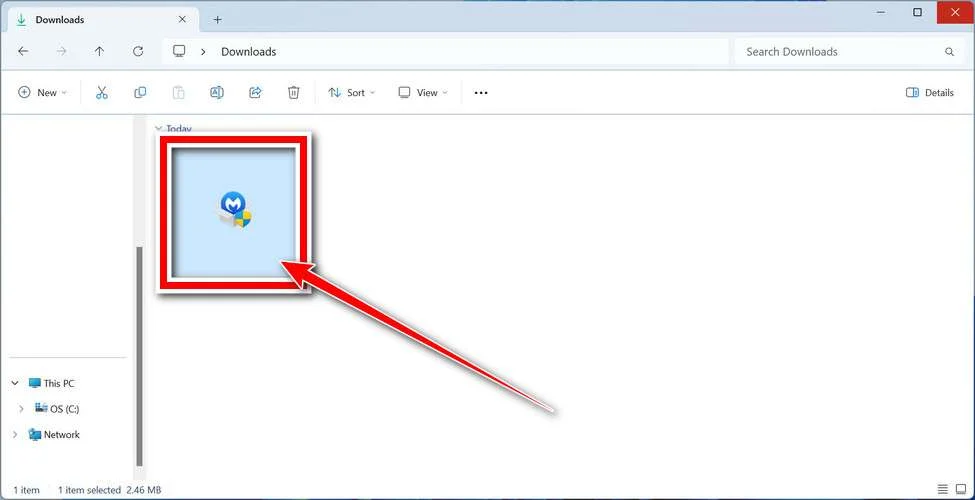
Follow the On-Screen Prompts to Install Malwarebytes
The setup wizard will walk you through a few quick screens:
-
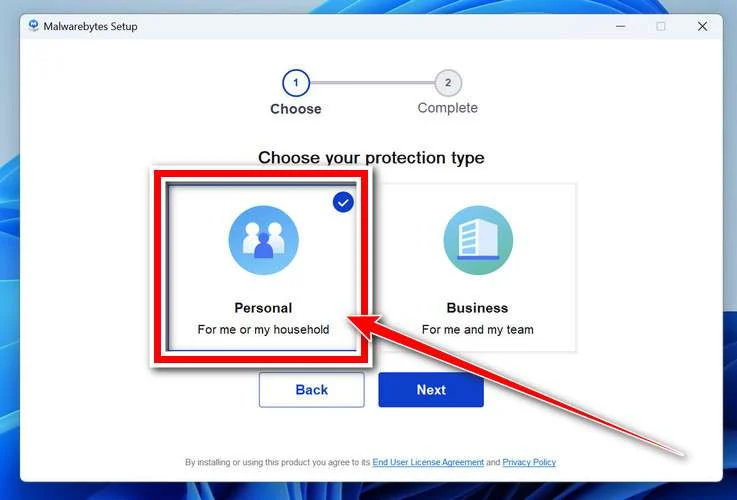
Choose where you’re installing the program — “Personal Computer” or “Work Computer” — then click Next.
-
Malwarebytes will now install on your device. This usually takes under a minute.

-
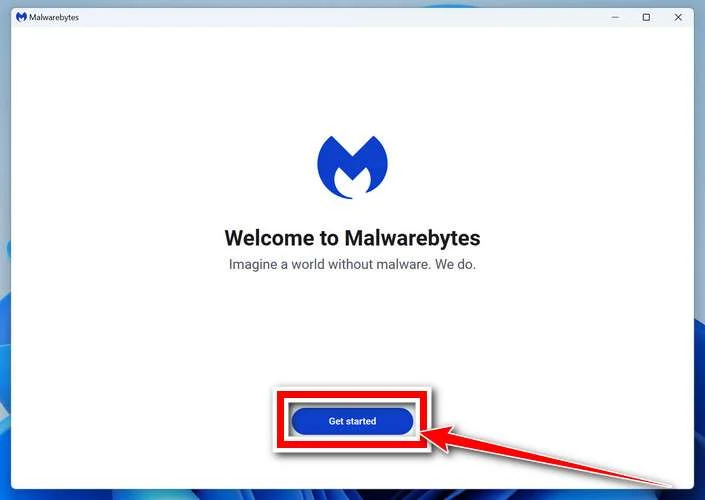
When installation is complete, the “Welcome to Malwarebytes” screen will open automatically.
-
On the final screen, click Open Malwarebytes to launch the program.

-
Enable “Scan for Rootkits”
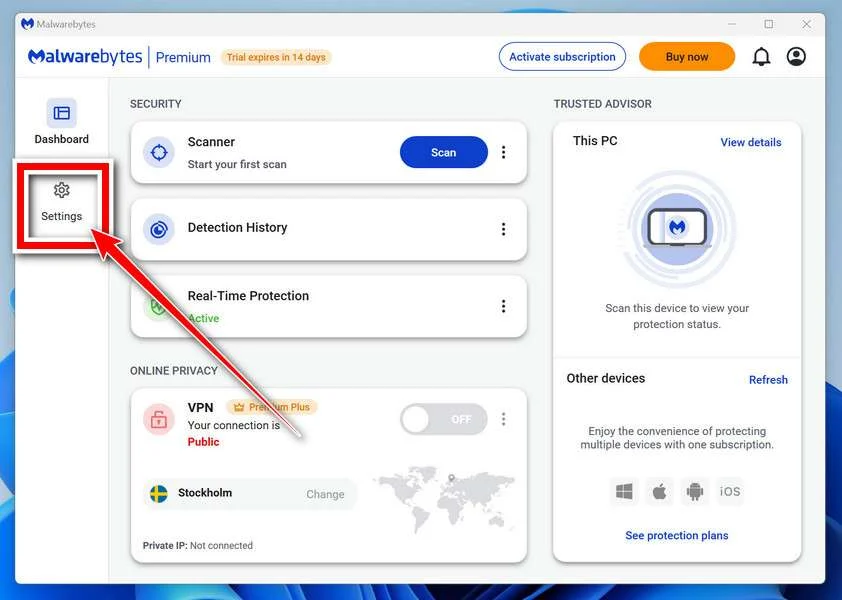
Before scanning, turn on rootkit detection so Malwarebytes can find even the most hidden threats. Click the Settings gear icon on the left side of the screen.
In the settings menu, find “Scan for rootkits” and click the toggle so it turns blue.

Done? Click “Dashboard” in the left pane to return to the main screen.
Start the Scan
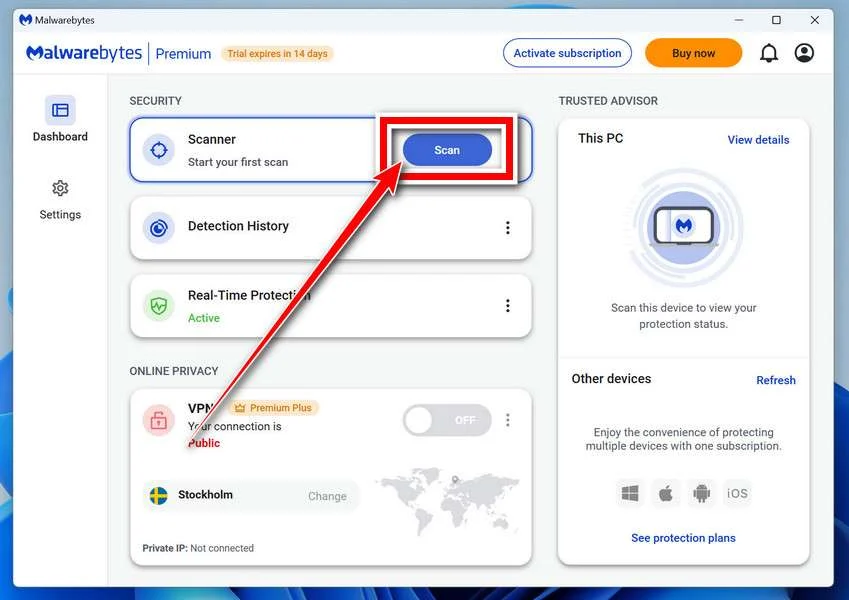
Click the blue Scan button. Malwarebytes will automatically update its virus database and start checking your computer for malware.
-
Wait for the Scan to Finish
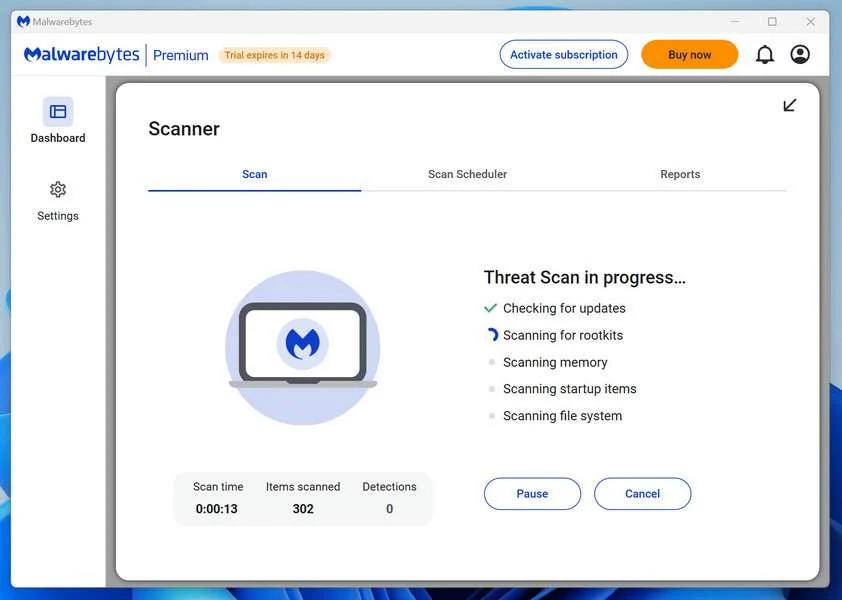
The scan checks your entire system for browser hijackers and other malicious programs, so it can take 5 to 20 minutes depending on your computer. Feel free to do something else — just check back occasionally to see the progress.
-
Quarantine the Detected Threats
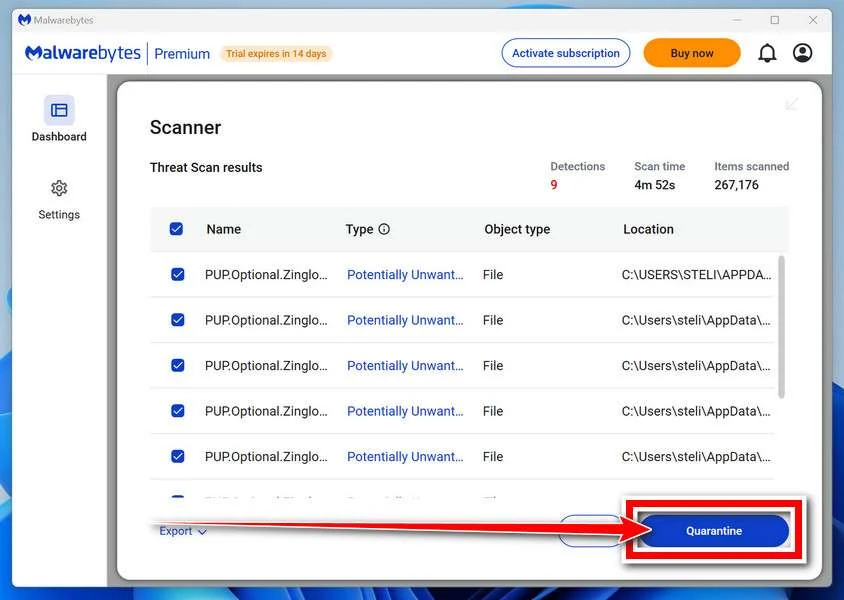
When the scan is done, you’ll see a list of everything Malwarebytes found — malware, adware, and potentially unwanted programs. Click the “Quarantine” button to remove all of them at once.
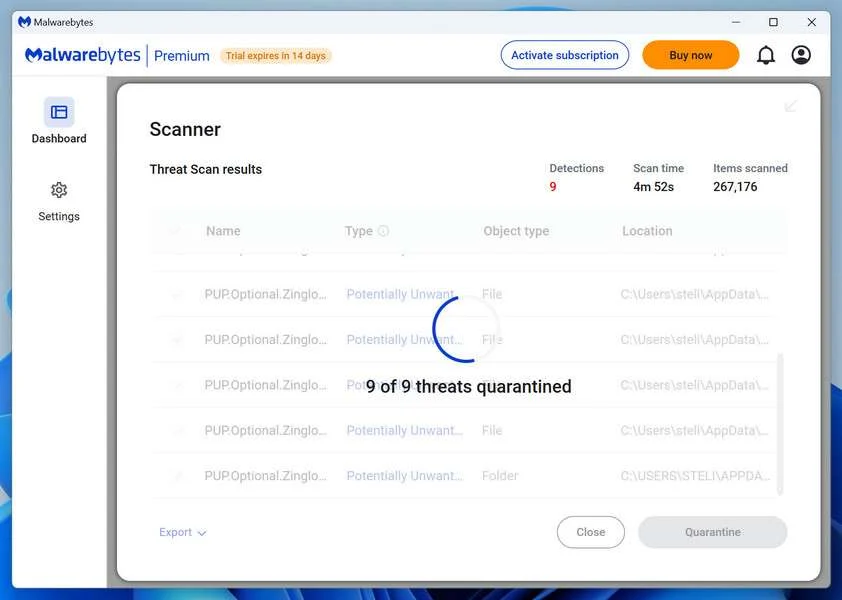
Malwarebytes will now remove the malicious files and registry entries and move them safely into quarantine.
-
Restart Your Computer
Some threats can only be fully removed after a reboot. If Malwarebytes asks you to restart, click Yes. Once you’re logged back in, Malwarebytes has finished removing the threats it found.
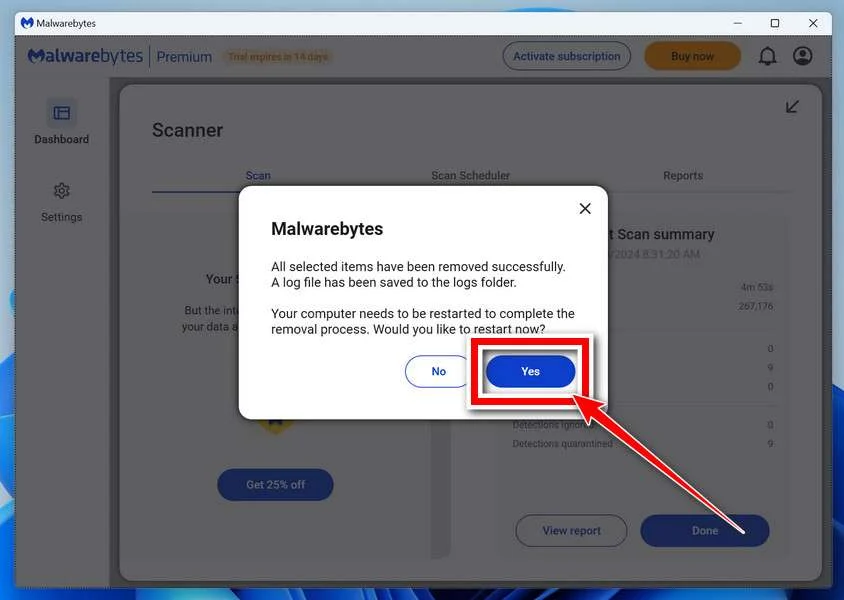
That’s it — your Windows PC is now clean of trojans, adware, and other malware, and should be back to running smoothly.
If you are still having problems with your computer after completing these instructions, then please follow one of the steps:
- Run a computer scan with ESET Online Scanner
- Ask for help in our Windows Malware Removal Help & Support forum.
Run a Malware Scan with Malwarebytes for Mac
Malwarebytes for Mac is a free on-demand scanner that removes the malware other security software tends to miss — adware, browser hijackers, and unwanted programs included. Cleaning an infected Mac with Malwarebytes has always been completely free, and it’s our go-to recommendation. Follow the steps below to scan and clean your Mac in just a few minutes.
-
Download Malwarebytes for Mac
Click the button below to download the latest version of Malwarebytes for Mac.
Download MalwarebytesOfficial installer for macOS. Your download starts right away.Want real-time protection? See Malwarebytes PremiumMalwarebytes Free for MacScans and removes malware at no cost -
Open the Malwarebytes setup file
When the download finishes, open your Downloads folder and double-click the setup file to begin the installation.
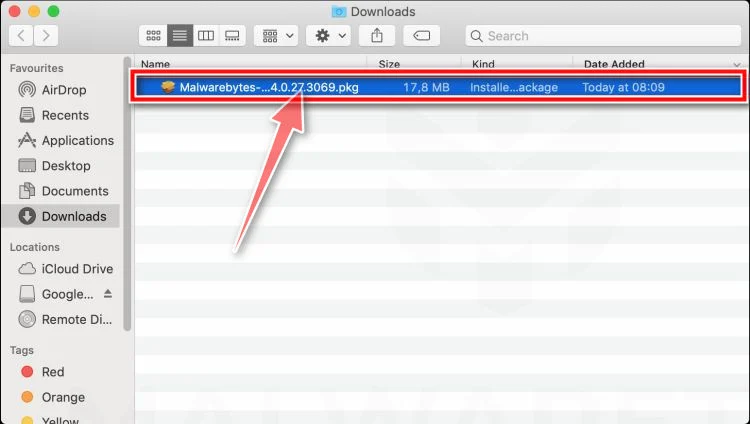
-
Follow the On-Screen Prompts to Install Malwarebytes
The Malwarebytes for Mac Installer will guide you through a few quick screens. Click “Continue” and keep following the prompts until the installation completes.
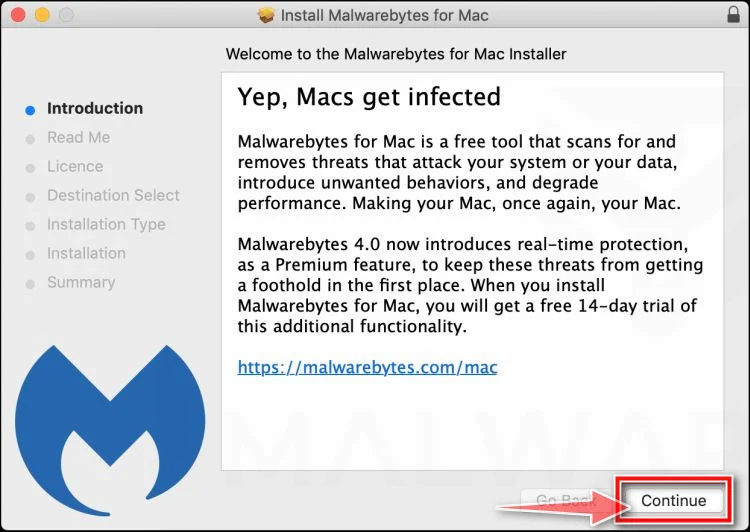
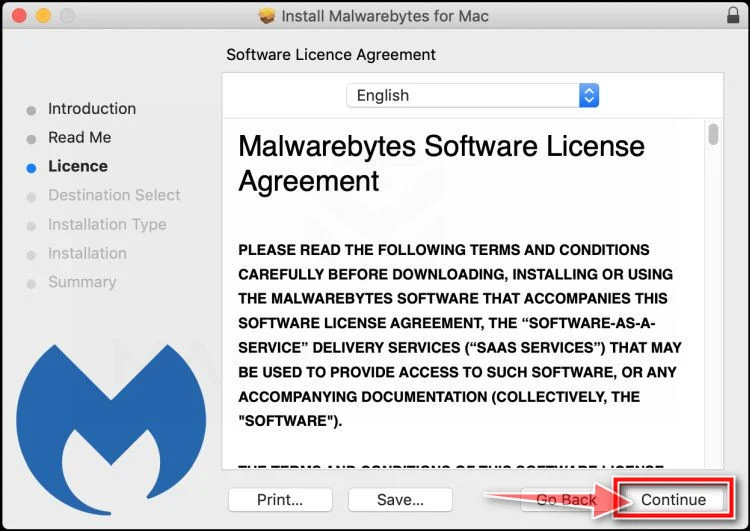
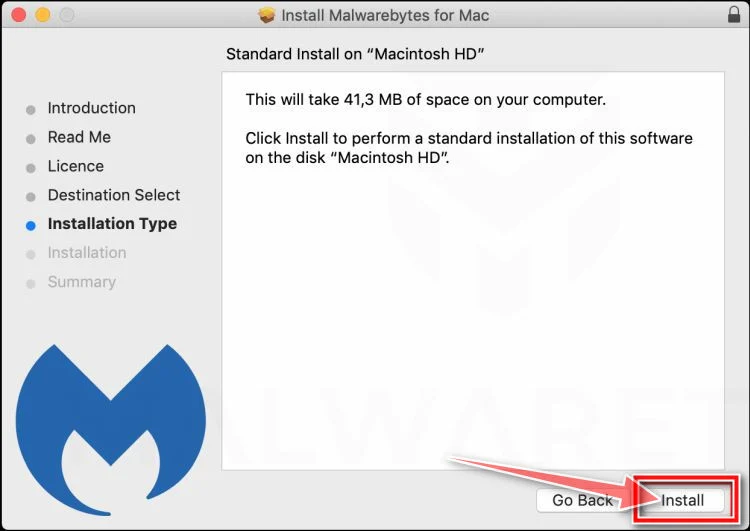
When the installation is complete, Malwarebytes opens to the Welcome to Malwarebytes screen. Click “Get started“.
-
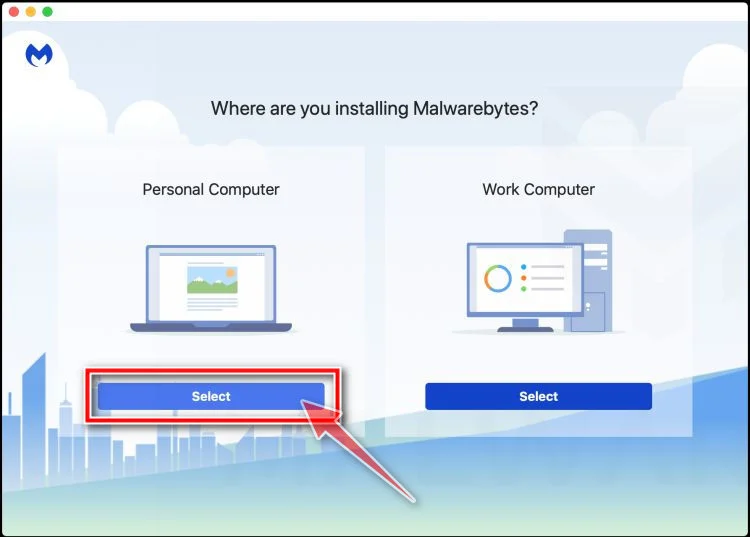
Select “Personal Computer” or “Work Computer”
Malwarebytes will ask what type of computer you’re installing it on. Click either Personal Computer or Work Computer, whichever applies.
-
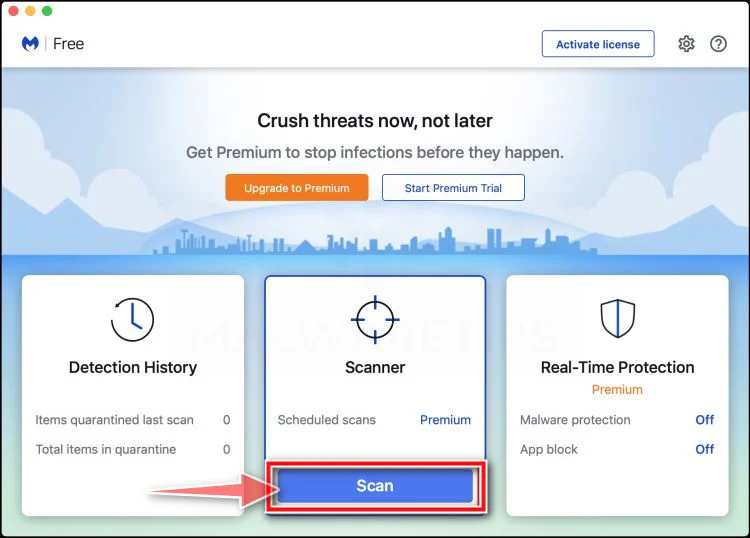
Start the Scan
Click the “Scan” button. Malwarebytes will automatically update its detection database and begin checking your Mac for malware.
-
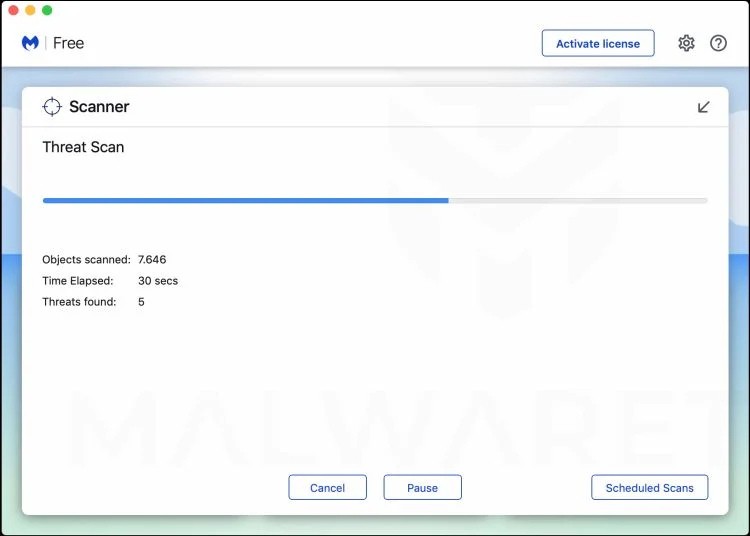
Wait for the Scan to Finish
Malwarebytes will scan your Mac for adware, browser hijackers, and other malicious programs. This can take a few minutes, so feel free to do something else — just check back occasionally to see the progress.
-
Quarantine the Detected Threats
When the scan is done, you’ll see a list of everything Malwarebytes found. Click the “Quarantine” button to remove all the threats at once.
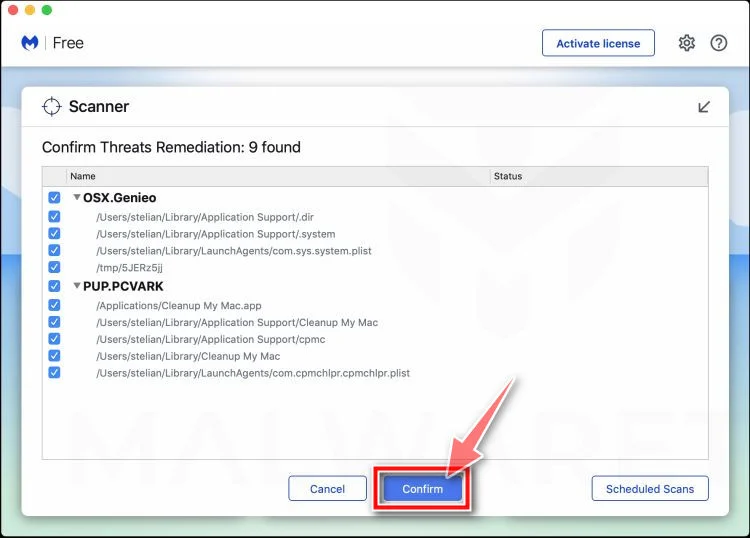
-
Restart Your Mac
Malwarebytes will now remove all the malicious files it found. Some threats can only be fully removed after a reboot — if Malwarebytes asks you to restart, allow it. Once you’re logged back in, your Mac is clean.
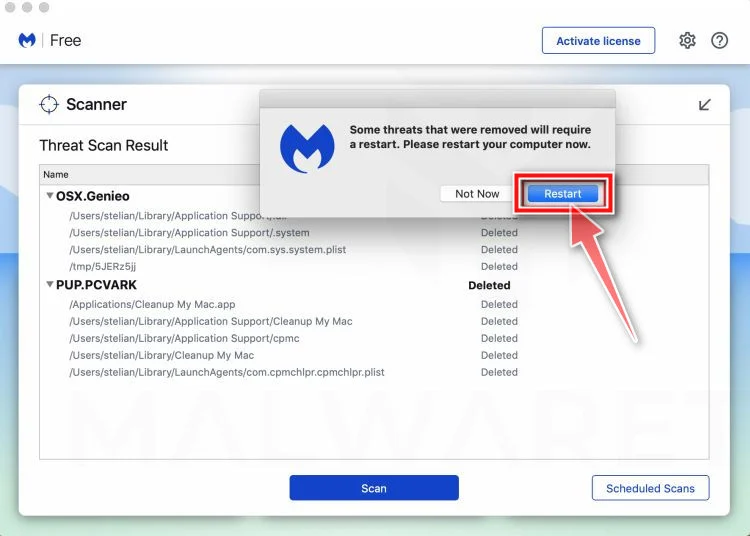
That’s it — your Mac is now free of adware, rogue browser extensions, and other potentially harmful software.
If you are still experiencing problems while trying to remove a malicious program from your computer, please ask for help in our Mac Malware Removal Help & Support forum.
Run a Malware Scan with Malwarebytes for Android
Malwarebytes for Android automatically detects and removes dangerous threats like malware and ransomware so you don’t have to worry about your most-used device being compromised. Aggressive detection of adware and potentially unwanted programs keeps your Android phone or tablet running smooth.
-
Download Malwarebytes for Android.
You can download Malwarebytes for Android by clicking the link below.
Get Malwarebytes for AndroidOpens Google Play in a new tab.Want real-time protection? See Malwarebytes Premium for AndroidMalwarebytes for AndroidScans your phone and removes malware at no cost -
Install Malwarebytes for Android on your phone.
In the Google Play Store, tap “Install” to install Malwarebytes for Android on your device.

When the installation process has finished, tap “Open” to begin using Malwarebytes for Android. You can also open Malwarebytes by tapping on its icon in your phone menu or home screen.

-
Follow the on-screen prompts to complete the setup process
When Malwarebytes will open, you will see the Malwarebytes Setup Wizard which will guide you through a series of permissions and other setup options.
This is the first of two screens that explain the difference between the Premium and Free versions. Swipe this screen to continue.
Tap on “Got it” to proceed to the next step.
Malwarebytes for Android will now ask for a set of permissions that are required to scan your device and protect it from malware. Tap on “Give permission” to continue.
Tap on “Allow” to permit Malwarebytes to access the files on your phone.
-
Update database and run a scan with Malwarebytes for Android
You will now be prompted to update the Malwarebytes database and run a full system scan.

Click on “Update database” to update the Malwarebytes for Android definitions to the latest version, then click on “Run full scan” to perform a system scan.

-
Wait for the Malwarebytes scan to complete.
Malwarebytes will now start scanning your phone for adware and other malicious apps. This process can take a few minutes, so we suggest you do something else and periodically check on the status of the scan to see when it is finished.

-
Click on “Remove Selected”.
When the scan has been completed, you will be presented with a screen showing the malware infections that Malwarebytes for Android has detected. To remove the malicious apps that Malwarebytes has found, tap on the “Remove Selected” button.

-
Restart your phone.
Malwarebytes for Android will now remove all the malicious apps that it has found. To complete the malware removal process, Malwarebytes may ask you to restart your device.
That’s it — your Android phone is now clean — no more malicious apps, adware, or browser redirects.
If you are still having problems with your phone after completing these instructions, then please follow one of the steps:
- Restore your phone to factory settings by going to Settings > General management > Reset > Factory data reset.
- Ask for help in our Mobile Malware Removal Help & Support forum.
Stay Protected: Block Ads and Malicious Sites
Now that your device is clean, keep it that way. Most infections start with a malicious ad or a fake download button — so blocking them at the source is your best defense.
We recommend AdGuard, which blocks malicious ads, phishing pages, and dangerous redirects before they can reach you.
👉 Download AdGuard and browse safely
Frequently Asked Questions
Can I open a file after removing .InWatch?
No. The extension only labels the encrypted file. Removing it does not reverse the transformation applied to the file’s contents.
Is the $30 payment guaranteed to restore my files?
No. The attacker provides no enforceable guarantee, and payment can lead to silence, a broken tool, partial recovery, or another demand.
Does Malwarebytes decrypt InWatch files?
No. Malwarebytes can help remove malicious components. Decryption requires a compatible key and tool, while clean backups remain the safest recovery source.
Should I message ALEXA BLISS on Telegram?
Avoid contact unless a qualified responder has a specific reason. Messaging confirms an active victim and places the attacker in control of the conversation.
Is read_it.txt itself dangerous?
A plain text note is primarily evidence, but follow no instructions inside it. Preserve a copy and let security software examine the surrounding system.
Can cloud version history recover my data?
Possibly. Pause synchronization first, remove the infection, and confirm that healthy versions predate the compromise before restoring them into a clean environment.
The Bottom Line
InWatch ransomware adds .InWatch, creates read_it.txt, and turns encrypted files into leverage for a small Bitcoin demand delivered through a private Telegram contact.
Respond as an incident, not a purchase. Isolate the system, preserve evidence, remove the threat, secure accounts, and recover verified data only after cleanup.

Join the discussion
0 commentsShare your experience or ask a question about this article.
Discussion
Start the conversation
Have a question or something useful to share? Add the first comment.