


A relative mentions that someone new is taking care of the bills. At first, it sounds like one less thing for everyone to worry about.
Then the person who took on the work becomes the only one who can explain what has changed.
Overview
A story about shared grief won a place in someone’s life
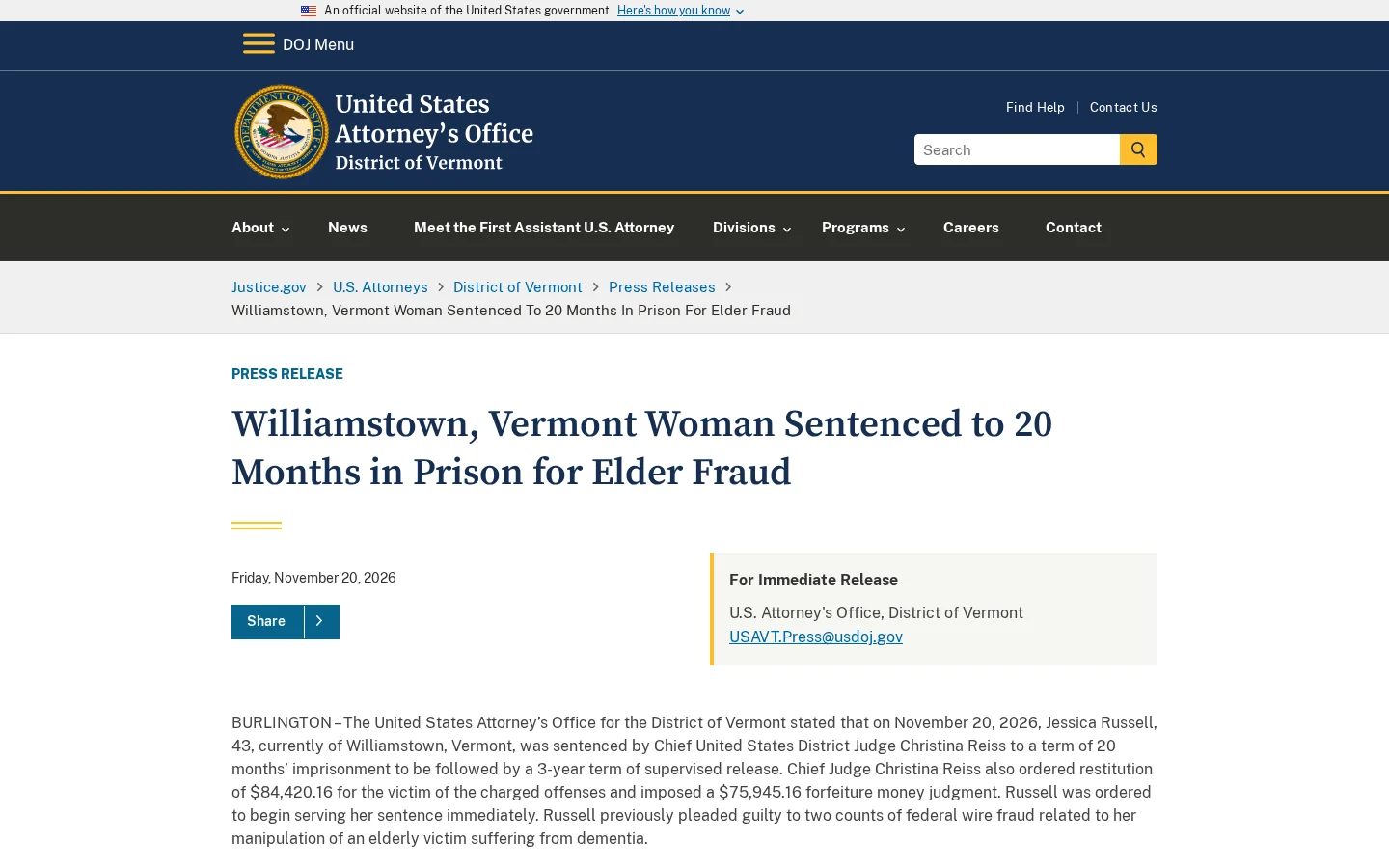
Federal prosecutors in Vermont say Jessica Russell befriended an older woman whose child had died. Russell admitted falsely claiming that she had also lost a child.
The false story made the friendship appear to come from an experience both women understood. Russell later lived with the woman and called her mom.
The older woman was living with dementia. Relatives told the court that Russell isolated her and eventually kept her sisters from reaching her despite their efforts.
A real power of attorney was part of the financial abuse
The federal sentencing announcement says Russell obtained power of attorney. She admitted using it to take money from a jointly held bank account for purchases in her own name.
The purchases included a home and a vehicle. The case does not say that every shared account or power of attorney is suspicious, or that a document alone proves consent.
A person appointed to help manage money may have authority to sign. That does not make the helper the owner of the older person’s money or excuse self-dealing.
The wire fraud case ended with a prison sentence
Russell pleaded guilty to two federal wire fraud counts and received a 20-month sentence on November 20, 2026. The court also imposed three years of supervised release.
The court ordered $84,420.16 in restitution and a $75,945.16 forfeiture money judgment. Neither order says that both amounts were paid to the woman.
- Speak directly with the person getting help if it is safe.
- Find out what financial authority the helper has and where it came from.
- Ask the bank about disputed transactions through a number it publishes itself.
- Report suspected abuse without waiting to solve every legal question on your own.
How the Jessica Russell Elder Fraud Scam Worked
Step 1: A specific story turned an acquaintance into a confidante
Russell used a false claim about the death of a child, not a cold investment pitch. The deception gave the older woman a personal reason to let her close.
When someone offers emotional support after a loss, that support may be real and welcome. Financial authority is a separate decision that should not follow automatically from the new relationship.
Ask what changed recently rather than attacking the new friend. If you lead with an accusation, the person you care about may feel they have to defend the relationship.
Offer concrete help with one task the older person wants done. A separate offer to review one bill can make it easier to see whether help has become control.
Step 2: Access to the older woman narrowed
Relatives told the court that Russell prevented the woman’s sisters from making contact. Their account of isolation describes a warning a family can notice without seeing a single transaction.
Missed calls on their own can have many explanations. Pay closer attention if every request goes through the same person, and private conversations or routine visits suddenly become impossible.
Try a friendly request for an ordinary conversation, without asking for passwords or demanding accounts. If you fear intimidation, plan any contact with a trusted professional or appropriate agency.
Notice whether the person still has access to their own phone, transportation and choices. A decision to accept assistance should not require surrendering ordinary contact with family.
Step 3: Help became authority over money
Russell admitted getting power of attorney and using it to take funds. The arrangement changed what she could do, but it did not make those purchases for herself permissible.
A financial agent’s obligations and powers depend on the instrument and state law. Read the actual document with an independent lawyer if you have authority to see it.
Find out whether the person is an agent, joint owner or simply someone the bank is allowed to contact. Similar descriptions in family conversations can refer to entirely different roles.
Ask the bank what documentation it received and who is authorized to get details. It may not be able to answer an informal request from a concerned relative.
Step 4: The money was used for property in the helper’s name
Prosecutors connect withdrawals from a jointly held account to a vehicle and residence in Russell’s name. That is a concrete reason to ask who ended up owning a major purchase.
For a large payment, put the invoice, authorization and ownership record alongside one another. A purchase supposedly made for someone’s care can look different when ownership belongs to the agent.
Do not move the older person’s money elsewhere on your own to protect it. An emergency transfer without authority can make records harder to follow or create another problem.
If you find a large unexplained expense, preserve what you can and talk to the bank, adult protective services or an attorney, depending on what is happening now.
What the Paperwork Should Help You Verify
Start with the older person’s wishes
Ask who they want involved and what kind of help they asked for. Do not assume a dementia diagnosis describes all of their abilities or erases their preferences.
When a conversation is possible, ask privately and give them time to answer. Someone under pressure may need more than one opportunity to describe what is happening.
If you cannot have that conversation safely, do not announce a confrontation. Seek advice from an adult protective service or law enforcement when there is an immediate safety concern.
Keep ordinary contact with the person even if they are not ready to discuss finances. A conversation about groceries or a visit can show whether they still make everyday choices.
If the person wants independent help, ask how they prefer to arrange it. A trusted neighbor, social worker or attorney may be easier for them to speak with privately.
Listen for specifics, such as a bill someone refused to show them or a vehicle they paid for but cannot use. Those details are more actionable than a family’s hunch.
Compare the bank’s records with the power granted
With the right authority, read the signed instrument and check the named agent, effective date, limits and other conditions. Ask your own lawyer to explain clauses about gifts or property.
Look for separate signatures on account ownership records. A power of attorney and a joint account agreement do not give identical rights, and both can exist in the same situation.
The CFPB’s Managing Someone Else’s Money guides describe basic duties for agents, including keeping records and acting for the person whose money they manage.
Ask for receipts and a transaction history if you have authority to obtain them. Routine accountability should not depend on the agent telling everyone that a purchase was necessary.
Compare periodic bank statements with a list of normal obligations. Note unexpected bills, missed payments and deposits handled differently from before, rather than treating every cash withdrawal as theft.
Ask who received the money for a purchase and whose name appears on the title, if you can get that information lawfully. A receipt and a title answer different questions.
Where the bank cannot speak to you, ask how the account holder can give narrow permission for a conversation. Do not use someone else’s credentials to get around that limit.
Use the right role for the job you want done
Maybe your relative needs help reading a statement or remembering a due date. Ask whether they can get that support without giving someone else ownership of the account.
Ask the institution whether it offers a trusted contact or useful alerts. A trusted contact is generally someone the institution can call, not a person authorized to move money.
Ask what the person doing the work can actually do under each option. Make room for independent advice before someone signs a form or changes how the account is held.
If there is a legitimate reason for a helper to receive payment, keep written terms and receipts. A record makes it easier to explain the arrangement later.
If the person wants someone to pay a regular bill, define that task before changing any legal paperwork. Ask what information the helper needs and what can stay private.
For help that may last a long time, decide who can review the records independently. This gives the person a second route to ask questions if their circumstances change.
Write down who will step in if the first helper cannot continue. Make sure current payments are documented so a replacement can take over without using the departing person’s login.
If you are offered authority yourself, get advice before mixing accounts or paying yourself. The CFPB’s role-specific guidance explains why separately identifying money and keeping receipts are basic duties.
If a second helper reviews the records, agree which transactions they should see and when. That person does not need the older adult’s login to review an authorized copy.
Keep a dated copy of any change in the authority and ask the institution what it recorded. A form in a home binder may not match what the bank has.
What to Do If You Suspect Financial Abuse
-
Deal with urgent safety and access concerns first. If the older person faces immediate danger or needs emergency medical help, contact emergency services.
If the person can talk privately, ask what they want you to know and what they need today. Do not force them to confront the helper.
If they are isolated and you cannot reach them, tell the appropriate local agency what access is being prevented and why you are concerned.
-
Collect a timeline without taking records you cannot access lawfully. Note what you personally saw, when contact became harder, and when the person’s bills or living arrangements changed.
Keep statements, authority forms or receipts you already have access to. A dated note explaining how you obtained a document helps preserve its value.
Mark other people’s accounts as their reports rather than putting them in your own voice. That helps an investigator follow up with the right witnesses.
-
Tell the bank that this may involve misuse of authority. Use an official fraud contact and describe the transfer, purchase or account change you can identify.
Ask what the bank can log and what it needs from the account holder or an authorized representative. Do not assume it can give you someone else’s transaction history.
Ask for a reference and write down what the bank asks you to do next. If there are bills due, make sure a qualified helper is available to address them.
-
Find the local service that investigates elder abuse. Use the DOJ’s elder abuse reporting directory to locate the appropriate service where the person lives.
For adult protective services, explain the living situation, the suspected financial behavior and the safest way to contact the person. Ask what information will help them assess urgency.
Tell the agency if you also called the bank or police. Keep your reports separate from any private messages in which someone offers financial recovery for an upfront fee.
-
Get separate advice on changing or challenging the authority. An elder-law attorney or legal aid organization can explain what the account holder or an authorized person can do locally.
Bring copies of the authority document, relevant account information and a short timeline. Ask who has standing and how to protect necessary payments while a challenge is being considered.
Until the authority question is resolved, keep checking the person’s safety and ability to get routine help. An investigation alone does not pay the utility bill.
Frequently Asked Questions
Is giving someone power of attorney inherently unsafe?
It is a common tool for arranging help. The danger arises when a person gets that authority through manipulation or uses it for their own benefit.
Can a joint account and a power of attorney both be present?
Yes, they concern different relationships to the money. Ask the bank and an independent lawyer which document governs the action you are trying to understand.
What if the older person still trusts the helper?
Avoid humiliating them or insisting that they settle the issue in one conversation. Offer private support and get advice from a qualified agency if you suspect abuse.
Will the bank discuss another person’s finances with me?
Do not assume it can disclose account records without authority. You can still describe what you observed and ask how it takes a report of suspected exploitation.
Does the forfeiture judgment tell us the victim was paid?
No, a forfeiture judgment does not establish repayment to the victim. The announcement lists restitution separately and does not report that it was collected.
Should I wait until I have proof before asking for help?
Preserve concrete observations, but you do not need to finish an investigation before reporting a safety concern. Use the local service that assesses suspected abuse.
The Bottom Line
Do not give someone control of a relative’s money just because the relationship feels close. Keep the person’s wishes, the scope of authority and independent checks separate.
If you suspect existing abuse, preserve the records you can lawfully obtain and call the bank and local protective service. Treat any immediate danger as an emergency.

Join the discussion
0 commentsShare your experience or ask a question about this article.
Community experiences
Did this happen to you?
Your experience could help someone recognize the same scam. Submit a private report for our team to review.
I experienced this tooReports are reviewed before publication. Sharing publicly is always your choice.
Discussion
Start the conversation
Have a question or something useful to share? Add the first comment.