


Someone on social media offers you money to use the bank account you already have. They describe it as a favor and say they’ll handle the rest.
Before you answer, think about whose name would be on the record if that payment went wrong.
Overview
What the New Jersey mail theft case involved
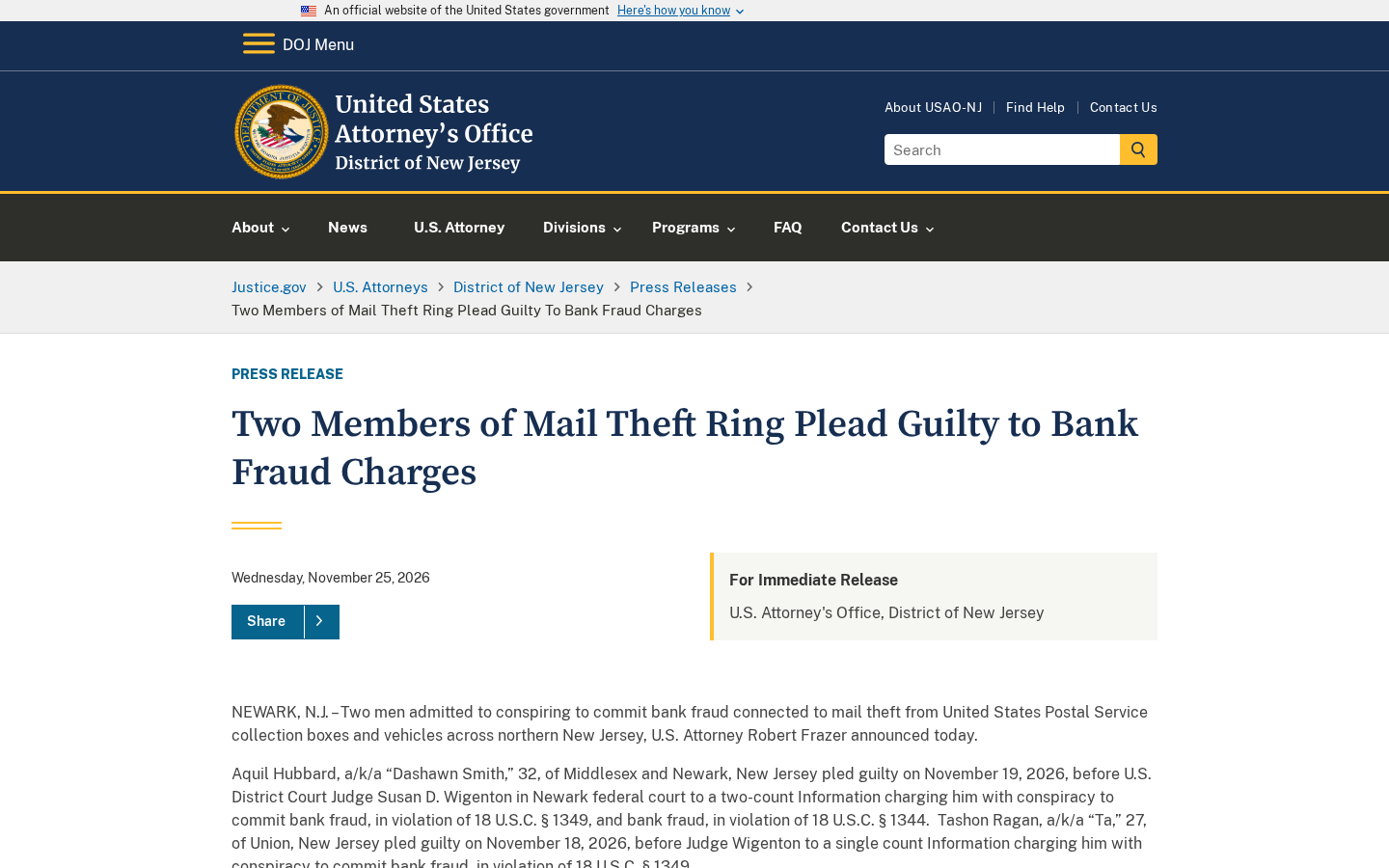
The US Attorney’s Office for New Jersey announced guilty pleas by Aquil Hubbard and Tashon Ragan in a bank fraud case tied to stolen mail.
Prosecutors say the group took mail from collection boxes and postal vehicles in northern New Jersey between December 2024 and January 2026. Checks were among the items they targeted.
The announcement describes some stolen checks being altered and attempts to deposit or cash them. Hubbard and Ragan also admitted recruiting account holders through social media.
The case involved both people whose mailed checks were stolen and people approached through social media. Each group needs different records when calling the bank.
If you were recruited, save the message before blocking the sender. Keep anything showing what access they asked you to grant.
The federal case was at the guilty plea stage
Ragan pleaded guilty to bank fraud conspiracy on November 18, 2026. Hubbard pleaded guilty to that conspiracy and a bank fraud count on November 19.
The DOJ announced both pleas on November 25 and listed March 23, 2027 as the scheduled sentencing date. That date is not a deadline to report check theft.
The release does not give a total loss amount. A person checking a missing payment should start with their own bank record rather than trying to match a case total.
Why an offer to use your bank account matters
- The person who owns the account is the bank’s contact when a payment is questioned.
- A pending or available deposit can still be reviewed and reversed by the bank.
- Moving funds at the recruiter’s direction can make it harder to account for what happened.
- The actual sender may be someone whose check was stolen, not the recruiter or a legitimate employer.
You do not have to accept a payment to see whether an offer is legitimate. Ask your bank first if the arrangement depends on using an account in your name.
How the New Jersey Mail Theft and Bank Fraud Worked
Step 1: Payments intended for legitimate recipients were taken from the mail
The federal release says the group targeted items such as checks, credit and debit cards. The people mailing them had ordinary reasons to believe the items would reach their destinations.
A check intended for rent or an invoice can look routine in your records. The first sign may be a message from the real recipient saying the account is unpaid.
Start the investigation with the sending date and the due date. A late payment might be delayed; a check image showing a different recipient is a more specific concern.
Step 2: A stolen check was used for fraud rather than delivery
Prosecutors say the men altered stolen checks and tried to cash or deposit them. The check did not need to reach the real payee for a charge to appear.
Once a paid check appears, open the image through the bank’s own site or app if the bank offers one. Compare the amount and payee against what you wrote.
If there is no image, request copies of the records the bank can supply. Do not accept a payment status as the only answer when the intended recipient disputes receipt.
Step 3: Social media recruitment brought other bank accounts into the case
Hubbard and Ragan admitted recruiting people through social media and offering compensation for access to accounts. The DOJ described those accounts as being used for the stolen check scheme.
Don’t test an offer to move someone else’s funds with a deposit. Verify the business separately, and ask your bank before letting anyone use the account.
If a recruiter wants your login, one-time code, card or account access, decline and contact your bank if anything was already shared. Keep the original offer instead of forwarding it.
What to Check When Someone Wants to Use Your Bank Account
The reason they give should not be your only evidence
A recruiter can call the arrangement a job, a favor or a short-term mistake they need you to fix. The important question is why they need your personal account.
A genuine employer paying you wages does not need your password or card. Payroll instructions explain how the business pays you, not why you must handle its other receipts.
If a friend passes the message along, ask how they know the sender and whether they have checked what the proposed payments are for. Don’t share login details while waiting.
Keep the message even if you decline. If the sender contacts you elsewhere, use platform reporting tools without sharing the recruiter’s pitch publicly as an opportunity.
Seeing money in your account is not the end of the check
Open your bank’s app yourself and find the entry in your history. Note whether it is posted or pending, and whether a new debit or reversal appears beside it.
Ask the bank to identify what kind of credit it shows and why it arrived. A credit can be available before a later review finds an issue with the payment.
Do not send it back to a new recipient just because someone says the deposit was a mistake. Let the bank investigate and handle any proper reversal.
If you have already moved part of it, say so when you call the bank. Provide the amount moved and where it went instead of describing everything as still available.
Check any fee or restriction the bank identifies and ask how to challenge an error. Do not accept an offer from the original recruiter to remove a bank restriction.
Check which forms of account access are still available
Tell the bank if you shared a password, card, code or access to the email attached to the account. Ask what needs to be secured first.
If they only saw a screenshot, describe what it contained. An account number, a one-time code and a balance do not provide the same access.
Ask the bank to check recent contact changes, new payees, linked accounts and sessions it can see. Use only its approved route to change a credential or remove access.
Ask how accessible your legitimate deposits will be during review. If your normal pay is due, find out whether the bank recommends moving that direct deposit through your employer.
Save the record of changes the bank confirmed. Do not delete your own app or messages before collecting what you are authorized to preserve.
If you cannot get in because contact details changed, use the bank’s verified number or go to an official branch. Do not ask the recruiter to restore your access.
When bank staff call back, ask how to verify their identity without giving them a sign-in code. You can end the call and use the number in your bank records.
What to Check If Your Own Mailed Payment Was the One Taken
Start with your account activity, not an emailed image
Sign in to your bank independently and find the withdrawal under transaction history or the relevant statement. Search for the amount, check number or date if your app allows it.
Download the available image and transaction entry. Keep both sides if the bank makes them available, and do not post them in a group looking for help.
Compare the recipient and amount against a check register, invoice or copy you saved before mailing. It helps to know which information you recorded before the dispute began.
If you wrote a second check around the same date, make sure the posted number is the one you intended to inspect. Don’t report a different transaction by mistake.
Find out whether you need to stop payment or report one already made
If the check has not posted, ask your bank whether it can stop payment, what it needs to identify the check and whether the stop has a fee.
Ask when the stop takes effect and how long it lasts. Keep the confirmation and ask your intended recipient how to pay again without leaving two payments active.
If the check was paid, describe exactly what looks wrong. An unfamiliar endorsement, a different payee and an amount you never wrote are separate details.
The CFPB’s stolen check guidance recommends contacting the bank promptly. Ask which records or statements the bank requires and what deadlines apply to your account.
Arrange payment with the real recipient separately
If the intended recipient says it has no payment, get its current balance and due date through its established contact details. Ask what would prevent service interruption or added charges.
Explain that the bank is investigating an earlier payment. Do not send another check until you understand whether the first one might still be paid.
For a replacement, use a verified billing address or the recipient’s own account portal. A message about the missing check is not a reason to accept new payment instructions blindly.
Record the replacement payment’s confirmation separately. Later, you want to distinguish money that actually settled the bill from the payment still being disputed.
What to Do If a Mailed Check or Your Account Was Misused
-
Call the bank’s fraud department through a verified number. Use the contact in your app, on your statement or on the back of your card.
Say whether a check is missing, was paid with changes, or was never written by you. Give the date, check number, original amount and name of the intended recipient.
Ask how the bank wants the dispute documented and save its case number. If it requests a written statement, keep a copy and proof of delivery.
-
Look for activity linked to the original incident. Check recent statements for new check charges, returned items or account changes you do not recognize.
Tell the bank which records might have been exposed, including unused checks or account material in the same envelope. Ask whether it recommends replacing checks or changing the account.
Before closing anything, list incoming deposits and regular payments you will need to move. Ask the bank how to avoid interrupting your legitimate bills.
-
Report suspected mail theft to Postal Inspectors. Start at the Postal Inspection Service report page and choose the reporting option that matches the missing mail.
Include the date and place the item was mailed, expected recipient and any known bank report. Share financial documents only through a verified route that asks for them.
Keep the report and tell the bank you filed it. A postal report does not replace a dispute with the institution that handled the check.
-
If someone recruited you, cut off their access immediately. Tell your bank if you shared credentials, received deposits for them or let them use your debit card.
Use the bank’s official security or fraud contact to secure the account. Do not move or send questionable funds at the recruiter’s direction while the bank reviews them.
Save the messages and payment records. If you are worried about your legal position, seek independent advice rather than trusting the person who asked for access.
-
Check that the real bill and the bank dispute remain on track. Ask each institution how it will contact you and when to expect an update.
If a credit appears while the case is open, ask whether it is temporary or final. Keep enough in the account to cover payments you still owe.
Frequently Asked Questions
Did the New Jersey defendants admit a role in the case?
Both pleaded guilty to bank fraud conspiracy. Hubbard also pleaded guilty to a separate bank fraud count, according to the federal announcement.
Does a missing check prove it was stolen?
A missing check may be delayed, misplaced or stolen. Ask the payee and the bank what happened before deciding which report or dispute fits.
What if the check number is the same?
Use the number to identify the payment, then compare the image and amount. The number by itself does not show whether the payment information was altered.
Should I reimburse a stranger who says they accidentally deposited my check?
Do not send money to the person contacting you. Give the bank the records you have and let it explain what happened to the original payment.
Can I lend out my account if I don’t touch the check?
Do not grant access to an account to receive or move an unexplained payment. Report any access already granted and let the bank direct the next steps.
Will a fraud report mark my bill paid?
Reporting theft does not automatically settle the bill. Contact the intended recipient separately to confirm the balance and arrange a safe way to pay if necessary.
The Bottom Line
Do not let a social media contact use your account to receive money. If you already granted access or took a payment, stop and call the bank directly.
If it was your own mailed check that disappeared, preserve the payment record and contact your bank. Verify the real payee before sending a replacement.

Join the discussion
0 commentsShare your experience or ask a question about this article.
Community experiences
Did this happen to you?
Your experience could help someone recognize the same scam. Submit a private report for our team to review.
I experienced this tooReports are reviewed before publication. Sharing publicly is always your choice.
Discussion
Start the conversation
Have a question or something useful to share? Add the first comment.