


Your order says it has shipped, and the seller sends a tracking number. Days later, the only update is that a label was created.
You can check whether the parcel really moved without paying a second shipping charge or using a link from a text.
Overview
The YDH Express settlement concerns USPS labels
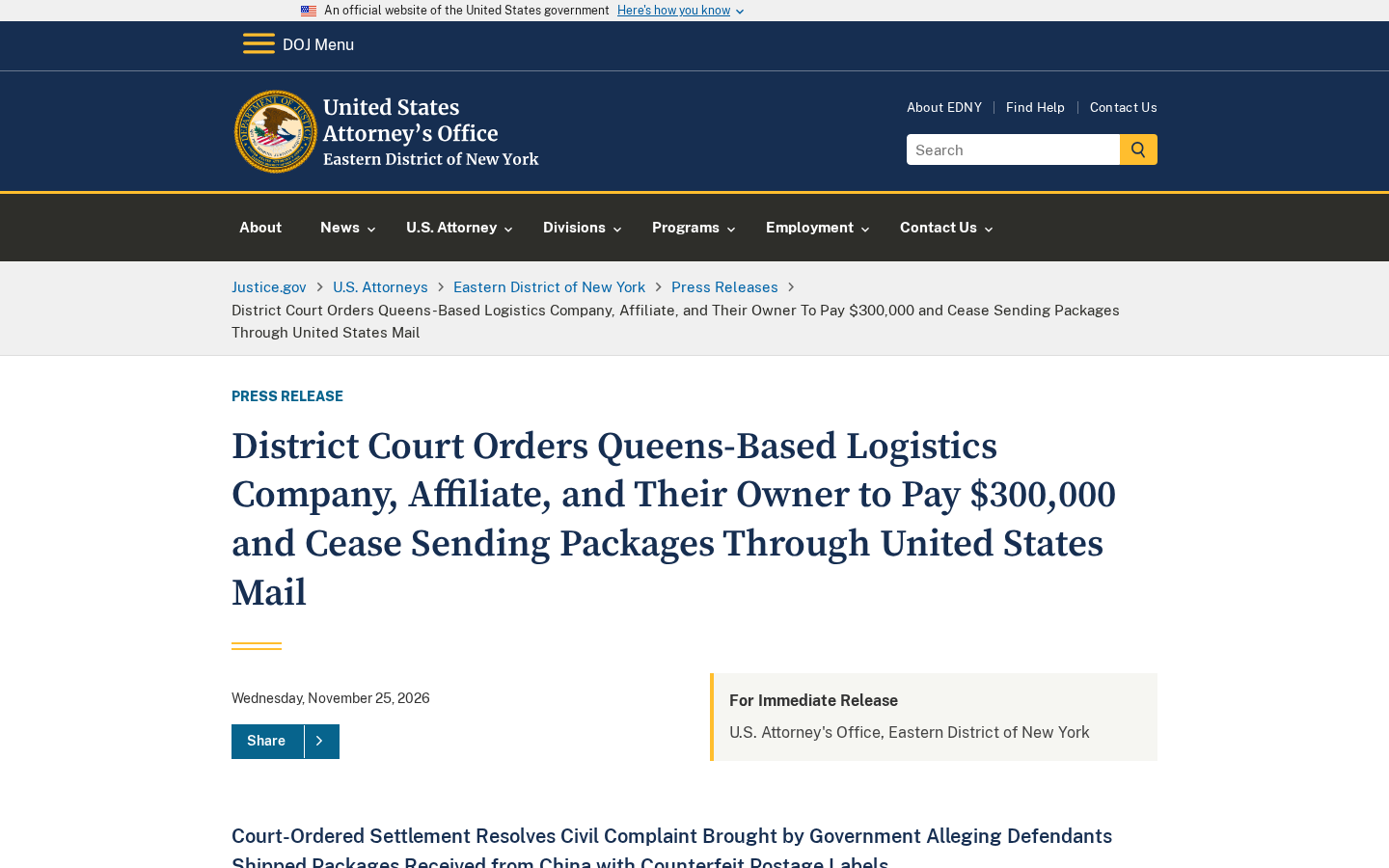
On November 25, 2026, the Eastern District of New York announced a court-ordered civil settlement with YDH Express Inc., YDH Int’l Inc. and their owner, Yizhao Hou.
The defendants agreed to pay $300,000 to the United States and permanently stop mailing packages through USPS. That payment is not described as a fund for missing online orders.
The government alleged that the companies put parcels bearing counterfeit postage into the US mail after receiving those parcels from business customers in China.
The DOJ says there was no determination of liability. The settlement resolves the allegations and imposes obligations; it is not a criminal conviction or proof about individual shipments.
Postage, tracking and delivery are different facts
Creating a tracking number is not the same as paying valid postage, handing the parcel to a carrier or delivering it. Ask what the latest scan actually shows.
The Postal Inspection Service’s counterfeit postage warning says mail with counterfeit labels may not be processed or delivered. Inspectors may also seize it as evidence in an investigation.
A tracking entry that appears stalled does not diagnose counterfeit postage. A parcel might be awaiting acceptance or moving with a different carrier before entering the USPS network.
Which records matter to a shopper?
- The retailer’s order record identifies what was bought, what was charged and when it promised shipment.
- An independent carrier lookup shows the status available for the actual tracking number.
- The seller’s response should explain the carrier handoff or offer a remedy if it cannot locate the parcel.
- A separate text demanding a payment is not proof that a postage issue exists.
If you simply want your order or your money back, begin with the seller and payment provider. Identifying who made a label is not a prerequisite for asking about nondelivery.
What the Court-Ordered Settlement Does and Does Not Say
The shipping restriction did not begin with the November headline
The government filed its civil complaint in May 2025. A temporary restraining order kept the defendants from using USPS to mail parcels beginning May 16, 2025.
A preliminary injunction entered on June 6, 2025 and remained in effect, according to the announcement. The later agreement made the restriction permanent for the defendants named.
Those dates make it important to check an actual order record. An earlier case date, a new court order and your own shipping date do not mean the same thing.
The civil complaint addressed shipments into the US mail
The DOJ says defendants received the parcels from companies in China. That describes the direction of the shipments alleged in the complaint, not the origin of every product sold online.
The release does not identify individual shopping accounts or publish tracking numbers readers should search for. It does not accuse every vendor delivering an order through an international logistics partner.
Use the exact recipient, seller and carrier information for your transaction. Do not apply the complaint to a different company with initials that happen to match.
A court payment is not an order refund
The settlement requires payment to the United States. If an order never arrived, the seller and your payment provider need your purchase information, not your interpretation of the court award.
A text that uses the case to ask for a processing charge deserves independent verification. The cited DOJ release does not tell shoppers to pay a fee to release parcels.
If someone says government compensation is waiting for you, find the case announcement yourself. Check whether the agency actually published a claims route before sharing anything.
How to Identify the Seller, Shipping Partner and Actual Carrier
Confirm who charged you before looking up the delivery
Open the original order page or receipt and find the legal name or checkout merchant. Compare the order number and amount to the charge on your statement.
A storefront, marketplace and fulfillment partner can each have a different role. The party handling a package is not necessarily the merchant with authority to refund the payment.
If the receipt came from a marketplace, sign in and open the specific order there. A message from a seller should not be your only record of the transaction.
Identify whether a second carrier actually accepted the parcel
Go to the carrier’s official tracking page and type the number you copied from your order account. Do not trust an unfamiliar site simply because it shows the number.
If a shipping partner is listed, note both tracking references and the date of any handoff. Ask the seller which carrier should have the parcel now.
Read the wording of the latest entry carefully. An electronic label notice is different from a scan showing that the parcel was accepted into the carrier’s network.
When a retailer says the parcel reached a US carrier, ask for the acceptance date and whatever destination information the carrier can confirm in writing.
Check the delivery information you actually provided
Compare the address in your order account with the address you intended to use. An old apartment number or missing unit can create a problem unrelated to postage.
If the tracking page shows delivery but your address does not match, ask the carrier to verify destination details it is allowed to share. Stop relying on an emailed screenshot.
For a valid address and delivered status, note the reported location, time and any available delivery photo. Check with the carrier and retailer rather than paying a new fee.
Ask the right party for the next action
Ask the actual seller whether it will trace, replace or refund a missing parcel and what timeline it supports. Get a reference attached to the specific order.
Ask the carrier what its latest scan means and whether you can open an inquiry. A carrier can explain its own handling without controlling the refund terms of the sale.
If the two answers conflict, keep both and supply them to the marketplace or payment provider. A disagreement is better documented with ticket numbers and written replies.
What to Record Before You Dispute a Missing Delivery
Separate a wrong destination from a package that never moved
If tracking shows another city, ask whether it was a transit stop, an incorrect address or the final destination. That tells you which inquiry to open.
Where the seller shipped several items in one order, confirm which item belongs to each number. A delivery scan for one box does not settle what happened to the other.
When a carrier’s lookup does not recognize the number, double-check what the seller supplied. Keep a screenshot before requesting the name of the correct carrier and a working reference.
If the order shows a different carrier than the text claims, use your actual receipt to resolve the discrepancy. Do not let the message choose the website where you check.
If the retailer marked the order shipped before carrier acceptance, note both dates. Ask about that gap instead of assuming all the delay happened in transit.
Record what the seller promised and what it can now verify
Find the shipping promise in the order confirmation rather than assuming the expected delivery date was guaranteed. A shipment deadline and a delivery estimate describe different things.
If the shop changes a delivery estimate online, save the original confirmation and later notice. The issuer can then see what you were told when you paid.
When the seller confirms it cannot locate the order, ask whether it can issue the refund to the original payment method. Keep any refund reference it provides.
Track whether an offered credit, replacement or refund actually appears. A support email agreeing to send money is useful evidence but not itself a posted credit.
Do not close a dispute merely because someone promises to respond later. Check your provider’s instructions for handling a replacement or refund while a case is open.
Know whose clock you are watching
The marketplace deadline, the card issuer’s dispute window and the carrier’s inquiry timeline may be different. Put the applicable dates together rather than assuming the longest one governs them all.
If you reach the marketplace, use the order history and open its help or problem option for that purchase. Select the issue that describes what actually happened.
For a dispute, keep the order number, amount paid and payment date ready. If only part of a shipment is missing, identify the items you did receive.
When a refund or new parcel arrives, update the open case using the verified contact. That avoids claiming a loss that has already been resolved.
If you paid a separate delivery demand with your card, do not mix it into the missing merchandise claim. It is a separate transaction with a different recipient.
Keep the records until both matters are resolved. An accurate order history can help you distinguish a later refund from another claim using the same package number.
What to Do If Your Parcel Is Missing or a Postage Demand Arrives
-
Start with the retailer and tracking record. Open the order directly and copy the expected shipping date, delivery address, promised service and provided tracking number.
Open the carrier separately and check which events it actually shows. Take screenshots of the latest status and the order before they change.
If a carrier confirms a postage problem, note exactly what the official representative said. Ask which person needs to resolve it rather than guessing from the status label.
-
Ask the seller for a clear written remedy. Give the order number and the current carrier status, then request a trace, replacement or refund appropriate to the case.
If the seller offers a replacement, confirm whether the first order is canceled, what date the new parcel is expected and whether any additional charge would apply.
Set a reminder for the marketplace’s nondelivery deadline. Do not let the seller’s promise of another update make you miss your own opportunity to file.
-
Check the payment dispute process before the deadline. Use the card issuer or payment provider’s verified dispute channel and explain that the merchandise was not received.
The FTC’s nondelivery guide explains why the payment method and dates matter. Give the issuer the purchase date, expected shipment and seller correspondence.
State that the original purchase was authorized if you made it. Explain what hasn’t arrived rather than reporting an authorized order as a stolen card transaction.
-
Do not pay through a delivery text. If a message says postage is due, check the tracking number in your actual order and contact the carrier independently.
Do not enter card details in a link from a stranger. If the carrier confirms a legitimate issue, ask how to resolve it through an official contact.
If you already entered payment details or made a second payment, call your card issuer promptly. Identify both the original purchase and the suspicious later charge separately.
-
Report suspected counterfeit postage with the evidence you have. Use the Postal Inspection Service’s report route and provide the relevant shipping record, purchase proof and dates.
If you received a parcel with a suspect label, keep the packaging private for inspectors. Do not post an image that exposes the recipient’s address.
Do not pay a stranger to remake a label or release a parcel. Dealing with the verified carrier and seller keeps the shipping issue tied to the actual order.
Frequently Asked Questions
Did the YDH settlement establish criminal guilt?
The government described a civil settlement and explicitly said there was no determination of liability. The agreed payment and prohibition are separate from the allegations it resolved.
Does a tracking number prove the purchase reached USPS?
A number can exist before the parcel is physically accepted. Look for the carrier’s actual acceptance or movement history and ask about any handoff if the record is unclear.
Could real counterfeit postage keep a package from being delivered?
The Postal Inspection Service says parcels with counterfeit postage may not be processed or delivered. A delay alone does not tell you that counterfeit postage is involved.
Will the $300,000 settlement replace my missing order?
The announced payment goes to the United States. If an unrelated order is missing, pursue your seller or issuer with the records for that purchase.
Do I need the original packaging to report it?
Packaging can help if you have it. If you never received the parcel, keep the order, tracking history and messages instead of waiting for something you cannot recover.
What if a shipping text knows my tracking number?
A number in a text is not proof the sender works for the carrier. Check it in the official tracking tool reached from the carrier’s own site.
The Bottom Line
Do not pay anyone from an unexpected message to release a missing parcel. Check the genuine order and carrier records before deciding whether you have a delivery problem.
If the shipment is missing, request a written remedy from the merchant and preserve your dispute deadline. Report suspected counterfeit postage separately with whatever evidence you can verify.

Join the discussion
0 commentsShare your experience or ask a question about this article.
Community experiences
Did this happen to you?
Your experience could help someone recognize the same scam. Submit a private report for our team to review.
I experienced this tooReports are reviewed before publication. Sharing publicly is always your choice.
Discussion
Start the conversation
Have a question or something useful to share? Add the first comment.