


An unfamiliar card payment appears even though you still have your card. The business name on the statement offers little help, and you do not remember buying anything.
The Timothy Wadsworth case shows how an unauthorized charge can enter a much longer money trail before the account holder has noticed the problem.
Overview
Stolen account information was used to process card payments
Timothy Wadsworth obtained credit card account numbers from coconspirators and processed payments the account holders had not authorized. Proceeds moved through accounts he controlled and into Bitcoin.
The DOJ’s sentencing announcement describes 310 attempted payments totaling $1,673,578 during part of the operation in 2020.
Of those attempts, 116 were initially successful, totaling $730,728.22. Attempted charges, successful processing, and final losses are different measures of the activity.
A prison sentence confirms the criminal conduct
On October 23, 2026, Wadsworth received 51 months in prison following convictions for conspiracy to commit wire fraud and money laundering.
The wider case also included fraudulent benefit and loan applications and a romance-fraud payment. Its approximately $2.06 million figure combines actual and intended losses across those activities.
That wider total should not be presented as card losses alone. The announcement separately identifies restitution of $810,965.19 and forfeiture of $810,956.19.
A genuine payment service does not authenticate the charge
The scheme used Stripe, bank accounts, and Coinbase as parts of the payment trail. The account holders had not authorized the underlying card transactions.
- A successful payment did not establish the cardholder’s consent.
- A recognizable processor did not prove a real purchase existed.
- The operator’s later Bitcoin purchase did not make the victim a crypto investor.
- A criminal sentence did not automatically reverse an individual charge.
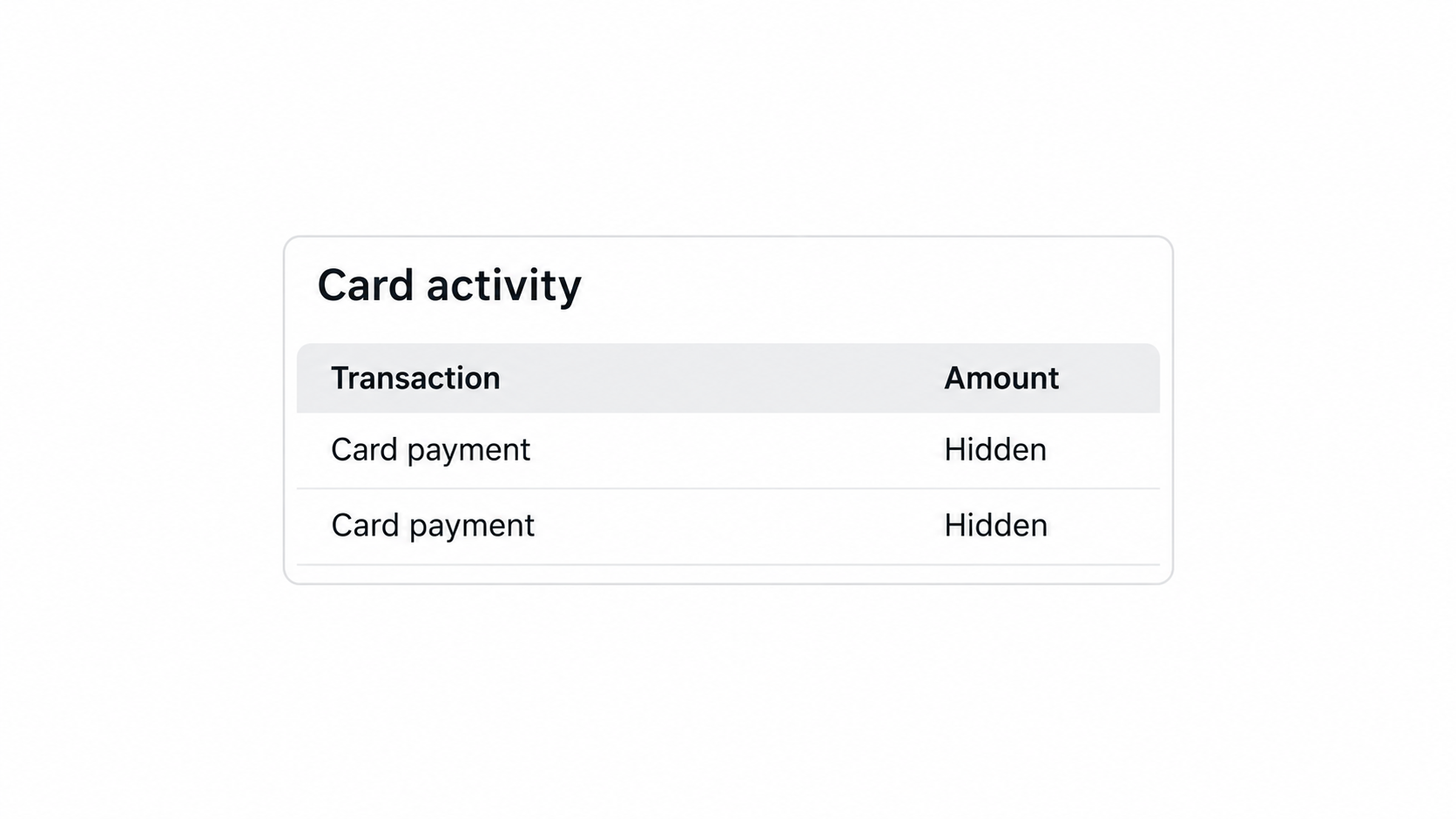
The lead account screen is a reconstruction with amounts and identifying details omitted. It is not a victim statement or a recovered display from the case.
You Can Still Possess Your Card When Its Details Are Misused
A physical card and the information associated with its account are different things. Someone with the account details may attempt a transaction without taking the card from your wallet.
The Wadsworth case establishes misuse of account numbers obtained from other participants. It does not identify one universal method by which every cardholder’s information was originally stolen.
That limitation matters when deciding what to investigate. Do not assume a particular shop, breach, or person supplied the information merely because the card remained with you.
Start with the transaction you can identify. Its date, amount, merchant description, and account record give the issuer something concrete to examine.
You can ask whether a merchant description corresponds to a business you know. That check should not become a reason to delay reporting a charge you genuinely did not authorize.
Use the issuer’s own channel rather than a phone number in an unexpected refund message. A second person claiming to fix the charge may introduce a different fraud.
The immediate objective is to protect the affected account and preserve dispute rights. You do not need to trace the operator’s complete financial network before asking for help.
How the Wadsworth Unauthorized Card Payment Scam Works
Step 1: Account numbers reach someone who can submit payments
Wadsworth received card account numbers from coconspirators. He used those details to process unauthorized transactions rather than charging people for purchases they had knowingly made.
The case is therefore different from an unhappy customer disputing the quality of a legitimate order. The account holders had not approved the payments at all.
If that describes your situation, say so clearly to the issuer. Keep an unauthorized charge separate from a purchase you made but now want refunded.
An accurate description helps the company choose the appropriate investigation. Do not invent a stolen physical card or account takeover if you do not know that occurred.
Step 2: A merchant processing account submits the charges
Between March 10 and May 15, 2020, Wadsworth attempted the identified payments using a Stripe account. Some attempts succeeded initially while others did not.
Processing infrastructure can handle a payment without establishing the truth of the transaction behind it. A successful charge is not independent evidence that the customer consented.
For a cardholder, the useful question is whether you recognize and authorized the purchase. The processor’s familiar name does not answer that question.
Preserve the statement description exactly as shown. The issuer can investigate it without you having to identify every intermediary involved in settling the payment.
Step 3: Proceeds move into bank accounts controlled by the operator
After payments were processed, Wadsworth transferred money from Stripe into bank accounts he owned with HSBC and Evolve Federal Credit Union.
The DOJ describes substantial transfers during a short period. Moving the proceeds away from the processing account was another stage of the scheme’s financial trail.
These facts identify services and accounts used in the case. They do not establish that every customer of those institutions was involved or that the institutions knowingly participated.
Your report should name the transaction you actually experienced. Let the issuer and investigators connect it to downstream accounts through records they can obtain.
Step 4: The money is converted into Bitcoin and sent onward
Wadsworth transferred funds into his Coinbase account, bought Bitcoin, and sent it to external addresses. Some transactions exceeded $10,000 each.
This conversion happened within the operator’s movement of proceeds. It did not mean the people whose cards were charged had bought Bitcoin themselves.
That distinction changes the recovery conversation. A cardholder should begin with the card issuer, rather than accepting a stranger’s demand to fund a crypto wallet to trace the charge.
Keep any message offering blockchain recovery with your evidence. The person contacting you needs independent verification, regardless of how confidently they describe the money trail.
Step 5: Other fraudulent receipts enter the wider case
Wadsworth also received money through false loan and benefit applications. In a separate romance-fraud episode, a recently widowed victim sent $42,000 to his bank account.
The person deceiving that victim claimed to be an oil rig worker needing travel expenses. That payment was another documented source of criminal proceeds, rather than a card transaction.
Keeping these activities separate prevents a misleading total. The wider case’s actual and intended loss figure should not be divided into an invented average cardholder loss.
If you are reporting a different payment, describe its actual promise and method. A wire sent under a false relationship story needs different evidence from an unauthorized card charge.
The Statement Name and the Downstream Recipient Are Different Clues
A card statement gives a starting point for identifying a charge. It does not necessarily display every bank, exchange, or participant who later handled the proceeds.
That can make an unfamiliar description confusing without making it harmless. Ask the issuer to clarify the merchant and report the lack of authorization promptly.
Do not use internet guesses about a business name as proof of criminal involvement. Similar names and processor references can lead to the wrong company.
The criminal case establishes Wadsworth’s conduct through financial records and the convictions. It does not give readers enough information to attribute every unfamiliar charge to him.
Keep the allegation attached to the evidence you have. You can report an unknown payment without claiming it belongs to this particular prosecution.
What the Case Amounts Mean for an Individual Cardholder
The 310 attempted payments describe submissions, not 310 proven victims. One account could be involved in more than one attempt, and not every attempt succeeded.
The 116 initially successful payments describe a different stage of processing. The announcement does not turn that count into a complete account of final reimbursements or unresolved losses.
Restitution and forfeiture also serve different purposes. The two similar amounts in the announcement should not be added together and called money already returned to cardholders.
For your own dispute, identify what reached your account, whether it remains posted, and whether a credit has actually appeared. Keep pending and completed adjustments separate.
If the issuer gives a provisional credit, ask whether the investigation remains open. Retain the decision that explains the eventual treatment of the charge.
These account-specific records are more useful than a headline amount when you need to establish what still needs correcting on your statement.
When you speak with the issuer, record the date, department, reference number, and exact transaction being investigated. Keep later calls tied to that reference.
If several charges are disputed, list them separately. Ask whether each has been credited, remains under review, or was excluded from the investigation.
A single refund can otherwise make an account appear corrected while another item remains. Compare the issuer’s written outcome with the complete list you first reported.
If a replacement card arrives, verify the affected account through the issuer. Continue following the original dispute rather than assuming card replacement settled it.
What to Do if You Have Fallen Victim to This Scam
-
Open your card account through its normal app or website and identify the unfamiliar charge. Save the date, amount, merchant description, and statement where it first appeared.
Check whether an authorized household user recognizes it, where relevant, without delaying a fraud report. Keep an unfamiliar description separate from a transaction someone confirms making.
Do not share a full card number or account screenshot in a public post. Preserve the unredacted record privately for the issuer’s secure process.
-
Call the number on the back of the card or use the issuer’s established fraud channel. Explain that you did not authorize the identified payment.
Ask whether the card should be locked or replaced and whether other transactions need checking. Obtain the fraud reference and any follow-up instructions.
If an unexpected caller claims to be handling the dispute, end that call and contact the issuer independently. Do not provide codes or send a payment to authenticate yourself.
-
For a consumer credit-card billing error, follow the CFPB’s written-dispute procedure as well as reporting promptly by phone.
Send the notice to the billing-dispute address specified by the issuer, which may differ from its payment address. Include your account details and a clear explanation of the error.
The CFPB says to send it within 60 days after the issuer sent the first statement showing the error. Keep the letter and evidence of delivery.
-
Continue paying correct, undisputed credit-card charges on time while the company investigates. Review later statements for the disputed charge and any explanation of its status.
Keep the issuer’s acknowledgment and final response. If it decides a charge is correct, ask for the stated reason and what further review options apply.
Debit cards and business accounts can have different rules and deadlines. Tell the provider which account and payment method were actually involved, rather than assuming this credit-card timeline applies.
-
Review related account activity and tell the issuer about any additional unfamiliar payments. If someone misused your identity beyond a card charge, report through IdentityTheft.gov.
Describe what you know rather than naming an unsupported source of the stolen information. Keep the report and follow the recovery steps for the actual accounts affected.
If you received online solicitations or refund demands connected to the loss, preserve them and report through IC3 using File A Complaint.
-
Refuse a request to buy cryptocurrency or pay a recovery fee to reverse an unauthorized card charge. Your issuer can investigate without a stranger-controlled wallet.
The FTC’s recovery-scam guidance explains why earlier fraud victims may receive new offers claiming to retrieve lost funds.
Verify any claimed reimbursement through the original payment provider or genuine case contact. Keep an actual account credit separate from a promise made in a message.
Frequently Asked Questions
Did victims in this case knowingly buy cryptocurrency?
The documented card transactions were unauthorized. Wadsworth later bought and transferred Bitcoin as part of moving the proceeds, rather than fulfilling cardholders’ investment instructions.
Does still having my card rule out card fraud?
No, account details can be misused without taking the physical card. Ask the issuer to investigate the actual transaction and avoid guessing how the information was originally obtained.
Were all 310 attempted payments successful?
No, the DOJ identifies 116 initially successful payments within that group. Attempts, processed payments, final losses, and victim counts should not be treated as the same measure.
Does the case prove Stripe or Coinbase ran the fraud?
No, the announcement describes Wadsworth using those services in his payment trail. Their names do not establish knowing involvement by the services or their other customers.
Do the wider case losses all concern credit cards?
No, the case also includes fraudulent loan applications, benefits, and other payments. Its combined actual and intended loss figure is not a card-only total.
What is the first step after finding an unauthorized charge?
Contact the card issuer through its genuine fraud channel, preserve the transaction details, and follow the applicable dispute procedure. Do not wait for someone offering unofficial recovery help.
The Bottom Line
Do not dismiss an unfamiliar card charge because a recognizable payment service appears in the transaction. Verify the purchase and report any lack of authorization directly to your issuer.
Wadsworth’s case shows how proceeds can move through several accounts and into Bitcoin. Preserve your records, protect the affected card, and follow the dispute steps for your actual payment method.

Join the discussion
0 commentsShare your experience or ask a question about this article.
Community experiences
Did this happen to you?
Your experience could help someone recognize the same scam. Submit a private report for our team to review.
I experienced this tooReports are reviewed before publication. Sharing publicly is always your choice.
Discussion
Start the conversation
Have a question or something useful to share? Add the first comment.