


An investment comes from someone you already know and trust. The project sounds worthwhile, and the person explaining it has a place in your community.
Then comes a small instruction about the payment, one that seems much less important than the return you have been promised.
Overview
Church projects and concert promotions supplied the investment story
Richard Reinaldo Garcia solicited money for purported church-property investments and Christian concert promotions. The people approached included congregants and others connected through personal relationships.
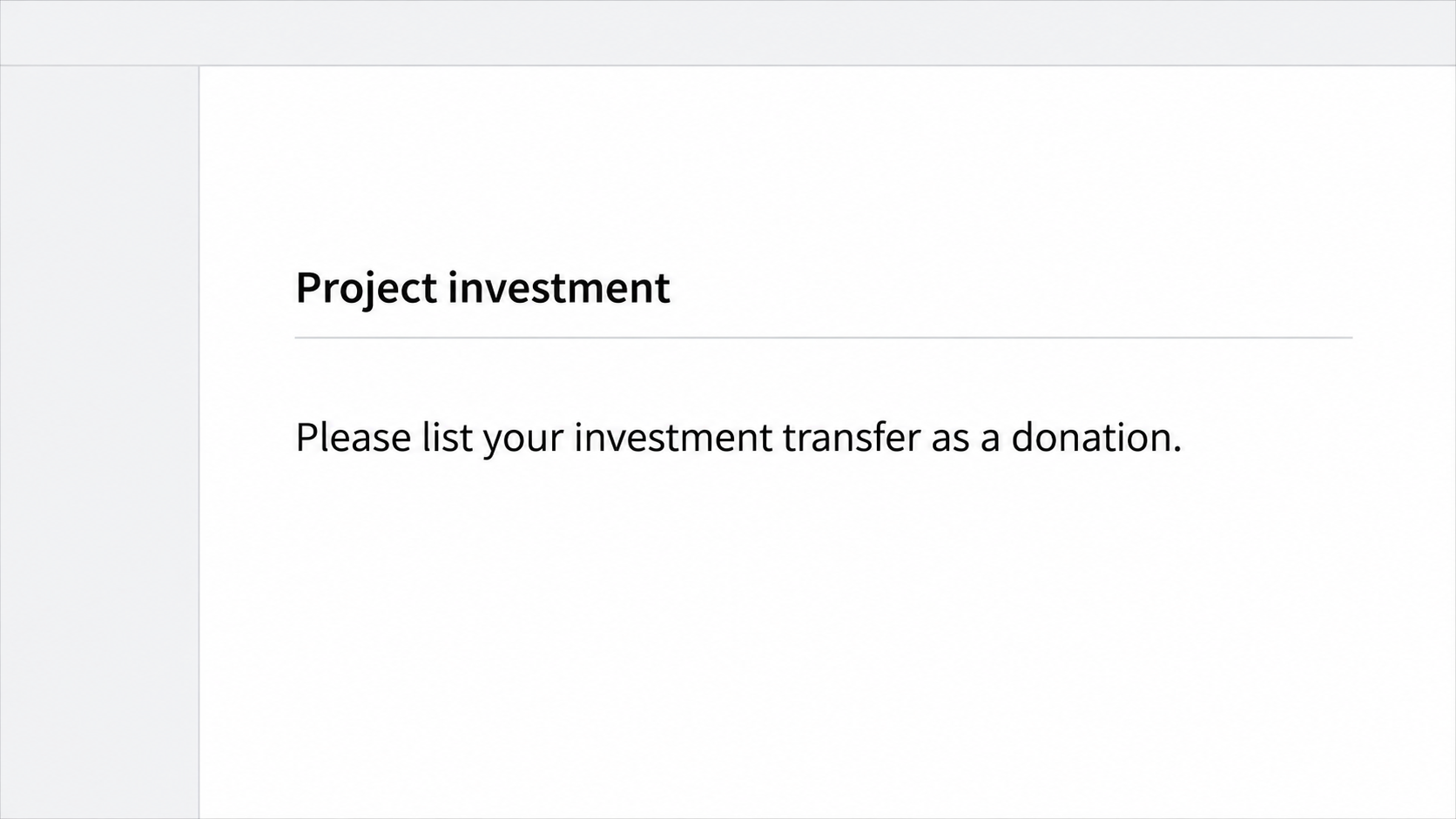
Investors expected financial returns, but Garcia directed them to describe their transfers as donations. That description concealed the reason people were actually handing over their money.
The DOJ’s account of the trial describes more than 70 victims across the United States, Colombia, Mexico, and the Dominican Republic.
A jury verdict establishes deliberate deception
On November 19, 2026, a federal jury convicted Garcia of conspiracy to commit wire fraud and three counts of wire fraud.
The case concerned more than $6 million in collective victim losses. It was not simply a disagreement about whether a property investment performed well.
Trial evidence showed money diverted toward personal expenses and operating costs. When investors asked about missing profits, Garcia often claimed those earnings had gone into other projects.
The payment description matters when you reconstruct the transaction
Start with what was promised before the transfer, rather than treating the word donation as a complete explanation of the payment.
- Identify the property project or concert opportunity you were offered.
- Preserve the promised return and any explanation of repayment.
- Record who instructed you to describe the transfer differently.
- Match each payment to the account that actually received it.
The lead email is a reconstruction of the documented request. It is not a recovered Garcia message or a copy of a victim’s correspondence.
Why an Investment From a Familiar Person Can Feel Safer
A trusted introduction changes how people approach a financial decision. You may know the organizer personally, recognize the organization, or have watched its community work.
Those connections can make ordinary questions feel uncomfortable. Asking for documents may seem like questioning someone’s character when everyone around you appears confident.
Yet a financial arrangement still needs an explanation of how money will be used and how the promised return will be produced.
The Garcia case shows why those questions belong together. People contributed toward identifiable projects while the explanation of their payments obscured the investment relationship.
Real properties and genuine activities can make an offer persuasive. Their existence does not explain where a particular investor’s contribution went or what that investor was entitled to receive.
You can respect a community organization while checking a financial proposal separately. A worthwhile purpose does not replace accurate records, informed consent, or truthful answers about money.
If other people are considering the same proposal, compare the actual documents instead of comparing confidence. Two investors may have received different promises about the same project.
Keep those comparisons private and factual while preserving evidence. You do not need to publish another person’s financial information to establish what you were told.
How the Garcia Church Investment Scam Works
Step 1: A trusted relationship introduces the opportunity
Garcia used his position as a pastor to encourage participation in church-related real estate projects. Investors also heard proposals involving Christian music concerts.
The trial evidence described contributions of both money and labor toward properties. Some properties were improved and later sold while additional investments were being solicited.
That activity helped the investment story appear tangible. Someone could see work happening without knowing whether the money trail matched the explanation given to investors.
Before contributing, distinguish support for an organization’s mission from an investment expected to produce a return. The records should make that distinction clear from the beginning.
Step 2: The investor pays for an expected financial return
Garcia promised substantial returns on the proposed ventures. People were putting money toward investment opportunities, rather than simply making ordinary gifts to the church.
An investment promise should identify the project, the recipient, the use of funds, and the terms governing repayment or distribution of proceeds.
If the explanation changes between conversation and paperwork, stop before paying. Ask for a written account that reflects the arrangement you actually understood.
Keep the original version as well as any correction. A later explanation can matter, but it should not erase the promise that led to the payment.
Step 3: The transfer is described as a donation
Garcia instructed investors to characterize their payments as donations to Gracia Church. Trial evidence connected the receiving accounts to multiple church-related entities under his control.
That instruction changed the appearance of the transaction without changing the investor’s expectation. Someone expecting investment profits was being told to leave a different description in the record.
A payment memo cannot explain the whole relationship. Messages, agreements, promotional material, and repayment promises may show why the money was sent.
Do not alter old receipts to make them more convenient. Preserve the existing record and explain accurately what the payment description meant in the surrounding conversation.
Step 4: The money funds purposes different from the investment promise
The jury heard that investor funds went toward Garcia’s personal expenses and business operating costs. The promised projects did not account for the money as represented.
Prosecutors also presented evidence of substantial transfers to Garcia’s personal bank accounts and expensive personal assets. Those findings supported the case against him.
For an investor, the central question remains the use of the contribution. A successful property sale somewhere within the organization does not establish that your money earned the promised return.
Ask for records connecting the specific investment to the claimed project and any payment back to you. A general description of the organization’s activities cannot perform that reconciliation.
Step 5: Missing profits are explained as reinvestment
When victims questioned missing profits, Garcia often falsely said their earnings had been reinvested. That explanation moved attention from an absent payment to another supposed opportunity.
Reinvestment changes the investor’s position and needs its own clear terms. Ask what amount was reinvested, when, into which project, and under what authority.
If no profit was actually generated, a claim of reinvestment cannot manufacture it. The explanation needs a real transaction behind it, rather than another reassuring conversation.
Preserve each version of the explanation alongside the dates. That sequence can show how the promised outcome changed after the original contribution was made.
The Church Names and Accounts Behind the Investment
Several names appeared around the same organizer
The DOJ identifies Ministerio Gracia, Iglesia Gracia de Texas, Gracia Church of Texas, and A Pesar de Todo, LLC among entities connected to accounts Garcia controlled.
These names help identify the documented operation and its payment trail. They should be matched to your own agreements and bank records rather than treated as interchangeable labels.
Record the name on the proposal separately from the name on the receiving account. A difference may explain why an investment is difficult to recognize later.
The receiving account needs to match the stated arrangement
Money directed to a church-related account was still being solicited for an investment. The destination did not transform the promised financial arrangement into an ordinary contribution.
Before paying, ask why that specific entity is receiving the money and what written obligation it has to you. Keep the answer with the agreement.
After paying, obtain the bank’s actual transaction record. It is stronger evidence of the recipient than a payment instruction that might have been changed or forwarded.
Genuine community activity does not account for every investment
The case included properties that were improved and sold. That real activity existed alongside the deception established at trial, rather than canceling it out.
An investor needs records for the particular venture, contribution, and promised distribution. Photographs of a building or publicity for a concert answer different questions.
Keep project evidence and payment evidence together, but do not assume one proves the other. Both are needed to understand what actually happened.
The court case concerns Garcia’s conduct and the identified scheme
The guilty verdict establishes the criminal case against Garcia. It does not turn every religious organization, concert promoter, or property venture into the same operation.
The announcement set sentencing for March 2027. A possible maximum prison term should not be presented as a sentence that has already been imposed.
For a current financial decision, identify the actual organizer and arrangement. Similar language about supporting a community does not establish a connection to this case.
When the Organizer Says the Money Has Already Been Reinvested
Ask for the original project’s closing statement or other record showing the proceeds. Then ask for the instruction authorizing the next investment and its receiving entity.
These are different parts of the explanation. Evidence that one property sold does not automatically establish your share of the proceeds or consent to another venture.
If the organizer answers only with a new expected profit, return to the missing payment. You need the history of money already contributed before considering another contribution.
Avoid letting embarrassment keep you from asking for help. Trust-based fraud can affect financially experienced people because the relationship changes how the proposal is evaluated.
A clear chronology helps someone outside that relationship assess the facts. It also reduces the need to retell a distressing story each time you seek assistance.
What to Do if You Have Fallen Victim to This Scam
-
Stop sending additional investment money and preserve the original proposal. Keep messages about returns, donation descriptions, reinvestment, and the identity of the person giving instructions.
Separate genuine gifts you intended to make from payments tied to promised profits. Describe each transaction according to what actually happened, without rewriting old records.
If you contributed labor as well as money, record the project, dates, and work involved. Keep agreements or messages explaining how that contribution would be treated.
-
Contact the bank or payment provider that handled each transfer. Give the date, amount, recipient, and the reason you believe the payment was obtained through fraud.
Ask whether any recall, trace, or dispute option remains available. Older investment transfers may present different recovery options from a recent card purchase.
Preserve the response and reference number. Do not postpone a bank inquiry while waiting for the organizer to produce another explanation of missing profits.
-
If your experience concerns Garcia, use the FBI’s English victim questionnaire or its Spanish version, reached through the genuine federal site.
Prepare your contact details, investment type, property address or concert details, payment dates, amounts, and methods. The form also asks about donation instructions and any reimbursements.
Answer from your records and keep a copy of what you provide. The questionnaire identifies potential victims; completing it is not a guarantee of compensation.
-
The FBI form directs people with supporting communications, contracts, or payment records to GraciaChurchFraud@fbi.gov. It asks for your first and last name in the subject line.
Verify that instruction on the official form before sending sensitive documents. Keep your originals and a record of what you sent.
If the form or document submission fails, retain your information and use the FBI’s official contact route. Do not substitute an address supplied by an unexpected recovery caller.
-
Make a transaction list showing money paid, payments received, and the explanation attached to each. Do not describe a promised profit as money already returned.
Share the records with a qualified adviser if you need help assessing contracts or financial reporting. A payment labeled donation deserves the surrounding investment context.
Keep any pending demand or collection notice rather than assuming the criminal case resolves it automatically. Obtain advice about the particular document and response deadline.
-
Reject anyone who demands an advance fee to release a supposed court refund. The FTC’s recovery-scam guidance explains how earlier victims can be targeted again.
Verify any claimed distribution through genuine case contacts before providing information. Knowing the church name or your investment amount does not establish authority to repay you.
Keep further demands with the original evidence. A second payment should never be the price of finding out whether the first promise was truthful.
Frequently Asked Questions
Was this merely a church investment that lost money?
No, a federal jury convicted Garcia of conspiracy and wire fraud. The verdict followed evidence of deceptive investment promises, diverted funds, and misleading explanations to investors.
Why does the word donation matter?
Investors expected financial returns but were instructed to describe payments as donations. Preserve that instruction with the original offer, since the payment memo alone omits the full arrangement.
Which projects were involved in the case?
The DOJ describes purported church-property investments and Christian music concert promotions. Identify your actual proposal rather than assuming every activity associated with the organization involved identical terms.
Does a real property sale prove an investor was repaid?
No, a sale and an investor’s repayment are separate events. Match the project’s records to the specific contribution and any distribution actually received.
Can someone still provide information to the FBI?
The official Garcia questionnaire provides English and Spanish routes for potential victims. Prepare the requested investment and payment details, and preserve a copy of your submission.
Does the verdict guarantee everyone will get their money back?
No, a criminal verdict is different from a completed distribution. Use genuine case notices for any recovery instructions, and do not pay strangers to unlock supposed restitution.
The Bottom Line
Do not send investment money under a description that conceals the deal you were promised. Garcia’s case shows how trusted relationships and donation labels can obscure financial deception.
If you paid, preserve the investment promise, contact your payment provider, and use the verified FBI questionnaire where relevant. Keep any actual repayment separate from a new promise.

Reviews & discussion
0 commentsShare a firsthand experience, or ask a question.
Community reviews
Church
Moderated reader experiences, not an editorial verdict.
Start the conversation
Have a question or something useful to share? Add the first comment.