


Tom Honeyands was at dinner on a work trip when someone claiming to be Lloyds called. It sounded like an awkward interruption, not a financial emergency.
A genuine message soon arrived on his phone. The caller had an explanation for it, and that explanation was the part he needed to question.
Overview
The call that cost a tech reviewer £70,000
The Lloyds passcode scam works by getting you to trust the caller’s explanation of a security message more than the words on the message itself.
In a case reported by The Guardian, Honeyands, the tech reviewer behind The Tech Chap, said he was in Tokyo when someone claiming to be Lloyds called.
The caller asked about a transaction in Singapore that Honeyands didn’t recognize. He then claimed that some banking security details would have to be reset.
Honeyands said the person appeared to know personal details, including which bank he used. Knowing those details made the conversation sound credible. It didn’t establish who was calling.
He wondered whether his public videos or travel posts helped the caller piece things together. The report doesn’t establish where the caller got the information.
The code was real, but its purpose was misrepresented
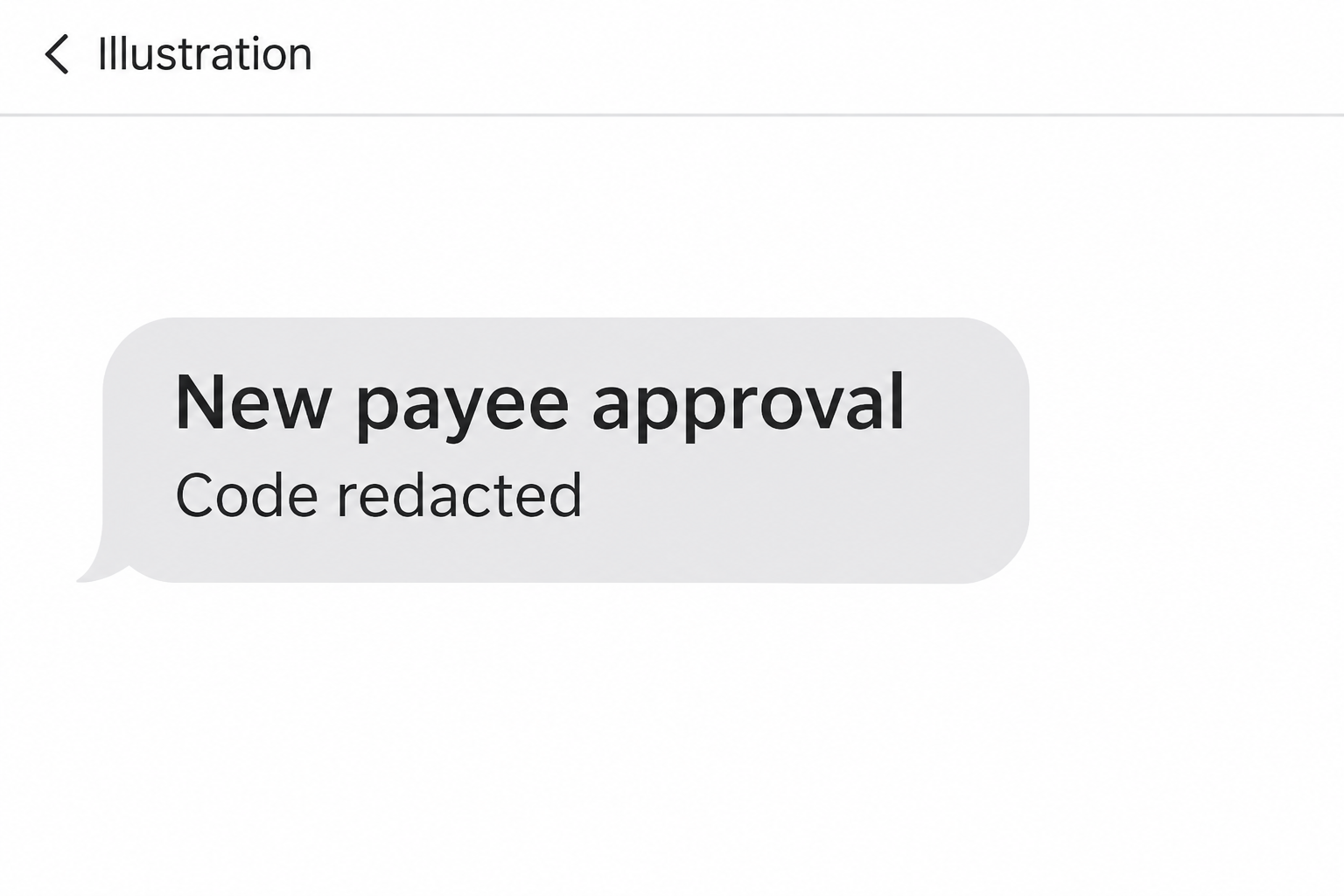
Honeyands said he believed he was confirming cancellations. The messages were actually connected to verifying new payees, the recipients a bank customer sets up to receive money.
The report says Honeyands made 12 verifications over several hours and that the criminals made payments totaling £70,000. It does not say that each verification represented a separate payment.
Lloyds warns about this exact kind of passcode request. One excuse it identifies is a caller saying they need a code to stop a fraudulent payment.
The bank’s warning matters even if you aren’t a Lloyds customer. The wording differs from bank to bank; the principle is that a code is tied to an action.
Three details that matter more than caller ID
- Whether you started the banking action that produced the message.
- Whether the action described in the message matches what you meant to do.
- Whether you reached the bank yourself using contact information you already trusted.
A code in a thread of legitimate alerts can look reassuring. It may be from the bank without telling you anything about the caller.
How the Scam Works
Step 1: The caller asks about a payment you don’t recognize
At first, the question sounds like something a bank would ask. If you didn’t make a payment, of course you’ll want your bank to know before more money disappears.
In the reported case, the mention of a transaction abroad landed while Honeyands himself was traveling. He was tired and found the call hard to hear over dinner.
You don’t have to work out why a detail sounds right before you end the call. The safer question is whether you can check the transaction directly with your bank.
That check works even if the story sounds plausible. A caller can be wrong about the payment and still sound convincing about your bank, location or account.
Step 2: An unrelated request is framed as a security fix
Once you deny making the transaction, the conversation moves on. You’re told there’s a way to stop the problem, but that you have to help immediately.
Someone calling it a security reset or a cancellation does not change what a bank code permits. The words on the screen describe a banking action, not the caller’s intention.
A new-payee notice is about adding or confirming someone who could receive a payment. If you never intended to do that, don’t confirm it.
If a caller tells you the instructions on screen mean something different today, that is enough reason to end the call. You don’t need a second warning.
Step 3: A genuine bank message makes the caller sound legitimate
People are used to getting an alert just after they take an action online. Here, that timing can make you think the person talking must be the one protecting you.
The safer way to read an unexpected code is as a sign that a banking action may be underway. It isn’t a test you have to pass with a stranger.
That applies whether the caller asks for digits aloud or asks you to accept a prompt. If you’re unsure what an approval does, do not authorize it.
Open your bank’s own app separately if you can do so safely, or call the bank. Don’t use a link or number supplied during the suspicious conversation.
Step 4: Repeated requests leave less time to question the story
A second notification is worth treating as a fresh decision, not a continuation of something you already approved. The text may refer to a different action.
Honeyands’ account illustrates why the distinction matters. By the time he questioned who was on the line, there had been multiple verifications over a span of hours.
An alert can arrive after you hang up. Report that alert too, even if you can no longer see a corresponding request in your online banking.
Don’t dismiss an unexpected code just because it expired. The code itself may no longer work, but it can tell your bank when an unfamiliar action was attempted.
Step 5: A second caller says they’re the real bank
In Honeyands’ case, the real Lloyds security team eventually called. He had the impostor on hold, and for a moment he didn’t know which caller to believe.
The bank’s employee told him to end both calls and dial the number on his card. Calling the number himself resolved the uncertainty neither incoming call could clear up.
If two voices give you different instructions, you don’t owe either one an immediate answer. End the calls completely and get in touch on your terms.
You may still need to speak to a fraud specialist once you call in. Starting at a trusted number is what lets you ask for that team safely.
How to Check an Unexpected Lloyds Call
Check the action instead of the sender label
Before accepting any prompt, ask what the bank says it is approving. A recipient setup, card transaction or login is not automatically connected to whatever the caller described.
It helps to read the message without listening to anyone talk over it. If you don’t recognize the action, leave it alone and contact the bank.
A real text doesn’t always need a reply. If you didn’t start the activity, the fraud team can advise you without you having to complete it.
Use a channel you can find independently
Call the number on your card or contact the bank from the app you already use. A sponsored result or second text can send you somewhere else.
If a line hasn’t disconnected properly, use another phone if available. Dial the trusted number yourself and explain that you just ended a suspicious call.
If you’re abroad, find the bank’s published number for calls from overseas. You may need to ask a travel companion to help while you locate it.
A genuine fraud team can deal with a customer who hangs up to verify. You don’t have to stay on the line to be helpful.
Decide in advance what to say and do
A simple answer is enough: tell the caller you’ll contact your bank directly. You don’t need to debate whether the claimed transaction is possible or explain where you are.
Help others find the right number before they’re in a rush. A saved official contact gives them something they can use when a caller is talking.
If you share an account, agree that either person can pause a payment. That gives them time to call the bank if the instructions look wrong.
Be careful about banking details in public posts
If you record tutorials or travel videos, review what an audience can see behind the main subject. App icons, notification banners and statements can all reveal small details.
Consider turning off notification previews while recording and checking the finished video before posting it. Keeping a travel update private until you get home is another option.
Those steps reduce what you disclose. They won’t stop every scam call, and there is no reason to assume a person who fell for one posted something carelessly.
What to Do If You Have Fallen Victim to This Scam
End contact and call the real bank
Use a verified number and say whether you read out a code, approved a prompt or noticed money leaving. Don’t assume the bank knows why the alert arrived.
If you’re still getting instructions on another line, end that conversation too. Don’t move any additional money based on a caller’s promise to protect or return it.
Ask the bank to check the account activity
Flag unfamiliar recipients, transfers, cards or sign-ins and give the times of the prompts. Ask what the bank can block now and which account access you need to reset.
If money went out, ask the bank to try to recover it and give you a case number. Report it promptly rather than waiting for your statement to update.
Write down which actions you actually took
Record what the caller claimed, what the security messages described and what you personally did. Include any transfers you made yourself and distinguish those from ones you didn’t make.
Save the call log, messages and relevant statement entries somewhere private. Take copies rather than forwarding codes, passwords or complete card details to anyone.
Ask how the bank is handling each disputed payment
Tell the bank if you were misled into sending money or if someone else made a payment. Ask the bank what evidence it needs rather than guessing which category applies.
The rules for eligible UK bank transfer scams aren’t a blanket refund for every loss. If it rejects your claim, ask for the reasons in writing before making a complaint.
Secure related accounts and report the call
Follow the bank’s instructions for resetting access. If you shared an email password or reused a disclosed password elsewhere, change it on a trusted device and secure the email account.
Use the UK government’s fraud reporting guidance to find the right reporting route. The police report is separate from the fraud claim you open with the bank.
Watch for another call offering to undo the damage
A caller may have details of the first incident and still not be from the bank. Use your existing case reference when you ring the bank yourself.
Keep copies of letters and each case update. If you and the bank can’t resolve the complaint, the Financial Ombudsman Service explains the routes for disputed or unauthorized payments.
Frequently Asked Questions
Can a real Lloyds text arrive during a fake call?
A genuine verification message can arrive during a fake call. Read it and contact your bank independently if you didn’t start the action it describes.
The message and the conversation are two separate things. An explanation from the caller cannot replace the instructions you see on a bank alert.
Does an unexpected code mean money has already left?
A code can relate to an action that hasn’t been completed. Your bank can tell you what it has recorded and what it can still stop.
Report it even if your balance hasn’t changed. You may have noticed a sign-in attempt or a request to add a recipient before a payment happened.
What if I only confirmed my name or address?
Tell the bank what you disclosed if you are concerned. Sharing basic details is different from authorizing a payment, but it can make a later impersonation attempt feel familiar.
Watch for new contact about the supposed case. If someone calls to confirm a detail you mentioned earlier, it is still safer to start a fresh call yourself.
Should I freeze my card in the app?
A card freeze may help with certain card activity, depending on the bank. It isn’t a substitute for reporting a suspected account takeover, recipient setup or bank transfer.
If you’re unsure what’s affected, call the real fraud team. Tell them whether the alert mentioned a card purchase, an account change or a transfer.
Will the bank refund payments after I shared a code?
There isn’t enough information in the fact that you shared a code to predict the outcome. Tell the bank how the caller obtained it and which payments you dispute.
Preserve the exact wording of the instructions you received. When you review a decision, the sequence of the call, the alert and the payment may matter.
Is this the same as a safe account scam?
Both can start with a fake fraud call, but the requests are different. A safe account scam asks you to send money somewhere else for supposed protection.
The Lloyds case reported here centered on messages to verify new payees. Honeyands was told the verifications would cancel payments, not that he should move his own balance.
The Bottom Line
A convincing caller and a genuine bank message can arrive at the same time. The message only tells you what the bank is asking you to approve.
If you didn’t start that action, leave the code alone. End the call and contact the bank yourself, especially if you already approved something you didn’t understand.

Join the discussion
0 commentsShare your experience or ask a question about this article.
Community experiences
Did this happen to you?
Your experience could help someone recognize the same scam. Submit a private report for our team to review.
I experienced this tooReports are reviewed before publication. Sharing publicly is always your choice.
Discussion
Start the conversation
Have a question or something useful to share? Add the first comment.