


You’re looking through an auction listing for a vase you’ve wanted for years. The seller has included a photo of the signature underneath, exactly where you’d expect to find it.
For one auction specialist, the signature on a vase was the reason to look more closely. The piece never made it into the sale.
Overview
The Lalique vase that didn’t pass inspection
A counterfeit collectibles scam can start with a genuine old object. The deception is in what the seller claims the piece is, who made it or why it is rare.
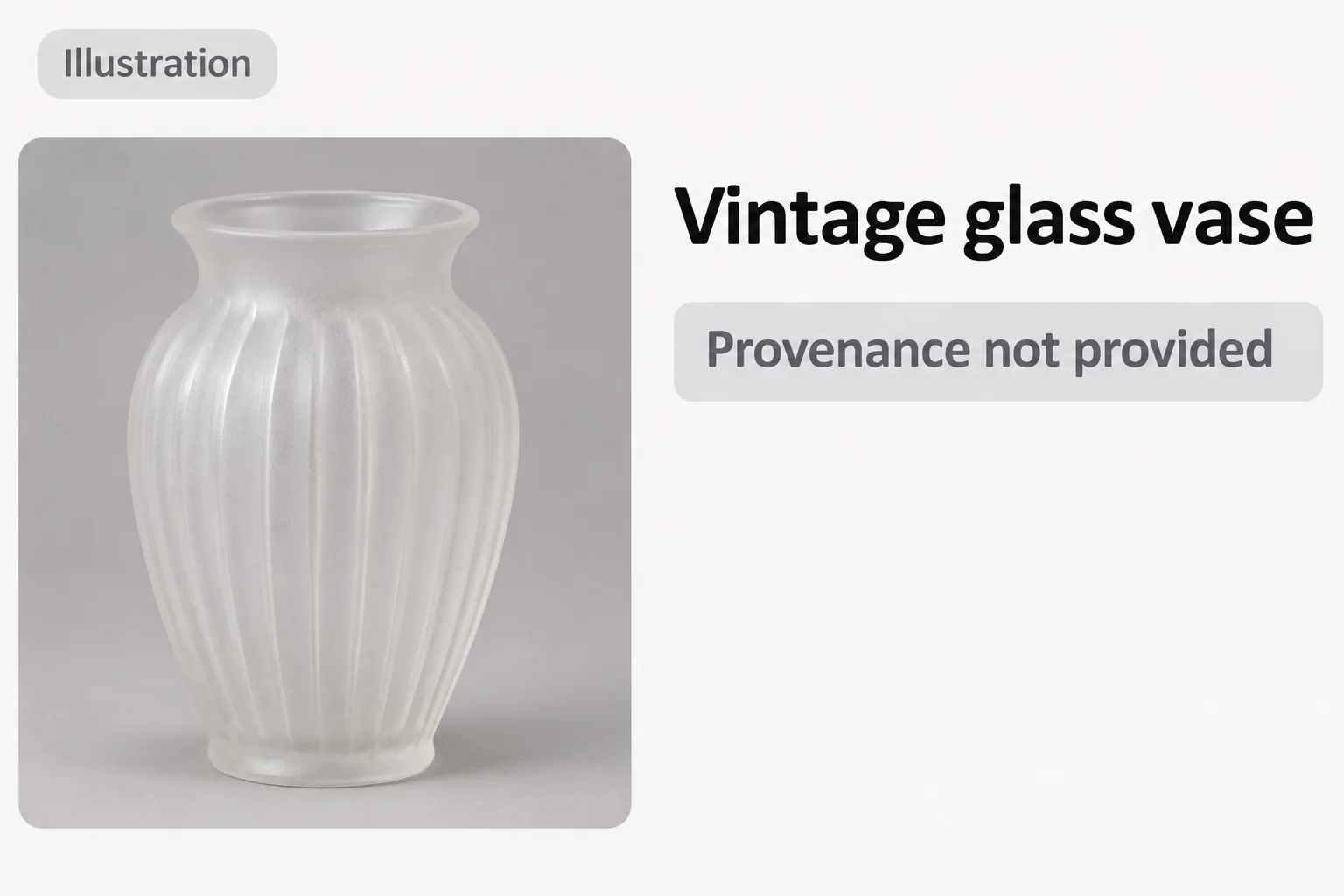
In a case reported by The Guardian, Auctionet specialist Kayleigh Davies examined a vase with Lalique engraved underneath. She determined that the engraving wasn’t original and declined to sell it.
Davies said the seller paid for the engraving to increase the piece’s value. The report doesn’t identify a buyer or a financial loss.
That makes the case useful to a buyer. The vase could have sold under an accurate description, but the new mark gave it a history it didn’t have.
What makes a collectible worth more?
The price of a collectible often depends on a detail you won’t notice from the first photograph. The manufacturer, the date, the finish and the packaging can each matter.
Think of a vintage toy car in an uncommon color. A repaint can look attractive, but it isn’t evidence that the maker originally produced the toy in that color.
An original figure can turn up in a replacement box. Check whether the seller claims both were made at the time and originally sold together.
A restored item isn’t necessarily fake. The issue is whether the seller lets you understand what was replaced, repaired or added before you pay a price that assumes original condition.
Three terms that aren’t interchangeable
- Authenticity asks whether the item is what the seller says it is, such as an original piece by a named maker.
- Condition describes its current state, including damage, repairs, missing pieces and parts that were replaced.
- Provenance is the history of ownership or sale, supported where possible by records tied to this particular item.
An object can be authentic and have no surviving receipts. A different one can arrive with a folder of paperwork and still turn out to have been described incorrectly.
How the Scam Works
Step 1: An ordinary object is presented as something harder to find
An online listing leads with the claim that affects the price. You might see an early production date, the name of a sought-after maker or a promise of original condition.
A buyer browsing quickly sees those details before opening the photos. Check which parts of the claim the seller can actually document.
In the case Davies described, there was a real vase somebody could have bought. The name on the bottom was what misrepresented its origin.
Other listings can be misleading in different ways. A real piece may be worth less if it has an undisclosed repair or a replacement part.
Step 2: One convincing detail stands in for proof
A close-up of a signature seems more useful than a description alone. It proves that the visible object carries a mark, but it doesn’t establish when the mark was added.
With a boxed toy, an attractive front photo can’t show everything about the inner tray or the seals. Ask to see the parts that are material to the condition claim.
Paperwork is more useful when it matches the item. An old auction receipt might point to a catalog photo showing the same repair or other distinctive detail.
One good close-up doesn’t have to answer every question. It does need to make sense alongside the rest of the object and the seller’s explanation.
Step 3: The sale moves ahead before you can check the claim
An auction deadline can be legitimate. It becomes a problem for you when it arrives before anyone can answer the question that determines how much you’re willing to bid.
A seller might say someone else is ready to pay or that there isn’t time to take more photos. That account doesn’t tell you anything about the vase or toy.
Take the advertised premium out of your decision if you can’t verify it. Compare the piece with ones sold without the rare finish, attribution or original box.
If the price only makes sense as an authenticated example, wait for one. The next listing may be easier to evaluate because you now know what to ask.
Step 4: The discrepancy becomes apparent after the sale
A collectible can look different in person. The repair might show under ordinary light or a loose piece may reveal that more was replaced than the listing suggested.
If the mismatch is subtle, get a specialist’s written opinion before making a definitive accusation. The expert may be able to separate an unclear photo from a material difference.
A deleted listing or off-platform deal can make a claim harder to resolve. Keep the description and pay through channels that preserve records.
A parcel arriving doesn’t settle whether the seller delivered what was advertised. The delivery record tells you it arrived; the listing tells you what you were supposed to receive.
How to Check a Collectible Before You Pay
Ask a question about this specific piece
Request pictures of the entire item and the feature that supports the price. For glass, ask to see the base, rim and sides.
Ask whether those photos show the object you’re buying. A stock picture can help identify a design, but it can’t show the condition of the seller’s item.
For repairs, ask where they are and what work was done. If the seller doesn’t know, take that uncertainty into account before you commit.
You can ask about authenticity without accusing the seller. Explain that the attribution affects your bid and ask what evidence they have for it.
Compare against the correct version
Match the description against reputable reference material or auction archives. Use dimensions and design details to make sure the example you’re consulting actually depicts the same model.
For a signature on glass, don’t compare one mark against a random photo and stop there. Designs and production periods can differ; a specialist can explain which reference applies.
Lalique’s identification guidance asks for photos of the object as well as its signature. Its FAQ also directs people seeking a valuation to a recognized expert.
A reputable archive can make the next question clearer. It can’t certify a physical object based solely on one cropped image shared by the person selling it.
Check the history and terms before you bid
Ask what the seller means by provenance. A previous catalog entry, dated invoice or ownership record carries more weight when it connects clearly to the exact piece.
Ask where the records came from if previous ownership is part of the claim. The seller can explain that without disclosing unnecessary personal information.
Check the auction house’s terms for descriptions, condition reports and returns. Read those alongside the venue’s payment rules, especially if the sale involves shipping across borders.
Decide on a maximum total that includes fees and shipping. That figure is easier to stick to when you’ve already decided how much uncertainty you’re comfortable paying for.
Pay somewhere that keeps the transaction on record
If you’re buying through a marketplace, look up which payments are eligible for its buyer protection. A chat transcript alone may not get you the same coverage as an order.
On eBay, for example, check the Money Back Guarantee policy for eligible transactions, time limits and what it says about items that don’t match their descriptions.
Be wary when someone asks you to switch to a bank transfer after you ask about returns. Compare the protections before paying, even if the seller offers a discount.
Ask how the marketplace and card issuer’s processes interact. On eBay, starting a payment dispute for the same purchase can end marketplace protection.
Save a copy of the final description and condition report. If someone clarifies a detail in a message, keep that too, alongside the order confirmation.
What to Do If You Have Fallen Victim to This Scam
Save the listing and keep the item as received
Capture the description, photos and any claim about the maker, packaging or condition. Keep the order confirmation, payment record, shipping label and the seller’s messages.
Photograph what arrived from several angles, including the area you think was misrepresented. Don’t clean, repair or alter the item while you are trying to document its condition.
Describe the exact mismatch in writing
Say what the listing promised and what you observed on the object. For example, note a restored chip if the description explicitly said there had been no repairs.
If you suspect the mark isn’t original, say so without presenting it as a verdict. Ask a specialist what a physical inspection could establish.
Use the venue’s dispute process promptly
Flag the order using the marketplace’s process for items not as described. For an auction purchase, contact the auction house using your invoice.
Don’t let a long conversation push you past a deadline. Keep messages in the original channel and follow the case instructions before returning or disposing of anything.
Contact the provider you used to pay
If the seller won’t resolve the issue, ask your card issuer, bank or payment service about a dispute. Be clear about whether you authorized the payment.
Don’t report your own payment as an unrecognized transaction. Give the issuer the original description, photos and any expert notes, and let it tell you which procedure can apply.
Get local consumer advice or report suspected fraud
In the UK, Citizens Advice explains how to report counterfeit goods and seek help with a refund. The right route can depend on the seller and location.
Where there is evidence of deliberate deception, use the UK fraud reporting guidance to find the correct route. Reporting does not replace opening a payment or marketplace dispute.
Don’t pass the problem to another collector
A resale listing repeats the harm if it presents a disputed piece as genuine. Keep the item secure while the claim is open.
Check with the marketplace before closing a case in exchange for a promised refund. You may not be able to reopen it later.
Comparing Two Listings for the Same Collectible
Keep the uncertainty visible when you compare prices
One seller might photograph a repaired rim and price the vase accordingly. Another might call a similar vase pristine but never show that part in a photograph.
Put those listings side by side and note what each one actually documents. A detailed condition report can make the lower-priced piece easier to evaluate, even if it’s less desirable.
Check completed sales, not just the amounts current sellers are asking. An unsold listing can tell you what someone hoped to get, but it doesn’t establish the going price.
If the auctioneer published a sale price, check whether it includes fees. Compare prices on the same basis before setting a limit.
Frequently Asked Questions
Does a maker’s mark prove a collectible is real?
A mark gives you something to check. Its location, appearance and relationship to the object are all relevant, but a signature alone does not establish who made the object.
Consider the shape, size, condition and history as well. For a costly piece, an independent expert can tell you which details are meaningful and which ones are easy to misread.
Is an item with no provenance automatically fake?
Items often pass through families without a formal record. Missing documentation leaves you with fewer ways to support a claim, but it doesn’t make the claim false.
The sensible response depends on the price and what you are buying. If the asking price relies on notable ownership, don’t pay for that history if it can’t be substantiated.
Is a reproduction always a scam?
A reproduction disclosed accurately can be a legitimate purchase. There’s a difference between buying a clearly labeled copy you like and being charged for a collectible described as an original.
Keep any language about the edition or production date. If the listing uses vague descriptions, ask whether the seller is claiming it was made in the original production period.
What if my item really is old?
An object can be old without being made by the named manufacturer. It can also have old parts alongside newer repairs or a recently added mark.
Ask a specialist to address the specific claim you paid for. A general estimate of age won’t always answer whether a piece is from the stated maker or series.
Will a certificate of authenticity protect my purchase?
A certificate is only useful if it comes from a credible issuer and describes the actual object. Contact the issuer independently if you’re unsure.
For a dispute, preserve the certificate with the listing and receipt. Even if it turns out to be inaccurate, it helps show the representation you received at the time.
Should I return a suspected counterfeit immediately?
Open the case first and ask for instructions. Some marketplaces handle counterfeit claims differently from an ordinary return, so don’t assume the usual label is the right one.
Keep the original packaging and the item as received. If the marketplace tells you to send it back, keep the return tracking and follow its written directions.
The Bottom Line
The vase was real, but the name added to it gave the wrong impression. That detail alone might have persuaded a buyer to pay more.
When one detail accounts for most of the price, take time to check it. If you’ve bought the piece, preserve your evidence and start the dispute promptly.

Join the discussion
0 commentsShare your experience or ask a question about this article.
Community experiences
Did this happen to you?
Your experience could help someone recognize the same scam. Submit a private report for our team to review.
I experienced this tooReports are reviewed before publication. Sharing publicly is always your choice.
Discussion
Start the conversation
Have a question or something useful to share? Add the first comment.