

You’ve probably seen it all over Instagram and TikTok lately — that sleek purple stick everyone’s calling “Botox in a balm.”
It’s the Lovera Calcium Volume Multi Balm, and it’s being advertised as a revolutionary Korean skincare product that can “instantly lift, firm, and erase wrinkles.”
Influencers rave about it, the ads look ultra-polished, and the claims sound almost magical.
But if you’ve been around the internet long enough, you already know — when something sounds too good to be true, it usually is.
After a deep investigation into the Lovera website, registration data, reviews, and supplier listings, the truth became clear: Lovera isn’t a legitimate Korean brand — it’s another viral dropshipping skincare operation selling cheap re-labeled balms imported from China and marketed with fabricated claims.
In this detailed review, we’ll expose how Lovera markets itself as a miracle skincare stick, what’s really inside, how the operation works, and what to do if you’ve already bought one.
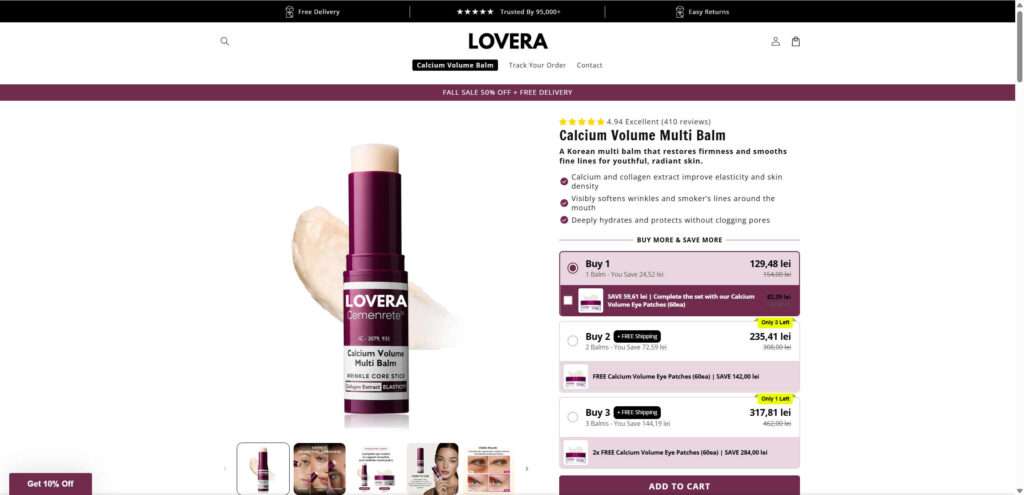
Overview: What Is the Lovera Calcium Volume Multi Balm?
The Lovera Calcium Volume Multi Balm is promoted as a “wrinkle-filling core stick” containing calcium, collagen extract, glutathione, adenosine, and elastin.
According to the website, it:
- Restores firmness and lifts sagging skin
- Reduces fine lines and smoker’s wrinkles
- Deeply hydrates without clogging pores
- Works as a primer under makeup
- Provides visible results in days
At first glance, the site looks legitimate. There’s professional photography, five-star reviews, discount banners, and even a “Trusted by 95,000+ customers” badge.
But once you dig deeper, the red flags begin stacking up quickly.
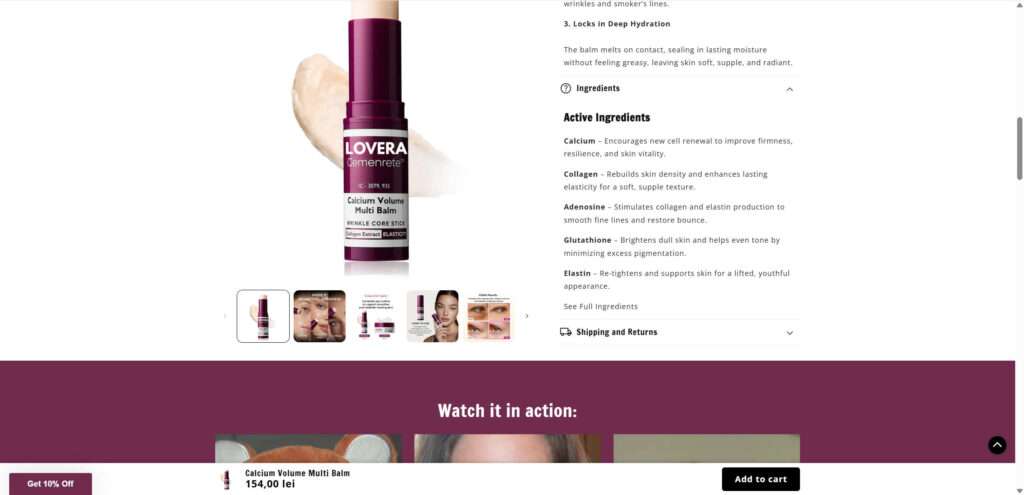
Red Flags on the Official Lovera Website
1. Newly Registered Domain
A quick WHOIS check reveals that lovera.shop was registered in May 2025 — only a few months ago.
That’s a glaring inconsistency for a brand claiming to have “95,000+ loyal customers” and “years of innovation.”
Real Korean skincare brands like Innisfree, Etude, and Laneige have verifiable histories, corporate pages, and parent companies.
Lovera, in contrast, has none of that.
2. No Company Information
There’s no registered company name, no business address, no founder information, and no manufacturer details anywhere on the site.
The Contact Us section only includes a web form — no phone number, no real email, no social media presence tied to verifiable people.
That’s classic behavior for short-term Shopify dropshipping websites designed to disappear after a few months.
3. Copy-Pasted Reviews
Every product on the Lovera site shows glowing 5-star reviews like:
“Instant lift and glow!”
“Feels like Botox in a stick!”
“I saw results in 3 days — unbelievable!”
Yet there’s no date stamps, verified badges, or user photos.
When you search the same sentences on Google, identical reviews appear on dozens of other fake beauty sites — many selling the exact same purple balm under different names.
4. Aggressive Discounts and Fake Urgency
The site constantly displays fake scarcity messages like “Only 3 left!”, “Limited Fall Sale 50% Off,” and “Buy 2 Get Free Eye Patches Worth ₹2900!”
These are automated Shopify urgency scripts used to trigger impulse purchases before shoppers have time to research legitimacy.
5. Fake “Science” Claims
Lovera markets its balm as “powered by calcium complex and collagen extract.”
However, calcium molecules are too large to penetrate the skin barrier, meaning they can’t improve firmness or elasticity topically.
It’s pseudo-science designed to sound credible to non-experts.
6. Fake Studies
The site references a “study of 400 individuals after two weeks” showing 94% improvement — but no citation, no publication, no brand-run test, nothing verifiable.
7. Unrealistic Ratings
Every product on the site shows a 4.94/5 rating based on 410 reviews.
Yet, outside the site, there are virtually no real reviews. On Trustpilot, there’s only one user review, which is negative.
Trustpilot & Customer Experiences
The single Trustpilot review for Lovera says:
“I placed an order, got charged immediately, but never received any confirmation or delivery. No response to emails.”
That matches the pattern seen in other beauty dropshipping scams — instant charge, delayed or missing shipping, and silent customer service.
Fake Testimonials
Lovera’s homepage displays before-and-after photos showing dramatic wrinkle reduction.
Reverse-image searches reveal that many of these photos come from unrelated stock image databases or older K-beauty marketing materials.
In short: the “results” you see are not from real Lovera customers — they’re generic templates used to fabricate trust.
The Dropshipping Connection
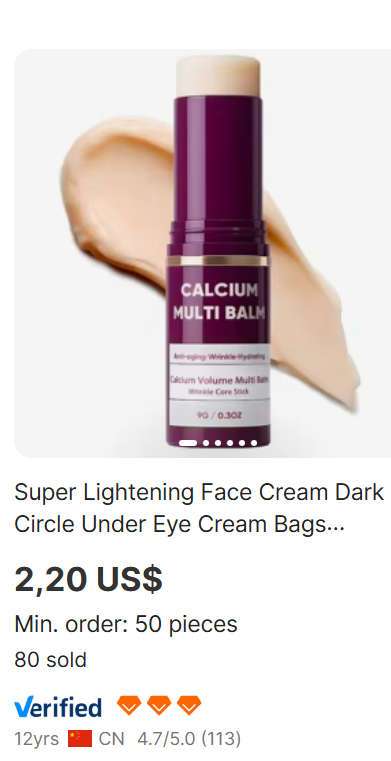
When you look up the Lovera balm on Alibaba, you’ll find identical purple tubes sold wholesale for $2.20 per unit — labeled “Calcium Multi Balm” or “Anti-Wrinkle Core Stick.”
The images and packaging match perfectly, down to the font and wording.
This proves Lovera isn’t manufacturing anything new — they’re buying low-cost OEM skincare from China, adding a fake brand name, and reselling it at 60–70× markup.
How It Works
- Import Cheap Generic Balms
- The sellers purchase bulk “Calcium Multi Balm” sticks from Chinese suppliers for ~$2 each.
- These suppliers offer private labeling, meaning anyone can print their own brand name (“Lovera,” “MiraLuxe,” etc.) on the same product.
- Create a Shopify Store
- They build a visually appealing website using a premium Shopify beauty theme, fill it with stock photos and fake reviews, and run ads promising instant wrinkle removal.
- Run Aggressive Social Media Ads
- TikTok, Instagram, and Facebook ads push the “Botox in a stick” angle, often using influencer clips and AI-generated testimonials.
- The ads use emotional hooks like “Erase 10 years of aging in seconds.”
- Take Orders, Delay Shipping
- Orders are collected through the site.
- The products are drop-shipped directly from Chinese warehouses, typically taking 3–4 weeks to arrive — despite “Free Fast Delivery” claims.
- Ignore Complaints
- Once negative reviews accumulate, the store either rebrands (changing domain name) or vanishes.
- The operators then relaunch under a new name like “LoveraSkin”, “CalixCare,” or “EverYouth Balm.”
What To Do If You Bought It
If you’ve purchased the Lovera Calcium Volume Multi Balm and suspect you’ve been misled, follow these steps:
1. Document Everything
Keep copies of:
- Your order confirmation
- Product photos
- Delivery tracking or lack thereof
- Emails and receipts
2. Request a Refund
Email the seller through the site’s contact form and state:
“I am requesting a full refund due to misleading advertising and non-delivery/product misrepresentation.”
If they don’t respond within a few days:
3. File a Dispute or Chargeback
- PayPal: Use Item Not As Described or Not Received.
- Credit Card: Request a chargeback through your issuing bank.
- Shopify Payments: Report through the order email (Shopify investigates deceptive stores).
Attach screenshots of the website, your communication attempts, and any evidence of misrepresentation.
4. Report the Site
- FTC (reportfraud.ftc.gov)
- Better Business Bureau
- Trustpilot
- Reddit r/Scams or r/BeautyScams
5. Leave a Review
Warn others by leaving a factual review describing your experience.
Safer, Verified Alternatives
If you want a genuine Korean multi-balm, try verified brands with transparent manufacturing such as:
- KAHI Seoul Wrinkle Bounce Multi Balm – the real viral balm featured in K-dramas.
- Innisfree Green Tea Seed Stick – lightweight hydration from a real Korean brand.
- COSRX The Retinol 0.1 Cream Stick – dermatologist-tested and MFDS registered.
- Laneige Lip & Eye Multi Stick – authentic brand with verifiable lab credentials.
All of these are produced in certified Korean laboratories, have transparent ingredient lists, and are sold by major authorized retailers.
Bottom Line
Lovera Calcium Volume Multi Balm isn’t a revolutionary Korean skincare breakthrough — it’s a re-branded $2.20 Chinese balm sold through a short-term dropshipping site with fake reviews, misleading claims, and no corporate transparency.
The “Botox in a stick” tagline is nothing more than clever marketing built on social-media hype.
Verdict: Not Recommended.
- Fake origin story
- Misleading advertising
- Unverifiable reviews
- Cheap generic OEM sourcing
- Poor customer feedback
- Safety and refund risks
Until there’s evidence of a real company, lab certification, and authentic consumer reviews, Lovera should be treated as a deceptive dropshipping operation, not a trusted skincare brand.

Join the discussion
0 commentsShare your experience or ask a question about this article.
Discussion
Start the conversation
Have a question or something useful to share? Add the first comment.