


An order you thought was finished appears in your payment dashboard with a new deadline. The buyer’s bank is asking about the charge, not about your store in general.
The next step depends on what the dispute actually says. A delivery photo, a cancellation email, and a receipt answer very different questions.
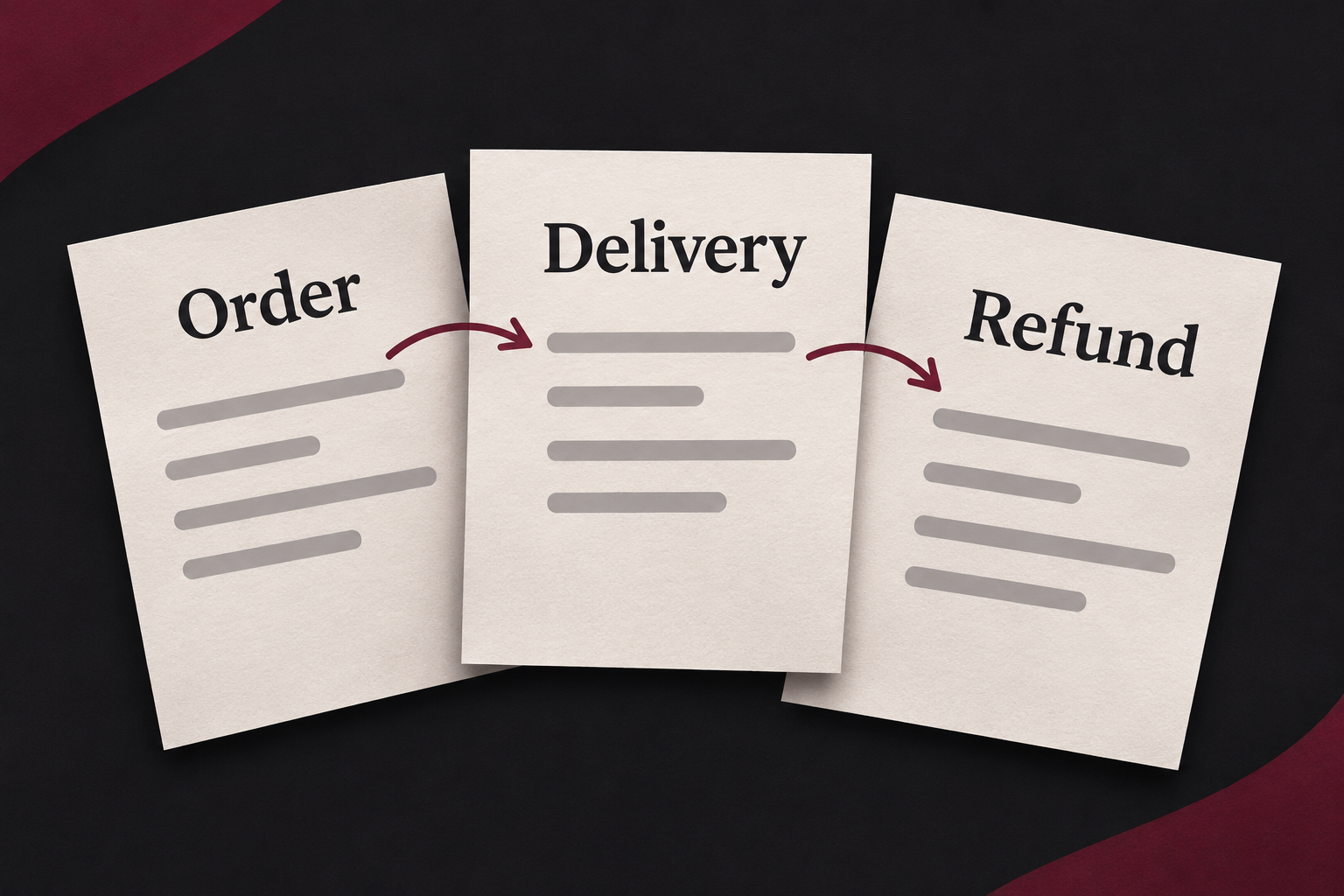
Overview
Work from the reason in the notice
A chargeback is a formal card-payment dispute through the issuing bank and payment system. Its existence doesn’t tell you whether the buyer made a mistake or was deceived.
Read the stated reason and the response deadline in your processor’s dashboard. The processor may need your information before the bank or network has finished its own review.
PayPal’s seller guidance explains why disputes arise and which records can help. Always follow the instructions in the case, regardless of the provider you use.
Decide whether your records support contesting it
Compare the disputed transaction with your order, shipment, refund records and communications. A buyer can have a valid dispute even when the payment itself was authorized.
If you promised a refund and never issued it, address that fact honestly. Don’t submit a good delivery record as if it answered why a promised credit is missing.
Visa uses first-party misuse to describe certain disputes over authorized transactions. You don’t have to decide what the buyer intended in order to submit reliable evidence.
Send a useful record rather than everything you have
A reviewer shouldn’t have to hunt through your customer database. Match each document to the disputed transaction and say exactly what the document shows.
The issuer and processor may limit which documents or fields they accept. Keep original records privately, and submit only necessary information through the approved channel.
- Deadline: Record the date and time shown for the case before pulling reports or contacting a shipper.
- Reason: Choose evidence that answers whether the buyer authorized, received, canceled, or was refunded for this order.
- Decision: Contest only when the evidence supports it. Otherwise use the processor’s available options and fix the issue that created the dispute.
Build the Response Around the Actual Dispute
The cardholder says they didn’t authorize the charge
Start with the payment and order references, date, amount, and service or merchandise sold. The buyer’s name on your receipt is not enough to establish authorization.
Check what your processor can tell you about the checkout, including whether an authentication result is available. Authorization to process a payment isn’t conclusive evidence of cardholder participation.
When it matters, ask about Visa’s evidence requirements for qualifying fraud disputes. The rules for a given case depend on the network, dispute condition, and processor.
Prior orders can help when the processor says a documented connection satisfies the requirements. Don’t treat a shared household address or repeated IP as independently identifying one person.
A descriptor may explain why a real buyer didn’t recognize the charge. Show how your store name appears on the statement and how it connects to the receipt.
The buyer says nothing arrived
Find the tracking associated with this order, not just the most recent package you sent the same customer. Compare shipping dates, the destination available to you, and delivery status.
For split shipments, identify which box held the disputed item. A scan for a different package won’t show that the missing item arrived with it.
If the carrier delivered to a locker, note whether the record confirms pickup or only deposit. Don’t claim that the customer personally collected it unless you actually have that evidence.
A second shipment or replacement can change the timeline. Include enough context to show which shipment you’re relying on and how it relates to the buyer’s report.
For digital products, use permitted records that link fulfillment to this order. A server entry showing that someone opened a page doesn’t necessarily show what was delivered.
The buyer says the item wasn’t what you described
Keep the product description or listing version in effect when the order was placed. A description you corrected afterward doesn’t prove what the buyer saw before purchasing.
If support documented a defect or accepted an exchange, include it where relevant. Leaving out the part that contradicts your position can make the rest harder to trust.
Use contemporaneous records about the product sent, such as the variant or order-specific packing record. A marketing photo of your usual version cannot establish what this box contained.
If your records show that the wrong item shipped, resolve the actual fulfillment problem. It may be more appropriate to accept the dispute than to argue that tracking proves delivery.
The dispute concerns a cancellation, credit, or duplicate
For a recurring charge, find the sign-up terms, the relevant billing date and any cancellation request. Distinguish the date it was requested from when your system processed it.
Look for gaps between support and billing. If a worker confirmed a cancellation but the payment still went through, don’t argue that the renewal log overrides the confirmation.
For a missing credit, provide a completed refund reference, date and amount where the processor asks for them. A draft refund or an email promising one is different.
If two charges look alike, compare order and payment references before saying they were separate purchases. One basket, two items and two captures aren’t necessarily the same scenario.
Put the Evidence in an Order Someone Can Follow
Start with a short statement and a timeline
Describe what was disputed and the decision you’re asking for. Aim to make the timeline intelligible to someone who doesn’t know your product names or support abbreviations.
Use the same time zone when a deadline or cancellation turns on timing. Explain which clock each system uses rather than guessing which event came first.
Label the records by function, such as order confirmation, delivery confirmation, or completed refund. Brief file names are easier to navigate than strings generated by an internal system.
When there was no useful communication with the customer, say so if relevant. Don’t recreate a message from memory and present it as a contemporaneous copy.
Protect payment and customer data
Don’t attach full card numbers, security codes, unredacted customer lists or unrelated orders. The processor’s secure portal, not email or an open link, is where relevant evidence belongs.
Supply personal details only to the degree required to connect the submitted record to the case. Use appropriate redaction for other customers, unrelated transactions, and internal employee notes.
Keep a private copy of exactly what you submitted and the confirmation. A reviewer needs the response itself, while you need an accurate record of what you sent.
If you need to obtain more information from a carrier or provider, contact it through a verified route. Never send a customer a demand for their full card number.
Decide what your own records cannot prove
A support reply from an address associated with the account may help connect messages to an order. It doesn’t prove the sender was the cardholder.
Likewise, a shipping record can be persuasive about delivery and irrelevant to a cancellation after a return. Explain only the part of the dispute the record answers.
When a record is missing, don’t infer an event just to complete the timeline. Mark the gap and decide whether the remaining evidence still supports a response.
Correct the Routine Friction Behind Some Disputes
Make the transaction recognizable to the buyer
Check how the store name appears on statements and order receipts through your processor’s approved tools. Customers shouldn’t have to guess which transaction belongs to which merchant.
Provide a way to find the receipt and reach support without giving up unnecessary account information. Someone dealing with an unfamiliar charge may be trying to prevent further loss.
Give each return or cancellation a useful confirmation, with the effective date and what happens next. An acknowledgment that only says the request was received doesn’t confirm a refund.
Fix the gap before collecting more information
If carriers repeatedly record deliveries without enough destination context, review your delivery options for higher-risk orders. Choose proportionate evidence rather than collecting every detail you can obtain.
For digital orders, decide which record already shows the purchased service was made available. A privacy-conscious retention plan can help preserve useful evidence without stockpiling unnecessary identifiers.
Review common dispute reasons by fulfillment type. A cluster of duplicate billing complaints may need a billing fix, not a different method of responding to the issuing bank.
Post legitimate cancellation instructions where customers can find them, and test the process yourself. Make sure the payment actually stops when the support team says it will.
Compare Two Responses to the Same Order
A tracking photo can be useful without settling the case
Suppose a customer disputes a replacement vacuum filter. Your order system shows two shipped parcels, but the delivery photo only shows the first box on the doorstep.
Start with the product line and match it to the correct shipment. If the image isn’t tied to the disputed item, attaching it alone leaves the key question unanswered.
If the correct tracking record confirms delivery, show that connection in the response. If the carrier has no record of the second parcel arriving, say what you can verify.
A concise response might identify the shipment and state what the carrier recorded. Don’t state that the buyer was there unless a relevant record actually verifies it.
Now change the reason rather than the evidence
Suppose the buyer received both parcels but says they canceled a recurring order. Tracking becomes background, and the relevant timeline now includes enrollment, cancellation, and the charge.
If your support channel shows a request to cancel before the charge, explain whether it was completed and when. A generic copy of the subscription terms won’t resolve that discrepancy.
If cancellation followed the disputed billing date, show those records without claiming the timing settles the case. Submit them as your processor directs.
This difference matters even if the same bank receives the file. A useful response answers the particular question raised, rather than presenting every transaction record you can find.
What to Do When a Chargeback Notice Arrives
- Open the case through the processor directly. Confirm the transaction, reason, deadline and account where you must submit your response.
- Find the original order and event history. Compare the payment reference, deliveries, cancellations and any credits already made for that transaction.
- Decide whether to contest based on records. Accept or otherwise resolve a valid dispute through the processor rather than sending a separate refund blindly.
- Select documents that address the stated reason. For a missing parcel, show the matching shipment; for an unprocessed credit, establish what happened to the refund.
- Submit through the proper channel and save the receipt. Confirm the submission was accepted and retain the dated copy of the response.
- Track the result and fix what you control. The outcome can tell you where better records or a clearer fulfillment process would help next time.
If the buyer says the dispute was withdrawn, follow your provider’s instructions and check the case status. Don’t assume a private assurance stops the deadline.
If you already sent a refund, ask the processor before issuing another one. Preserve the reference so the dispute and refund can be reconciled without a duplicated credit.
Buyers have a different evidence problem from sellers. Our consumer chargeback guide covers what to keep when you need to contact your own bank about an online order.
Frequently Asked Questions
Is every customer chargeback an example of friendly fraud?
No, a chargeback can follow unauthorized use, billing problems, non-delivery, or genuine confusion. Start with the reason stated in the case rather than attributing intent to the buyer.
Is proof of shipment enough to show that an item arrived?
It proves the carrier recorded a shipment, not necessarily delivery to the correct destination. Check what the processor requires and match the tracking to the disputed order.
What if I sent a refund before the dispute appeared?
Keep the completed refund record and present it through the case when the processor asks. Don’t make a second payment to resolve the same amount without guidance.
Can I use an IP address as my main evidence of authorization?
An address can help establish context where the rules allow it, but it can represent a shared connection. Follow the case requirements and use corroborating records.
Should I wait for the buyer to answer before I respond?
No, keep the response deadline unless the processor confirms otherwise. A private conversation doesn’t necessarily change the case status or the time available to submit records.
Will strong documentary evidence always reverse the chargeback?
No, the issuer or applicable payment process evaluates the case under its own rules. Good records clarify what happened, but they don’t guarantee a particular result.
The Bottom Line
Read the reason and deadline before you gather records or contact the buyer.
Contest a chargeback with records that directly answer the dispute, not a general argument about how your store operates.
If the buyer’s account of the problem matches your records, use the processor’s appropriate resolution route. Then fix the billing, delivery, or cancellation gap that caused the complaint.

Join the discussion
0 commentsShare your experience or ask a question about this article.
Community experiences
Did this happen to you?
Your experience could help someone recognize the same scam. Submit a private report for our team to review.
I experienced this tooReports are reviewed before publication. Sharing publicly is always your choice.
Discussion
Start the conversation
Have a question or something useful to share? Add the first comment.