

If you have been seeing “microneedle patch” ads everywhere lately, you are not imagining it.
They show up in Facebook feeds, Instagram Reels, TikTok videos, YouTube pre-roll, and even “news-style” advertorial pages that look like they were written by a health publication.
The pitch is almost always the same: stick a tiny patch on your skin once a day, and watch the pounds melt off because it “activates brown fat,” “balances blood sugar,” or “targets stubborn belly fat at the source.”
It sounds modern. It sounds science-backed.
And that is exactly why this particular scam is catching so many smart people off guard.
This article breaks down how the microneedle patch scam works, what to look for, and what to do if you already ordered and now regret it.
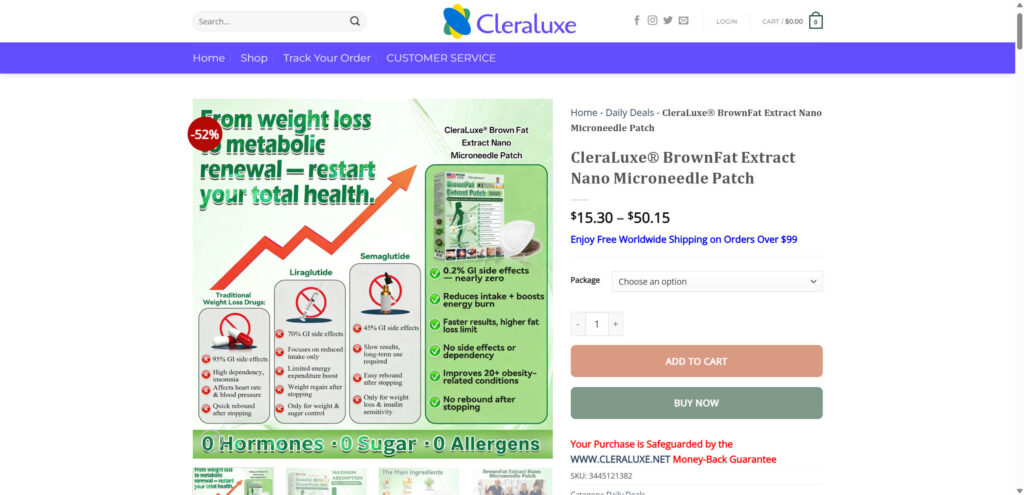
Scam Overview
The microneedle patch scam is not one single brand.
It is a repeatable marketing template that pops up under new names every week, often using the same layout, the same product photos, and the same claims, just with a different logo on top.
Sometimes the product is positioned as a “brown fat patch.” Other times it is “moringa and berberine,” “brown fat extract,” “nano microneedle,” or “advanced metabolism patch.” The words change, but the strategy stays familiar.
Why microneedle patches are the perfect scam product
Scammers love products that:
- Look “new” and technical enough that the average buyer cannot easily verify the claims.
- Are cheap to source, easy to ship, and hard to return.
- Allow huge markups while still looking “discounted.”
- Can be marketed emotionally: weight loss, diabetes fears, sleep apnea, joint pain, belly fat.
Microneedle patches check every box.
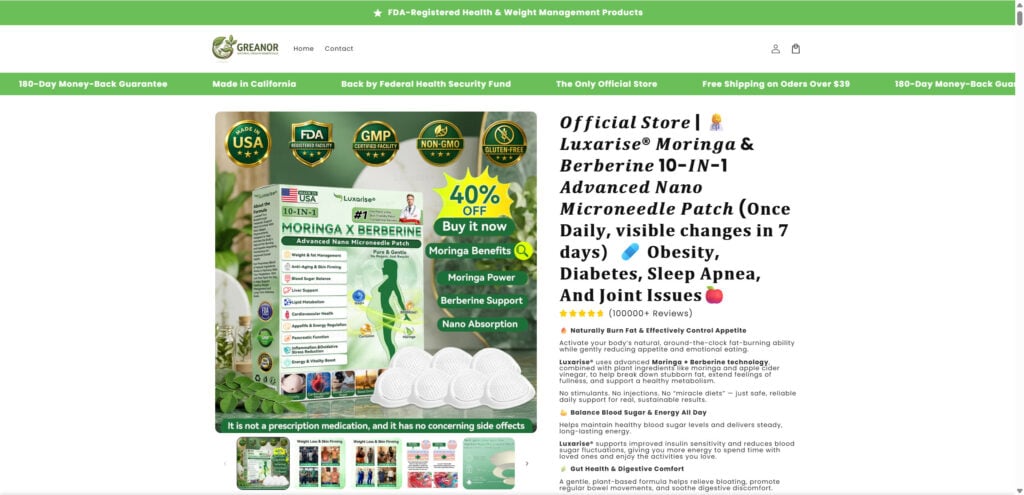
They are small, lightweight, and inexpensive to manufacture at scale. If the seller is dropshipping, fulfillment can be outsourced to a third-party supplier, often overseas.
Because the item is “personal care” and touches skin, many sellers hide behind “hygiene policies” to refuse returns. Even when a “180-day guarantee” is advertised, the actual policy tends to be full of conditions.
The promise that hooks people
Most microneedle patch scam pages combine several high-intent promises:
- Rapid, visible results in 7 days, 14 days, or 21 days.
- “Targets brown fat” or “activates UCP1” for fat burning.
- “No diet required” or “works while you sleep.”
- “No injections” and “no side effects.”
- “Clinically proven,” “doctor recommended,” or “lab tested.”
- “FDA approved” or “FDA registered,” often paired with official-looking badges.
A big part of the persuasion is the way they frame weight loss as a hidden biological switch.
Not calories. Not habits. Not consistency.
A switch.
The patch supposedly flips it.
That framing matters because it lowers skepticism. If a person has tried diets before and felt frustrated, the “you were not broken, your brown fat was asleep” narrative can feel comforting.
The visual tactics that make it feel real
These campaigns are built like a movie trailer: fast, emotional, and highly visual.
Common elements include:
- Before-and-after photo grids, often with dramatic transformations.
- A “doctor” or “pharmacist” standing in a clinical setting, sometimes in scrubs or a white coat.
- Screenshots of social media comments that look like real conversations.
- News-style layouts with bold headlines and “investigation” language.
- Badges like “GMP Certified,” “Non-GMO,” “Gluten-Free,” “Made in USA,” and “FDA.”
None of those visuals prove the product works.
They are there to reduce friction and create a sense of authority.
A huge red flag is when the page leans on badges and testimonials instead of clear, verifiable details like manufacturer identity, real clinical trial citations, and transparent customer support.
The “FDA” word game
Many scam pages intentionally blur the line between phrases like:
- FDA approved
- FDA cleared
- FDA registered
- Manufactured in an FDA-registered facility
These are not interchangeable.
A product can be made in a facility that is registered, and that does not mean the product itself is approved for weight loss claims. Scam pages count on most people not knowing the difference.
You will often see a badge that implies approval, even if the fine print only suggests facility registration.
The science-sounding fog
A major pattern in microneedle patch scams is “science theater.”
They use complicated language to sound credible:
- “Thermogenic signaling”
- “Metabolic amplification”
- “UCP1 activation”
- “Targeted transdermal delivery”
- “Visible color-change proof”
- “Nano microneedle system”
The problem is not the existence of scientific terms.
The problem is how they are used.
Real science communication explains what a mechanism means, what evidence supports it, what results were measured, and in whom.
Scam pages often do the opposite: they stack terms to create the feeling of proof, while avoiding specifics that can be checked.
The “color change” trick
Some microneedle patch sales pages claim the patch “turns brown” as proof it is extracting fat or activating brown fat.
That is a classic manipulation tactic.
Color change can happen for many mundane reasons: moisture, oxidation, adhesive chemistry, contact with skin oils, heat, or dyes in the patch material.
A patch changing color is not medical evidence of fat loss.
It is a visual hook designed to keep users committed and to reduce refund requests. If the patch changes color, the buyer thinks, “Something is happening,” even if nothing meaningful is happening.
The pricing that pushes panic decisions
These pages almost always use aggressive discounting.
You will see:
- “Today only” pricing
- 40% off, 52% off, 74% off, or 80% off
- Countdown timers
- “Limited stock”
- “First 100 orders” bonuses
- “Bundle recommended for best results”
This is a pressure tactic, not a sign of a legitimate brand.
A real health-related product company does not need a permanent emergency sale to survive.
The discount is designed to stop you from researching.
The upsell trap and why many people get charged more than expected
Even when the front-end price looks low, the checkout flow is often engineered to increase your total.
Common upsell tactics include:
- Pre-selected multi-box bundles.
- “Best value” packages that default to 3 or 6 boxes.
- Add-on items in small print.
- Shipping protection add-ons that are checked by default.
- Post-purchase upsells after payment, where one click adds another charge.
- Subscription language buried in terms, or “VIP club” style billing.
A huge portion of victims do not just buy one item.
They buy more than they intended, then struggle to cancel or get refunds.
The dropshipping reality behind the “official store” story
Many microneedle patch scam sites present themselves as:
- “The only official store”
- “Direct from the manufacturer”
- “Made in California”
- “Fast US shipping”
But behind the scenes, it often behaves like a typical dropshipping operation:
- The product ships from overseas fulfillment.
- Tracking numbers can be slow to appear.
- Support emails go unanswered or reply with scripted delays.
- Refunds are blocked with paperwork demands and return address confusion.
Even when a package arrives, the product may look generic, with minimal labeling, vague ingredients, and instructions that do not match the marketing claims.
Why these scams keep coming back
Two reasons: it is profitable, and it is easy to relaunch.
If a site gets too many complaints, the seller can:
- Change the domain
- Change the brand name
- Reuse the same page template
- Run the same ads again
Because the product is simple to source and the marketing is the real “product,” the scam can be restarted fast.
That is why you see so many variations of the same microneedle patch pitch.
How The Scam Works
Below is the typical end-to-end funnel. Not every campaign includes every step, but the strongest scams follow this playbook closely.
Step 1: The social media ad that looks like a discovery, not an ad
The first contact is usually a short video or image ad.
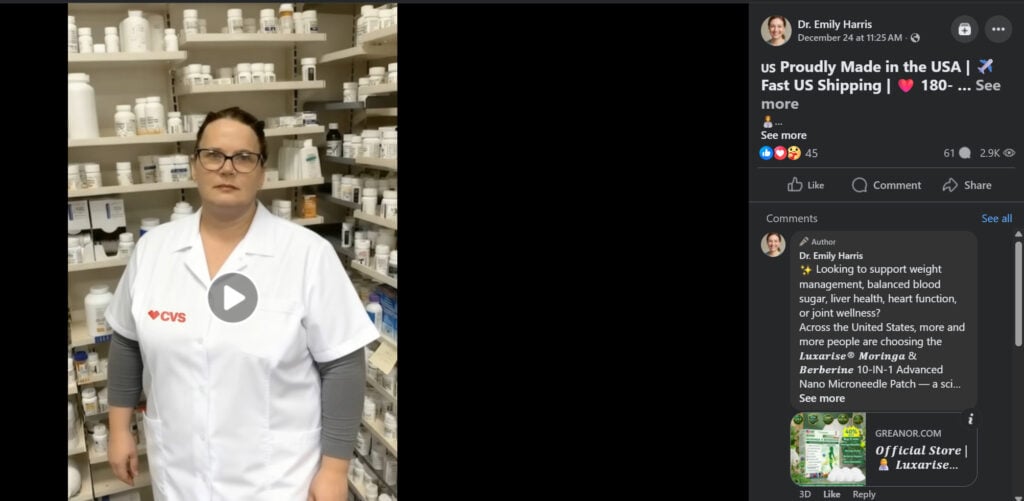
It often includes one or more of these hooks:
- A person in a white coat speaking confidently.
- “I was skeptical until I saw this.”
- “Doctors hate this simple patch.”
- A shocking before-and-after montage.
- A claim that it is “going viral” and “selling out.”
The ad is crafted to feel like you stumbled onto a secret.
That feeling is intentional. When people feel they discovered something, they trust it more.
Step 2: Borrowed authority and fake credibility signals
Many ads rely on credibility shortcuts:
- A “doctor” identity that is hard to verify.
- A clinic or pharmacy backdrop.
- A brand name that sounds medical or premium.
- Claims like “trusted by Google” or “featured on major networks.”
Sometimes the page uses news logos or “as seen on” banners. Sometimes it uses celebrity names in comments or fake endorsements.
The goal is to create just enough trust that you click through.
Step 3: The advertorial bridge page that warms you up
A lot of microneedle patch scams do not send you straight to the checkout.
They use a bridge page that looks like a review article or investigative report.
This page typically includes:
- A dramatic headline about belly fat, diabetes, or “brown fat activation.”
- A personal story of struggle and transformation.
- Selective “science” explanations.
- Quotes that look like medical commentary.
- A big button that says “Check availability” or “Claim discount.”
This step matters because it moves you from curiosity to belief.
It also reduces the chance you exit to Google and search the brand name.
Step 4: The “official store” landing page with heavy pressure design
Once you reach the sales page, you will often see:
- A huge discount badge like 52% off or 80% off.
- A countdown timer.
- A stack of certification icons.
- A wall of testimonials and transformations.
- Claims like “visible changes in 7 days.”
The layout is built to keep you scrolling until you are emotionally invested.
You will also see “pain points” amplified: heart risk, stroke risk, diabetes complications, sleep apnea, arthritis, fatty liver, depression. These are serious topics, used in a way that increases fear and urgency.
Step 5: The mechanism story that sounds smart but stays uncheckable
Here is the key trick: the page explains a mechanism with scientific words, but without verifiable evidence.
It might claim:
- Brown fat is the real key to weight loss.
- The patch “activates thermogenesis” and “amplifies metabolism.”
- Ingredients are “delivered directly” through microneedles.
- Results happen without diet changes.
A legitimate product that claims medical or near-medical effects should be able to point to real studies, not just internal “clinical research” with no citations.
Scam pages often mention “thousands of participants” in vague “studies” conducted by the brand itself. They rarely provide study registration, institution names, or published results.
Step 6: The bundle logic that turns one purchase into six
Next comes the “recommended” purchase.
You will see language like:
- “Most customers choose 6 boxes.”
- “For best results, use for 90 days.”
- “Buy 3 get 2 free.”
- “Limited-time bundle pricing.”
This is not about your health.
It is about increasing order value before you have time to evaluate the product.
A person who might hesitate at $29 is more likely to panic-buy at $149 if they believe it is a short window and the page implies that one box is “not enough.”
Step 7: The checkout add-ons and fine print traps
At checkout, watch for:
- Shipping protection that is pre-checked.
- “Priority processing” add-ons.
- Email or SMS sign-ups that double as marketing consent.
- Subscription language in small print.
- A second upsell page after payment.
Some victims only realize later that they agreed to recurring billing, or that they were charged multiple times due to separate upsells.
Step 8: The fulfillment delay that buys the seller time
After purchase, many customers experience a common pattern:
- Confirmation email is vague.
- Tracking number takes days to appear.
- Tracking updates are slow or inconsistent.
- The package arrives later than expected.
This delay works in the seller’s favor.
It pushes you outside the fastest dispute windows. It also increases the chance you forget details of the checkout flow.
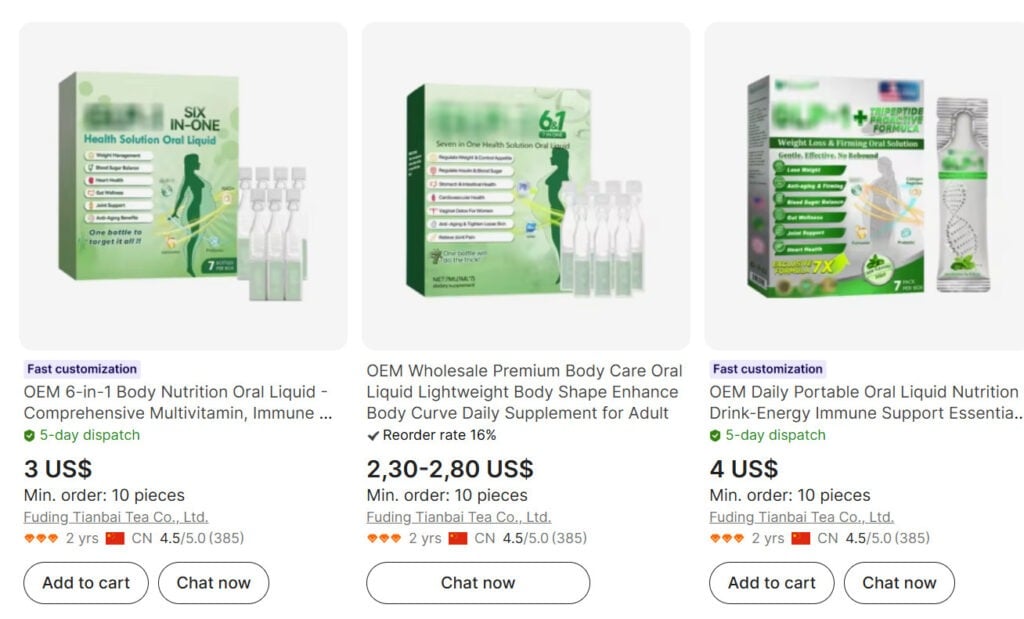
Step 9: The product that arrives looking generic and under-labeled
When the patch finally arrives, people often notice:
- Minimal branding.
- Packaging that does not match the site.
- Ingredients that are unclear or incomplete.
- Instructions that feel generic.
- A lack of manufacturer transparency.
Even if the product is not harmful, it often does not match the dramatic promises that sold it.
That gap is where complaints start.
Step 10: The refund maze
This is where scam operations become obvious.
Refund requests are often met with:
- No response.
- Scripted replies asking you to “wait a few more days.”
- Demands for photos, videos, and multiple forms.
- Instructions to return the product to a confusing address.
- Claims that returns are not allowed due to hygiene.
- Offers of partial refunds to make you go away.
A common tactic is the “support loop,” where each reply asks for one more thing, stretching the process until the buyer gives up.
Step 11: The rebrand cycle
As complaints build, the seller may:
- Shut down the site.
- Launch a new domain.
- Rename the product.
- Use the same ad creatives and page templates again.
This is why searching for one specific brand name sometimes leads nowhere after a few months. The operation moved.
The scam is not the name.
The scam is the system.
What To Do If You Have Fallen Victim to This Scam
If you bought a microneedle weight loss patch and now suspect it was a scam, you are not alone, and you still have options. The key is to act calmly but quickly.
- Collect your evidence in one folder
Save screenshots of the ad, the sales page, the pricing you saw, the claims made, and the refund policy.
Download your order confirmation email and take a screenshot of your bank or card transaction. - Check for extra charges or multiple transactions
Look closely for shipping insurance, upsells, “VIP” charges, or multiple orders.
If you see unexpected charges, document them immediately. - Search your email for subscription language
Use keywords like “subscription,” “membership,” “recurring,” “monthly,” “program,” “VIP,” and “trial.”
Scams often hide billing terms in confirmation emails or post-purchase pages. - Email the seller once, clearly, and keep it short
State: you want a refund, you do not authorize future charges, and you want written confirmation.
Do not argue about science. Focus on the transaction and refund request. - Do not rely on the seller’s promises if they stall
If they respond with delays or vague assurances, treat that as a warning.
Set a personal deadline, like 48 hours, before escalating. - Contact your card issuer or bank and ask about dispute options
Explain that you believe this was a deceptive online purchase, with misleading claims and refund barriers.
Ask what documentation they need and what the timeline is. - Request a chargeback if the seller refuses, delays, or is unreachable
Chargebacks exist for situations like misleading sales practices and failure to honor refund policies.
Submit your screenshots and any email attempts as proof you tried to resolve it. - If you used a debit card, act even faster
Debit disputes can be more time-sensitive.
Call your bank, ask about fraud protections, and follow their process immediately. - If you entered your card on a sketchy site, consider replacing the card
If the site looks untrustworthy or you suspect recurring billing, replacing the card can prevent future charges.
Ask your card issuer about blocking future merchant transactions as well. - Monitor your statements for at least 60 days
Some operations charge again weeks later.
Set a calendar reminder to review transactions weekly. - If you experience side effects, stop using the product and talk to a medical professional
Skin irritation, rashes, or allergic reactions are reasons to discontinue.
If symptoms are severe, seek medical help promptly. - Report the ad and the site
Report the ad on the platform you saw it on (Facebook, Instagram, TikTok, YouTube).
You can also report deceptive online shopping experiences to consumer protection agencies in your country. - Warn others, but protect your personal info
If you post about it, blur your address, phone number, and order number.
Stick to verifiable facts: claims shown on the page, what you were charged, what arrived, and how support responded. - Do not blame yourself
These funnels are designed by professionals who understand psychology and urgency triggers.
The best response is to document, dispute, and move forward with better filters for future ads.
The Bottom Line
The microneedle patch scam succeeds because it mixes three powerful things: a modern-sounding technology, emotionally charged health promises, and a high-pressure checkout funnel.
The brands may change, the logos may rotate, and the landing pages may look slightly different, but the core pattern stays the same: dramatic claims, vague proof, aggressive bundles, and refund resistance.
If you are researching before buying, your safest move is to pause, search for independent information, and treat “brown fat activation in 7 days” style promises as a major warning sign.
If you already bought, focus on practical steps: document everything, watch for extra charges, and escalate to your bank or card issuer if the seller plays games.
A legitimate company does not need confusion, urgency, and disappearing support to sell a real product.
FAQ: Microneedle Patch Scam
What is the microneedle patch scam?
It is a repeating online sales scheme where marketers push “brown fat” or “metabolism” microneedle patches using exaggerated weight loss claims, fake credibility signals, and high-pressure discounts. The brand name changes often, but the tactics stay the same.
Are microneedle weight loss patches legit?
The concept of microneedles exists in real medicine, but these viral weight loss patches are typically marketed with claims that are not backed by clear, verifiable clinical evidence. When a site promises dramatic fat loss in 7 days with a patch, that is a major red flag.
Why do so many different brands look identical?
Because many of these are template-based dropshipping campaigns. The same product photos, page layout, and “science” copy are reused across multiple domains, then rebranded when complaints increase.
What are the biggest red flags that a microneedle patch site is a scam?
Common red flags include:
- “Made in USA” claims paired with slow overseas shipping
- Fake-looking doctor or pharmacist endorsements
- No real company address or verifiable business details
- “FDA approved” style badges without proof
- Countdown timers and constant “today only” discounts
- Bundle pressure like “most customers buy 6”
- Vague refund policy or return address confusion
- Reviews that look copied, repetitive, or too perfect
Does “FDA registered” mean the product is FDA approved?
No. “FDA registered” is often used to sound official, but it does not automatically mean the product is approved for weight loss claims. Many scam pages rely on this confusion.
Why do they claim the patch changes color?
Color-change claims are used as “proof” that the patch is working, even though color can change for basic reasons like moisture, heat, skin oils, or materials in the patch. It is a persuasion trick designed to reduce refund requests.
Why do these ads mention serious conditions like diabetes and sleep apnea?
Because fear converts. Many scam ads list scary health risks to create urgency and make the patch feel like a medical solution instead of a simple product. That emotional pressure is part of the manipulation.
Why did my order total jump at checkout?
Many of these funnels add charges through:
- Pre-selected bundles
- Shipping protection add-ons
- Priority processing fees
- Post-purchase upsells
- Fine print that pushes multi-box purchases
Always check the final total carefully before confirming payment.
Can these sites put me on a subscription without me realizing?
Some do. Subscription language may be hidden in small print, terms pages, or post-purchase offers. If you suspect recurring billing, check your confirmation email, your bank statement, and cancel through your card issuer if needed.
I ordered, but tracking is stuck or updates are weird. Is that a sign of a scam?
It can be. Scam-style dropshipping operations often have delayed tracking, slow shipping updates, or tracking numbers that appear days later. It does not prove fraud by itself, but it fits the common pattern.
The product arrived, but it looks generic. What does that mean?
It often means the “brand” is just a marketing shell. Many victims receive a generic patch with minimal labeling that does not match the dramatic promises made on the site.
What should I do if I cannot get a refund?
Do this in order:
- Save screenshots of the ad, claims, checkout total, and refund policy.
- Email the seller once, clearly requesting a refund and cancellation of any future charges.
- If they stall or refuse, contact your bank or card issuer and ask about a dispute or chargeback.
- Monitor your statements for additional charges.
Should I cancel my card?
If you suspect recurring billing, unexpected charges, or the site feels unsafe, ask your card issuer about blocking the merchant or replacing the card. This can prevent future charges.
What if I used a debit card instead of a credit card?
Act quickly. Debit protections can be more time-sensitive. Call your bank, explain the situation, and ask what dispute options are available.
Could the patch be dangerous?
Some people report skin irritation or allergic reactions with adhesive products. If you experience redness, burning, rash, or swelling, stop using it and consider speaking with a medical professional, especially if symptoms persist or worsen.
How can I avoid microneedle patch scams in the future?
Use a simple checklist:
- Never buy from an ad without researching the company first
- Avoid products promising rapid weight loss with no lifestyle change
- Be skeptical of “doctor recommended” with no verifiable credentials
- Look for clear company details, real support options, and transparent return policies
- If the site uses constant urgency and huge discounts, walk away

Reviews & discussion
8 commentsShare a firsthand experience, or ask a question.
Community reviews
Don’t Buy a Microneedle Patch Until You Read This
Moderated reader experiences, not an editorial verdict.
What about asking oeople to report the ad? Some platforms have places to do that, although, I have seen very few disappear right away. Does reporting the ad have any benefit?
In reply to Joy
It is worth doing, Joy, though not quite for the reason people hope. A single report rarely takes an ad down; what actually moves things is volume combined with pressure on the money side. On Facebook or Instagram, use Report ad and choose the scam or misleading option, and also hide the ad, which trims what you get shown afterwards. Beyond the platform, complaints to the FTC at reportfraud.ftc.gov, or the ASA if you are in the UK, and above all a dispute with your card issuer if you were charged, tend to have more effect – the merchant account is the one part of these operations that is genuinely hard to replace. So yes, report the ad, but report the payment too.
I bought one box, silly me,
However I did lose 2lb, but I was exercising along with it. so I’m getting bombared with purchasing the largest patch.
No thanks.
In reply to Scam trade
Two pounds while exercising is two pounds of exercise, and you clearly know that already – so “silly me” is unwarranted. You ran the experiment and interpreted it correctly, which is more than the advertising does.
The bombardment is the actual product. Once a purchase is made, the email and text sequence begins – a bigger patch, a bundle, a “loyalty” price – and it is automated and relentless because the first sale is only the entry point. Do not reply to those messages, do not click the unsubscribe link in the more dubious ones, and if they keep coming, mark them as spam in your mail client rather than engaging.
Two practical things. Check your statement for the next month or two, since this seller enrols a lot of buyers in a recurring order that appears four to six weeks later; if one shows up, ring your card issuer, dispute it, revoke the merchant’s recurring authorisation and ask for a new card number. And on the patches themselves: the ingredients advertised are not absorbed through skin in any meaningful quantity, so there is nothing to be gained from a larger one.
This product is definitely a scam. The patches are not as described. They are nothing more than round tape. The seller deletes the website and email so you can’t contact them . Refund is not possible. They use legitimate business like CVS in the video ad.
In reply to Dee
Hi Dee, thank you for sharing this.
What you described is exactly the scam pattern many buyers run into: the product is nothing like the ad, the seller disappears, and the refund path is deliberately cut off by deleting the website or contact email. Using the name or imagery of a legitimate business in the video ad makes it even more deceptive.
Your comment is very useful because it confirms how these patch ads operate in the real world, not just in the marketing.
so, what is a legit website for the product?
In reply to karen
It’s just a cheap product from China… do you really want it? Might not even work.. be careful… here is a cheap version on what scammers are selling https://www.aliexpress.com/w/wholesale-weight-loss-patch.html