

Neumann Wave Therapy Pro is sold with an unusually precise promise: use a small device for ten minutes daily and expect major changes in confidence and performance.
The pictures show a real object. The harder question is whether the impressive medical-sounding story describes what that object can actually do.
Overview
What the Device Appears to Be
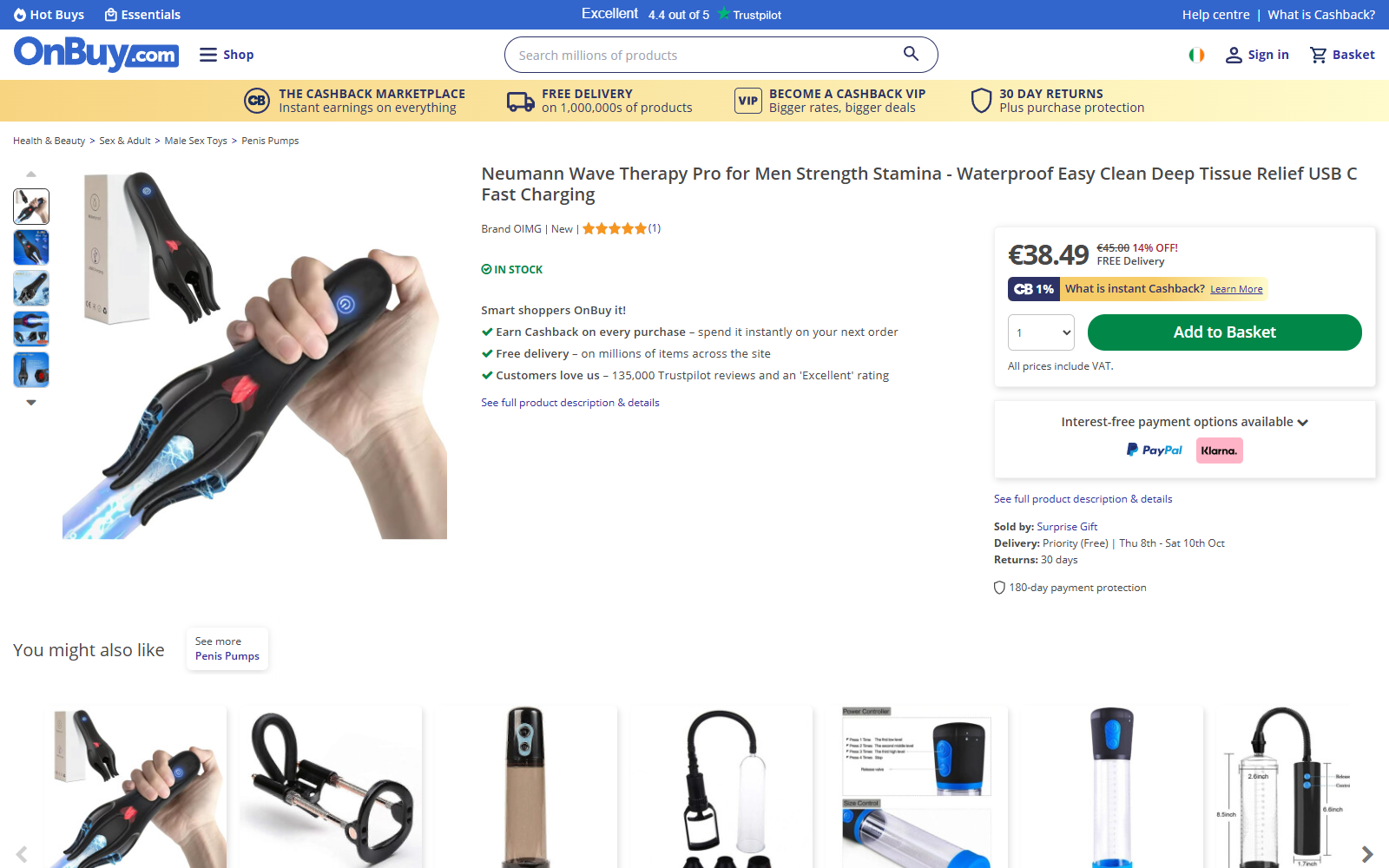
Neumann Wave Therapy Pro appears to be a rechargeable adult massager sold by third-party marketplace merchants.
The device has a looped body, vibration or stimulation modes, USB charging, and water-resistant marketing.
Marketplace categorization places it among male adult products, pumps, and personal massagers. The listing does not show a sophisticated medical wave generator.
The object may provide sensation or temporary stimulation. That does not establish permanent changes in anatomy, erectile function, or sexual health.
What the Listings Claim
Promotions promise results in days with ten minutes of daily use. Some claim gains in length, girth, stamina, control, energy, and confidence.
The phrase “wave therapy” evokes clinical shockwave treatments. Yet the listing describes an ordinary handheld rechargeable product without clinical treatment specifications.
One marketplace identifies the brand as OIMG. Another calls it unbranded. Similar imagery appears beside numerous generic adult devices.
No finished-product clinical study, named medical inventor, treatment protocol, or regulatory clearance is prominently supplied on the reviewed listing.
Our Verdict
Neumann Wave Therapy Pro appears to be a real, inexpensive personal massager wrapped in exaggerated male-enhancement language.
We found no reliable basis for promises of permanent length, girth, or rapid therapeutic results from the product shown.
Buyers should not confuse its name with clinician-administered low-intensity shockwave therapy. The technologies, supervision, evidence, and risks are not interchangeable.
- The marketplace device is real, but its medical framing is questionable.
- Listings disagree about brand identity.
- Permanent enlargement claims lack visible support.
- Manufacturer and safety details are incomplete.
- Results and return rights depend on the exact seller.
Why the Name “Wave Therapy” Is So Persuasive
Medical clinics sometimes discuss low-intensity extracorporeal shockwave therapy for erectile dysfunction. Specialized equipment directs acoustic energy into tissue under a treatment protocol.
Evidence for that clinical intervention remains nuanced. Patient selection, device settings, practitioner training, and the cause of erectile problems all matter.
A rechargeable vibrating massager is not automatically the same technology because a seller adds “wave therapy” to its name.
The reviewed marketplace listing does not identify acoustic energy output, pulse frequency, treatment depth, applicator type, clinical trial, or trained provider.
Instead, it emphasizes a water-resistant body, charging, portability, vibration, and adult use. Those features describe a consumer massager.
Medical-sounding naming lets the advertisement borrow credibility without proving equivalence to a medical procedure.
Consumers should evaluate the hardware shown, not the treatment association suggested by the product title.
How the Neumann Wave Therapy Pro Sales Funnel Works
Step 1: An Embarrassing Concern Creates Urgency
Male sexual concerns can feel difficult to discuss. Ads exploit that discomfort by promising a private solution that requires no appointment.
The buyer is invited to imagine improved confidence, endurance, size, and relationship satisfaction from a brief daily routine.
When shame and hope arrive together, people are less likely to ask ordinary questions about evidence, identity, and safety.
Step 2: “Wave Therapy” Supplies Medical-Sounding Authority
The name resembles legitimate clinical terminology. It can make a vibrating device appear more advanced than a typical adult massager.
Listings rarely explain what physical wave is produced, how it is measured, or why that output would create permanent anatomical change.
A technical phrase without technical specifications is marketing, not validation.
Step 3: A Ten-Minute Routine Makes Results Feel Easy
“Ten minutes a day” converts a complicated health concern into a simple habit.
The message avoids surgery, prescriptions, assessment, and difficult conversations. That convenience is emotionally powerful.
It also shifts attention from whether the mechanism works to whether the buyer can follow the routine.
Step 4: Marketplace Images Imply Multiple Functions
Product graphics show massage, stimulation, water resistance, portability, and several body-placement icons.
Combining many uses can make a low-cost device appear versatile. It does not demonstrate that any claimed therapeutic outcome was measured.
Some images show the device held against a hand or leg, while the listing category identifies male adult use.
Step 5: Generic Hardware Receives a Distinctive Name
The same shape appears alongside products with different names and sellers. One listing even references Mansculpt Wave inside Neumann product copy.
That stray brand name is a strong sign that descriptions were reused. It weakens the idea of one carefully developed Neumann system.
A private-label name can change while the underlying commodity hardware remains the same.
Step 6: Discounts Make Comparison Feel Unnecessary
Large crossed-out prices and limited offers suggest a bargain. Yet similar devices appear across marketplaces under unrelated names.
The relevant comparison is not the seller’s reference price. It is the price of equivalent hardware, return protection, and accountable support.
A dramatic discount can be manufactured by choosing an unrealistic original price.
Step 7: The Marketplace Holds the Practical Remedy
If the device arrives defective, different, or ineffective, the brand may not provide meaningful direct support.
The buyer instead depends on the named merchant, marketplace policy, payment provider, and return window.
That is why the listing and seller record matter more than the product name printed in an advertisement.
The Listing Contradicts Its Own Premium Story
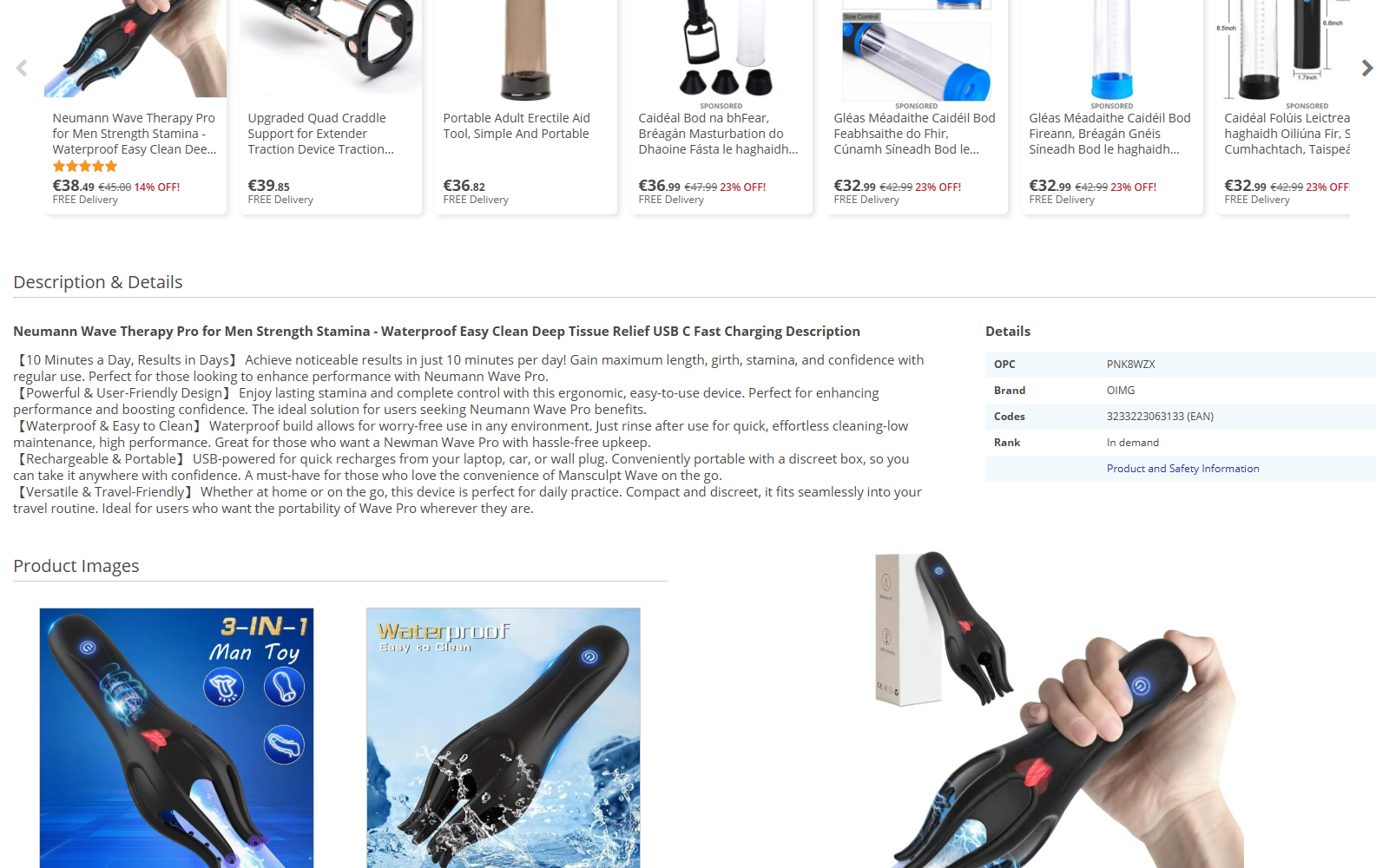
The headline presents Neumann Wave Therapy Pro as a specialized performance device. The detail table identifies the brand as OIMG.
Another major marketplace labels a closely matching listing “Unbranded.” Neither description identifies a recognized medical-device manufacturer.
The copy promises “maximum length and girth,” yet no measurement protocol or study is given.
It claims results in days while avoiding a realistic explanation of what changes, how long they last, and who should not use the product.
Most revealingly, one description calls the same object “Mansculpt Wave” near the end.
That kind of leftover name commonly appears when a supplier template is reused for rotating brands.
It does not prove the device is counterfeit. It does show that the brand story may be thinner than the sales page suggests.
What the Device May Actually Do
A vibrating adult product may create temporary stimulation, relaxation, or heightened sensation. Users can genuinely enjoy those effects.
Temporary blood flow and arousal are not permanent enlargement. They should not be described as lasting anatomical growth.
A loop or massage head may also apply pressure. Improper pressure, prolonged use, or poor fit can cause pain, bruising, numbness, or skin injury.
Water resistance should be independently specified. “Waterproof” marketing does not tell users the tested depth, duration, or certification standard.
Charging safety also matters for products used near water and sensitive tissue. Do not operate a device while it is connected to power.
Stop immediately if there is pain, discoloration, loss of sensation, swelling, bleeding, or difficulty urinating.
Persistent sexual-function concerns can reflect cardiovascular disease, diabetes, medication effects, hormones, anxiety, nerve damage, or relationship factors.
A generic massager cannot diagnose those causes. Avoiding medical evaluation may be the product’s greatest hidden risk.
What Real Evidence Would Look Like
A serious therapeutic device would identify its manufacturer, model, intended use, contraindications, operating specifications, and applicable regulatory status.
Clinical evidence would test the finished device, not merely discuss a different wave technology used in clinics.
Researchers would define participants, comparison group, treatment schedule, objective outcomes, side effects, and follow-up period.
Size claims would require standardized measurements taken by trained investigators. Self-reported confidence is not a substitute.
The Neumann listing provides none of that prominently. It offers generalized benefits and lifestyle language.
Testimonials are also weak evidence. A brief positive comment may describe delivery or sensation without confirming permanent medical improvement.
The Difference Between Pleasure, Treatment, and Permanent Change
These three outcomes are often blended together in the advertising, but they require very different evidence.
A pleasurable sensation is immediate and subjective. A user can decide whether vibration feels comfortable without a medical study.
Treatment means improving a diagnosed condition through a tested mechanism. That requires a defined device, protocol, population, and safety profile.
Permanent anatomical change is an even stronger claim. It requires objective measurements over time and follow-up after use stops.
The Neumann listing jumps from sensation and stimulation to lasting confidence, control, length, and girth.
That progression is not justified by the product description. Feeling stimulation today does not demonstrate structural growth tomorrow.
Buyers should decide what they actually want. A personal massager may satisfy one goal while being entirely unsuitable for another.
Company, Address, and Fulfillment Checks
Neumann Is a Product Label, Not a Verified Medical Company
The listings reviewed do not connect Neumann Wave Therapy Pro to a clearly identifiable medical-device firm.
Brand fields include OIMG or “Unbranded,” while copied text introduces another product name. Buyers cannot assume Neumann identifies the manufacturer.
The Seller Address May Be a Marketplace Location
Third-party merchants control the transaction. Their dispatch or return address may be a warehouse, cross-border logistics depot, or marketplace processing point.
None of those locations necessarily identifies the factory or product designer.
Support Can End at the Marketplace Message Center
We did not find a clear, dedicated Neumann support organization in the examined listings.
Before ordering, message the merchant about warranty, defective units, hygiene returns, charging problems, and the exact manufacturer. Save the response.
The Supply Chain Lacks Medical Traceability
The OnBuy safety section said manufacturer and responsible-person information was unavailable when reviewed.
Products shipped from overseas, including China, are not unsafe merely because of origin. Missing model accountability and safety documentation are the sharper concerns.
Return Policies May Exclude Opened Intimate Products
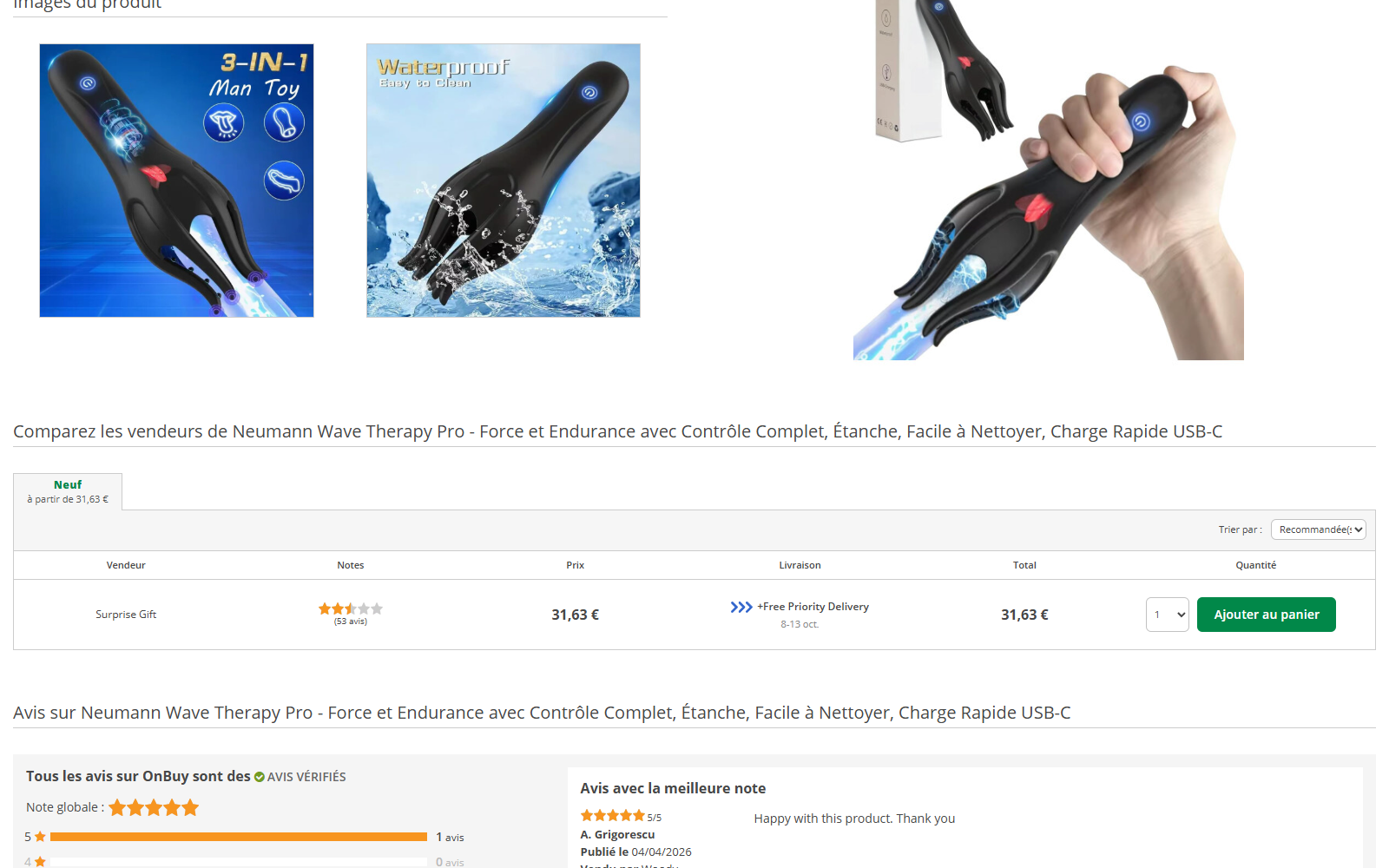
Marketplace pages can advertise 30-day returns while applying special hygiene exclusions after seals are broken.
That distinction matters because effectiveness cannot be tested without opening and using the device.
Ask the seller in writing whether an opened intimate item can be returned for dissatisfaction, not merely for a confirmed manufacturing defect.
Check who pays international return postage. Shipping a low-cost item overseas can make a refund economically pointless.
If the listing promises results within a deadline, compare that deadline with the return window.
Do not rely on a general marketplace banner when seller-specific terms say something narrower.
How to Evaluate Similar “Therapy” Devices
Search the exact model number or EAN, not only the advertised brand. Identical hardware may appear under several labels.
Reverse-search product images. Repeated photographs across unrelated stores suggest a commodity item rather than exclusive technology.
Look for operating output, battery certification, material composition, cleaning instructions, and a named manufacturer.
Ask whether the claimed treatment has evidence for this exact device. A study involving clinic equipment is not enough.
Check whether reviewers discuss measurable outcomes or simply say the parcel arrived.
Finally, compare the price with established adult-wellness brands offering clear materials, warranties, and support.
Never let an intimate concern force a rushed purchase. A reputable clinician will discuss options without guaranteeing impossible results or using countdown pressure.
What to Do if You Bought Neumann Wave Therapy Pro
- Do not rely on it for medical treatment. Persistent erectile, pain, urinary, or circulation concerns deserve assessment by a qualified clinician.
- Inspect before charging. Check seals, casing, cable, battery area, odors, sharp edges, material defects, and instructions.
- Save the listing immediately. Capture permanent-size promises, treatment language, seller identity, delivery origin, warranty, and return restrictions.
- Stop if symptoms appear. Pain, bruising, numbness, swelling, discoloration, or bleeding are reasons to discontinue use and seek appropriate advice.
- Request a remedy in writing. Describe the exact defect, mismatch, or unsupported promise and ask for prepaid return instructions.
- Use marketplace protection. Escalate before the deadline if the merchant stalls or demands an unreasonable overseas return.
- Contact the card issuer when justified. Supply the advertisement, receipt, correspondence, tracking, photographs, and marketplace decision.
- Check your device security. Malwarebytes can scan for unwanted software if a suspicious ad required an app or unofficial download.
- Reduce risky ad exposure. AdGuard can block many malicious or aggressive ad destinations, but it cannot verify medical claims.
- Report dangerous goods. Notify the marketplace and product-safety regulator if electrical faults, burns, injuries, or missing safety markings occur.
Frequently Asked Questions
Is Neumann Wave Therapy Pro a real device?
Yes. Marketplace listings show a physical rechargeable adult massager. The concern is the unsupported therapeutic and permanent-enhancement story around it.
Does it use medical shockwave therapy?
The reviewed listings do not provide specifications showing clinical shockwave technology. They describe vibration, massage, charging, and water resistance.
Can it permanently increase length or girth?
We found no finished-product clinical evidence supporting those promises. Temporary stimulation or blood flow should not be confused with permanent change.
Who manufactures Neumann Wave Therapy Pro?
The identity is unclear. One listing names OIMG, another says unbranded, and a description accidentally references Mansculpt Wave.
Is the device safe to use in water?
Do not rely solely on “waterproof” advertising. Confirm the precise rating and never use or handle a charging device near water.
Can an opened device be returned?
That depends on the seller, marketplace, defect, and hygiene policy. Ask before opening and preserve the seal if you already suspect a mismatch.
The Bottom Line
Neumann Wave Therapy Pro looks like a generic rechargeable adult massager, not the clearly documented medical breakthrough implied by its name and claims.
Judge it as commodity hardware. Do not pay a therapy premium, expect permanent enlargement, or postpone real medical care because a marketplace promises results in days.








