

Busaurus Toothpaste arrives dressed like the future of oral care. Its pastel gel, niacinamide language, and dramatic whitening pictures make ordinary brushing feel newly scientific.
Before replacing a familiar toothpaste, however, buyers need to separate the physical product from the remarkable story being built around it.
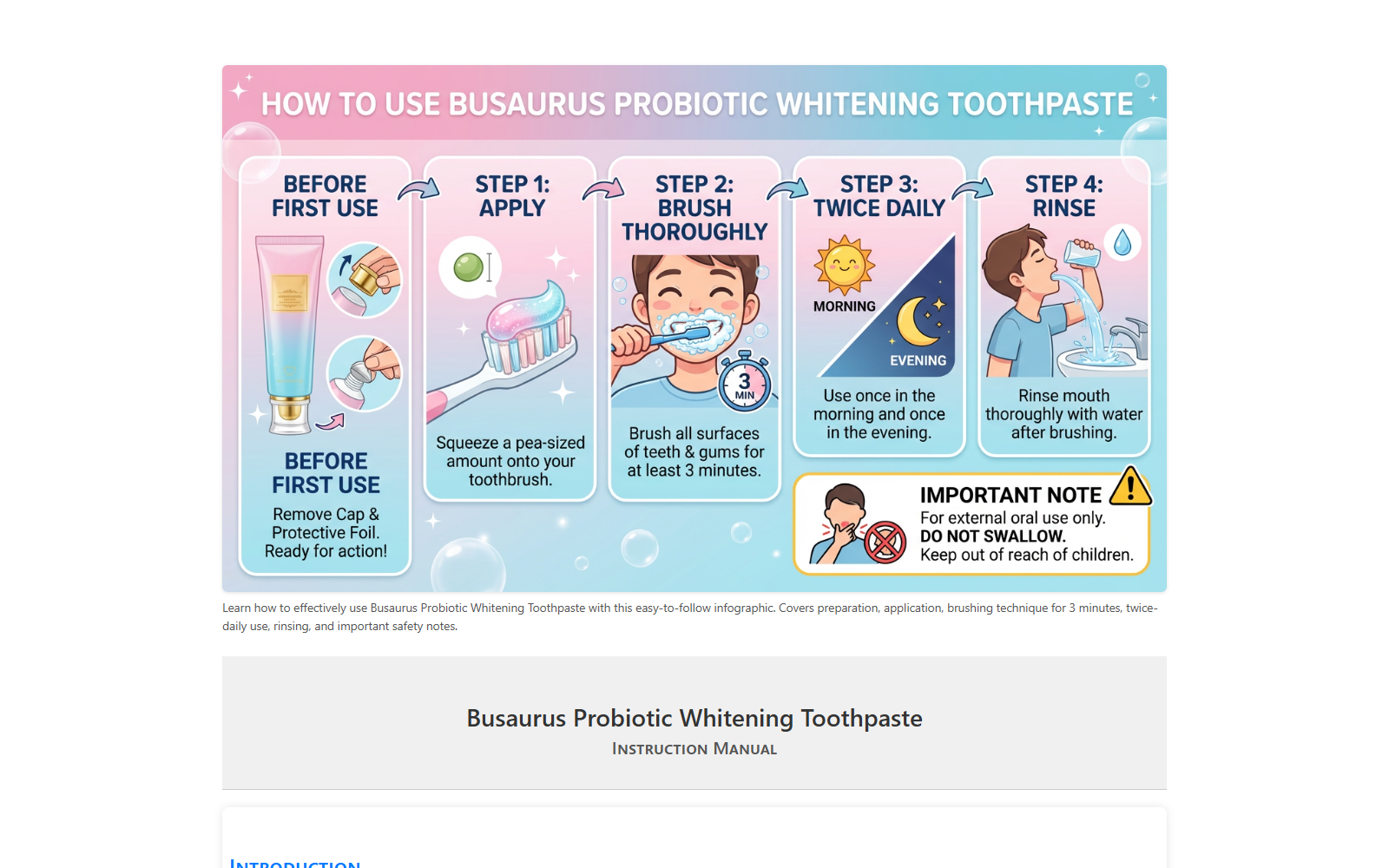
Overview
What Busaurus Toothpaste Is
Busaurus is a real toothpaste sold through marketplace listings rather than a clearly established, single-brand retail network.
Listings describe a translucent gel containing niacinamide, xylitol, hydrated silica, flavoring, and ingredients promoted as probiotics or botanical extracts.
The product is usually presented as fluoride-free. Sellers connect that formula with cleaner teeth, fresher breath, healthier gums, and visible stain removal.
Packages and listings are not entirely consistent. Brand names, tube sizes, ingredient descriptions, claims, and seller identities can differ across marketplaces.
What the Advertising Wants You to Believe
Promotional images imply that Busaurus can brighten dull teeth quickly while remaining gentler than conventional whitening products.
Niacinamide often receives star billing. That ingredient is familiar from skin care, which gives the toothpaste a fashionable scientific identity.
Some promotions also use “probiotic,” “microbiome,” “deep stain removal,” and “enamel safe” language without showing finished-product clinical testing.
A beautiful package and technical vocabulary can make those promises feel established. They do not, by themselves, demonstrate meaningful whitening or cavity protection.
Our Verdict
Busaurus appears to be a physical toothpaste, not a nonexistent-product scam. The larger problem is unverified marketing attached to a poorly traceable marketplace brand.
We could not find persuasive evidence that niacinamide is an established tooth-bleaching agent or that Busaurus delivers the dramatic changes suggested by its imagery.
The fluoride-free positioning also deserves context. A cosmetic stain-removal claim is not the same as proven protection against tooth decay.
- The toothpaste exists and is sold by multiple marketplace merchants.
- Whitening language often exceeds the evidence shown.
- Product identity and seller details vary between listings.
- Finished-product clinical results are not prominently provided.
- Buyers should inspect the exact label before use.
Why the Niacinamide Story Sounds More Scientific Than It Is
Niacinamide is a form of vitamin B3. It is widely used in cosmetics because it can support the skin barrier and improve certain skin concerns.
That reputation does not automatically transfer to tooth enamel. Skin, gums, dentin, plaque, and enamel are different tissues with different treatment requirements.
Established bleaching products commonly rely on peroxide chemistry. Whitening toothpastes more often remove some surface staining through abrasives and cleaning agents.
Busaurus listings rarely explain whether niacinamide changes tooth color, removes external deposits, supports soft tissue, or simply provides a memorable marketing hook.
Hydrated silica can help polish surface stains. That effect is more plausible than a vitamin transforming the natural internal color of teeth.
Even useful polishing has limits. It cannot correct every discoloration, and excessive abrasion can be undesirable for sensitive teeth or exposed dentin.
A trustworthy claim should identify the ingredient concentration, testing method, comparison product, study duration, participants, and measured result.
Busaurus advertising commonly supplies the conclusion first. The supporting evidence is far harder to locate.
How the Busaurus Toothpaste Sales Funnel Works
Step 1: A Visually Unusual Toothpaste Stops the Scroll
The pink-and-blue gel looks more like a beauty product than ordinary toothpaste. That novelty performs well in short social videos.
Bright foam, sparkling teeth, and rapid before-and-after transitions create an immediate visual promise that requires little explanation.
Some images appear heavily processed or synthetic. Perfect teeth, flawless faces, and inconsistent packaging should not be treated as clinical proof.
Step 2: Familiar Wellness Words Create Authority
Terms such as niacinamide, probiotics, microbiome, natural polishing agents, and gum support make the formula sound unusually advanced.
Each term may describe a real ingredient or concept. The sales page then encourages viewers to assume the combined product has proven transformative effects.
That leap is where buyers should pause. Ingredient familiarity is not the same as finished-formula evidence.
Step 3: Marketplace Listings Repeat the Same Claims
Product descriptions often travel between sellers. One merchant copies another, then automated catalogs repeat the wording across several countries.
Repetition can look like independent confirmation. In reality, dozens of listings may originate from one supplier description.
Search results also show spelling variations and closely related tubes under different seller names. That suggests a broadly distributed, private-label product.
Step 4: Dramatic Images Replace Measured Evidence
Before-and-after teeth are persuasive because viewers can understand them instantly. Yet lighting, exposure, color balance, editing, and dental treatment can change appearances.
Unless images belong to a controlled study with disclosed methods, they cannot tell buyers what the toothpaste caused.
An attractive demonstration may show foam or surface cleaning. It still does not establish long-term whitening, enamel safety, or cavity prevention.
Step 5: A Low Price Reduces Buyer Resistance
A toothpaste priced like an impulse purchase feels less risky than an expensive device or supplement.
That affordability encourages experimentation before the shopper investigates the manufacturer, ingredients, fluoride content, importer, or return policy.
The financial loss may be modest, but oral irritation, delayed dental care, or inadequate cavity protection matters more than the purchase price.
Step 6: The Seller, Not the Brand, Controls the Outcome
Marketplace buyers contract with the merchant named on their order. Packaging, delivery, returns, and authenticity can therefore vary between sellers.
One listing may offer platform protection while another directs complaints to a generic storefront with limited support.
The exact seller and listing should be saved before purchase. A product name alone may not identify who took payment.
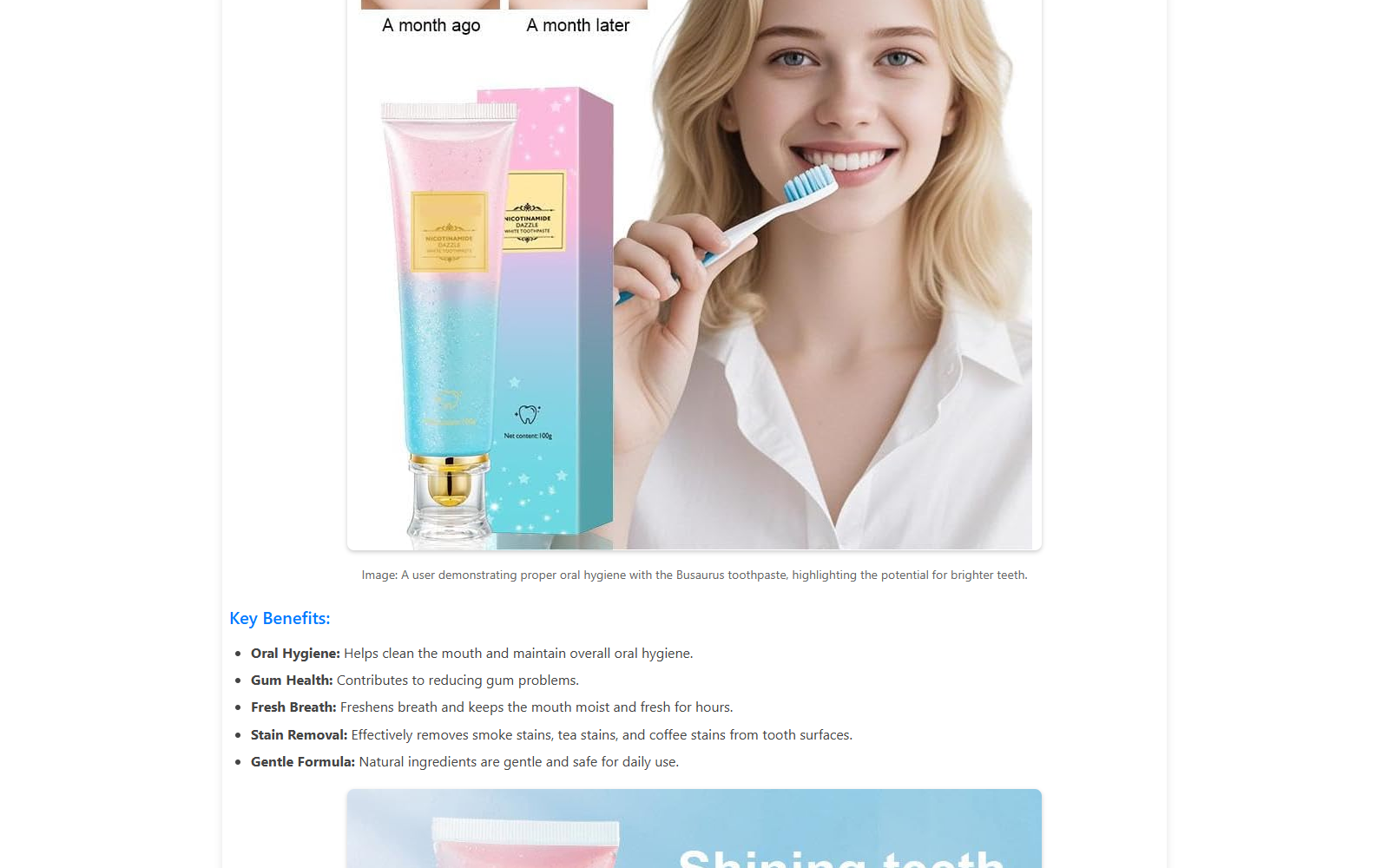
What the Product Page Actually Establishes
The instruction page we reviewed calls the item Busaurus Probiotic Whitening Toothpaste, yet its specification table identifies the brand as RESOVTE.
That mismatch does not prove fraud. It does show why shoppers should not assume Busaurus is the legal manufacturer.
The page lists 100g net content, a three-year shelf life, adult use, and routine brushing directions.
It claims oral hygiene, gum support, fresh breath, stain removal, and a gentle formula. Those are broad promotional statements, not disclosed clinical findings.
The safety section instructs users not to swallow the product and to stop if irritation occurs.
It does not prominently provide a complete, standardized Drug Facts panel, fluoride concentration, batch certificate, factory identity, or study report.
Different international listings add their own descriptions. One may describe probiotics, another niacinamide, while another says fluoride is present “if applicable.”
That phrase is especially unhelpful. A buyer should know whether the exact tube contains fluoride before it enters the shopping cart.
Fluoride-Free Does Not Automatically Mean Better
Some consumers intentionally choose fluoride-free toothpaste. Marketing often presents that choice as cleaner, gentler, or more natural.
Those are value judgments, not proof of equal cavity prevention. Fluoride has an established role in strengthening enamel and reducing decay risk.
A person with frequent cavities, dry mouth, exposed roots, braces, or certain medical conditions may need individualized dental guidance.
Switching solely because a social advertisement calls fluoride outdated can create a false sense of protection.
Xylitol and routine cleaning may support oral hygiene, but they should not be assumed to replace every benefit of a fluoride toothpaste.
Ask a dentist which active ingredients fit your risk. Bring the actual packaging, because online descriptions may not match the delivered tube.
Can Busaurus Really Whiten Teeth?
“Whitening” can describe several different outcomes. Removing coffee residue is different from bleaching enamel, masking yellow tones, or changing internal discoloration.
A mildly abrasive toothpaste may make teeth look cleaner by reducing surface stains. Results depend on the cause and depth of discoloration.
Peroxide bleaching can alter color more substantially, but it also requires appropriate use and may cause sensitivity or gum irritation.
Busaurus promotions frequently blur these distinctions. They imply dramatic brightening while emphasizing niacinamide and a gentle, peroxide-free identity.
Without controlled finished-product testing, buyers cannot know the average shade change, how quickly it occurs, or whether results outlast ordinary brushing.
A photograph showing brilliantly white teeth is not a measurement. Look for a published method and realistic limitations.
Company, Address, and Fulfillment Checks
The Brand Name Does Not Identify the Responsible Company
Busaurus appears on the consumer-facing tube, while one instruction record identifies RESOVTE as the brand. Marketplace merchants may use still other business names.
That fragmentation makes responsibility difficult to follow. The package should identify the manufacturer or distributor, country, lot, and reachable contact.
The Address May Belong Only to a Seller or Warehouse
A marketplace return location does not prove where toothpaste was formulated or manufactured.
Check the delivered label rather than trusting a storefront address. A fulfillment depot can process parcels without controlling quality or ingredients.
Support Depends on the Exact Marketplace Merchant
We did not find one clearly dominant Busaurus support operation covering every listing. Buyers may need to rely on the marketplace dispute system.
Save the seller name, order page, receipt, and return deadline. Listings can change or disappear after an order.
The Supply Chain Is Not Transparent Enough
The reviewed material does not clearly connect formula, factory, importer, lot testing, and consumer support.
Private-label products can be made anywhere, including China. Origin alone is not the verdict; traceability, accurate labeling, and quality controls are what matter.
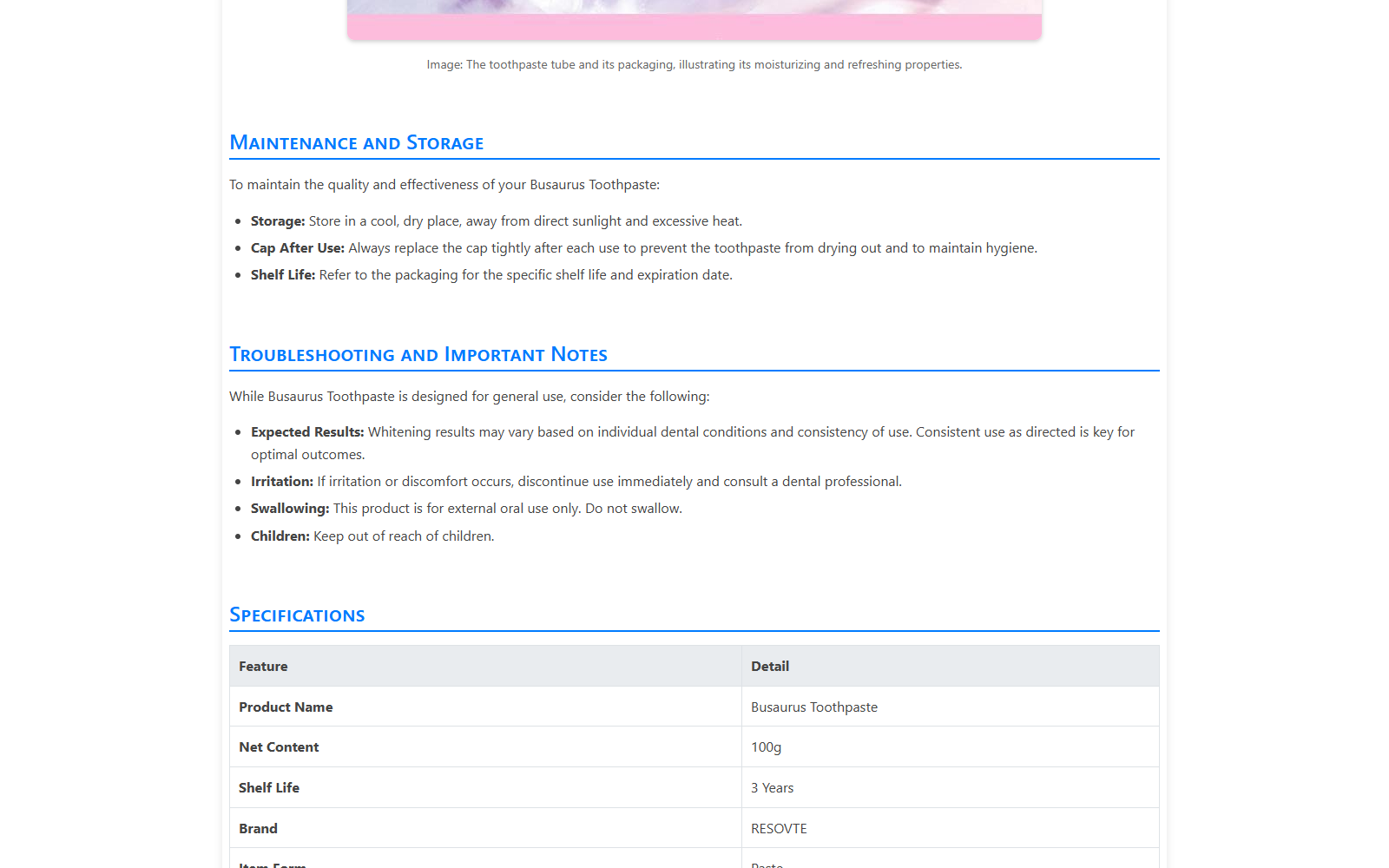
Warning Signs to Check on the Tube
The delivered package matters more than an advertisement. Do not use a tube with a broken seal, unreadable label, or unexplained differences.
Check whether the ingredient list is complete and written in a language you understand.
Look for net weight, lot number, expiration date, manufacturer or distributor, country of origin, warnings, and contact information.
If the product claims cavity protection, determine which active ingredient provides it and whether a concentration is stated.
Compare the tube with the listing you purchased. Photograph differences before opening it.
Do not assume a QR code proves authenticity. Codes can lead to ordinary marketing pages created by the same seller.
Who Should Be Especially Careful
People with gum disease, mouth sores, enamel erosion, tooth sensitivity, allergies, or recent dental work should ask a dental professional before experimenting.
Children require age-appropriate toothpaste and supervision. Marketplace claims such as “for all ages” should not replace label directions or professional advice.
Stop using the product if burning, swelling, rash, persistent pain, or unusual sensitivity develops.
Whitening cannot repair decay, infection, fractures, or gum recession. A cosmetic promise can distract from conditions needing treatment.
Seek prompt care for swelling, fever, severe pain, trauma, or spreading infection. No online toothpaste should delay urgent dental attention.
What to Do if You Bought Busaurus Toothpaste
- Save the exact listing. Capture the seller name, claimed ingredients, price, delivery promise, whitening statements, and return terms before the page changes.
- Inspect the package before use. Confirm the seal, lot, expiration date, ingredient list, warnings, manufacturer, importer, and country information.
- Compare product and advertisement. Photograph any mismatch in size, branding, color, ingredients, instructions, or packaging.
- Stop after a reaction. Rinse thoroughly, keep the tube and package, and contact a dentist or poison-control service when symptoms warrant it.
- Request a marketplace return. Describe specific mismatches or undisclosed facts instead of making broad accusations. Keep every support response.
- Dispute a materially misrepresented order. If the seller refuses a valid remedy, ask your card issuer about chargeback rights and deadlines.
- Protect accounts used during purchase. Change reused passwords and review statements. Malwarebytes can scan a device if an unfamiliar checkout prompted downloads.
- Reduce repeat exposure. AdGuard can block many aggressive ad networks and known malicious destinations while you continue researching products.
- Report unsafe labeling. Notify the marketplace and the appropriate consumer or product-safety regulator if the tube lacks required information or causes harm.
How to Choose a Better Whitening Product
Start with the problem you want to solve. Surface coffee staining, natural tooth color, medication discoloration, and enamel wear require different approaches.
Choose a product with a complete label, accountable manufacturer, realistic instructions, and an active ingredient suited to the goal.
Prefer claims supported by finished-product testing rather than a collection of studies about unrelated ingredient uses.
Do not equate tingling, unusual foam, or strong flavor with effectiveness. Sensation is easy to formulate and easy to market.
For significant whitening, a dentist can assess cavities, cracks, restorations, and sensitivity before bleaching begins.
Crowns, fillings, and veneers do not whiten like natural teeth. Professional planning can prevent an uneven result.
Frequently Asked Questions
Is Busaurus Toothpaste a fake product?
No. Physical tubes are sold through multiple marketplaces. The concern is whether the exact seller, formula, safety information, and whitening claims are sufficiently reliable.
Does niacinamide whiten tooth enamel?
We found no convincing evidence that niacinamide is an established enamel-bleaching ingredient. Any surface cleaning may come from abrasives and routine brushing.
Why is RESOVTE named on a Busaurus page?
The instruction record identifies RESOVTE in its specification table. That mismatch suggests Busaurus may be a product name within a broader private-label supply chain.
Is fluoride-free toothpaste safe?
It can be usable for some adults, but fluoride-free does not guarantee equivalent cavity protection. Ask a dentist about your individual decay risk.
Are the Busaurus before-and-after pictures reliable?
Not as proof. Lighting, editing, treatment history, and image generation can alter appearances. Look for disclosed, controlled testing with measured shade changes.
Can I return Busaurus Toothpaste?
Return rights depend on the marketplace, seller, location, hygiene rules, and whether the product was opened. Save the listing and act before the deadline.
The Bottom Line
Busaurus is best understood as a marketplace toothpaste with eye-catching presentation and claims that run ahead of the evidence shoppers can easily verify.
Do not mistake fashionable ingredients, repeated listings, or perfect images for clinical validation. Verify the exact tube, seller, formula, and return protection before using it.








