

NY-DMV-26-92173 looks like the kind of reference you should keep. When it arrives beside a warning about driving privileges, ignoring it can feel irresponsible.
You may not recognize the alleged violation. The message seems prepared for that uncertainty, with a link promising answers before the deadline runs out.
Overview
The identifier is part of a claim, not proof of a legal record
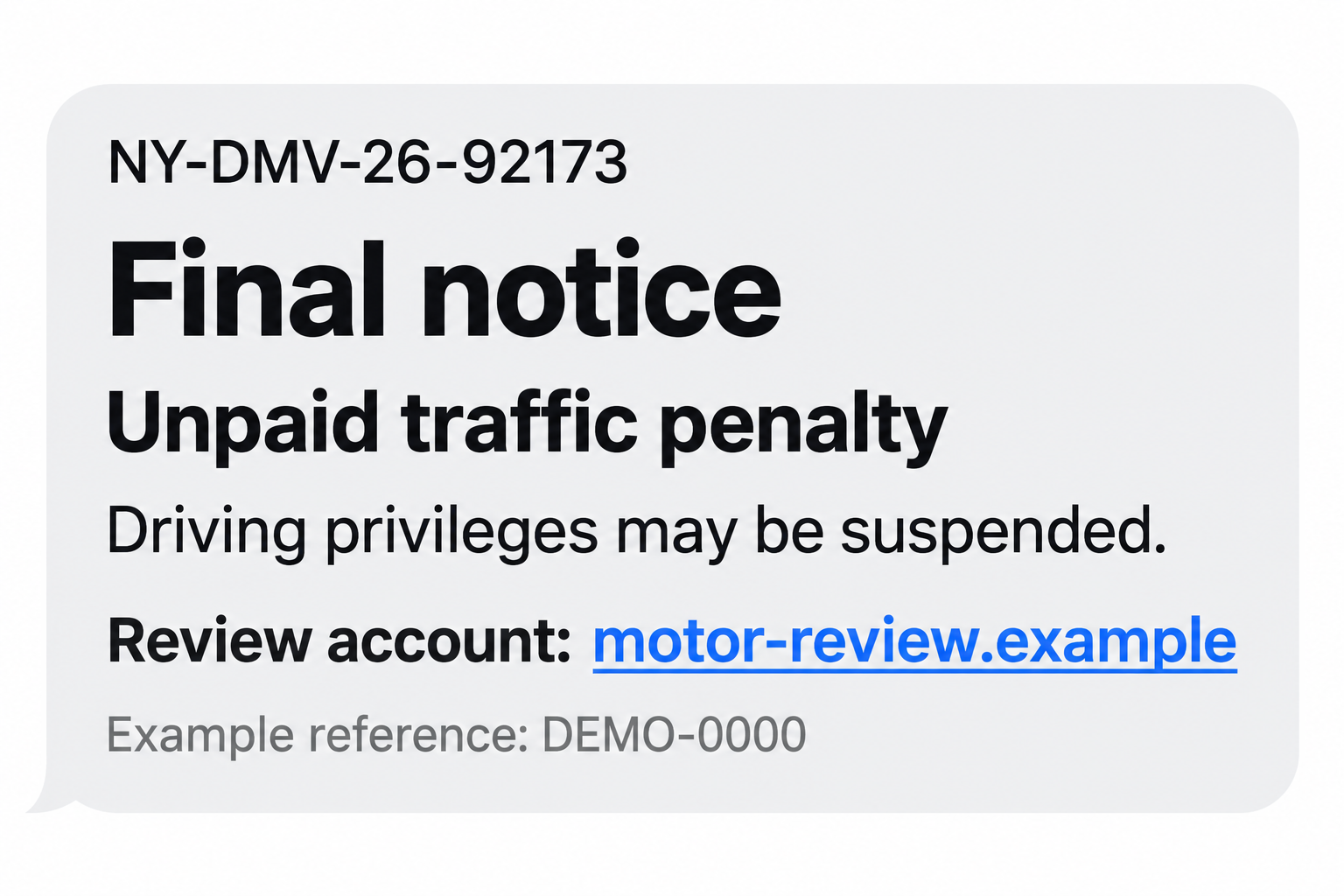
The NY-DMV-26-92173 scam text uses official-sounding reference wording alongside a supposed traffic penalty or unresolved payment. It encourages the recipient to act through an unsolicited destination.
The sequence resembles an administrative identifier. That resemblance can make the message seem connected to a government record before the reader has checked anything independently.
A reported version threatens suspension or additional costs, including a claimed 35% fee. These are statements in the deceptive message, not confirmed consequences for the recipient.
The lead visual is a generated interface illustration. Its example hostname and demonstration details are not an original message, a real case record, or a captured payment page.
New York authorities warn about this broader impersonation mechanism
New York’s official DMV and toll-text warning describes messages and imitation websites designed to obtain personal information.
The official warning corroborates that mechanism. It does not verify the exact 26-92173 identifier or show what every page using similar wording collects.
The practical danger is accepting an unknown sender’s account of a debt and entering information into the route that sender supplies.
- “NY” makes the reference feel local.
- “DMV” borrows a familiar agency’s authority.
- Grouped numbers suggest a record that has already been processed.
- A threatened restriction gives the recipient a reason to rush.
Verify a real driving issue through the responsible institution
Go independently to New York DMV or contact the actual court or tolling agency responsible for the matter being alleged.
A single agency name in a message does not establish who handles every possible ticket, toll, or license issue. Let the genuine institution direct you.
Do not use the text’s website to test whether the reference is real. A page controlled by the sender can repeat the same invented claim.
Why the Reference Number Can Be More Persuasive Than the Threat
People expect scams to sound vague. A message with a structured identifier can appear to have information that a random stranger would not possess.
But the sender can invent a string of letters and numbers as easily as a sentence. Specificity is not the same thing as verification.
The identifier can also make a search feel productive. Finding discussions of the same wording may explain the scam, but it does not locate a genuine case.
Do not mistake recognition for authenticity. A phrase can become familiar because many people received the same deceptive template.
You may also have a real driving-related obligation. That coincidence should lead to a separate official check, not automatic acceptance of the message.
The safest question is concrete: which institution has an actual record involving me, and how can I reach it without relying on this sender?
Answering that question prevents the text from controlling both the accusation and the process supposedly needed to disprove it.
How the NY-DMV-26-92173 Scam Works
Step 1: A government-style reference arrives without context
The text introduces an alleged unresolved traffic matter and gives it a label that looks administrative. The recipient is expected to recognize the authority, not the event.
That leaves a useful gap for the sender. You may assume that a missing letter, address change, or forgotten ticket explains why the notice is unexpected.
Those explanations are possibilities in your own mind, not facts established by the text. They should not become reasons to trust its link.
Keep the message for reference if needed, but begin verification outside it. You do not have to interact with a sender to investigate a claim.
Step 2: The alleged balance becomes a threat to daily life
The message connects an unpaid penalty to suspension, fees, or other consequences. It transforms an unfamiliar notice into a problem that could affect work and transport.
For a person who depends on driving, that possibility is difficult to dismiss. The sender benefits when practical concern turns into immediate compliance.
Do not treat the consequence as established simply because it sounds plausible. First confirm the underlying matter and the institution that actually administers it.
A fake deadline cannot determine your legal status. An authentic obligation, if one exists, must be addressed using information from its genuine record.
Step 3: The link promises a quick way to inspect the problem
Clicking can feel like gathering information rather than paying. That makes a “review” or “resolve” button an effective bridge to the next stage.
The destination may repeat the same reference and agency terminology. Agreement between a text and its linked page proves only that they tell the same story.
A reference alone cannot tell you which website you would reach or what details it might request. There is no need to investigate by clicking.
You can still avoid the risk without exploring the page. Navigate to the genuine agency yourself and ask how to check the alleged issue.
Step 4: Familiar address fragments can hide an unrelated host
Government names can appear in page titles, paths, or portions of a misleading address. Their presence does not show that New York controls the site.
Read the destination carefully if it is already visible, but do not open it merely to examine the design. A convincing layout does not improve its identity.
Likewise, a browser padlock says something about the connection, not whether the operator is a government agency. Encryption cannot authenticate the alleged debt.
Use an independently located official service and any payment route that service itself endorses. This is stronger than guessing from a logo or color scheme.
Step 5: A request for details creates an exposure separate from the penalty
If the imitation page asks for identifying or payment information, the recipient may provide it to view or settle the supposed balance.
At that point, the record being created may be a disclosure to the impersonator rather than a government payment. A small amount does not make that safe.
Do not enter a driver’s license number, account credentials, or card details simply to see whether the site recognizes you. That is not a harmless test.
If you already supplied information, note exactly what it was. Different disclosures require different protective steps, and not every visit means every account was compromised.
Step 6: Leaving the message restores an independent way to check
Open a new route to the responsible institution. Explain the claim and ask whether there is a real record, without accepting the sender’s version as fact.
If you are directed to another office, confirm its contact through an official source. Do not let an unsolicited follow-up caller take over the verification.
A genuine record can then be paid, challenged, or clarified through the proper process. A fabricated demand can be reported without financing it.
This separates the anxiety created by the text from the real decision you need to make. You are checking an obligation, not obeying a stranger.
What to Check When You Are Unsure About Your Driving Record
Identify whether the claim concerns a ticket, toll, or license
Scam messages often bundle different functions together. A real inquiry is easier to handle when you establish precisely what the alleged issue concerns.
DMV can provide information about its own services. A particular court or tolling agency may be responsible for other records or payment questions.
Start from a verified institution and follow its guidance. Do not assume the unknown sender has correctly identified the agency that would handle your situation.
Use records you already trust
An authentic citation or an existing account can supply a known starting point. Access it through a saved official route rather than the new text.
Compare the alleged event with the institution’s records. If the details do not agree, ask for clarification before treating a balance as yours.
Keep your actual contact information current with relevant agencies through their legitimate services. Do not “update” it on a form introduced by the suspicious message.
Be careful about help offered after you start searching
A search result or discussion can explain why a notice looks wrong. It cannot replace the authority responsible for your actual record.
A stranger offering to clear the reference for a fee is not a shortcut. Verify their role independently before disclosing information or authorizing any payment.
If you ask someone you trust for assistance, share a redacted image. Do not forward the live link and ask them to test it.
Your messaging service or carrier may provide a reporting option for unwanted texts. Use its published instructions rather than sending information back to the suspected impersonator.
Keep a separate copy of important evidence first. Reporting through a messaging interface and resolving an actual driving matter are different tasks handled through different channels.
What to Do if You Have Fallen Victim to This Scam
-
Stop using the sender’s route. Do not reply, submit another form, or call a contact supplied by the notice to request cancellation.
Keep the message, displayed identifier, and any transaction confirmation. Write a short account of what you clicked, entered, and approved.
That record helps distinguish a concerning text from an actual payment or data disclosure. Keep unredacted evidence private.
-
Check the alleged obligation independently. Contact the genuine institution relevant to the ticket, toll, or licensing claim.
Ask how to locate the record and verify any deadline. Do not assume a payment to an impersonator resolved a real matter.
If a genuine case exists, follow its official process. The fraudulent message is a separate problem, not an excuse to miss an authentic obligation.
-
Contact your financial provider after a payment or card disclosure. Use the official banking app or the number printed on your card.
Explain whether you approved the transaction because of deception or found a charge you never authorized. Ask which reporting and recovery options apply.
Preserve the provider’s case number and supporting receipts. No article or caller can guarantee that a particular payment will be returned.
-
Replace passwords entered on the imitation site. Reach the real account service through a trusted route and choose a unique password.
Change reused credentials elsewhere and review available security settings. Tell the provider if you shared a one-time code or approved an unexpected prompt.
Do not change unrelated passwords solely because the text arrived. Prioritize the accounts and credentials actually involved.
-
Respond to identity-information exposure. If sensitive identifying information was submitted, visit IdentityTheft.gov for a tailored recovery plan.
For a disclosed license detail, ask the genuine issuing agency what protective or replacement steps fit the situation. Keep copies of its instructions.
Do not send further identification to the suspicious page to remove the first submission. That would give the same unverified operator more information.
-
Report the deceptive communication. Use ReportFraud.ftc.gov and the relevant agency’s independently published reporting options.
Provide the actual destination and identifier where available, along with what happened. Avoid guessing who operates the site or which company is responsible.
Once useful evidence is saved, block and delete the message. Do not keep the conversation open in case the sender offers a resolution.
-
Watch for a second attempt disguised as recovery. Someone may claim they can reverse the charge or remove the supposed enforcement record.
Do not pay advance fees or share codes with an unsolicited helper. Confirm any claimed official role through independently found contact information.
Talk through the incident with anyone who helped you pay. Their card or personal details may also need attention, even if the text reached you.
Frequently Asked Questions
Is NY-DMV-26-92173 proof of a real case?
No. It is wording associated with the reported scam. A structured reference must be confirmed through the responsible institution before it is treated as genuine.
Does a threatened 35% fee mean I should pay immediately?
No. Verify the underlying obligation first. A fee claim in a suspicious text cannot establish a real balance or deadline.
Should I use the message’s link to check whether I owe money?
No. A sender-controlled page can repeat the same invented claim. Start with an independently located official agency or court.
Can a government name inside the web address authenticate it?
No. Familiar terms can be inserted into unrelated addresses. Verify the actual institution and its authorized service rather than relying on wording.
What if I have a genuine unresolved ticket?
Address it through the real issuer or responsible court. The existence of a genuine matter does not authenticate an unsolicited text about it.
What should I do after reading but not opening the link?
Save it if needed for reporting, then block and delete it. Reading the notice alone does not establish financial loss or account compromise.
The Bottom Line
Do not let NY-DMV-26-92173 turn an unverified traffic claim into a payment. Its official-looking reference and threatened penalties are not independent evidence.
Use genuine institutional records to check the issue. If you already submitted information or money, secure the affected accounts and contact the relevant provider promptly.

Join the discussion
0 commentsShare your experience or ask a question about this article.
Discussion
Start the conversation
Have a question or something useful to share? Add the first comment.