


Oasis investors could open an online account and see what looked like steady foreign-exchange earnings. The explanation sounded sophisticated without asking them to place trades themselves.
For people still dealing with those losses, another promise of help now deserves particular attention. The original investment is only part of the story.
Overview
The offer promised dependable income from forex trading
Oasis International Group, led by Michael J. DaCorta, collected money from hundreds of investors. The pitch described a profitable, well-protected foreign-exchange business.
Account statements and an online portal gave investors apparent evidence of earnings. Those displays concealed the losses and money movements behind the business.
The relevant operation also involved Oasis Management and Satellite Holdings Company. Match those entities and DaCorta when checking records, rather than unrelated businesses called Oasis.
The original fraud resulted in a conviction
DaCorta was convicted in 2022 and sentenced to 23 years in prison. A later civil summary judgment also found fraud violations against him.
The CFTC’s judgment announcement describes false trading claims, misleading statements and misuse of investor money. This was a proven scheme, not merely disappointing forex performance.
The advertised income was disconnected from the actual position of the business. Some money was lost trading, while other funds benefited the operators.
Investors must distinguish the receiver from later fee collectors
- The court-appointed receiver publishes updates through oasisreceivership.com directly.
- A 2026 order addresses misconduct by the Oasis Helpers Group.
- The original receivership claims deadline passed on June 15, 2020.
- Existing distributions and future payments depend on the court-supervised process.
Do not pay someone who claims another fee is necessary to protect an Oasis recovery without checking with the receiver through independently verified details.
The Portal Showed Income While Hiding the Damage
The Justice Department’s sentencing account explains the central sales story: Oasis supposedly earned substantial revenue as a market maker collecting spreads on forex trades.
A spread is the difference between quoted buying and selling prices. In a genuine business, explaining that mechanism would still leave actual revenue to verify.
Oasis made the concept sound like an engine for reliable earnings. Investors were told the opportunity was essentially risk-free and supported by substantial collateral.
In reality, Oasis was not operating the claimed market-making business. Its apparent spread earnings involved Oasis paying Oasis, creating the illusion of outside revenue.
The investor portal displayed those credits while concealing catastrophic trading losses. A person checking regularly could therefore become more reassured while the underlying position deteriorated.
That is why the dashboard matters so much. Its usefulness to the deception came from appearing to provide continuing evidence, rather than one promotional promise.
The court record also establishes Ponzi-style payments and personal spending. Investors’ deposits were not simply waiting safely behind the balance shown on a screen.
How the Oasis International Group Scam Works
Step 1: Sell a reassuring explanation for steady returns
The forex pitch presented Oasis as a business earning from market activity, with a minimum annual return of 12% among the assurances identified by the CFTC.
That framing could make the income seem connected to repeatable operations rather than unpredictable speculation. The technical language supplied an explanation people could repeat to others.
A credible explanation still needs genuine business activity underneath it. A promise becomes deceptive when the operator misstates how earnings are produced or hides the actual risk.
Here, the claimed market-making revenue did not exist as represented. The reassuring description helped conceal a fundamentally different use of investors’ money.
Step 2: Bring deposits into a shared investment operation
Investors supplied funds through promissory notes and other arrangements. The civil findings describe recruitment incentives that encouraged participants to introduce additional investors.
A recommendation from someone who has already invested can feel more reliable than a cold advertisement. That person may also believe the account statements they receive.
Personal trust does not establish what happens after a transfer. The person making an introduction may have no visibility into the pool’s actual financial position.
For a former investor, preserving who made the introduction is useful context. It should accompany the payment evidence rather than replace it.
Step 3: Display balances that conceal real losses
The CFTC findings describe false account statements showing balances unsupported by available money and assets. The displayed account was not a reliable measure of recoverable funds.
Repeated updates can make this deception particularly convincing. Each new statement appears to confirm the previous one, even when both rely on the same false accounting.
Someone comparing only those statements may therefore see consistency instead of trouble. The missing comparison is with independently held assets and genuine business results.
Save portal screenshots if you still have them. They show what Oasis represented, even though a displayed balance should not automatically become your cash-loss calculation.
Step 4: Use investor money to sustain payments and personal spending
Only some pooled funds went into forex trading, and that trading lost money. Other funds were misappropriated, including money used for residences and expensive vehicles.
Payments to investors helped perpetuate the operation. Receiving a payment could persuade someone that the earnings story was true without revealing its actual funding source.
A Ponzi payment and a genuine investment return can look identical in the recipient’s bank account. Their difference lies in how the money was generated.
That is why a testimonial about being paid cannot establish the safety of a pooled investment. It says little about obligations to everyone else.
Step 5: Turn the recovery period into another point of exposure
After intervention, a court-appointed receiver began recovering assets and administering claims. Former investors now needed reliable information about distributions and their own records.
A September 2026 court order found misconduct involving the Oasis Helpers Group, including an impermissible 15% levy on receivership distributions.
The court held DaCorta, Greg Melick, Jason McKee and Brent Winters in civil contempt. That is a civil finding, separate from DaCorta’s original criminal conviction.
The lesson for investors is immediate: someone claiming to help can interfere with the genuine recovery process. Verify their authority before giving them money or documents.
Oasis Entities, the Receiver and the Helpers Group
Identify the investment through its complete name
This case concerns Oasis International Group, Oasis Management and Satellite Holdings Company associated with DaCorta. The word Oasis alone is not a reliable identifier.
Use contracts, transfer recipients and dated statements to establish your connection. An unrelated charity, retailer or financial business should not inherit accusations from this case.
The receiver’s authority comes from the court
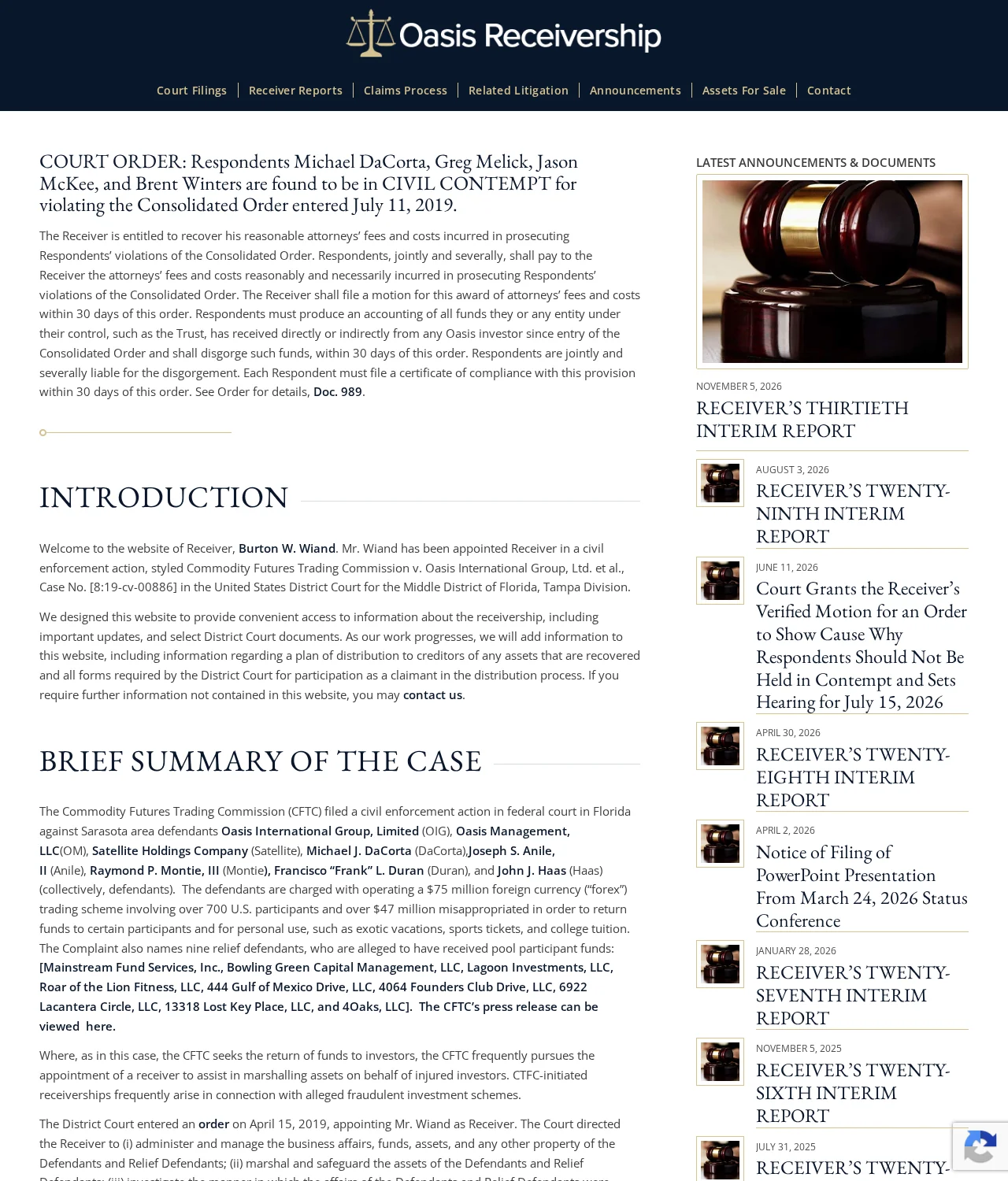
Burton W. Wiand was appointed receiver in the CFTC enforcement action. His role includes safeguarding assets and administering the court-supervised recovery process.
The receiver’s official case website contains court filings, reports and contact details. The latest published interim report independently identifies that website within the court filing.
A helpers label did not establish authority over distributions
The 2026 order describes interference with claim forms and attempts to collect money connected with investors’ recoveries. A supportive group name did not make those actions legitimate.
Do not treat a private group’s invoice as an instruction from the receiver. Check who issued it and what authority they claim before acting.
A court order is different from money already returned
The contempt order required an accounting and disgorgement of covered funds. That requirement should not be described as proof that every required payment has occurred.
Similarly, the original restitution obligation is different from the receivership’s available cash. Actual distributions depend on funds recovered and the court-approved administration.
What the Current Claims Information Means
The receiver’s report published in November 2026 states that the claims deadline was June 15, 2020. It does not announce a new application period.
It also says the first and second interim distributions are complete. For eligible claims receiving both, those payments totaled approximately 33.28% of their allowed amounts.
That percentage is historical distribution information, not a guaranteed rate for future payments. An allowed amount can also differ from a portal balance someone remembers.
If you already filed a claim, your practical questions concern its status, contact information and any official instructions affecting it. Keep your individual claim reference private.
If you missed the deadline, the report says untimely claims are barred. Ask the receiver about your circumstances rather than assuming a paid helper can bypass that rule.
An update to an existing address is not the same as filing a new claim. Be clear about which task you need when contacting the receiver.
These distinctions help protect people from paying for an outcome the person collecting money cannot deliver. A persuasive explanation cannot reopen a court-supervised deadline.
Keep a record of which distributions you received and when. A missing check, an address change and an eligibility dispute are different problems requiring different information.
When asking about a payment, provide the reference from your existing correspondence. Do not publish the reference in a group hoping that someone will identify the issue.
The receiver may need to authenticate your identity before discussing a private claim. That check is different from a third party demanding a recovery commission.
What to Do if You Have Fallen Victim to This Scam
-
Gather both investment and recovery-period records. Preserve Oasis agreements, payment histories, portal statements, claim correspondence and records of distributions you actually received.
Also retain Helpers Group agreements, invoices and messages if they concern your experience. Keep those payments separate from the original investment in your summary.
Write down dates and amounts without assuming all losses belong to one transaction. That separation helps the receiver understand exactly what you are reporting.
-
Reach the receiver through the published case website. Open oasisreceivership.com yourself and select Contact, rather than following a message sender’s substitute link.
The contact page lists (727) 235-6769 and a form asking for your name, email, subject and message. Identify the case and describe your question concisely.
If using the form, complete any verification it presents and send the message. Save any confirmation and a copy of the information you supplied.
If the form fails or provides no confirmation, call the published number. Ask how to send supporting records securely, rather than repeatedly uploading sensitive material.
-
Clarify your existing claim rather than purchasing a new one. Have your private claim reference and original submission correspondence available when speaking with the receiver.
Ask whether contact details need updating and which instructions apply to your situation. Verify any requested document against the case website before returning it.
If you did not file before the deadline, explain that clearly. Do not pay someone claiming they can guarantee admission into the completed claims process.
-
Verify any demand connected with a distribution. Send the receiver the invoice and accompanying message, asking whether the request comes from the court-supervised process.
Do not let a threatened collection deadline force payment before that check. If an actual legal notice arrives, obtain independent legal advice promptly.
Keep written instructions and your reply together. A private fee claim should not be confused with an official requirement governing your receivership payment.
-
Report new money sent under a deceptive recovery promise. Contact the bank or payment service that handled it, using established account support.
Provide the date, recipient, amount and reason you paid. Ask whether the transfer can be reviewed or stopped, and retain the provider’s reference number.
Tell the receiver about the approach as well. The institution handling your payment and the court-appointed administrator have different roles, so one report may not reach both.
-
Share verified information without exposing investor records. Direct other affected people to the receiver’s website and the specific court order rather than circulating private claim lists.
Keep your own claim number, financial statements and identifying information out of public discussions. Another participant’s familiarity with the case does not authenticate a payment request.
Follow later case updates for actual distribution decisions. No private assurance can establish that funds have been collected or that a future payment is certain.
Frequently Asked Questions
Was Oasis International Group a confirmed forex scam?
Yes, DaCorta’s criminal conviction and the civil fraud findings establish the wrongdoing. The case concerns his identified Oasis operation, rather than every business using that word.
Why did the online account show profits?
The portal displayed apparent spread earnings while hiding major trading losses. False statements represented balances that were not supported by the business’s available assets.
Who is the legitimate Oasis receiver?
Burton W. Wiand is the court-appointed receiver in the CFTC case. His reports identify oasisreceivership.com as the website for official case information.
What did the court find about the Helpers Group?
The September 2026 order found civil contempt and misconduct affecting recoveries, including an impermissible levy on distributions. It required an accounting and disgorgement of covered funds.
Can I file a new receivership claim now?
The latest published report states that the deadline passed in June 2020 and untimely claims are barred. Ask the receiver about your specific circumstances.
Does the reported distribution percentage guarantee more money?
No, the percentage describes completed interim distributions for applicable allowed claims. Additional payments require available funds and the actual court-supervised process, rather than a helper’s assurance.
The Bottom Line
Do not invest through the Oasis forex pitch or pay a private collector to protect a supposed recovery. The original fraud and later recovery misconduct are documented.
If you were affected, preserve both sets of records and contact the verified receiver about your claim or a new demand. Protect any distribution through independent confirmation.

Join the discussion
0 commentsShare your experience or ask a question about this article.
Community experiences
Did this happen to you?
Your experience could help someone recognize the same scam. Submit a private report for our team to review.
I experienced this tooReports are reviewed before publication. Sharing publicly is always your choice.
Discussion
Start the conversation
Have a question or something useful to share? Add the first comment.