

PawShield Ultrasonic Flea Killer is being marketed as the easy answer to a stressful problem: fleas.
The pitch is simple. No chemicals. No vet visits. No pills. Just “plug it in once” or turn it on and let “precision frequencies” do the work.
But when you slow down and look at how PawShield is sold, it starts to look less like a breakthrough and more like a familiar rebrand of a cheap gadget, pushed with a new narrative and the same conversion tactics.
In other words: same device, different label, different story, same overpromises.
This review breaks down the biggest red flags, what the device appears to be in reality, how this marketing funnel works, and what to do if you already ordered.
Scam Overview
If you found PawShield through TikTok, Facebook, Instagram, or YouTube, you are not alone.
The campaign is clearly built for social media: short punchy claims, anxious pet-owner targeting, and a landing page designed to convert quickly. The problem is that the claims are extremely strong, while the evidence and transparency are thin.
Let’s walk through what PawShield promises, what the red flags look like, and why this is best viewed as a dropshipping-style gadget campaign rather than a dependable flea solution.
What PawShield claims to do
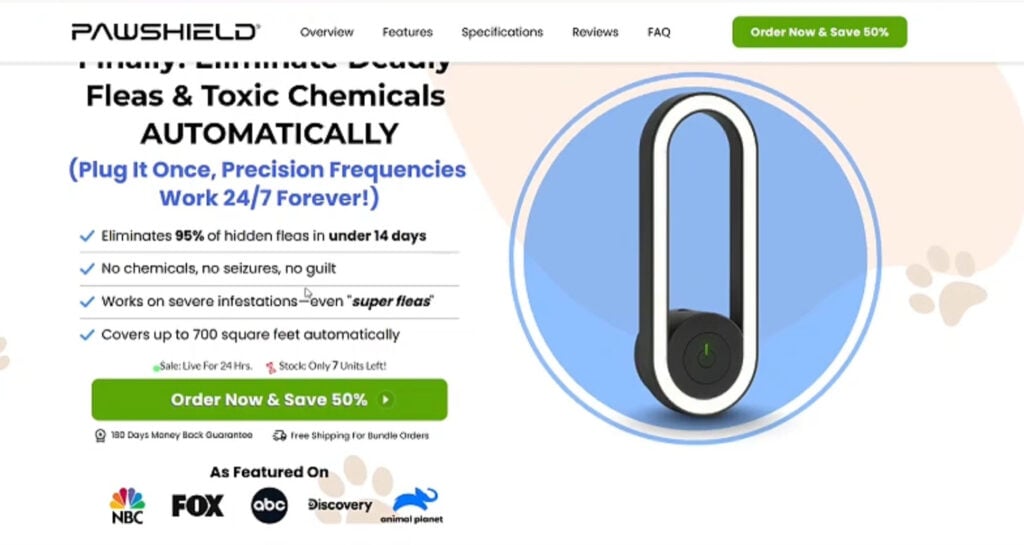
PawShield is positioned as a chemical-free flea solution that works through ultrasonic or “precision frequency” technology.
On the sales page, the promise is framed like a product you plug in and forget. It claims results without the trade-offs pet owners worry about.
Typical claims and phrasing include:
- “Eliminates 95% of hidden fleas in under 14 days”
- “Plug it once, precision frequencies work 24/7 forever”
- “Works on severe infestations, even ‘super fleas’”
- “Covers up to 700 square feet automatically”
- “Order now and save 50%”
- “Sale live for 24 hrs”
- “Stock only 7 units left”
- “180 days money back guarantee”
- “As featured on” media logos displayed as credibility signals
Those are not small claims.
“Eliminates 95%” and “under 14 days” is the kind of promise you would expect to see backed by testing, clear methodology, and real-world limitations.
Instead, what you usually get is marketing graphics.
The first major problem: ultrasonic flea claims have weak public proof
Here is the core issue.
PawShield’s marketing relies on the idea that ultrasonic sound or frequency cycling will repel or eliminate fleas reliably.
But the public-facing proof typically isn’t there.
You will see a lot of confident language about “technology,” but not what careful buyers look for:
- No clinical testing results shown
- No lab reports linked
- No clear methodology explaining how outcomes were measured
- No veterinary endorsements you can verify
- No meaningful limitations or scenarios where it may not work
If a company promises near-total flea control without providing solid supporting evidence, that is not a small gap. It is the entire product claim.
And fleas are not an abstract annoyance. They are a health and comfort issue for pets, and relying on an unproven shortcut can cost you time while the problem worsens.
The second major problem: the same device keeps appearing under different names
This is one of the strongest red flags in your screenshots.
The “PawShield” device shown in the ads and on the sales page looks like the same generic plug-in ultrasonic repeller device that has been sold online for years under countless names.
It also closely matches the device used in the HomeShield campaign, just with a new angle and new target: fleas instead of roaches or “pests in your walls.”
This is a classic pattern in high-volume dropshipping funnels:
- A cheap commodity gadget is sourced from overseas suppliers
- The product is renamed and repackaged into a “brand”
- The story changes depending on the niche (home pests, fleas, mosquitoes)
- The website design stays the same: urgency, big promises, big discount
- When complaints grow, the brand changes again
If you keep seeing the same device but the name, domain, and purpose keep changing, you are not watching innovation. You are watching a marketing machine.
The third major problem: the wholesale pricing tells you what this really is
Your screenshots also show something buyers rarely see.
The same style of ultrasonic plug-in device is listed on wholesale marketplaces for roughly $0.40 to $2 per unit, depending on supplier and order quantity.
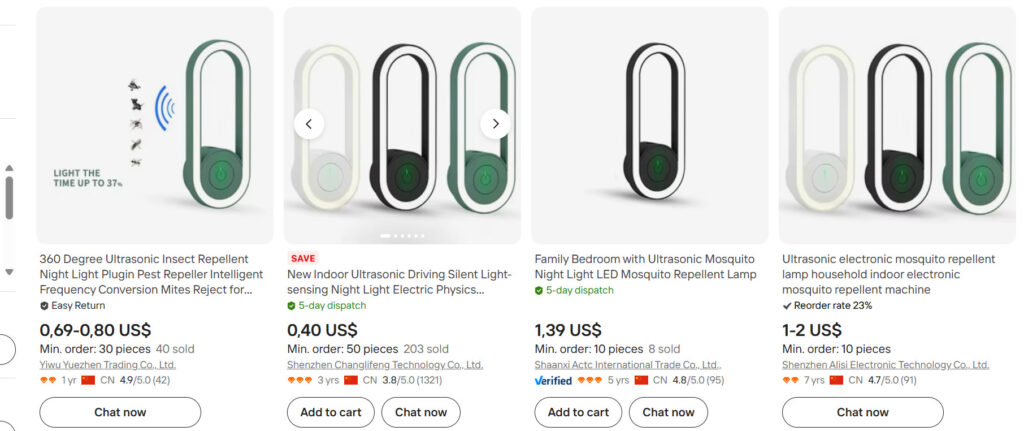
That does not automatically mean “scam” by itself. Many products are marked up.
But it does explain the business model:
- Buy a generic device for around $1
- Wrap it in a premium story about “precision frequencies” and “super fleas”
- Sell it for $30, $40, $60, or more
- Push bundles to increase order value
- Use refund friction to protect margins
A product can be real and still be sold through scam-like tactics.
When a $1 gadget is marketed as a near-guaranteed solution to a stubborn flea infestation, the mismatch matters.
The fourth major problem: mixed and inconsistent customer experiences
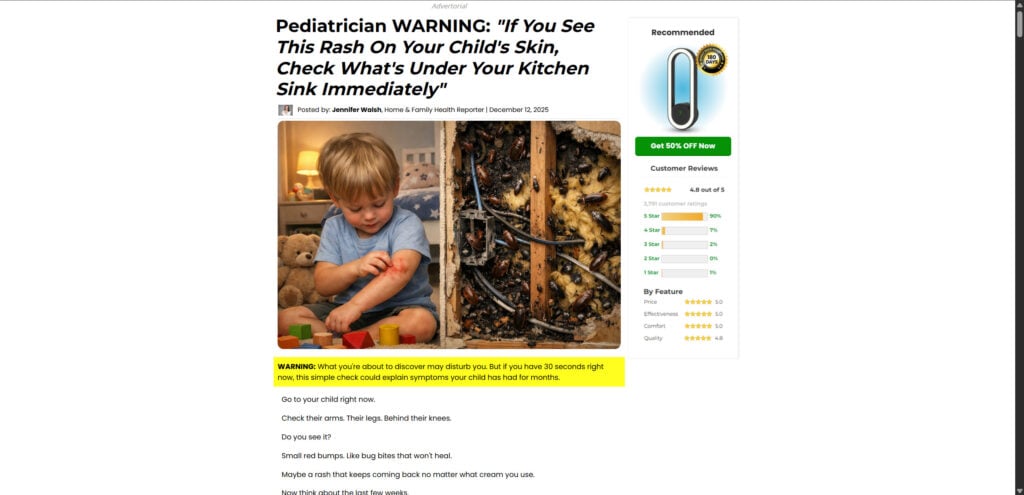
PawShield campaigns often lean on “thousands of reviews” and a high average star rating.
But when you look for real, verifiable buyer feedback across independent sources, the story tends to get inconsistent fast.
Some buyers report mild improvement or less scratching.
Others report no change at all, even after weeks.
That inconsistency is exactly what you would expect from a gadget that is not a clinically proven flea control method.
It is also what you see when marketing is stronger than product performance.
A real flea solution tends to show repeatable outcomes when used correctly.
A hype-driven gadget tends to produce a scatter of experiences, often influenced by placebo effect, timing, or what other treatments the owner used at the same time.
The fifth major problem: fake urgency that never ends
The PawShield page uses multiple urgency triggers:
- A “50% off” discount
- “Sale live for 24 hrs”
- “Stock only 7 units left”
Here is the reality of how these funnels work.
These “limited time” messages are commonly scripted elements that reset or rotate automatically. They exist to push you into a rushed decision, not to communicate real inventory status.
If a discount is always active, it is not a special deal. It is the price.
And if the page is constantly warning you that stock is about to run out, but ads are running nonstop, that is not a supply issue. It is a persuasion tactic.
The sixth major problem: lack of transparent company information
Legitimate pet health-related products usually provide clear business details:
- Company name
- Physical address
- Transparent contact options beyond a form
- Clear policies that do not hide behind vague language
- Product documentation you can review before purchase
With campaigns like PawShield, it is common to see:
- Minimal “about” information
- Limited support channels
- Policies written to favor the seller
- Unclear fulfillment details until after purchase
Transparency is not optional when the product is being positioned as a health-adjacent solution for pets.
If you cannot clearly identify who you are buying from, that matters.
A key contradiction you should not ignore
In the broader “ultrasonic flea killer” space, you will often see a second version of the story: a clip-on device attached to a pet.
That narrative is popular because it feels personal and direct.
But your PawShield screenshot shows a plug-in device with claims like “covers up to 700 square feet.”
That contradiction is not small.
A plug-in home device and a pet-worn clip device are not interchangeable products, and they are not solving the same problem in the same way.
When a campaign cannot keep the core premise consistent, it usually means the product came first and the story was built later.
That is exactly what happens in dropshipping funnels.
So, should you buy PawShield?
If you are looking for a dependable standalone flea solution, PawShield is not the product to bet on.
The lack of solid proof, the recycled device pattern, the urgency tactics, and the thin transparency add up to a high-risk purchase.
At best, it is a trendy gadget that may provide limited benefit for some people in some situations.
At worst, it is a distraction that costs you money and time while fleas continue to spread through your home and onto your pet.
How The Scam Works
PawShield follows a familiar funnel that shows up across many “one simple device” scam campaigns.
Here is the step-by-step structure, and why it converts so well.
Step 1: Social media targeting hits pet owners at the worst moment
Fleas create urgency naturally.
Your pet scratches, bites, or seems uncomfortable. You worry about your home. You worry about kids. You worry about visitors.
Ads know this.
So the campaign targets pet owners with emotionally loaded angles:
- “Finally eliminate fleas without chemicals”
- “No vet visits”
- “Works fast”
- “Safe for pets and humans”
- “One simple device”
This is designed to hit the exact buyer mindset that is most vulnerable: stressed, tired, and searching for a fast fix.
Step 2: The landing page reframes fleas as a problem only PawShield can solve
The page does not simply say “repels fleas.”
It often implies a bigger story:
- Fleas are hidden and widespread
- Traditional methods are risky, expensive, or toxic
- The problem is bigger than you think
- PawShield solves it with technology
This structure creates an emotional trap.
You are pushed into a choice between:
- Doing nothing and letting fleas spread
- Using “chemicals” and feeling guilty
- Buying the “safe” device and feeling responsible
That framing is persuasive, even when the product is not proven.
Step 3: Big numbers and fast timelines replace real evidence
The “95% in under 14 days” claim is a perfect example.
It is specific enough to feel scientific.
But it is not presented with the kind of support that makes specific claims trustworthy.
Real performance claims generally come with:
- Conditions (pet size, environment, severity)
- Study design
- Measurement method
- Limitations and exceptions
- Clear definitions of success
In PawShield style campaigns, you usually get the number and the timeline, but not the foundation.
That is how marketing imitates science.
Step 4: “As featured on” logos create borrowed credibility
Media logos are powerful.
Even skeptical buyers feel a quick subconscious trust boost when they see NBC, FOX, ABC, Discovery, and Animal Planet lined up under “As Featured On.”
But in many scam funnels, those logos are not proof of coverage.
They are design elements.
If the page does not link to real segments or verifiable features, treat the logos as decoration, not validation.
Step 5: Scarcity and discount pressure push the purchase
The funnel then adds urgency:
- “Order now and save 50%”
- “Sale live for 24 hrs”
- “Stock only 7 units left”
The purpose is simple: reduce thinking time.
A calm buyer compares options. A rushed buyer clicks.
This is why you see constant discounting and constant scarcity cues at the same time.
Step 6: Bundles and upsells increase the total
Flea campaigns are especially good at selling bundles because they can justify multiple units easily:
- “You need one for each room”
- “Protect your whole home”
- “Best results require multiple devices”
- “Bundle for free shipping”
Even when the device is not proven, the bundle logic feels reasonable in the moment.
And because the product cost is extremely low at the source, the seller can offer bigger “discounts” while still keeping strong profit margins.
Step 7: Fulfillment often comes from overseas suppliers
Because this looks like a commodity gadget campaign, fulfillment commonly follows a dropshipping pattern:
- The seller does not hold local inventory
- Orders are forwarded to a supplier or fulfillment partner
- Shipping can take longer than buyers expect
- Tracking may be limited or delayed
- Packaging may look generic or not match the branding
This is also where refund requests begin.
Step 8: Refund friction protects the seller
A long “money back guarantee” sounds comforting.
In practice, scam-like funnels often use policies as marketing, then make the process difficult.
Common friction points include:
- Slow support replies
- Repeated troubleshooting requests
- Offers of partial refunds to avoid returns
- Complicated return instructions
- Return shipping costs that make the refund not worth it
If returns require shipping overseas, many buyers give up.
That is part of how the model stays profitable.
Step 9: When reputation gets damaged, the product reappears under a new name
This is the “reset button.”
If PawShield gets too many complaints attached to it, the same device can quickly be relaunched as:
- A new brand name
- A new domain
- A new pest type (fleas, ticks, mosquitoes)
- A new claim set, slightly adjusted
- A fresh batch of “reviews” and urgency banners
This is why these gadgets feel like they are everywhere.
It is not one viral product. It is one product cycling through endless identities.
What To Do If You Have Fallen Victim to This Scam
If you already bought PawShield, focus on two goals: protect your finances and fix the flea problem with proven steps.
Here is a practical path that works for most people.
- Document everything before anything changesSave screenshots of:
- The product claims (like “95% in under 14 days”)
- The discount and scarcity messages
- The guarantee language
- Your checkout page and total
- Your order confirmation email
- Check your statement for extra chargesLook for:
- Multiple transactions
- Charges you do not recognize
- A second charge days later
- Any “protection” or add-on you did not intend to buy
- If you ordered 1 but were billed for more, treat it as a dispute issueWrite down exactly what you intended to order and what you were charged.Extra quantity problems happen in these funnels, especially when bundles are pushed hard.
- Email the seller with a direct refund requestKeep it short:
- State your order number
- State the issue (misleading claims, unwanted quantity, or dissatisfaction)
- Request a full refund
- Set a clear deadline for response (for example, 48 to 72 hours)
- If they stall, escalate through your payment methodIf you used a credit card, disputes are usually straightforward.Strong dispute reasons include:
- Product not as described (claims vs reality)
- Misleading advertising
- Unauthorized add-ons or quantity
- Refund refusal inconsistent with the advertised guarantee
- Do not rely on PawShield alone for fleasFleas have a life cycle that often requires a multi-step approach.If your pet is uncomfortable, contact a veterinarian for proven options.The longer you wait, the harder a flea problem becomes.
- Clean and treat the environmentFleas live in more than one place.Common basics include:
- Wash bedding on hot settings where appropriate
- Vacuum frequently, especially baseboards and pet resting spots
- Dispose of vacuum contents promptly
- Use proven treatments recommended by a vet or reputable guidance
- Watch for rebrands so you do not get fooled twiceIf you see the same device shape under a different name with a new promise, assume it is the same playbook.
- Report the adReport it on the platform where you saw it.Include screenshots of the strongest claims and the domain you purchased from.
- If you are worried about your pet’s health, prioritize professional adviceFlea issues can lead to skin irritation, allergic reactions, and secondary infections.If your pet is suffering, do not let a gadget campaign delay real treatment.
The Bottom Line
PawShield Ultrasonic Flea Killer is marketed as a near-effortless solution: chemical-free flea control powered by “precision frequencies,” with bold timelines and big percentage claims.
But the campaign shows the same red flags seen in many dropshipping gadget funnels: weak public proof, mixed outcomes, constant “limited time” discounts, unclear company transparency, and a product that appears to be a cheap commodity device sold under rotating names.
If you want a dependable flea solution, PawShield is not the purchase to make.
If you already ordered, document the claims, watch your charges, push for a refund quickly, and switch to proven flea control steps so your pet is not stuck waiting on marketing promises.
FAQ
Is PawShield Ultrasonic Flea Killer legit or a scam?
PawShield shows strong signs of a dropshipping-style gadget campaign: aggressive ads, big promises, weak evidence, and a device that appears under changing names and websites. The product may exist, but the marketing claims and sales tactics are the main red flags.
Does ultrasonic sound actually kill or eliminate fleas?
There is no reliable public proof presented by PawShield that ultrasonic sound eliminates fleas at the promised levels (for example, “95% in under 14 days”). If a brand cannot provide clinical testing, treat it as an unproven claim.
Why does PawShield promise “95% of fleas in under 14 days”?
Specific numbers and timelines are often used to make a claim feel scientific. Without transparent testing and methodology, it is marketing, not evidence.
Is PawShield the same device as HomeShield?
The device design and sales structure strongly suggest the same generic ultrasonic repeller is being rebranded with a new story (home pests one week, fleas the next). This is a common pattern with rotating dropshipping funnels.
Why are there constant “limited-time” discounts and stock warnings?
Fake urgency is a common conversion tactic. “50% off,” “sale ends today,” and “only a few left” messages are often repeated or reset to push rushed purchases.
Are the “As Featured On” logos and review counts real?
Often, these funnels use media logos and review graphics as visual trust props without verifiable links or proof. If you cannot confirm them independently, treat them as unverified.
Can PawShield replace vet-recommended flea treatments?
It should not be relied on as a standalone solution. Fleas can cause ongoing discomfort and skin problems, and delaying proven treatment can make infestations harder to control.
Why do reviews for PawShield seem mixed?
Unproven gadgets frequently produce inconsistent outcomes. Some users report mild improvement, while others see no change. Mixed feedback is common when marketing overpromises.
Does PawShield ship from China?
Many similar campaigns fulfill through overseas suppliers. That often means longer shipping times, generic packaging, and returns that may be costly or impractical.
What should I do if I already bought PawShield?
Save screenshots of claims, your checkout, and confirmation emails. Check your statement for extra charges. If the seller stalls, file a dispute/chargeback citing misleading claims or unauthorized quantity/add-ons.









I just purchased 2 for the deal price which would have been 40 or so dollars. I had 100 in my account now I have 10. I’m pissed. I need some advice on getting my money back.
Hi Shanna, I’m sorry this happened.
If you expected a charge of around $40 and instead lost about $90, act quickly. Save screenshots of the ad, the checkout page, your receipt, and the charges on your account. Then contact your bank, card issuer, or PayPal right away and dispute it as misleading billing and charges not matching the advertised offer.
Also watch for more charges. Sellers like this sometimes try additional billing after the first payment. Your comment should help warn other buyers before they get caught the same way.