


A message about your vacation arrives unexpectedly, just when everything seemed arranged.
It looks familiar enough to deserve attention, but one request needs checking.
Overview
An unexpected task interrupts an existing booking
The Reka booking WhatsApp scam exploits something ordinary: travelers expect administrative messages after arranging a vacation. Recognition can get ahead of sender verification.
A Swiss police warning describes this approach. The useful question is how to check an unexpected task without risking your reservation or payment details.
Before responding, distinguish the reservation from the person writing about it. A genuine trip and an authorized service message are separate questions.
One request deserves an independent check
Ask who would receive anything entered into the suggested website. A familiar subject doesn’t establish that the form belongs to your holiday provider.
This is card-data phishing, not a genuine booking task. Reka’s warning tells guests not to disclose payment information.
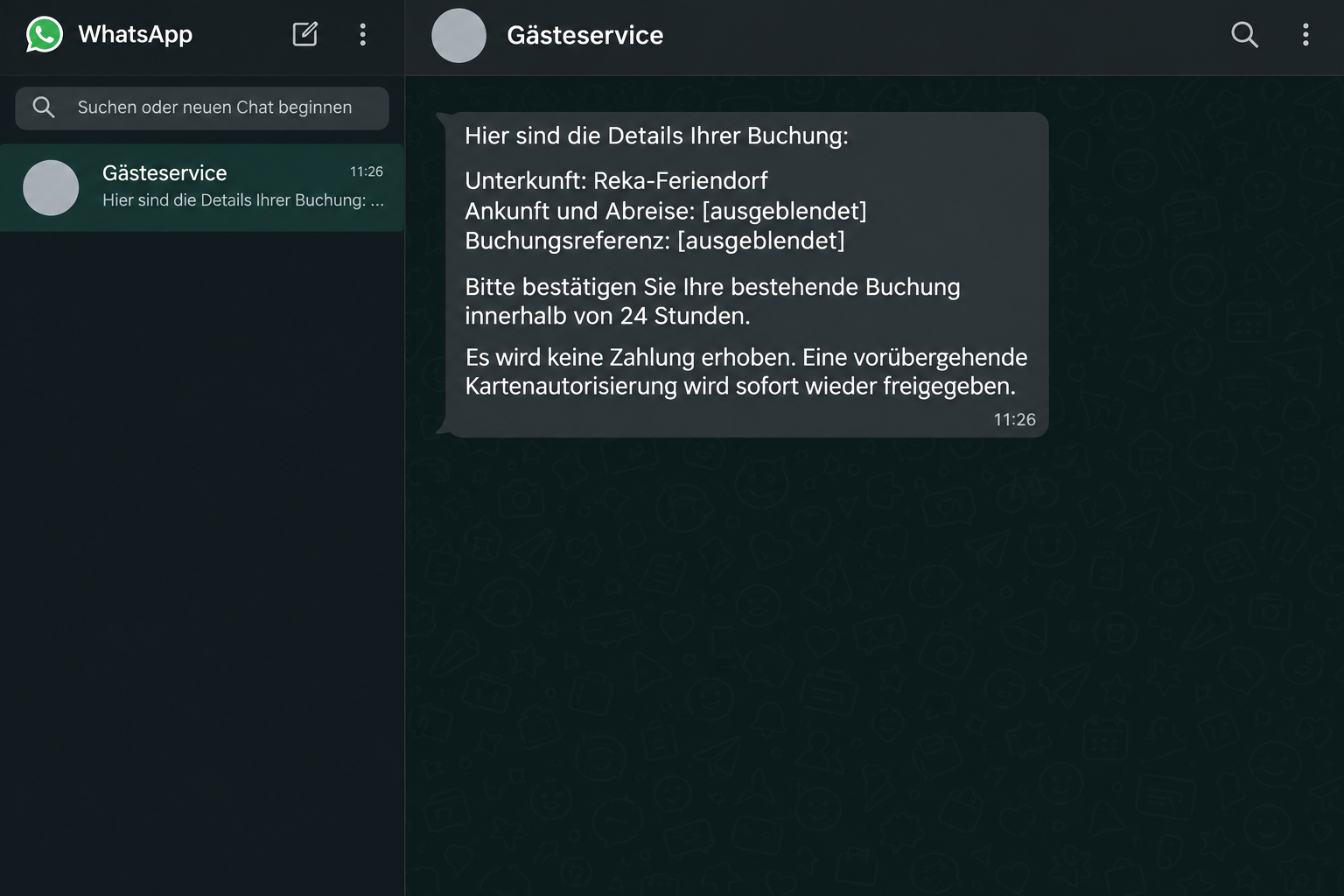
The image recreates the message’s central claims without exposing guest information or a working link. It is an illustration, not an original conversation.
Reka has issued its own customer warning
Reka’s official website confirms that fraudulent WhatsApp messages about Reka-Ferien bookings are circulating.
Its notice, updated November 17 at 20:00, says the circumstances are under investigation. Based on its current knowledge, Reka-Geld customer data are not affected.
- Did you reach Reka without using anything supplied by the new contact?
- Does the genuine provider confirm that another booking task is due?
- Have you separated the holiday question from any payment-card exposure?
- Can you identify what you actually shared before deciding what needs protection?
Why Knowing Your Travel Dates Is Not Proof of Identity
Usually, a wrong name or nonexistent reservation helps you dismiss a suspicious travel message. This approach removes that easy warning sign.
Knowing a record and being authorized to manage it are different things. Separate the information itself from the identity of the person presenting it.
A booking reference helps genuine support locate your reservation. Don’t assume that a person repeating it has passed an identity check or gained your permission.
The same distinction applies to the accommodation name. Someone can correctly name your destination while lying about their connection to its guest-service team.
Don’t assume a particular system was hacked because the message contains accurate details. Reka’s notice says it is investigating the background of the incident.
The published information does not identify the original access method or establish that every customer, booking, or Reka service was affected.
For a guest, the immediate decision doesn’t depend on solving that investigation. You can reject an unverified card request while checking your real booking separately.
How the Reka Booking WhatsApp Scam Works
Step 1: The familiarity
Impersonating guest service, the messages reproduce actual guest names, accommodations, travel dates, and references.
Compare the listed dates with your original confirmation, but ask the real provider whether its team sent the request. Matching dates don’t verify the sender.
Don’t correct apparent gaps or volunteer another guest’s details. Preserve the message instead of letting an unverified contact update the reservation through a conversation.
Step 2: The deadline
The sender threatens cancellation after 24 hours, promising no charge and immediate release of any temporary authorization.
That threat turns a routine-looking task into a potential loss. You may imagine rearranging travel or explaining why the family’s stay disappeared.
The deadline is the sender’s claim, not verified evidence that Reka will cancel your booking. Don’t let it become the reason to trust the link.
Contact the genuine provider to ask whether any action is actually due. A direct booking-status check addresses the worry without using the suspect form.
If other travelers received the message too, agree that nobody will confirm or pay until that independent check is complete.
The reassurance makes entering a card sound different from spending money. The wording can hide the immediate problem: an unknown party is collecting sensitive details.
You don’t have to see a debit for card information to be exposed. The request itself crosses a boundary when it comes from a fraudulent page.
A promise in a chat cannot control what a stranger does with submitted information. It also cannot make a separate website an authorized Reka payment route.
If a genuine payment question exists, discuss it directly with Reka rather than accepting the impersonator’s explanation of how authorizations work.
Step 3: The form
An unrelated booking-style page then requests personal and credit card information.
Reaching another page doesn’t reset the identity question. A request that began with an unverified contact still needs independent confirmation.
Payment credentials are not harmless reservation labels. Consider what someone could do with the information rather than the reassuring purpose attached to the request.
Ordinary administrative questions do not explain why an unverified party needs financial information. Look at the whole request, not just its familiar elements.
Stop rather than testing whether the form accepts an entry. You don’t need to submit anything to ask the real provider about your reservation.
How to Check Your Reservation Without Following the Link
Start with the booking confirmation you already had
Find the original confirmation from when you made the reservation. Keep it separate from the newly received WhatsApp message and any page it promotes.
Use independently known contact information for Reka or the property. Don’t copy a new telephone number from the chat into your verification process.
Ask whether your reservation remains active, whether any payment is outstanding, and whether staff genuinely sent the message, treating each as a separate question.
If someone else arranged the trip, coordinate with that person first. The right reference and named guest help genuine support locate the booking.
Keep the card question separate from the vacation question
Reka can clarify the stay, but your card issuer handles an exposed payment card. Don’t wait for a reservation reply before requesting urgent card protection.
Likewise, replacing a card does not automatically confirm or cancel your holiday. Ask Reka how any genuine payment arrangement should be handled afterward.
Switzerland’s official travel-security advice warns about WhatsApp messages that reuse real booking details and request another payment or card confirmation.
Its advice is to contact the provider through official details and avoid sending card information through message links. Those precautions address the same booking-confirmation trap.
Don’t rely on appearance or a reassuring page response
Copying the appearance of a reservation service doesn’t establish who receives a submitted form. Familiar styling isn’t permission to provide payment information.
A confirmation screen after submission wouldn’t establish that the card is safe either. Ask the issuer to assess exposure rather than trusting the site’s reassurance.
Your issuer needs the actual transaction record, not the webpage’s description of it. Keep any notification so the bank can explain what happened.
What to Do if You Have Fallen Victim to This Scam
-
If you only received the chat, don’t continue the conversation. Preserve the relevant message, then block and report the suspicious WhatsApp contact.
Tell any travel companions not to use the link. If you need reassurance about the stay, ask Reka through an independently verified channel.
Receiving a message doesn’t mean your card was used or your WhatsApp account was taken over. Base further action on what you actually shared.
-
If you opened the page, stop before entering information. Close it and avoid returning to inspect the next screen or test the confirmation.
Keep the URL from your browser history if you can do so without reopening it. Police and the genuine provider may need that information.
An opened link alone doesn’t demonstrate malware infection.
-
If you entered card details, contact the issuer immediately. Use the official banking app, your card’s contact information, or an independently verified support number.
Explain that you entered the information on a fraudulent booking-confirmation page. Ask the issuer to block the affected card and advise about replacement.
If you use this card for genuine trip costs, ask how replacement affects those arrangements, then update payment information only through verified providers.
Ask the issuer for a record of your report and how to raise any suspicious activity afterward.
Federal financial-loss guidance notes that many providers have 24-hour blocking hotlines. Don’t wait for holiday-office hours to address an exposed card.
While traveling, tell the issuer where you are and ask what options exist for accessing funds during replacement. Keep that practical question separate from disputing charges.
The federal travel guide recommends an offline backup of emergency numbers. Keep verified card-blocking details on paper so losing a phone doesn’t remove your contact route.
If the form appeared to fail or never displayed confirmation, disclose that too. An error message does not establish that your entries stayed private.
-
If you approved a request or see charges, describe the details precisely. Give the issuer the amount, merchant description, time, and any approval you completed.
Ask which transactions can be stopped, investigated, or disputed, and what evidence or deadlines apply. Don’t assume a temporary authorization means a harmless event.
The Swiss federal financial-loss guidance recommends immediate bank contact and investigation of suspicious transactions. Recovery depends on the circumstances and is not guaranteed.
-
Verify your trip with the real holiday provider. Explain that someone used your reservation details and ask how to share the suspicious message securely.
Use Reka-Ferien support rather than the chat
The official Reka-Ferien service page publishes holiday support contacts. Use that holiday-specific route rather than assuming every Reka contact handles reservations.
Make clear that you are asking about an existing stay and a suspicious message. Genuine support needs to understand both concerns.
If departure is close, say when you expect to arrive so staff understand the time-sensitive booking question.
Have the original confirmation ready, but don’t send complete card information with your question. Ask the team how to provide suspicious-message evidence securely.
Check the genuine terms before changing the stay
Reka’s rental conditions say booking confirmation is sent by email or post. Payment conditions vary by property and offer and appear during booking.
Check the conditions attached to your actual reservation instead of assuming every stay follows one schedule. Mediated third-party services can have their own provider’s terms.
The published terms also tie payment deadlines to the booking confirmation. A new sender’s deadline shouldn’t replace the dates in your genuine records.
If your reservation has installments, use its actual schedule when speaking to support. Reka’s terms allow installment arrangements with fees depending on booking circumstances.
This isn’t a reason to ignore a genuine balance due. Ask verified staff whether anything remains outstanding and how the agreed payment should be completed.
Keep their answer with your original confirmation. If you need to update a replaced payment card, ask for the genuine process before entering the new details.
The terms require a booking-change request in writing or through the customer portal, becoming binding when Reka confirms it. Booking changes may involve additional costs.
If you decide to change the trip, ask which conditions cover your particular offer. Don’t assume reporting phishing also changes a reservation or removes its payment obligations.
Save the chat, contact identity, dates, page address, and relevant bank records. Avoid posting unredacted booking references or another traveler’s information publicly.
For financial loss, follow the federal reporting guidance: contact local police and ask what evidence they need. Keep the report separate from your booking inquiry.
-
Protect any additional information you actually supplied. If you also entered a password, change it through the genuine service and anywhere you reused it.
If you shared identity documents or another person’s details, tell police and the affected person. Keep the response tied to the information involved.
Watch for follow-up contacts offering refunds, replacement bookings, or urgent verification. Verify them independently rather than continuing through the original suspicious conversation.
Frequently Asked Questions
Has Reka explained the original access method?
Reka says it is investigating the circumstances. The available notice doesn’t identify the original access method or authorize anyone contacting you.
How do I verify an urgent booking task?
Reach Reka through its genuine website or independently trusted booking records. Ask staff to check your reservation and explain any action actually due.
What should I check before entering card information?
Establish who is requesting it and why, independently of the message. Don’t provide payment details merely because a page describes the procedure as harmless.
Are Reka-Geld customer details affected by this incident?
Reka’s notice says those customer data are not affected based on current knowledge. The reported phishing approach targets Reka-Ferien holiday reservations.
Should I cancel my real reservation after receiving the message?
Don’t treat the impostor’s instructions as booking authority. Contact the genuine provider to verify your stay before canceling or making alternative arrangements.
What if I entered my card but haven’t lost money?
Tell your issuer immediately and request protection for the exposed card. You don’t need to wait for a charge before reporting the disclosure.
The Bottom Line
Do not follow this WhatsApp payment instruction. A genuine reservation doesn’t authorize a stranger to collect your financial information.
Verify the reservation directly with Reka. If you entered payment details, contact the card issuer immediately, preserve the evidence, and report the incident through genuine channels.

Join the discussion
0 commentsShare your experience or ask a question about this article.
Community experiences
Did this happen to you?
Your experience could help someone recognize the same scam. Submit a private report for our team to review.
I experienced this tooReports are reviewed before publication. Sharing publicly is always your choice.
Discussion
Start the conversation
Have a question or something useful to share? Add the first comment.