


A caller says you qualify for a free tablet or English course. The offer sounds simple, until another call says you owe money.
Then someone claiming legal authority enters the conversation. Before paying to make the problem disappear, look at how one documented operation turned an offer into a threat.
Overview
The free offer becomes a fabricated debt
The operation began with unsolicited calls offering supposedly free products. Later callers claimed the recipients had entered contracts requiring substantial payments for those products.
Government and lawyer impersonation supplied the pressure. People were threatened with court proceedings, arrest, or immigration consequences if they refused to pay.
A criminal conviction confirms the underlying scheme
Carla Magaly Alcedo Mendoza admitted operating a Peruvian call center involved in the fraud. She received an eight-year federal prison sentence on November 18, 2026.
Prosecutors attribute $15 million in losses and more than 30,000 Spanish-speaking U.S. victims to the wider conspiracy. Those are collective figures, not Alcedo’s individual receipts.
The immediate decision is to leave the caller’s payment process
Do not pay an unverified caller to prevent arrest over a supposedly free product. Check any claimed obligation and the named authority through independent channels.
- Save the original offer and later payment demands.
- Check what was actually offered before accepting the claimed debt.
- Contact a court or agency through its independently obtained details.
- Tell your payment provider promptly if money already moved.
What the Alcedo Case Actually Established
The Justice Department’s sentencing announcement describes a call center in Lima, Peru, that contacted Spanish-speaking consumers in the United States. Alcedo admitted owning and operating it.
The callers said people had won or qualified for free products, including computer tablets and English language courses. Subsequent calls introduced the supposed contractual payment requirement.
Alcedo and her coconspirators impersonated government officials and lawyers to make victims pay. The threats included legal proceedings, arrest, and consequences involving immigration.
She was extradited from Peru in April 2025 and pleaded guilty in August 2026 to conspiracy to commit mail and wire fraud.
The eight-year sentence followed that guilty plea and an operation that ran for years. It does not identify the sender of a similar call today.
The larger network also involved distribution operations in the United States that processed payments and distributed products. Different participants helped deliver different parts of the deception.
Alcedo and other defendants shared strategies for defrauding consumers. A confident caller who knew the supposed process could still be following a criminal operation’s playbook.
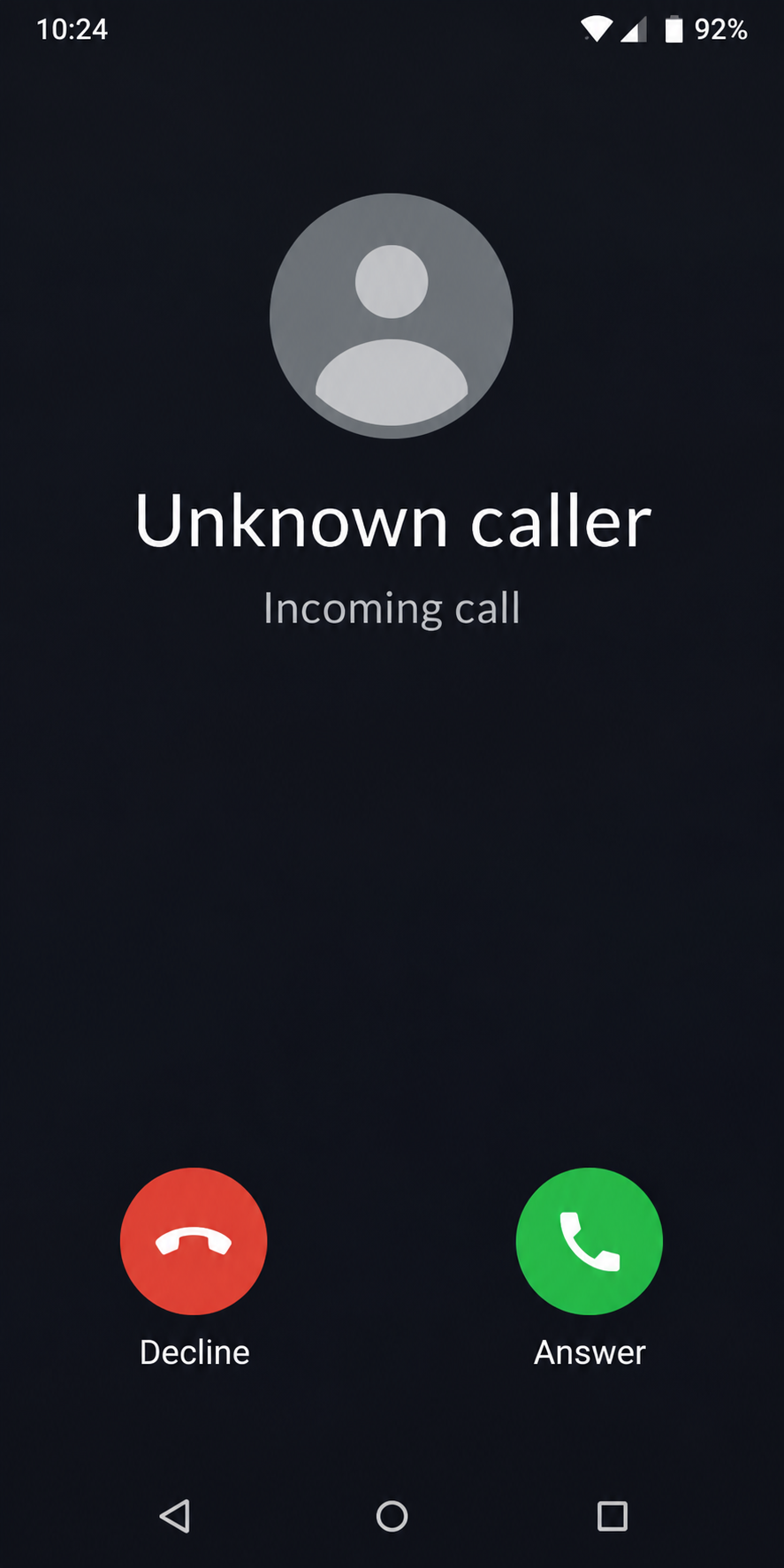
The phone image illustrates an unsolicited incoming call. It does not reproduce a recorded conversation, identify a victim, or show an original screen from the prosecution.
How the Free Tablet and Fake Court Threat Scam Works
Step 1: An unexpected offer gives the caller a reason to continue
A free product creates a conversation about receiving something useful. A tablet or language course can sound relevant without requiring the recipient to begin shopping.
Think about whether you entered any competition. A caller announcing a prize does not establish that an independent contest selected you.
Keep the difference between an advertised benefit and an agreed purchase clear. If the conversation begins with free, a later price needs explanation rather than automatic acceptance.
Step 2: The caller replaces the offer with a claimed contract
Later calls asserted that the recipient was contractually required to pay substantial sums. The supposed agreement became the explanation for a debt the recipient had not expected.
That puts the person on the defensive. Instead of deciding whether to buy a product, they are suddenly trying to explain why they should not owe money.
Bring the conversation back to the actual transaction. What was offered, what price was disclosed, and what did you agree to receive?
You can examine your own records without confirming another payment or supplying more information. A caller’s description of an agreement is not a substitute for the agreement.
Step 3: A supposed official makes the demand feel unavoidable
The operation used people pretending to be government officials and lawyers. Their claimed authority changed the tone from a sales disagreement to an apparently urgent legal problem.
A formal title does not authenticate the person using it. Neither does a second caller who already knows the product mentioned during the first conversation.
Use the name of the claimed office to locate an independent contact. Do not let the person demanding payment supply the only way to verify their authority.
Step 4: Threats make paying seem like the quickest exit
Victims were threatened with court proceedings, arrest, and immigration consequences. The threat supplied a reason to resolve the demand immediately rather than question the original offer.
You may feel that paying is easier than risking a serious problem. That feeling still does not establish that the caller can cause the consequence they describe.
End the call before deciding what to do with the claim. Ask an independently contacted agency or qualified adviser about a genuine concern.
Step 5: The payment network turns the pressure into a loss
The conspiracy included people handling payments and distributing products in the United States. The person receiving money did not need to be the person making the threatening call.
A domestic payment recipient or delivered product could therefore sit inside an international fraud. The visible local connection did not validate the fabricated contractual demand.
For someone who already paid, preserve the recipient and transaction details separately from the caller’s claimed title. Both can help explain where the money actually went.
Why Remembering the First Call Can Make the Second One Convincing
Recognizing the product can make the later demand feel connected to something real. You remember discussing a tablet, so you start questioning your memory of the terms.
The important question is what that first conversation established. Hearing an offer, accepting information, and agreeing to a priced purchase are different events.
Write down what you remember before another call changes the account of events. Keep any advertisement, order confirmation, delivery notice, or message that still exists.
If a relative took the original call, ask them to describe it in their own words. Do not let the threatening caller supply the family’s entire timeline.
A person may be embarrassed about accepting an offer that now sounds suspicious. Blame can make it harder to find out whether money or information was disclosed.
Start with practical questions: what was offered, what happened next, and how was payment requested? You need those answers to choose the next action.
Do not invent missing details to make the story sound complete. If the payment method or exact wording is uncertain, preserve that uncertainty when reporting.
If a Product or Package Actually Arrived
A delivery can make the claim harder to dismiss emotionally. Something tangible has arrived, and the caller says that proves you accepted a paid arrangement.
Keep the packaging, delivery information, and any enclosed paperwork. Those records can show the sender and timing without establishing that every statement in the demand is true.
A shipping receipt records a shipment; it does not supply all the terms the caller says you accepted. Compare it with the original offer and your own correspondence.
Do not use this case as a reason to ignore a purchase you genuinely made. Investigate the actual agreement instead of accepting either person’s unsupported summary.
If there is a real dispute over an order, contact the seller through independently verified details. Keep that process separate from an unverified threat of government action.
Keep any receipt that arrived with the package. Compare its printed amount with the offer you received, rather than accepting the figure because it looks formal.
The threatened penalty needs its own explanation. A working tablet would not establish who authorized a payment or why a government office supposedly became involved.
Checking the Threat Without Staying on the Line
The FTC’s government impersonation guidance describes callers using official titles, personal information, and urgent consequences to demand money. It advises independent contact rather than trusting caller identification.
Use an agency’s official website or an established contact record to find the correct office. Ask about the specific claim through that office’s normal process.
A telephone number displayed on your screen can be spoofed. Calling a number dictated by the same stranger does not resolve that problem.
If a court is named, contact the actual court independently. Explain what the caller claimed rather than paying the caller to provide more details.
Take real court papers or a genuine legal deadline seriously. Get appropriate legal assistance when necessary, while continuing to verify whether the telephone demand has any connection.
For an immigration concern, use the relevant agency’s official route or qualified independent assistance. A person collecting a product payment should not become your only legal adviser.
The caller may object that making another call will make things worse. That objection does not authenticate the office or explain the original payment obligation.
What to Do if You Have Fallen Victim to This Scam
-
Stop the conversation and pause further payments
End the call without promising another transfer or providing missing personal details. Keep the existing call log and messages before blocking further contact.
If the caller reaches a relative, agree on one trusted way to discuss the situation. Another family member should not be persuaded to pay separately.
-
Contact the company that handled your payment
The FTC’s payment recovery guidance recommends reporting the fraud promptly to the relevant bank, card issuer, payment app, or transfer company. Ask what recovery options remain available.
Give the actual amount, recipient, date, and transaction reference. Describe a payment induced by deception accurately, and keep the provider’s case number.
If money went to several recipients, list each transfer separately. A single total can hide which bank or payment service needs to trace each transaction.
Recovery depends on the transaction and circumstances. An investigator, sentence, or fraud report does not by itself establish that your payment has been returned.
-
Preserve the offer, demand, and payment as separate evidence
Save original messages, order records, packaging, payment receipts, and details of the claimed official. Record when the offer became a demand and when threats began.
Keep copies somewhere you control rather than relying on the caller to resend them. Avoid posting full addresses, identity documents, or financial records publicly.
-
Report the impersonation and address any exposed information
Use ReportFraud.ftc.gov to describe the approach and payment demand. Include the original free-product claim and any government, court, lawyer, or immigration identity the callers used.
If sensitive identity information was disclosed, use IdentityTheft.gov for a response matching that exposure. Tell financial providers about unfamiliar activity rather than assuming every account was compromised.
-
Verify later legal or recovery contact independently
Someone who knows the original loss may offer to recover it for another fee. Continue through the provider or agency you contacted yourself.
Do not give a new stranger control of the situation because they sound sympathetic. Preserve follow-up demands and check any claimed official role independently.
Helping a Relative Who Was Targeted in Spanish
The operation deliberately reached Spanish-speaking households. A helpful response gives the person room to explain the calls and obtain assistance in a language they understand.
Start by asking whether money has moved and whether another payment is planned. Deal with an active transfer before arguing about why the offer seemed believable.
Help the person find official contacts and organize records. Let them explain what happened, with language assistance when needed, instead of replacing their account with assumptions.
Keep the conversation private and practical. Sharing the story widely without permission can discourage someone from reporting the next demand or asking for help.
Frequently Asked Questions
Was the Alcedo operation confirmed as fraud?
Alcedo pleaded guilty to conspiracy to commit mail and wire fraud and received an eight-year prison sentence. The free-product demands were part of that documented criminal operation.
Did one call center alone steal the entire $15 million?
The Justice Department attributes that amount to the wider conspiracy, along with more than 30,000 victims. Those collective figures should not be treated as one defendant’s personal proceeds.
Does receiving a tablet prove I owe the caller money?
A delivery alone does not explain the agreement or validate a threatened government penalty. Preserve the shipment records and compare the demand with what was actually offered.
Should I ignore genuine court papers after receiving a scam call?
Verify actual court documents and deadlines through the court independently. Get appropriate assistance for a real legal matter instead of paying an unverified telephone caller.
Are all current free-tablet offers connected to this case?
The conviction concerns a particular historical conspiracy. A present-day offer needs its own checks; similar wording does not identify its operator or establish a connection to Alcedo.
Does reporting the scam guarantee that I will recover my payment?
A report can support an investigation and your provider’s response. Recovery still depends on what happened to the payment, so report promptly without accepting reimbursement guarantees.
The Bottom Line
Do not pay an unverified caller to prevent arrest over a supposedly free tablet or course. The Alcedo case shows how a simple offer became a fabricated obligation.
If you already paid, contact the payment provider, preserve the original offer and threats, and report the fraud. Check any real legal concern through an independently contacted office.

Join the discussion
0 commentsShare your experience or ask a question about this article.
Community experiences
Did this happen to you?
Your experience could help someone recognize the same scam. Submit a private report for our team to review.
I experienced this tooReports are reviewed before publication. Sharing publicly is always your choice.
Discussion
Start the conversation
Have a question or something useful to share? Add the first comment.