


The unexpected banking call leaves you uneasy about what might happen next.
An email seems to offer reassurance, but its next instruction deserves independent checking.
Overview
Check the institution before following the procedure
The SNB safe account scam borrows the authority of Switzerland’s central bank. The genuine institution explicitly says it does not provide accounts for private individuals.
That is a useful starting point: does the proposed service match what the organization actually does, independently of the caller’s explanation?
A Swiss police advisory describes this impersonation. The essential question is how to check a banking claim without handing control to the caller.
Written instructions still need an independent check
A message can make a telephone conversation feel settled without adding independent evidence. Receiving something in writing does not establish who authorized it.
Ask whether the information came from the same person whose identity you are trying to verify. Several formats can carry one unsupported claim.
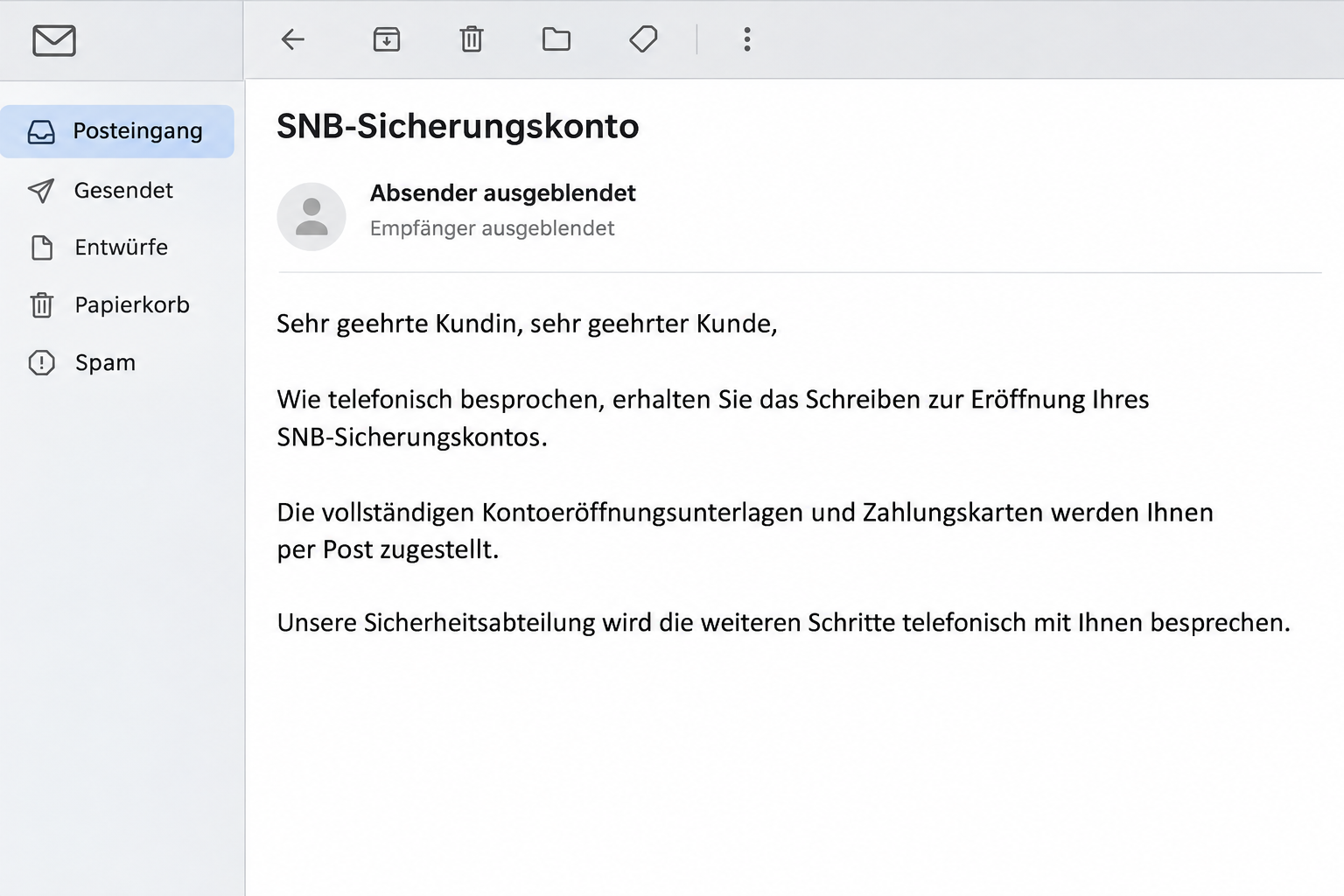
The image illustrates that email stage using reconstructed wording. It is not a genuine SNB communication or a copy of an individual’s evidence.
Pay attention to the requested action
The important question isn’t whether the letter looks polished. It is whether an unexpected caller wants you to surrender money outside your bank’s normal channels.
- Have you independently reached the institution using a previously trusted contact route?
- Can legitimate staff verify the transaction without relying on the message?
- Would the requested action give someone else control of your money?
- Can you pause the conversation and discuss the request with someone you trust?
Why the Real Swiss National Bank Does Not Fit This Story
The Swiss National Bank is Switzerland’s central bank. Its name carries real authority, which is precisely why the impersonation can feel convincing.
However, the SNB’s official contact page says it does not provide banking accounts, securities accounts, or loans to private individuals.
A surprise offer to open your personal emergency account therefore conflicts with the institution’s own explanation of its services.
The SNB also maintains an impersonation warning. It says scammers misuse its name, logo, and address in messages, websites, and telephone calls.
That warning explicitly states that the SNB never asks private individuals for money. A supposed protective purpose doesn’t turn a cash request into an exception.
You don’t need to understand central-bank settlement systems to evaluate this approach. Your own bank can address account concerns without a stranger collecting your banknotes.
Keep the two institutions separate when checking the story. A caller mentioning both your bank and the SNB hasn’t demonstrated authorization from either organization.
How the SNB Safe Account Scam Works
Step 1: The emergency
The caller alleges unauthorized transfers, blames bank insiders, and offers an SNB compensation account.
A denial isn’t permission to take over your banking decisions. You can reject a transaction claim without accepting the caller as a fraud specialist.
A recognizable institution name or familiar-looking caller display isn’t a substitute for reaching your bank through a contact route you already trust.
If the caller warns you away from bank staff, end the conversation anyway. Independently reaching your bank is how you check that accusation.
You don’t need to resolve the stranger’s story while staying on the line. Let legitimate staff check your account without the caller directing the conversation.
Step 2: The paperwork
A personalized forged letter adds legal references, a reference number, and promised account documents and cards.
When instructions resemble familiar administration, it becomes easier to focus on completing them. Pause before treating presentation as permission to act.
None of those features authenticates the sender. Text, logos, names, and reference numbers can be inserted into a document without the named institution’s involvement.
The email also gives the caller something tangible to point toward. Instead of assessing an unsupported telephone claim, you may begin following a written procedure.
Verify any institution through its independently accessed website. Using contact details supplied inside the questioned letter only keeps the check within the same story.
Look for an independently verifiable decision, not just another detail within the same message. A date, department name, or administrative heading doesn’t resolve the sender’s identity.
You can read the official institution’s service description without answering the sender. There is no need to negotiate with an unknown caller while checking.
Step 3: The handover
Claiming reimbursement, the caller demands cash for activation and sends a collector. Another impersonator may claim to be police.
Don’t assume money has arrived because someone announces that it has. The reliable check is your own bank’s account record and explanation.
Check actual transactions with your bank independently. Even an unexpected credit deserves investigation by the bank rather than instructions from an unsolicited caller.
Withdrawing cash does not prove that another institution has received or secured it. A withdrawal record documents the withdrawal, not the courier’s authority.
A receipt cannot make an unauthorized collector legitimate. The critical event is possession changing hands, not whether someone signs a sheet afterward.
Evaluate a follow-up contact from the beginning rather than relying on a previous introduction. Someone else’s assurance cannot replace independent identification.
A second voice agreeing with the first isn’t independent confirmation when both contacts arise from the same unsolicited approach.
Do not organize a meeting to investigate the collector yourself. Cancel the handover and let genuine police determine what further action is appropriate.
Checks That Matter More Than the Letter’s Appearance
Separate the financial fact from the caller’s explanation
There are several different questions here: whether a transaction exists, whether you authorized it, and whether the caller works for the institution.
A convincing explanation doesn’t answer those questions. Check the account through your established banking app or by speaking with your bank independently.
Read transaction descriptions carefully with legitimate staff. Don’t let the caller interpret every number on your screen while directing your next move.
If your bank identifies a real unauthorized transaction, follow its verified fraud procedure. You can report genuine fraud without accepting the unsolicited rescue offer.
Separate personal information from account access
A letter containing your name may feel more trustworthy than a generic message. It still doesn’t show who composed or sent it.
Federal guidance on identity information distinguishes an IBAN and identity-document copy from the access needed to withdraw money through online banking.
That doesn’t make identity documents harmless to share. The same guidance explains that criminals can misuse someone else’s details to make other approaches appear genuine.
If you gave personal information but no banking credentials, identify exactly what was disclosed. Check statements for unfamiliar activity and contact your bank about anything unexplained.
If you sent a passport or identity-card copy during a fraud attempt, the guidance recommends reporting it to police or an identity-document center.
A password or one-time code creates a different exposure. Tell legitimate bank staff about it promptly rather than assuming that monitoring alone is enough.
Don’t let reassurance create a second financial risk
Separate anything you are promised from anything you are asked to give. Reassuring language doesn’t remove the risk of parting with your property.
The label attached to a request matters less than its effect. Identify who gains possession or control before deciding whether to proceed.
Switzerland’s federal warning about doorstep scammers identifies cash collections, urgency, and secrecy as warning signs in authority impersonation.
You can refuse the request without proving every detail false. Keeping control of your money while checking independently is enough.
What to Do if You Have Fallen Victim to This Scam
-
End the conversation and stop any planned collection. Don’t make another financial commitment or continue the unverified instructions.
If cash is already in your possession, keep it secure while contacting your bank. You do not owe the caller an explanation or another appointment.
If a collector is present or you feel threatened, prioritize physical safety and contact genuine emergency services. Don’t confront or follow the person.
-
Reach your bank through an independent channel. Use your established banking app, your card’s published contact information, or a branch you already know.
Explain that someone impersonated bank security and the SNB. Ask staff to check actual transactions and any changes made during the calls.
Tell them whether you withdrew cash, transferred funds, disclosed banking information, or approved anything. Each action changes what the bank needs to investigate.
-
Report a completed cash handover to cantonal police. Swiss federal financial-loss guidance recommends reporting losses, preferably after calling ahead.
Provide the collection time, location, amount, communications, and any paperwork. Describe what happened accurately, including instructions that seemed unusual afterward.
Ask how to preserve anything relevant without putting yourself at risk. Don’t arrange another handover to recover the money or gather more evidence.
-
Preserve the email and a simple timeline. Keep the original message, attachments, call history, reference details, and withdrawal records in their existing form.
Write down the order of events while you remember it. Note what each person claimed and when you contacted the genuine bank.
Share private documents only with appropriate institutions through verified channels. Public posts should not expose your account details, home address, or identification documents.
-
Secure only the access you actually exposed. If you revealed a banking password or verification code, tell your bank immediately and follow its account-protection instructions.
If you installed remote-access software, stop using that device for banking and seek qualified help. That is an additional exposure, not an established part here.
Receiving the forged email alone doesn’t establish a device infection. Antivirus software cannot retrieve cash or replace a bank and police report.
-
Be cautious about subsequent compensation or investigation calls. Tell your household that further impersonation attempts may follow, especially if callers already know your circumstances.
Independently verify anyone claiming to investigate the incident. Don’t pay a recovery fee or release more cash because another person promises reimbursement.
Ask your bank and police what follow-up to expect. Knowing their genuine process makes an unexpected new instruction easier to question.
What to Tell the Genuine Bank
When legitimate staff answer, start with your actions rather than trying to repeat the entire conversation. Distinguish what you disclosed from what someone merely claimed.
Tell them if you shared a password, read out a one-time code, approved a request, or allowed screen access. Never repeat those secrets during an unverified conversation.
The federal banking-phishing guidance says banks do not request passwords or card verification through email. Always use independently verified official access points instead.
Ask which disputed entries are completed payments and which remain pending. Have staff explain any unfamiliar recipient or change rather than guessing from the balance.
If you approved a payment while being misled, say so clearly. Don’t describe it as something you never authorized; accurate details help the investigation.
Ask what to monitor after reporting and how to reach the fraud team again. Record any reference supplied through this verified conversation.
Keep verified instructions with your report so you know what legitimate staff asked you to do.
Helping Someone Who Is Still Following the Caller
A person caught in the conversation may believe they are preventing a financial disaster. Starting with blame can make it harder for them to disengage.
Offer one concrete next step: ending the call and contacting the bank together. Bring the conversation back to an independently verified source.
If they are already heading to a branch, encourage them to tell staff exactly why the withdrawal was requested and who expects the cash.
Don’t coach them to hide the reason for withdrawing money. A genuine bank employee needs the full context to recognize the attempted deception.
Afterward, help organize the records and reporting rather than repeatedly asking why they believed the story. The urgent task is preventing further loss.
Frequently Asked Questions
Is an SNB safe account for private customers a real service?
The SNB says it does not offer banking accounts to private individuals. The emergency account described by these callers is an impersonation claim.
Can official-looking paperwork authenticate an unexpected caller?
Use independently obtained contact information rather than the document itself. A professional appearance doesn’t establish that a real institution authorized the request.
How can I check whether a transaction really happened?
Use your established banking app or contact legitimate staff independently. Ask them to identify the transaction, its status, and any action you actually authorized.
Should I trust someone who calls back claiming to be police?
Check the claimed identity through your own independently chosen police contact. Don’t allow an earlier caller’s introduction to establish someone else’s authority.
Can my bank automatically reverse a cash handover?
A cash collection isn’t an ordinary card payment. Report it promptly to your bank and police, but don’t assume that recovery is guaranteed.
Do I need malware removal after receiving the email?
Receiving this email alone doesn’t show infection. Tell your bank if you disclosed access details, and seek device help after installing software or granting remote access.
The Bottom Line
Do not follow this caller’s financial instructions. The real National Bank does not provide private banking accounts, and unfamiliar visitors should not take control of your savings.
If you already followed instructions, stop the contact, alert your own bank, and report any cash handover to cantonal police. Preserve the email and collection details.

Join the discussion
0 commentsShare your experience or ask a question about this article.
Community experiences
Did this happen to you?
Your experience could help someone recognize the same scam. Submit a private report for our team to review.
I experienced this tooReports are reviewed before publication. Sharing publicly is always your choice.
Discussion
Start the conversation
Have a question or something useful to share? Add the first comment.