

Email scams impersonating reputable companies like PayPal are unfortunately very common these days. One such scam that has been making the rounds involves emails that appear to come from the address “service@paypal.com”. While this is a legitimate PayPal email address, cybercriminals often spoof it in a bid to trick users into handing over sensitive information or payments.
In this article, we will take an in-depth look at how the service@paypal.com email scam works, provide examples of the types of emails scammers send, outline steps you can take if you fallen victim, and offer some best practices to help you avoid becoming a target.
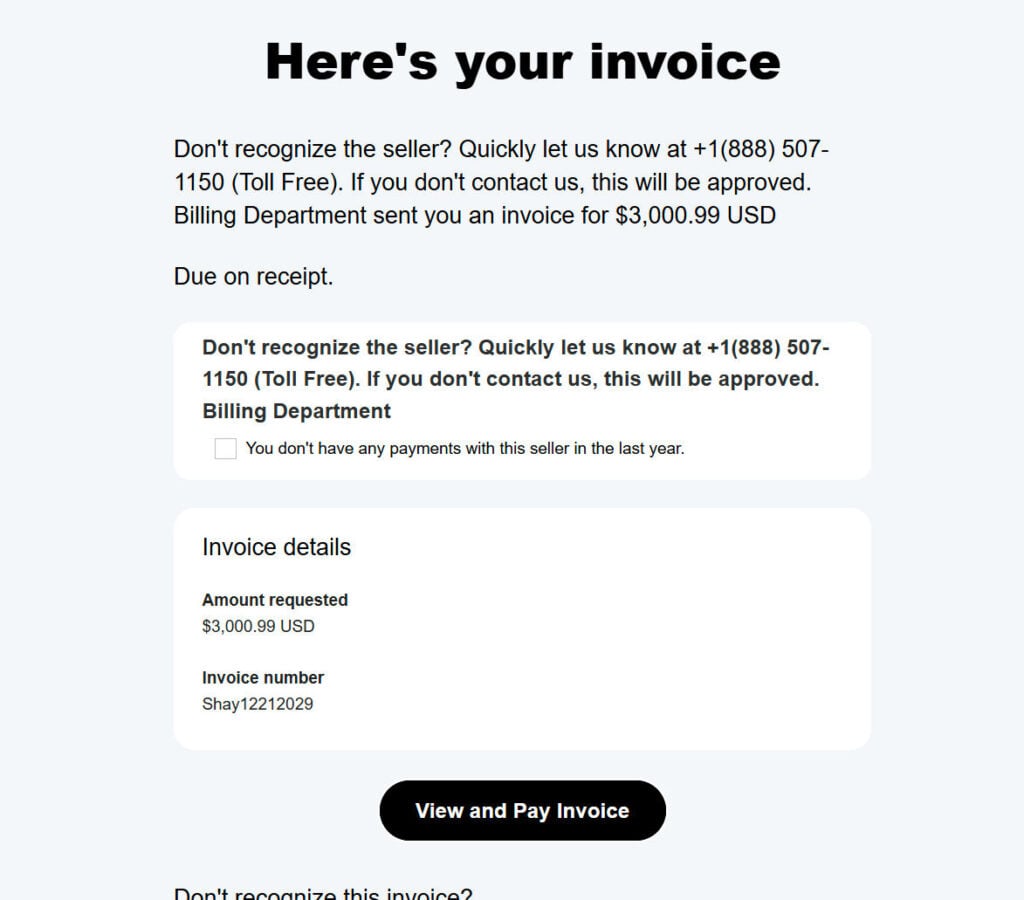
Scam Overview
The service@paypal.com email scam is an increasingly common form of phishing attack targeting PayPal’s large user base. By impersonating PayPal’s customer support address, scammers are able to deceive recipients into believing the fraudulent emails are legitimate. Through manipulative messaging, victims are tricked into clicking embedded links and exposing login information or downloading malware.
To carry out the scam, cybercriminals use a technique called email spoofing. This involves altering the email header to disguise the true point of origin while making it appear as if the message was sent from service@paypal.com. Victims receive the emails in their inbox with the trusted PayPal address, making the scam messages seem authentic.
Once this initial deception is achieved, the content of the emails is crafted to persuade recipients to take immediate action without deeper consideration of legitimacy. Scare tactics are often used implying the account is at risk, financial loss is imminent, or unauthorized activity has occurred. Some prevalent examples include:
- Urgent warnings that failure to confirm account details will result in permanent closure.
- Alerts of temporary account limitations due to suspicious access patterns, prompting password resets.
- Notices of missed payments to a company, requiring immediate payment through an attached invoice.
- Disclosures of unauthorized purchases made from the account, asking the user to verify.
- Claims that login credentials must be re-entered due to security concerns detected.
No matter the specifics of the scam email, the underlying motive is manipulating victims into clicking embedded links or attachments without thinking critically. For many recipients, the trusted source paired with alarming content provokes a quick response driven by panic rather than prudent evaluation.
In the case of embedded links, victims are led to sophisticated fake websites spoofing PayPal’s legitimate login portal. If login credentials are entered, this sensitive information is captured by the fraudsters running the phishing site in the background.
For emails with malicious attachments, victims who enable downloads are unknowingly installing malware onto their device. This permits extended access for stealing financial information over months or years.
With credentials and sensitive data successfully harvested by either approach, scammers can easily access and drain accounts. Unauthorized transactions, wire transfers, purchases with victim’s funds, and account takeovers are sadly common outcomes.
Experts emphasize wariness when receiving any unsolicited emails from financial institutions or online payment providers like PayPal. Scrutinizing the sender address, content, embedded links, and resisting the urge to act without verification are key protective steps.
Ultimately, proactive precautions like unique strong passwords, two-factor authentication, and antivirus software provide the best defense. But awareness of the service@paypal.com scam and similar frauds is essential. With vigilance and critical thinking applied to any suspicious messages, individuals can minimize their risk of falling prey.
How the Scam Works
The service@paypal.com scam leverages a variety of technical and social engineering techniques to steal money and information from victims. Here is a step-by-step overview of how this scam unfolds:
- Email Spoofing
The first step involves using email spoofing to manipulate the “From” address. Scammers alter email header information to make it appear as if emails are being sent from service@paypal.com. This provides credibility and tricks recipients.
- Crafting Deceptive Content
Scammers write extremely manipulative content to provoke strong reactions in recipients. Threats of account suspension, missed payments, unauthorized access and other concerning scenarios provoke fear or panic. This clouds judgement.
- Embedding Malicious Links and Attachments
The scam emails contain embedded links or infected attachments. The links redirect to fake login pages to harvest credentials. The attachments covertly download malware onto victim’s devices.
- Psychological Triggers
Content plays on emotions like fear, urgency and uncertainty. This motivates recipients to act quickly without considering legitimacy, especially when seeing the trusted source address.
- Capturing Login Credentials
Victims who click embedded links are taken to convincing phishing sites mimicking PayPal’s real login page. If recipients enter their username and password, this sensitive data is captured.
- Installing Malware
Other victims download and enable malware attachments. This infects their computer or mobile device, allowing long-term monitoring and data theft.
- Account Takeover
Using stolen login details, scammers gain full access to accounts. Money is drained, charges are made, and new recipients added to wire funds out. Accounts can be monitored long-term.
- Maximizing Damage
Scammers move quickly once gaining account access, wiring out large sums or making expensive purchases. Accounts may be locked to prevent recovery. Some victims lose their entire balances.
- Selling Data
Stolen account details, financial information and identities harvested via malware are sold on black markets. This data fuels extensive financial fraud impacting victims.
By following these steps, scammers behind the service@paypal.com scam are able to inflict significant financial and identity theft damages on individuals and businesses worldwide. Awareness of their tactics is key to avoidance.
Types of Scam Emails
Cybercriminals leverage an array of pretexts in service@paypal.com phishing scam emails to convince recipients to click malicious links or attachments. Some of the most common email types include:
Missed Payment Scam Emails
These claim you failed to make a payment to a company or service provider through PayPal as promised. The email may allege a vendor invoice remains unpaid or that a subscription renewal was missed. You’re instructed to click a link to review invoice details and pay the amount due immediately.
Account Limitation Scam Emails
These state your account has been temporarily limited or frozen due to suspicious activity detected. The email may claim multiple failed login attempts triggered a security precaution, requiring identity verification to restore access. A link is provided to confirm details and lift the limitation.
Account Closure Threat Emails
These warn your PayPal account is scheduled to be permanently closed within 24-48 hours due to alleged policy violations. The message claims you can avoid account termination by promptly confirming your details via the provided link.
Unauthorized Transaction Emails
These emails state unauthorized or fraudulent transactions were recently made from your account. They may also claim your credit card on file has been changed by an unknown IP address. The message provides a link to review these changes and confirm whether they were legitimate.
Security Alert Emails
These messages allege PayPal’s security system has flagged suspicious devices accessing your account. The email prompts you to immediately click a link to log in and review recent devices for any you don’t recognize.
Billing Update Scam Emails
These emails notify you that your stored billing information is out of date and must be updated immediately to avoid payment interruptions. A link is provided to conveniently review and revised any outdated or expired payment details.
Fake Receipt Emails
These scam emails contain fake receipts alleging you recently made purchases from online retailers. Details like the item, price, and partial credit card number may be included to add legitimacy. The message requests you click a link to confirm the purchases listed.
With heightened vigilance and skepticism, individuals can recognize the telltale signs of these fraudulent email types. Avoiding acting on unsolicited financial account notifications without independent verification is key to sidestepping the service@paypal.com scam.
How to Spot service@paypal.com Scam Emails
While scam emails impersonating PayPal’s customer service address are deceptive, there are telling signs that can help identify the frauds:
- Scrutinize the Sender Address – Comparing the address to PayPal’s actual customer service email – service@paypal.com – can reveal spoofing. Subtle differences like substitutions of letters or domains can indicate fraud.
- Hover Over Links – Without clicking, hovering over any embedded links will preview the actual destination. If completely unrelated or suspicious sites appear, it’s a major red flag.
- Check for Logical Fallacies – Scam emails often make illogical threats related to your account that the real PayPal would not do, like immediately suspending all services without reason.
- Look for Poor Grammar and Spelling – Phishing emails tend to contain numerous grammatical mistakes, capitalization errors, and spelling inconsistencies no professional company would send.
- Verify Unexpected Attachments – PayPal would seldom send unsolicited attachments by email. Any surprise files could carry embedded malware.
- Note Use of Fear Tactics – Emails try to scare recipients into immediate action with threats of account closure, missed payment fees, or unauthorized access detections that may not be real.
- Contact PayPal Directly – If something seems suspicious, log into your PayPal account separately and contact customer support to verify legitimacy.
What to Do if You’re a Victim
If you suspect you may have fallen for a service@paypal.com scam, here are important steps to take right away:
- Change your password – Even if you did not lose money, change your PayPal password immediately if you entered it on a phishing site. Enable 2-factor authentication if you haven’t already.
- Contact PayPal – Notify PayPal’s customer service right away. They can secure your account and escalate any unauthorized transactions.
- Inspect your account activity – Review your account closely for any unauthorized transactions, sent payments, added bank accounts, etc. Report any suspicious activity.
- Dispute unauthorized transactions – If scammers stole money, dispute the transactions with PayPal as fraudulent right away. Also contact your bank.
- Scan your device – Conduct a scan with updated antivirus software to check for any malware installation. Remove any infections immediately.
- Place alerts – Contact credit bureaus and place fraud alerts on your name and identity so you’re notified of any suspicious new accounts opened in your name.
- Change reused passwords – If you reuse the same password elsewhere, change it on all other accounts immediately to avoid further fallout.
Is Your Device Infected? Run a Free Malware Scan
Slow performance, constant pop-ups, or strange behavior? These are classic signs of a malware infection. The fastest way to find out is to scan your device with Malwarebytes Free — one of the most trusted malware removal tools available.
The free version detects and removes the most common threats, including:
- Adware — the cause of those annoying pop-ups
- Browser hijackers — unwanted redirects and changed homepages
- Trojans and spyware — hidden programs stealing your data
- Potentially unwanted programs (PUPs) — software you never asked for
👉 Select your device below — Windows, Mac, or Android — then follow the simple steps to download Malwarebytes, scan your system, and remove any threats it finds. The scan usually takes 5 to 20 minutes.
Run a Malware Scan with Malwarebytes for Windows
Malwarebytes is one of the most popular and trusted anti-malware tools for Windows — and it’s completely free for removing infections. It catches threats that many antivirus programs miss, including adware, browser hijackers, and trojans. Follow the steps below to scan and clean your PC in just a few minutes.
Download Malwarebytes
Click the button below to download the latest version of Malwarebytes for Windows from the official source. The free version is all you need — it will scan your computer and remove adware, browser hijackers, and other malicious software at no cost.
Download MalwarebytesOfficial installer for Windows 11 and 10. Your download starts right away.Want real-time protection? See Malwarebytes Premium Malwarebytes Free for WindowsScans and removes malware at no cost
-
Install Malwarebytes
When the download finishes, open your Downloads folder and double-click the MBSetup file. If Windows shows a User Account Control pop-up, click “Yes” to allow the installation.
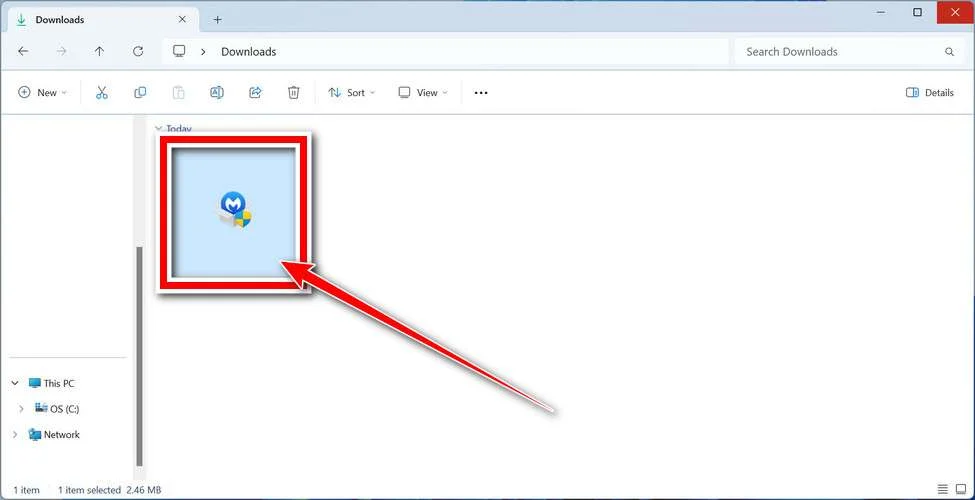
Follow the On-Screen Prompts to Install Malwarebytes
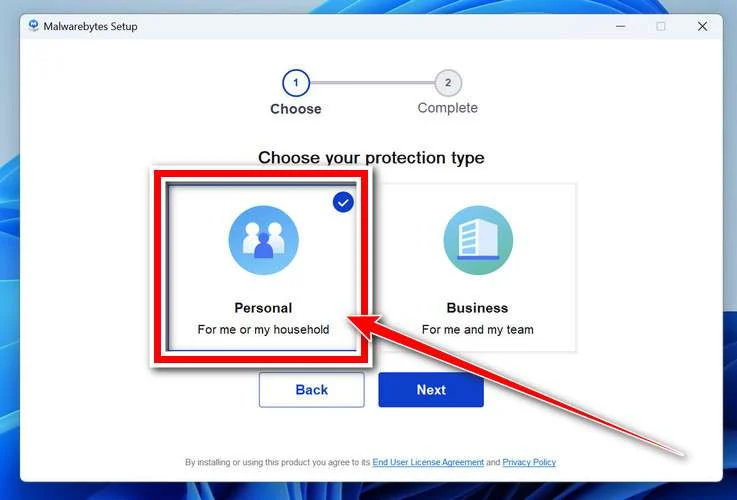
The setup wizard will walk you through a few quick screens:
-
Choose where you’re installing the program — “Personal Computer” or “Work Computer” — then click Next.
-
Malwarebytes will now install on your device. This usually takes under a minute.

-
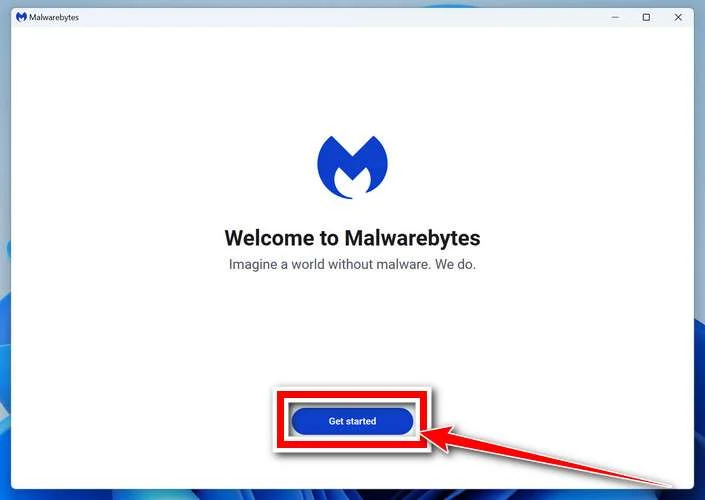
When installation is complete, the “Welcome to Malwarebytes” screen will open automatically.
-
On the final screen, click Open Malwarebytes to launch the program.

-
Enable “Scan for Rootkits”
Before scanning, turn on rootkit detection so Malwarebytes can find even the most hidden threats. Click the Settings gear icon on the left side of the screen.
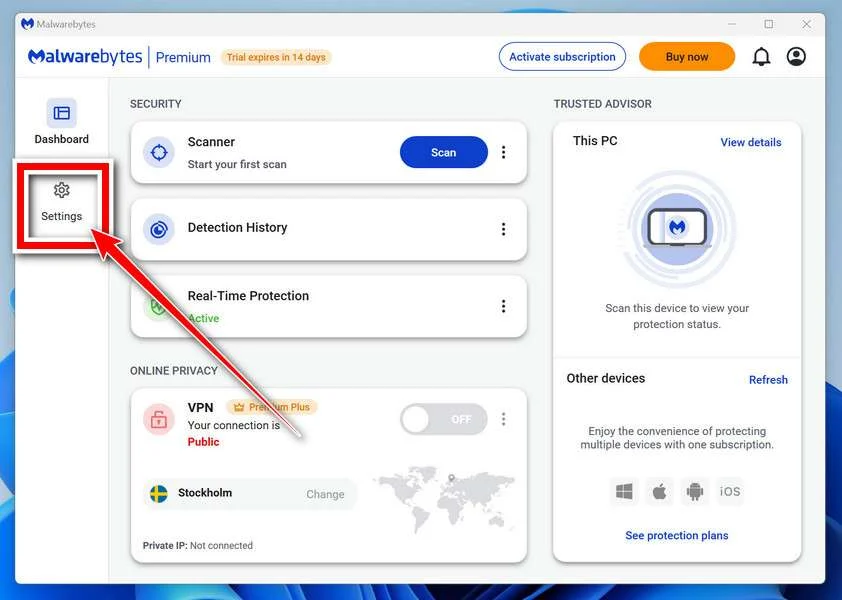
In the settings menu, find “Scan for rootkits” and click the toggle so it turns blue.

Done? Click “Dashboard” in the left pane to return to the main screen.
Start the Scan
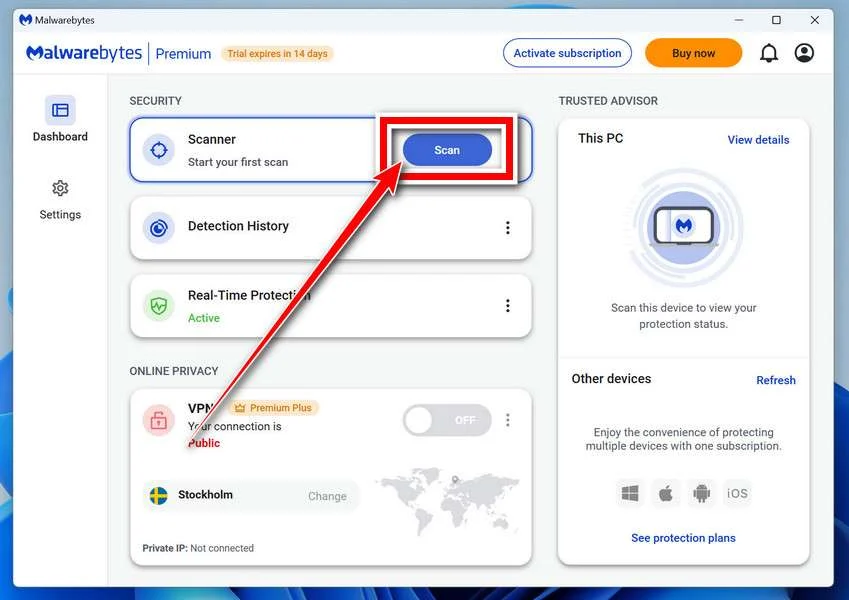
Click the blue Scan button. Malwarebytes will automatically update its virus database and start checking your computer for malware.
-
Wait for the Scan to Finish
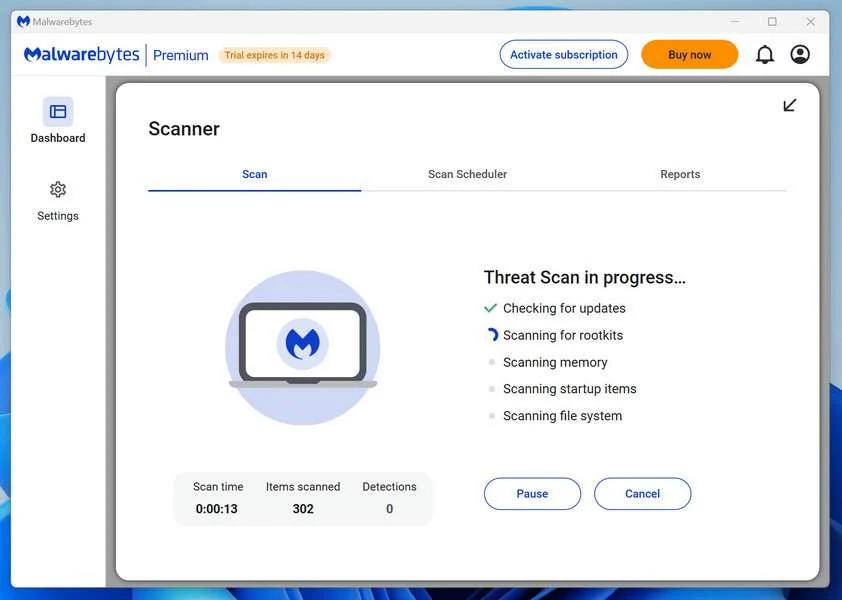
The scan checks your entire system for browser hijackers and other malicious programs, so it can take 5 to 20 minutes depending on your computer. Feel free to do something else — just check back occasionally to see the progress.
-
Quarantine the Detected Threats
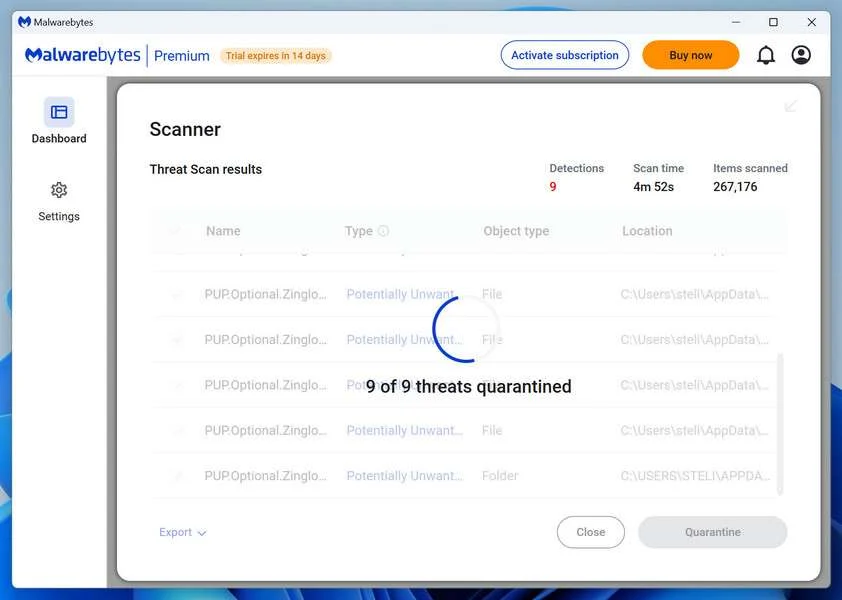
When the scan is done, you’ll see a list of everything Malwarebytes found — malware, adware, and potentially unwanted programs. Click the “Quarantine” button to remove all of them at once.
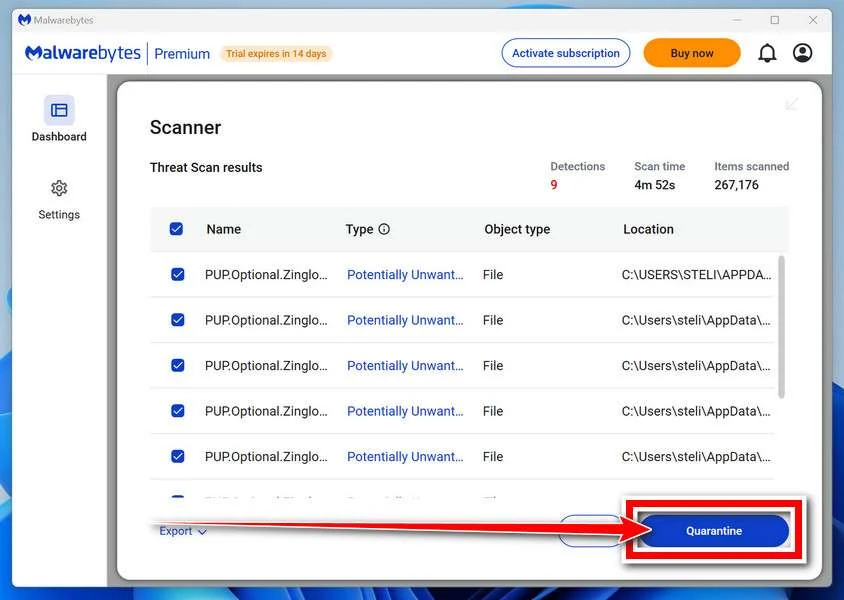
Malwarebytes will now remove the malicious files and registry entries and move them safely into quarantine.
-
Restart Your Computer
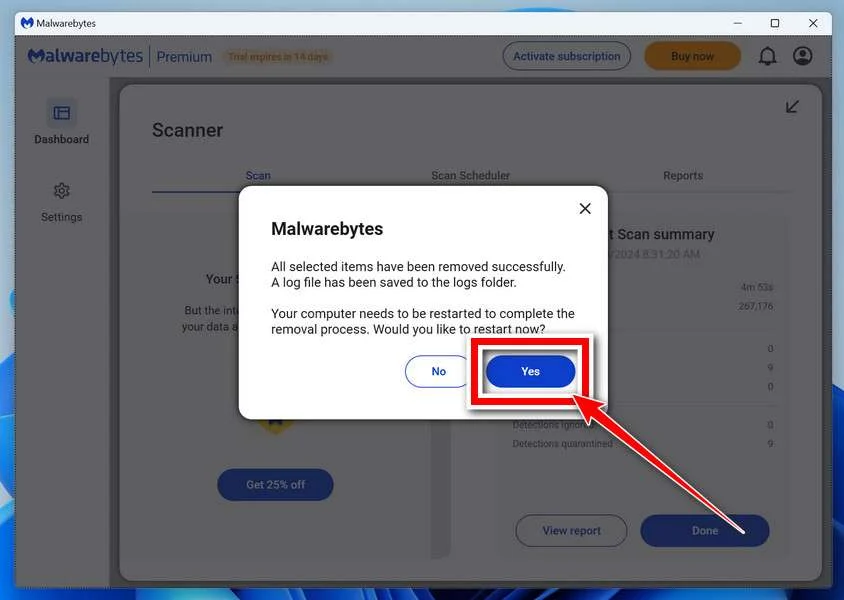
Some threats can only be fully removed after a reboot. If Malwarebytes asks you to restart, click Yes. Once you’re logged back in, Malwarebytes has finished removing the threats it found.
That’s it — your Windows PC is now clean of trojans, adware, and other malware, and should be back to running smoothly.
If you are still having problems with your computer after completing these instructions, then please follow one of the steps:
- Run a computer scan with ESET Online Scanner
- Ask for help in our Windows Malware Removal Help & Support forum.
Run a Malware Scan with Malwarebytes for Mac
Malwarebytes for Mac is a free on-demand scanner that removes the malware other security software tends to miss — adware, browser hijackers, and unwanted programs included. Cleaning an infected Mac with Malwarebytes has always been completely free, and it’s our go-to recommendation. Follow the steps below to scan and clean your Mac in just a few minutes.
-
Download Malwarebytes for Mac
Click the button below to download the latest version of Malwarebytes for Mac.
Download MalwarebytesOfficial installer for macOS. Your download starts right away.Want real-time protection? See Malwarebytes PremiumMalwarebytes Free for MacScans and removes malware at no cost -
Open the Malwarebytes setup file
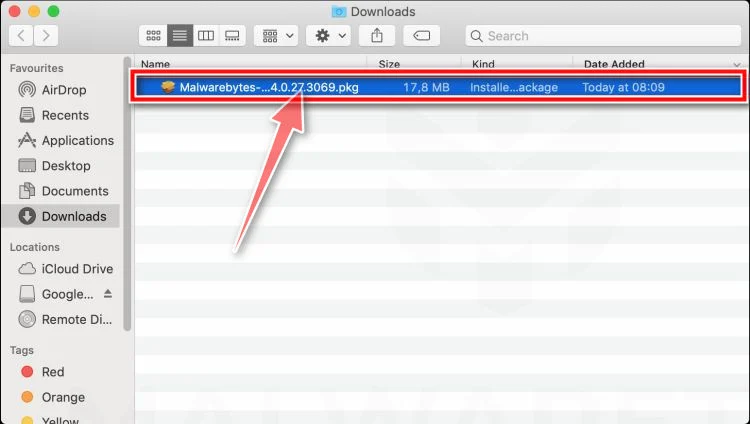
When the download finishes, open your Downloads folder and double-click the setup file to begin the installation.
-
Follow the On-Screen Prompts to Install Malwarebytes
The Malwarebytes for Mac Installer will guide you through a few quick screens. Click “Continue” and keep following the prompts until the installation completes.
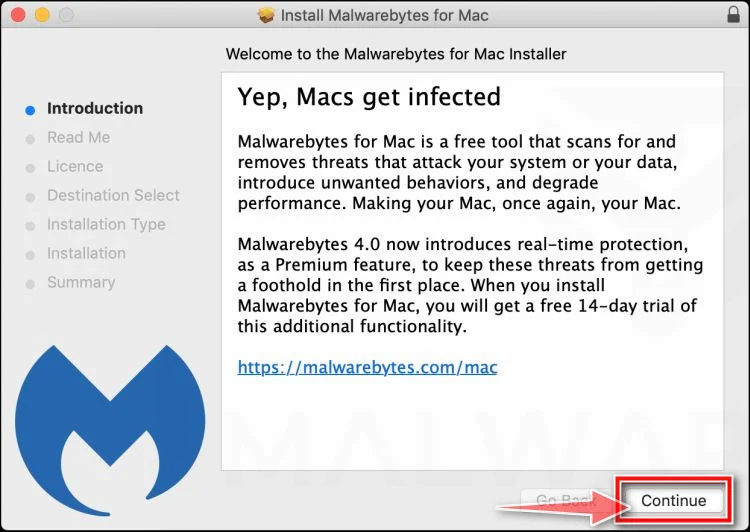
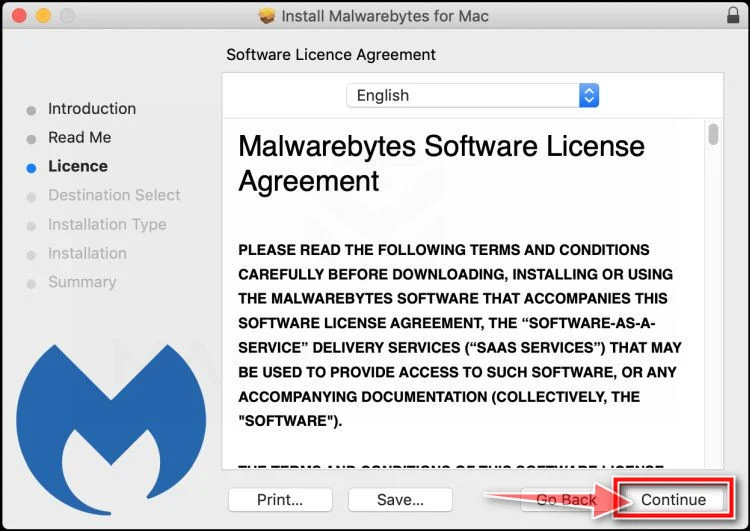
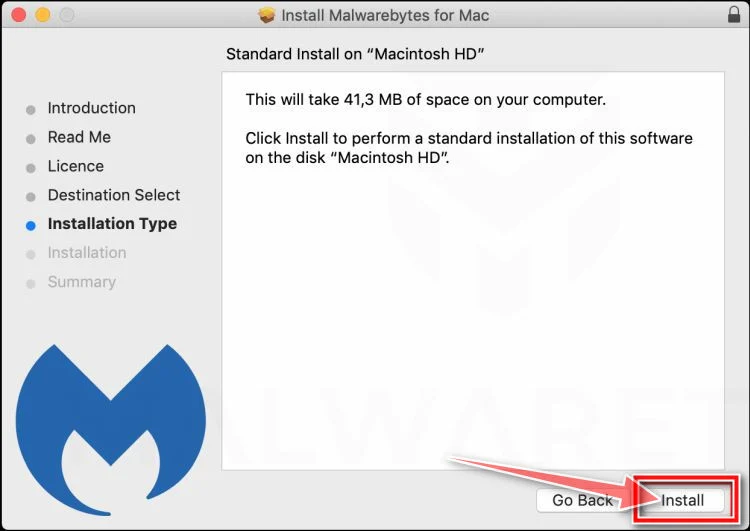
When the installation is complete, Malwarebytes opens to the Welcome to Malwarebytes screen. Click “Get started“.
-
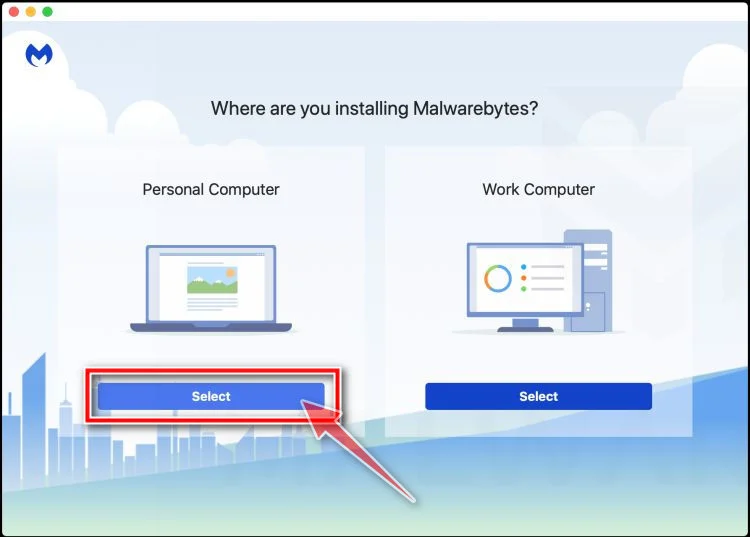
Select “Personal Computer” or “Work Computer”
Malwarebytes will ask what type of computer you’re installing it on. Click either Personal Computer or Work Computer, whichever applies.
-
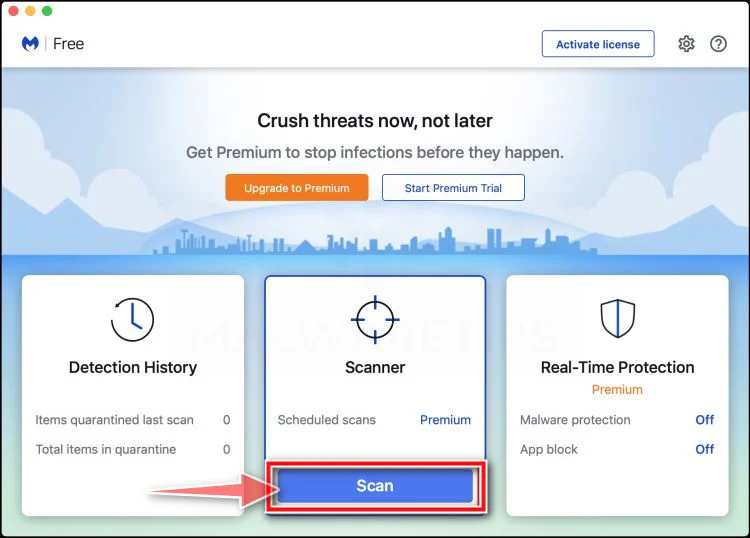
Start the Scan
Click the “Scan” button. Malwarebytes will automatically update its detection database and begin checking your Mac for malware.
-
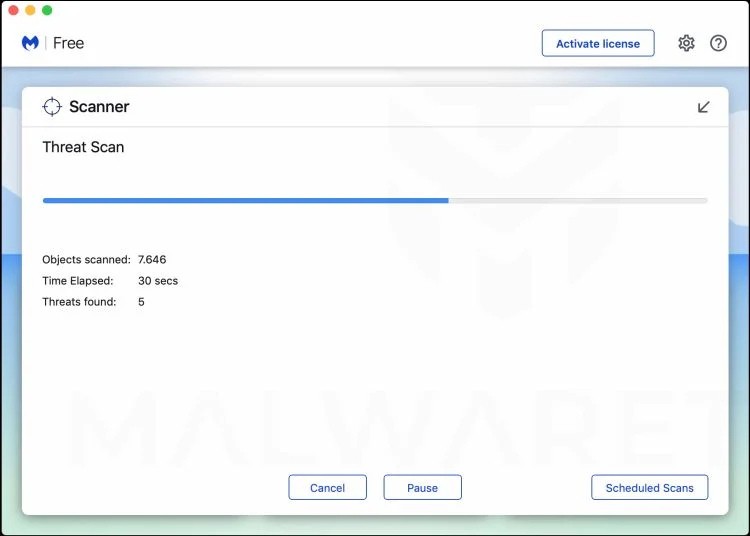
Wait for the Scan to Finish
Malwarebytes will scan your Mac for adware, browser hijackers, and other malicious programs. This can take a few minutes, so feel free to do something else — just check back occasionally to see the progress.
-
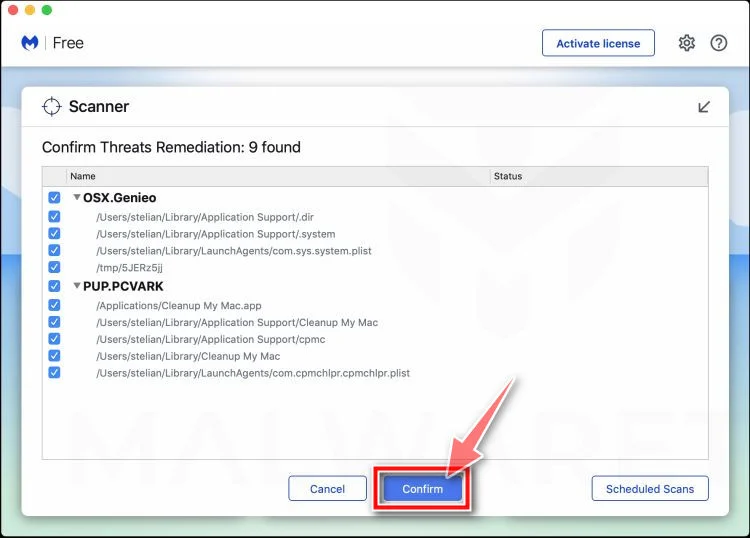
Quarantine the Detected Threats
When the scan is done, you’ll see a list of everything Malwarebytes found. Click the “Quarantine” button to remove all the threats at once.
-
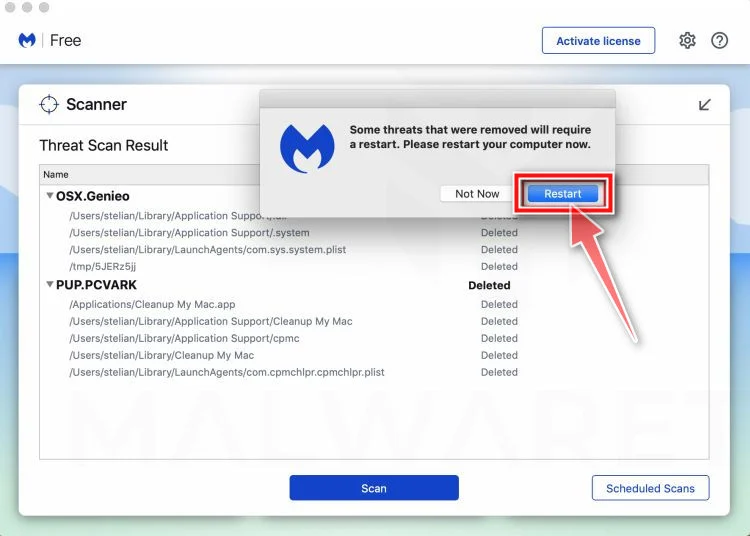
Restart Your Mac
Malwarebytes will now remove all the malicious files it found. Some threats can only be fully removed after a reboot — if Malwarebytes asks you to restart, allow it. Once you’re logged back in, your Mac is clean.
That’s it — your Mac is now free of adware, rogue browser extensions, and other potentially harmful software.
If you are still experiencing problems while trying to remove a malicious program from your computer, please ask for help in our Mac Malware Removal Help & Support forum.
Run a Malware Scan with Malwarebytes for Android
Malwarebytes for Android automatically detects and removes dangerous threats like malware and ransomware so you don’t have to worry about your most-used device being compromised. Aggressive detection of adware and potentially unwanted programs keeps your Android phone or tablet running smooth.
-
Download Malwarebytes for Android.
You can download Malwarebytes for Android by clicking the link below.
Get Malwarebytes for AndroidOpens Google Play in a new tab.Want real-time protection? See Malwarebytes Premium for AndroidMalwarebytes for AndroidScans your phone and removes malware at no cost -
Install Malwarebytes for Android on your phone.
In the Google Play Store, tap “Install” to install Malwarebytes for Android on your device.

When the installation process has finished, tap “Open” to begin using Malwarebytes for Android. You can also open Malwarebytes by tapping on its icon in your phone menu or home screen.

-
Follow the on-screen prompts to complete the setup process
When Malwarebytes will open, you will see the Malwarebytes Setup Wizard which will guide you through a series of permissions and other setup options.
This is the first of two screens that explain the difference between the Premium and Free versions. Swipe this screen to continue.
Tap on “Got it” to proceed to the next step.
Malwarebytes for Android will now ask for a set of permissions that are required to scan your device and protect it from malware. Tap on “Give permission” to continue.
Tap on “Allow” to permit Malwarebytes to access the files on your phone.
-
Update database and run a scan with Malwarebytes for Android
You will now be prompted to update the Malwarebytes database and run a full system scan.

Click on “Update database” to update the Malwarebytes for Android definitions to the latest version, then click on “Run full scan” to perform a system scan.

-
Wait for the Malwarebytes scan to complete.
Malwarebytes will now start scanning your phone for adware and other malicious apps. This process can take a few minutes, so we suggest you do something else and periodically check on the status of the scan to see when it is finished.

-
Click on “Remove Selected”.
When the scan has been completed, you will be presented with a screen showing the malware infections that Malwarebytes for Android has detected. To remove the malicious apps that Malwarebytes has found, tap on the “Remove Selected” button.

-
Restart your phone.
Malwarebytes for Android will now remove all the malicious apps that it has found. To complete the malware removal process, Malwarebytes may ask you to restart your device.
That’s it — your Android phone is now clean — no more malicious apps, adware, or browser redirects.
If you are still having problems with your phone after completing these instructions, then please follow one of the steps:
- Restore your phone to factory settings by going to Settings > General management > Reset > Factory data reset.
- Ask for help in our Mobile Malware Removal Help & Support forum.
Stay Protected: Block Ads and Malicious Sites
Now that your device is clean, keep it that way. Most infections start with a malicious ad or a fake download button — so blocking them at the source is your best defense.
We recommend AdGuard, which blocks malicious ads, phishing pages, and dangerous redirects before they can reach you.
👉 Download AdGuard and browse safely
Answers to Common Questions on the service@paypal.com Email Scam
What is the service@paypal.com email scam?
This scam involves cybercriminals sending phishing emails pretending to be from PayPal’s legitimate customer support address – service@paypal.com. By spoofing this real email address, scammers aim to trick recipients into believing the messages are authentic. The emails contain links to fake websites to steal PayPal account credentials or infected attachments that download malware.
How does the scam work technically?
Scammers use email spoofing techniques to alter the email header and disguise the true point of origin. Although the emails come from the criminals’ own servers, they are manipulated to show service@paypal.com in the sender address. The content is crafted to compel recipients to click links or attachments without considering legitimacy.
What specific scam emails should I watch out for?
Scam emails to watch for include those warning your account will close, claiming missed payments, unauthorized logins detected, required billing updates, and other urgent pretexts. Links take you to phishing sites and any attachments carry malware.
What are some red flags?
Red flags include a sense of urgency, threatening account closure, suspicious links, grammatical errors, requests for sensitive information, spoofed sender addresses, and unexpected email attachments.
What happens if I click the links or enable attachments?
The phishing links take you to official looking sites that steal your PayPal username and password. Enabling attachments inadvertently downloads malware onto your device, allowing long-term monitoring and data extraction.
What are common outcomes if victims are ensnared?
With access to your account, scammers can drain or transfer funds, make unauthorized purchases, and add new recipients to continue stealing. Installed malware can also capture financial details for identity fraud.
What should I do if I think I was scammed?
Immediately change your passwords, contact PayPal to secure your account, check for unauthorized transactions, scan devices for malware, place fraud alerts on credit reports, and monitor your financial statements.
How can I avoid becoming a victim?
Be wary of unsolicited emails, manually type PayPal’s URL, use unique complex passwords, enable two-factor authentication, and call PayPal directly if you have any concerns about possible scam emails.
Are there other related scams targeting PayPal users?
Yes, some other common scams include calls pretending to be from PayPal tech support, fraudulent emails requesting account verification, and text messages containing suspicious links related to your PayPal account.
The Bottom Line
The service@paypal.com email scam can easily fool unsuspecting users into compromising their account security and financial information. But being aware of the common red flags in these scam messages, and taking prudent steps if you have been victimized, can help limit the damage inflicted by fraudsters.
Ultimately, adopting best practices like using unique passwords across accounts, enabling two-factor authentication, installing antivirus software, and scrutinizing all unsolicited emails before acting is key. With proper precautions, the threat posed by the service@paypal.com scam and similar frauds targeting PayPal users can be minimized. But vigilance is essential, as new variants of the scam are sure to emerge.

Join the discussion
0 commentsShare your experience or ask a question about this article.
Discussion
Start the conversation
Have a question or something useful to share? Add the first comment.