

The viral videos make these kids bath bombs look almost magical: bright swirls fill the tub, a large toy appears from the fizz, and bath time suddenly becomes effortless.
The real products are far less predictable. Some are ordinary bath bombs with a tiny plastic figure inside. Others arrive with weak colors, unclear ingredient labels, or toys that look nothing like the advertisement. Here is what parents should check before buying.
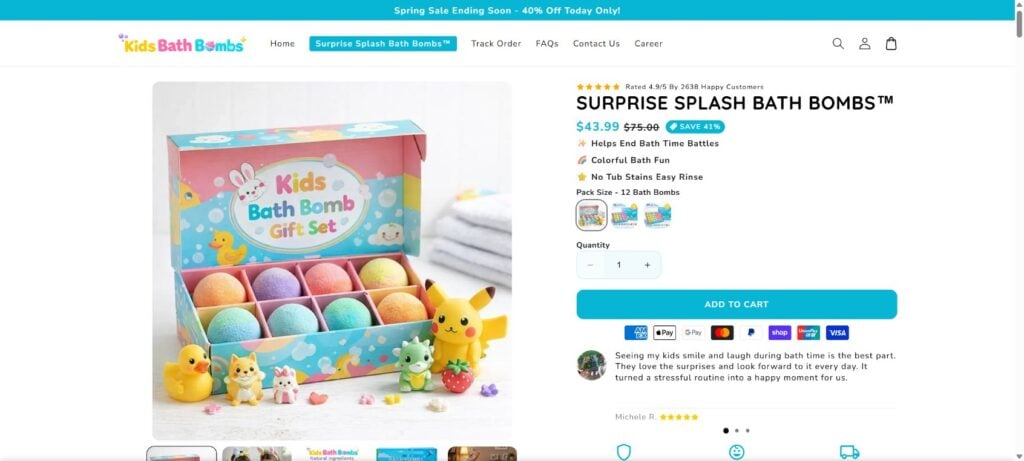
Overview
Kids bath bombs with surprise toys are real products, but the viral version of the offer is frequently overhyped. The basic item is simple: a scented, colored bath bomb dissolves in water and reveals a small plastic figure. There is no special mechanism and no guarantee that the effect will resemble the dramatic social media demonstration.
The problem starts when generic sellers use edited or AI-generated demonstrations to advertise a much more impressive product than the one they ship. The video may show intense colors covering the whole tub, a large detailed character, thick foam, and a rapid spinning effect. What arrives may be a lightly scented fizzing ball with a tiny, inexpensive toy inside. In some cases, buyers may receive repeated toys, a damaged set, or no surprise at all.
Quality also varies between batches because very similar sets are sold under many temporary brand names. A polished product page, a countdown timer, and a large claimed discount do not tell you who manufactured the bath bomb or whether the formula was tested for children’s use. Words such as “natural,” “organic,” and “gentle” are marketing claims, not substitutes for a complete ingredient list and age warning.
The hidden toy introduces a separate safety issue. Small figures can present a choking hazard to young children, especially when the toy appears unexpectedly in cloudy bath water. The U.S. Consumer Product Safety Commission requires warnings for many toys intended for children ages 3 to 5 when they contain small parts, while products intended for children under 3 are subject to stricter small-parts rules.
Fragrance, dyes, and preservatives can also irritate sensitive skin. The FDA notes that cosmetics can trigger allergic reactions and that terms such as “hypoallergenic” or “for sensitive skin” do not have a federal definition that guarantees a reaction will not occur.
What you are usually buying
- A generic bath bomb set sold under a temporary or little-known brand
- Fragrance, color, salts, oils, and other cosmetic ingredients
- A small plastic figure sealed inside each bath bomb
- Marketing images that may not show the exact batch you receive
- A return policy that may require authorization and customer-paid shipping
How the Viral Kids Bath Bomb Offer Works
Step 1: An exaggerated video creates the wow factor
The advertisement focuses on the reveal. It may show a bath bomb spinning rapidly, producing several layers of vivid color, and releasing a toy that appears unusually large or detailed. The visual is designed to make parents imagine an easy solution to bath-time resistance.
Step 2: The product page adds urgency
The landing page commonly displays a steep crossed-out price, a “today only” discount, a countdown timer, a large review score, and claims that stock is almost gone. These elements push the buyer to order before checking the ingredients, company details, independent reviews, or return address.
Step 3: A generic set is shipped
Many sellers appear to source broadly available bath bomb sets and repackage or relabel them. That does not mean nothing will arrive. The more common disappointment is that the shipped item is cheaper, smaller, and less impressive than the advertisement.
Step 4: Returning an opened bath product becomes difficult
You normally have to dissolve at least one bath bomb to discover its color, scent, and toy. A seller can then argue that the cosmetic product has been used. If the return must also be shipped to an overseas warehouse at the buyer’s expense, the postage may cost too much to make the refund worthwhile.
The Biggest Red Flags to Check
No complete ingredient list
Do not rely on a short list that mentions only shea butter, coconut oil, or essential oils. Look for the full ingredient declaration on the product page and packaging. If a seller markets the item for children but will not identify the fragrance, color additives, preservatives, or manufacturer, choose a different product.
A hidden toy with no clear age warning
The toy should be appropriate for the child’s age and clearly disclosed before purchase. A page that shows toddlers using the product while burying a “3+” warning in small text deserves extra caution. Adult supervision is essential because the toy appears loose in bath water.
Perfect-looking demonstrations
If the toy seems larger than the bath bomb, the colors move with impossible precision, or every shot looks computer-generated, treat the video as an advertisement rather than proof. Search for unedited customer photos that show the packaging, dissolved bath water, and actual toy side by side.
No identifiable operator or practical return address
A contact form alone is not enough for a children’s product. Check for a legal business name, physical mailing address, working email, and clear return instructions. Read whether opened products are eligible and who pays international postage.
Are Viral Kids Bath Bombs a Scam or Legit?
The product category is legitimate, but many viral offers are misleading. Buyers often receive something, yet it may be a low-cost generic set that cannot reproduce the advertisement. That is the central risk: not an empty package, but a cheap product sold through unrealistic visuals and urgency-heavy marketing.
A recognizable manufacturer, complete label, age warning, realistic photos, and retailer-backed returns make a set safer to consider. An anonymous store using impossible demonstrations and vague ingredient claims is not worth the gamble, particularly when the product touches a child’s skin.
What to Do If You Already Bought the Bath Bombs
1. Save the advertisement and order page
Take screenshots of the claimed toy size, colors, ingredients, age recommendation, delivery estimate, and refund promise. Save the confirmation email and packaging. This evidence matters if the seller later changes the page.
2. Inspect the unopened package first
Confirm that the label lists ingredients, warnings, manufacturer or distributor information, and a batch or lot identifier. Do not use a damaged, leaking, discolored, or strangely smelling product.
3. Stop immediately if irritation develops
Rinse the skin with clean water and stop using the set if your child develops redness, itching, burning, swelling, breathing problems, or eye irritation. Seek medical help for a serious reaction and keep the packaging so the ingredients can be reviewed.
4. Request a refund in writing
Explain exactly how the product differs from the advertisement and attach photos. Ask for the return address, authorization number, refund amount, and shipping responsibility before mailing anything. Use tracked postage if a return is practical.
5. Dispute a materially misrepresented purchase
If the seller refuses to resolve a clear mismatch, contact your card issuer or payment service and provide the advertisement, photos, correspondence, and tracking. Describe the issue accurately as merchandise not as described rather than simply saying you disliked it.
Frequently Asked Questions
Do the surprise toys really exist?
Often, yes. The toy is usually much smaller and cheaper than it appears in the advertisement. Quality and variety can differ between batches.
Are “natural” bath bombs automatically safe for kids?
No. Natural ingredients can still cause irritation or allergic reactions, and the term does not replace a full ingredient list, age warning, or responsible supervision.
Can the hidden toy be a choking hazard?
Yes. Small figures can be dangerous for children under 3 and may require a warning for some older children’s products. Keep the toy away from younger siblings and supervise the bath.
The Bottom Line
Kids bath bombs with toys inside are real, but the viral experience is often manufactured by the advertisement. Buy only when the exact ingredients, age warning, seller identity, realistic customer photos, and return terms are clear. If those details are missing, skip the countdown and choose a product from a retailer that will stand behind what it sells.

Join the discussion
0 commentsShare your experience or ask a question about this article.
Discussion
Start the conversation
Have a question or something useful to share? Add the first comment.