

A bottle promising bladder comfort, thicker hair, kidney support, and renewed energy can seem unusually efficient. One daily routine appears to answer several unrelated worries.
Virelia Pumpkin Seed Oil was promoted with exactly that range. Following the brand across the web, however, leads to a surprisingly different collection of products.
Overview
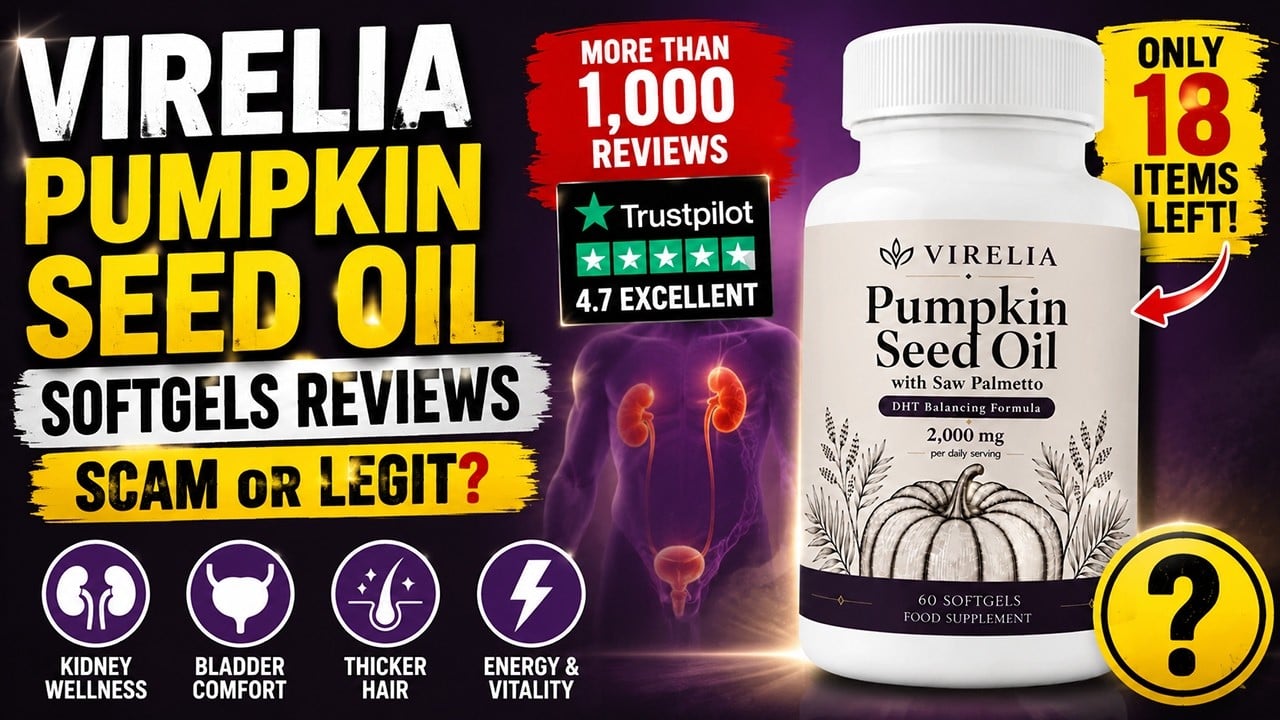
The advertised softgels promise benefits across several body systems
Virelia Pumpkin Seed Oil is shown as a 2,000mg daily formula with saw palmetto. The bottle presentation calls it a DHT-balancing supplement.
The promotion connects it with urinary flow, bladder comfort, kidney wellness, thicker hair, energy, and vitality. That is an unusually broad outcome list.
Pumpkin seed oil and saw palmetto are common supplement ingredients. Their familiarity does not prove this particular formula produces every advertised result.
The exact product page is difficult to trace now
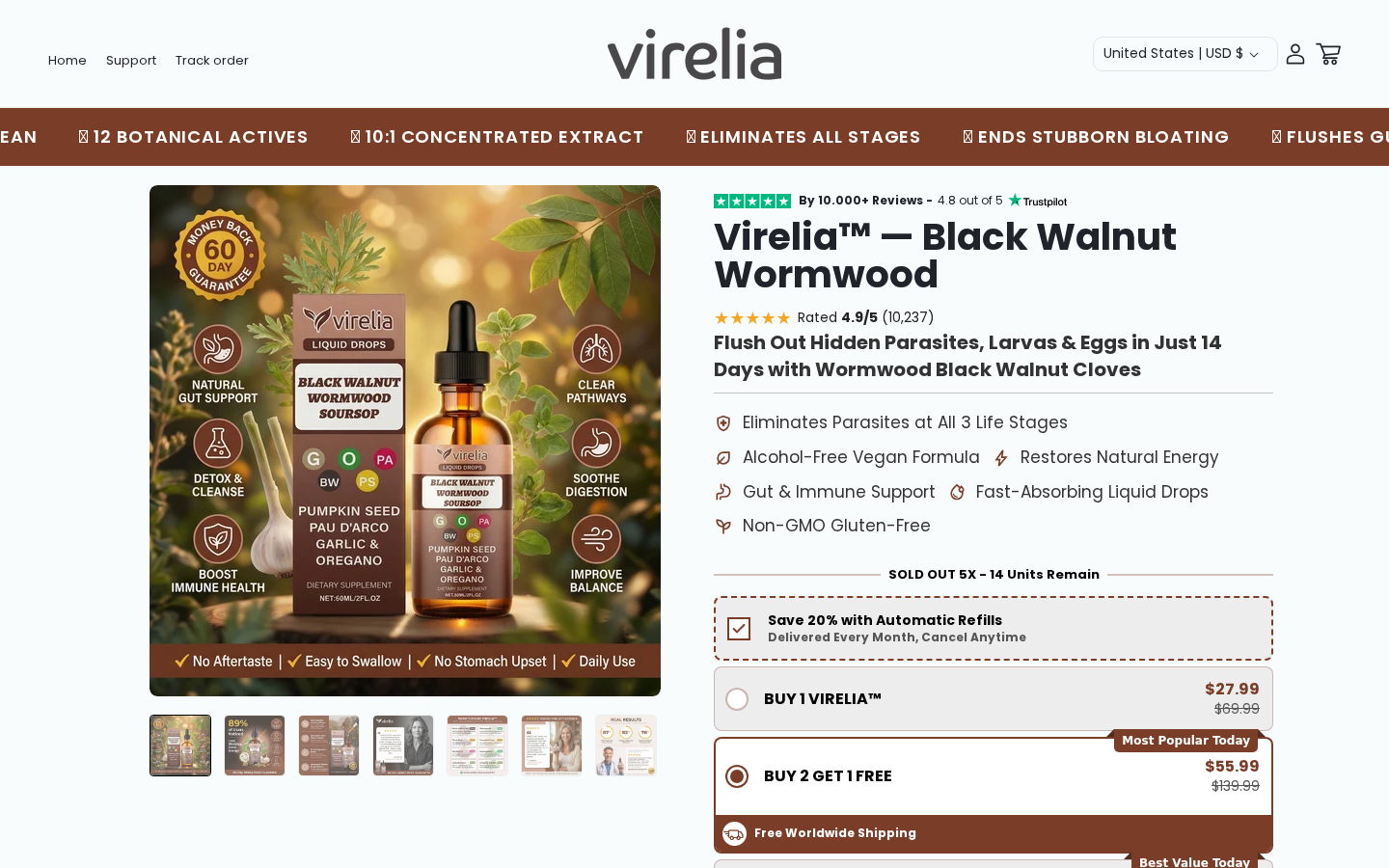
During our investigation, the Virelia-branded storefront we located did not prominently sell the Pumpkin Seed Oil softgels shown in the advertisement.
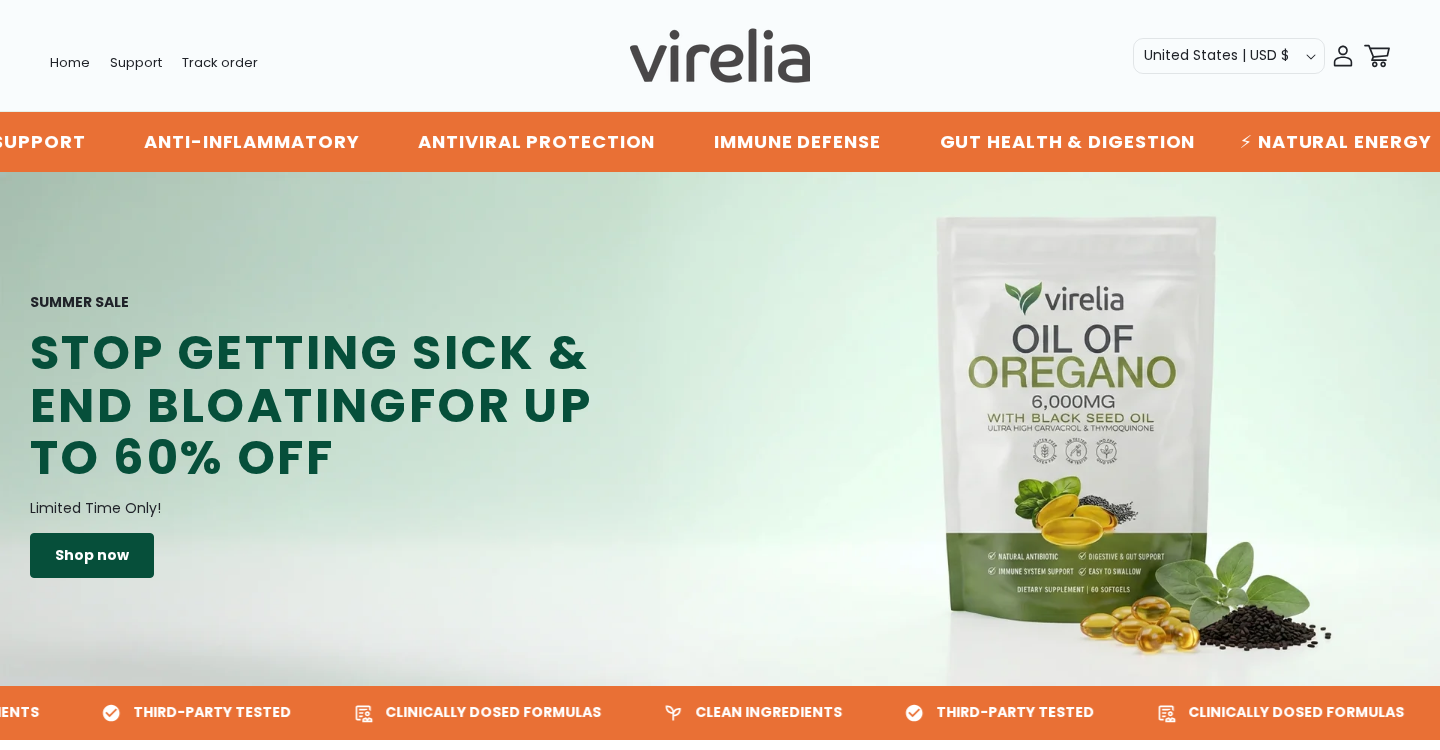
Instead, it promoted Black Walnut Wormwood liquid drops and Oil of Oregano with Black Seed Oil softgels under the same Virelia name.
Those products target very different concerns. The abrupt catalog shift makes it harder to verify the original seller, formula, return terms, and continuing support.
A current Virelia offer includes automatic monthly refills
The current wormwood product page visibly preselects an option offering 20% savings with automatic refills delivered every month.
That evidence applies to the captured wormwood offer. It does not establish that every earlier Pumpkin Seed Oil purchase automatically renewed.
The current store also promotes cayenne and eye formulas with four-week refills, huge seller-controlled ratings, and claims involving blood pressure, cataracts, and macular degeneration.
- The original softgel advertisement combines urinary, kidney, hair, and vitality claims.
- The exact advertised product is not prominent on the Virelia storefront now visible.
- The current brand site sells unrelated parasite and oregano formulas.
- The wormwood page preselects a monthly automatic-refill option.
- Scarcity messages claim repeated sellouts and very limited remaining inventory.
- Large rating counts appear inside the seller-controlled pages.
Our recommendation is to avoid the offer until the responsible company, exact formula, payment conditions, and post-purchase support can be verified independently.
What Virelia Pumpkin Seed Oil Claims to Do
The softgel advertisement frames pumpkin seed oil as a simple answer to aging-related discomfort. Saw palmetto strengthens the association with prostate and hair concerns.
Urinary flow and bladder comfort are understandable supplement targets. However, kidney wellness is a much broader and potentially more serious medical subject.
Adding thicker hair, energy, and vitality stretches the same formula across outcomes with different causes, measurements, and treatment standards.
Broad promises help almost any positive change feel relevant. A quieter night, better hydration, reduced caffeine, or natural hair variation may be credited to the bottle.
A credible product claim should identify the studied dose, participant group, duration, comparison treatment, and measurable endpoint.
The advertisement instead relies on ingredient reputation and confident labels. We found no published controlled study of the exact Virelia finished product.
That does not mean pumpkin seed preparations have no research. It means ingredient-level findings cannot be transferred automatically to every branded formula.
Extraction method, fatty-acid profile, active compounds, dose, purity, and participant health can all change the result.
Why the Medical Claims Need Extra Caution
Urinary symptoms can signal conditions needing diagnosis
Frequent urination, weak flow, urgency, pain, blood, retention, or nighttime waking can have many causes. They should not be reduced to a supplement-shopping problem.
Infection, prostate enlargement, diabetes, medication effects, stones, neurological problems, or other conditions may require testing and timely treatment.
Inability to urinate, severe pain, fever, vomiting, or visible blood can need urgent care. A marketing guarantee should never delay that decision.
Kidney language can create a false sense of protection
“Kidney wellness” is vague and emotionally powerful. It does not explain whether the seller means filtration, stone prevention, inflammation, fluid balance, or something else.
People with kidney disease must be particularly careful with supplements. Ingredients, contaminants, and altered metabolism can create risks not obvious from a natural-looking label.
Anyone with diagnosed kidney problems should discuss new supplements with a qualified clinician who understands current medications and laboratory results.
Hair and vitality claims widen the target audience
Saw palmetto is often marketed around DHT. Hair loss, however, has several patterns and causes, and response cannot be assumed from a bottle slogan.
Energy and vitality are even less specific. Sleep, mood, anemia, thyroid conditions, nutrition, infection, and cardiovascular health can affect how someone feels.
A product spanning all these topics can sell to more people, but wider marketing is not stronger evidence.
What the Current Virelia Storefront Reveals
The storefront now visible uses the Virelia name but leads with products unlike the Pumpkin Seed Oil softgels.
One page sells Black Walnut Wormwood drops and promises to eliminate parasites, larvae, and eggs within 14 days.
The formula image names wormwood, black walnut, clove, pumpkin seed, pau d’arco, garlic, and oregano.
That page also presents digestive, immune, energy, and cleansing promises. Again, the offer moves across many body systems with little diagnostic context.
A second Virelia presentation advertises Oil of Oregano with Black Seed Oil. It tells visitors to stop getting sick and end bloating for up to 60% off.
Consumers searching for a urinary softgel can therefore encounter parasite drops and high-dose oregano instead. This is not a coherent product trail.
A brand can legitimately expand its catalog. The concern here is the difficulty of locating a stable page for the exact advertised product.
When pages vanish or change, guarantees, ingredient disclosures, and checkout terms may vanish with them. Buyers are left relying on saved records.
How the Virelia Supplement Scam Funnel Works
Step 1: Several private health worries are bundled together
The promotion speaks to urinary discomfort, aging, hair thinning, low energy, and confidence in one compact message.
A viewer experiencing any one concern may keep watching because the formula appears relevant. Someone experiencing several feels the product was designed specifically for them.
This broad targeting creates urgency without explaining which symptom needs professional evaluation before self-treatment.
Step 2: Recognizable oils make the pitch feel traditional
Pumpkin seed oil and saw palmetto sound familiar and plant-based. Their presence reduces the feeling of experimentation.
Natural origin does not guarantee safety, purity, correct dosage, or effectiveness. Plants contain active compounds precisely because they can affect the body.
The advertisement uses ingredient recognition as a shortcut around finished-product testing and manufacturer transparency.
Step 3: Ratings and scarcity imply proven popularity
The promotion references more than 1,000 reviews and a 4.7 score. It also tells shoppers that only a small number of items remain.
The current storefront repeats similar tactics with thousands of ratings, repeated sellout claims, and limited remaining units.
On-site counters are controlled by the seller. Without outside verification, buyers cannot know whether inventory and rating numbers reflect real-time records.
Step 4: The product name leads into a changing brand ecosystem
A shopper may search Virelia after seeing the Pumpkin Seed Oil advertisement and reach a store promoting entirely different supplements.
The consistent brand name creates continuity even when the formulas, health stories, and delivery forms change dramatically.
This makes comparison difficult. Reviews for one Virelia product may be mistaken for evidence about another.
Step 5: A discount option can activate recurring delivery
On the current wormwood page, the monthly automatic-refill choice is selected and paired with 20% savings.
The alternative one-time purchase appears nearby, but buyers focused on the lower price may not appreciate that the selected option repeats.
Again, we cannot apply that exact checkout setting retroactively to every Pumpkin Seed Oil order. It proves the brand currently uses recurring billing.
Step 6: The shipment may not resolve who stands behind it
A bottle can arrive from a fulfillment warehouse that serves numerous ecommerce stores. The sender address may not identify the marketer or manufacturer.
Support may use another name, while the card charge uses a descriptor the buyer does not recognize.
That fragmentation becomes critical when a customer wants to cancel future shipments, report a reaction, or obtain a refund.
Step 7: New formulas replace the old campaign
The storefront can pivot from urinary softgels to parasite drops or oregano capsules without abandoning the brand’s visual identity.
Search results, old advertisements, and saved videos continue circulating after the original page disappears. Consumers encounter evidence from different moments and assume it describes one stable company.
The safest defense is to evaluate the exact offer visible at checkout, not the brand’s earlier reputation or another product’s testimonials.
Company, Address, and Fulfillment Checks
A brand name is not enough to identify the operator
Virelia on a label does not tell buyers which legal company receives funds, owns the formula, handles complaints, or reports serious adverse events.
Compare the entity named in the terms, privacy policy, checkout, confirmation email, package, and card statement. They should form an understandable chain.
If each document points somewhere different, support problems are predictable. Do not place a health order while ownership remains a guessing exercise.
Addresses can belong to warehouses or mailbox services
An address printed on a parcel may identify only the logistics company. It may process thousands of packages without controlling the website.
Search the location before buying. Look for a recognized business office, virtual mailbox, residence, unrelated tenant, or multi-client fulfillment center.
A warehouse is not automatically suspicious. Misrepresenting it as corporate headquarters or a manufacturing laboratory would be.
Support must answer product-specific questions
Ask whether the exact Pumpkin Seed Oil formula remains available, which company manufactured it, and whether any purchase renews automatically.
Request the cancellation method, return address, unopened-product rule, and merchant descriptor. A generic reply that avoids the product name is not sufficient.
Test the phone and email before paying. Numbers that fail, unanswered mailboxes, and scripted responses can turn a simple cancellation into weeks of frustration.
Manufacturing claims need documents, not badges
Look for a complete Supplement Facts panel, distributor identity, lot number, country of manufacture, allergen statement, and specific warnings.
Third-party testing should produce a lot-matched certificate showing identity, potency, microbes, heavy metals, and the laboratory responsible.
Do not assume a “registered facility” statement means the product was approved for effectiveness. Registration and product approval are different concepts.
Automatic Refills and Cancellation Risk
Recurring delivery is not inherently improper. It becomes harmful when enrollment is inconspicuous, consent is ambiguous, or cancellation is made unreasonably difficult.
The Virelia wormwood page shows monthly automatic refills as the selected choice. Shoppers must actively notice how that option differs from a one-time purchase.
A genuine subscription disclosure should state billing frequency, amount, renewal date, cancellation method, deadline, and whether prices can change.
The same information should appear immediately before the order is submitted. A general policy link is not a substitute for clear checkout consent.
After paying, inspect the receipt for “subscription,” “autoship,” “membership,” “monthly,” or a future shipment date.
Create a calendar reminder well before the next billing cycle. Do not wait until another parcel arrives to test cancellation.
Cancel in writing and preserve confirmation. If the account provides a button, capture the final status after using it.
Watch several statements because a new charge may use a different descriptor. Report unauthorized renewals promptly to the card issuer.
What to Do if You Have Fallen Victim to This Scam
- Stop using the supplement after concerning symptoms. Contact a clinician or poison-control service as appropriate. Seek urgent care for severe pain, breathing difficulty, fainting, bleeding, or inability to urinate.
- Preserve the exact offer. Save the advertisement, product page, selected purchase option, final checkout, receipt, bottle label, lot number, package, policies, and every support response.
- Check for automatic renewal. Review the receipt, account page, emails, and card authorization. Cancel through every available channel and keep written confirmation.
- Request a refund with precise facts. Explain whether the product differed, arrived damaged, caused a reaction, or was billed unexpectedly. Obtain authorization before returning anything.
- Challenge unauthorized refills quickly. Contact the card issuer, identify the first approved transaction, and distinguish it from later charges you did not authorize.
- Protect information shared at checkout. Change reused passwords, monitor card activity, and distrust callers claiming they need a fee or security code to process refunds.
- Inspect devices used in the purchase. If redirects installed anything, scan with Malwarebytes. AdGuard can help block deceptive advertisements, pop-ups, and known malicious destinations.
- Report the campaign. Send documented complaints to the FTC, your state attorney general, the advertising platform, payment processor, and health regulator for serious product reactions.
Frequently Asked Questions
Is Virelia Pumpkin Seed Oil a confirmed scam?
A supplement may arrive, but the changing products, aggressive disease claims, four-week refills, unverifiable ratings, and missing accountability create a deceptive pattern worth avoiding.
Does Virelia Pumpkin Seed Oil improve bladder symptoms?
Ingredient research cannot prove this exact formula works. Persistent or worsening urinary symptoms deserve medical evaluation rather than reliance on an online advertisement.
Is the Pumpkin Seed Oil offer a subscription?
We could not confirm every original order’s terms. The current Virelia wormwood page clearly offers a preselected monthly automatic-refill option.
Why does the Virelia website show different products now?
Online stores can change catalogs or campaigns. That change makes it harder to confirm the original formula, seller, guarantee, and continuing support.
Are the displayed Virelia reviews reliable?
Seller-controlled ratings should not be treated as independent proof. Look for purchase verification, balanced feedback, dates, product-specific wording, and transparent moderation.
What should I do about an unexpected refill charge?
Cancel in writing, save confirmation, contact the merchant, and notify the card issuer promptly. Clearly separate the authorized first order from disputed renewals.
The Bottom Line
Virelia Pumpkin Seed Oil was sold through an expansive health story, but the exact product now leads into a changing catalog of unrelated formulas.
That instability, aggressive disease claims, and repeated four-week refill offers make the network too risky to trust. Choose a traceable supplement seller instead.

Join the discussion
0 commentsShare your experience or ask a question about this article.
Discussion
Start the conversation
Have a question or something useful to share? Add the first comment.