


You agree to sell a watch. The buyer suggests exchanging identification so both sides know who they are dealing with.
It can feel like a reasonable precaution when the item is valuable. Before sending your ID, consider what the other person can do with a copy.
Overview
A seller lost the watch and kept hearing from strangers
A watch seller reported that a buyer took the watch without paying. The seller said both parties had exchanged identification as part of the deal.
The seller later heard from someone on LinkedIn who was also trying to sell a watch.
That person said they had received an ID that appeared to belong to the first seller.
The first seller also described a police inquiry involving phones and their identity. Their account does not establish who was behind each contact or how the investigations ended.
The identity document was more useful than the deal suggested
Sending a photo can feel reciprocal when a buyer sends one first. A photo can show whose document it is while leaving the identity of the person sending it uncertain.
Hampshire Police documented online sales in which supposed buyers left without paying for high-value goods, including a watch. Some suspects asked sellers to show ID.
New Zealand Police separately warn that fake marketplace accounts can use stolen identification documents. The two warnings explain why losing a watch and exposing your identity require separate responses.
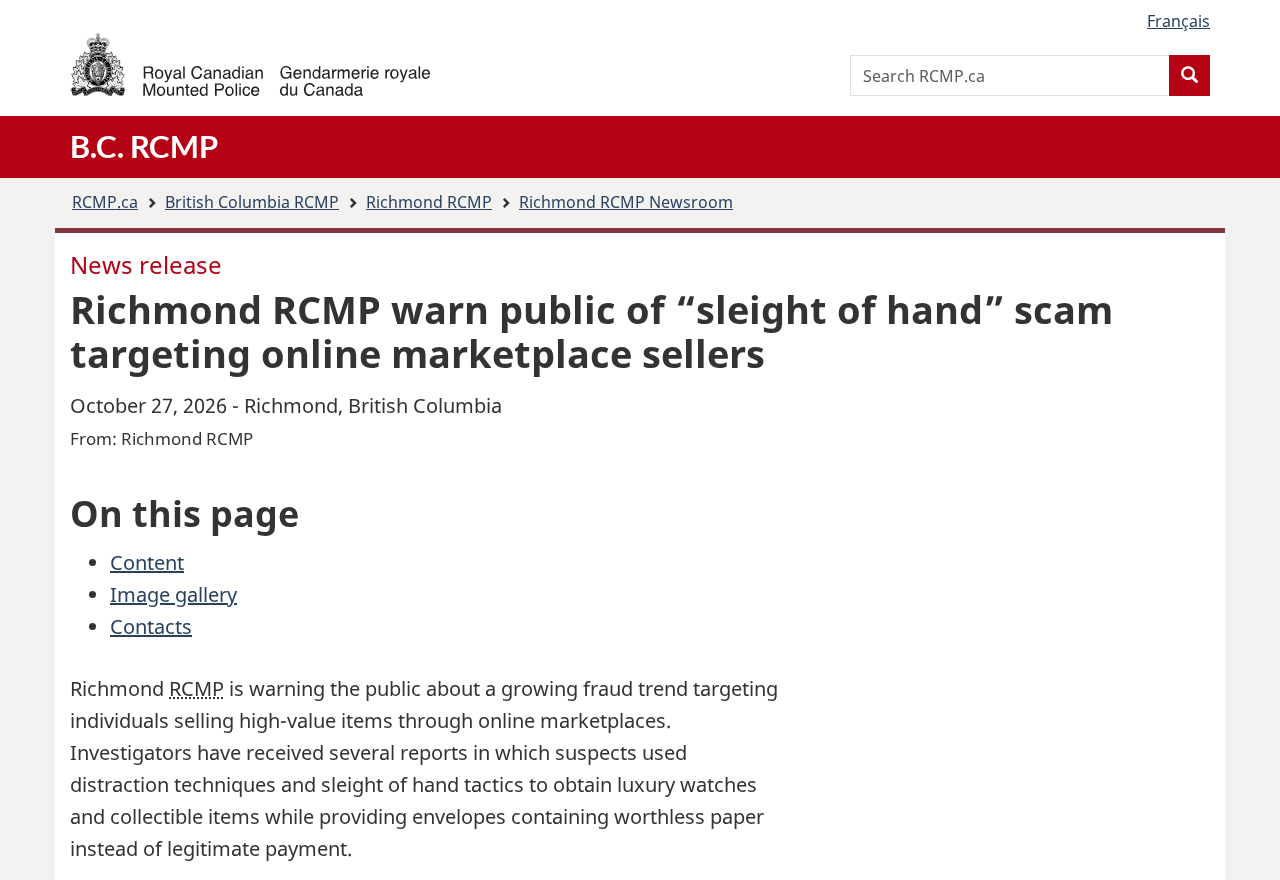
The image above shows a separate Richmond RCMP warning about fake payments targeting people selling watches and other high-value items online.
Payment and identity need their own checks
A photo of a buyer’s ID cannot tell you whether a payment reached you. Check the actual payment through the bank, marketplace, or provider where you expect to receive it.
Keep enough information to document a sale. A platform’s official identity checks can be handled inside that service.
A stranger in a chat has no comparable need to keep your document.
- An ID exchange can be presented as a sign of trust.
- The seller hands over a valuable item and later finds no payment.
- Someone in a different transaction receives an ID resembling the seller’s.
- The second contact may be another victim trying to verify the identity.
- Payment records and evidence of document misuse need to be preserved separately.
How the Scam Works
Step 1: The sale starts with a valuable item and a plausible buyer
A person selling a watch expects questions about condition, originality, servicing, and how the handover will work. It takes time to get comfortable with a buyer on a private sale.
The seller who reported this case said the other person agreed to buy the watch.
The report does not name the listing platform or say how payment was supposed to happen.
Keep initial messages inside the marketplace if it offers communication and payment records. If the buyer moves the discussion elsewhere, you may lose part of the platform’s transaction history.
For a valuable item, settle how you will check payment before making arrangements. Write down what each party is expected to do so it stays clear during the handover.
Step 2: A photo of an ID makes the buyer look accountable
A buyer may say that exchanging identification protects both people. The request can sound fair when they are willing to send what looks like their own document first.
You usually cannot verify from the photo who controls the account that sent it. The image may be genuine and still belong to a person unrelated to the sale.
Avoid sending a photo of a license or passport to a private buyer. If the marketplace requires verification, navigate to its own account settings and use its established process.
Review what personal information is visible in any other documents you share about the item. A warranty card or purchase receipt may contain an address or contact details.
Step 3: The item leaves before payment is verified
The reported watch sale ended with the buyer leaving without paying. The source gives no detail about whether they presented a receipt, promised a later payment, or used another explanation.
In other cases described by Hampshire Police, fake buyers convinced sellers that a bank transfer had gone through. The payment needed to be verified from the seller’s account.
Check the amount and the status through the payment channel you expected to use. A screenshot on the buyer’s phone cannot confirm the state of your own account.
If the payment is missing, stop the handover. You can agree to continue later once the platform or bank confirms what happened.
Step 4: The document can appear in someone else’s sale
The seller said a stranger later contacted them through LinkedIn after receiving an ID that looked like theirs. The stranger was also trying to sell a watch.
An ID image can look convincing because it contains real details. It can give another person the impression that the name in the chat has been verified.
If someone sends you an ID photo as proof during a deal, avoid confronting the person whose name appears on it. They may have had their details exposed earlier.
Save the profile, messages, and transaction details for a report. Send them privately through the marketplace or police reporting route so the ID is not circulated further.
Step 5: The seller has to address the item and the identity exposure
The person who lost the watch said they had located it and expected to hear from police after the investigation. Recovery had yet to be confirmed in their account.
A serial number, original receipt, and photos can help identify your watch. A report about your ID needs the messages where it was shared and any later reports of reuse.
If someone contacts you about another sale, ask when they received the image and through which platform. Suggest that they preserve the conversation and report it there.
Avoid arranging a private meeting to get the watch or the document back. Contact the authority handling the case and provide the new information through its existing reporting route.
How to Set Up a Safer Private Sale
Use the marketplace’s supported transaction process when you can. Before accepting an offer, check what records or protection it provides for shipping, pickup, and payment.
Make the handover conditional on confirmed payment in the account you control. If the app says a payment is pending or being reviewed, wait and verify the status.
If you are shipping, keep the label, tracking receipt, and address provided through the sale platform. Check whether the service provides protection for the item’s value and delivery method.
For an in-person exchange, use a suitable public location. The RCMP’s guidance for online marketplace sellers recommends careful payment verification and using a police exchange zone where available.
Keep identifying records for the item in a private folder. A watch serial number and dated receipt can be useful later without being included in an open listing.
A bill of sale can describe the item, price, date, and agreed payment method. Ask the platform or a trusted professional about any documentation required for a higher-value sale.
If the buyer changes the terms shortly before pickup, take a fresh look at the arrangement. You can end a transaction if payment or the request for personal information changes.
When you need to show proof of the purchase history, review the document first. Share only what helps establish the item’s provenance, and cover unrelated personal information.
## How to Respond When Your ID Turns Up in a Second Deal
A stranger who contacts you may be trying to verify a deal they have not completed. Ask for the name of the platform and the date of the exchange.
If they are willing to report it, ask them to preserve the original conversation. A forwarded picture alone may leave out which profile sent it and why it was offered.
If the stranger wants you to prove your identity by sending a fresh image, decline. You can explain that your document may have been misused without circulating a second copy.
Add the new incident to your existing report if the authority accepts updates. Keep separate dates for the original sale, the later contact, and any evidence the platform supplies.
If you cannot verify the person who contacted you, give them the platform’s official reporting route. Avoid sharing your home address, new ID, or additional payment details in the conversation.
If someone calls claiming to be from the police, ask for the agency and case number. Then call through the agency’s published contact details to verify the request.
Keep a short record of the platforms where the image has appeared. If another person contacts you weeks later, that record can help you avoid confusing separate reports.
If you report a profile for impersonation, specify that an image of your identification was used.
A screenshot of the profile alone may omit the part that connects it to you.
What to Do if You Have Fallen Victim to This Scam
If your watch is gone and your ID has been shared, document both problems. An item recovery would still leave the question of where the ID image ended up.
-
Stop contact after preserving the sale. Save the listing, profile, timeline, agreed payment, and any message where identification was requested or shared.
-
Confirm whether payment arrived. Use your own bank or marketplace app. Ask the provider to explain any pending entry, reversal, or discrepancy.
-
Report the missing watch. Give police and the marketplace its serial number, photographs, proof of ownership, and any evidence of a later listing.
-
Report the ID exposure separately. Ask the issuing authority about its process and what a replacement would do. Preserve any later report of the image being reused.
-
Use an identity recovery plan if there is evidence of misuse. In the United States, start at IdentityTheft.gov. Check what steps fit the information you exposed.
-
Verify unexpected inquiries independently. If someone claims to be an investigator, contact the agency through its published number and ask for the case reference.
If someone shows you the image you sent, ask them to retain the original message. Avoid forwarding the ID through more chats just to establish that it matches yours.
If your address was visible, be cautious about someone arriving for a follow-up pickup. Use the marketplace or police case you already opened to handle further contact.
If you find a listing that appears to show your watch, preserve the listing and relevant details. Let the marketplace or authorities decide what they can do next.
When reporting identity misuse, distinguish what you know from what someone told you. The date you shared the document and the date it resurfaced can both help.
Frequently Asked Questions
Why would the other person send me an ID first?
The exchange can make a request for your identification seem reasonable. You may be looking at a real document that belongs to someone who has never heard of the sale.
Check the payment through the service where it should arrive. A document supplied by the buyer cannot confirm the transaction or replace platform protections.
Can a photo of my ID be used in another sale?
Yes. Police have warned that marketplace fraud can involve stolen identification documents. An image can be reused to make a different account or deal appear credible.
Document what you shared and watch for signs that someone is acting in your name. Use the relevant authority’s reporting route when a specific use comes to light.
What if a stranger says I am the scammer?
Ask them to report the conversation and retain the original messages. Explain that your identity may have been used without permission and avoid sending another copy of your ID.
If you already have a police or platform report, ask the authority how to connect the new information to it. Keep your reply brief and factual.
Should I change or replace my driver’s license?
Contact the issuing authority to ask what it recommends. The right action depends on the jurisdiction and which information or images were exposed.
A replacement document may address some risks. It cannot retrieve copies already shared, so keep a record of later contacts and report specific misuse.
What if the buyer says a transfer is delayed?
Check with your own payment provider and wait until the transaction is verified. Keep the watch with you while a payment is missing or uncertain.
If the buyer leaves because you want to wait, the item is still with you. You can relist it without trying to resolve their payment story in person.
Can I try to buy my own watch back?
Save the listing, serial number if visible, and any other evidence that links it to your watch. Report the listing and give the details to the investigator.
Avoid using a second payment or meeting to recover the item. Check first whether the police or marketplace can address it through their own process.
The Bottom Line
Verify payment in your own account before you hand over a watch. Keep copies of your ID out of private buyer chats.
If a buyer already took the watch or obtained your ID, report both. Preserve proof of ownership and any later message showing the document was used again.

Join the discussion
0 commentsShare your experience or ask a question about this article.
Discussion
Start the conversation
Have a question or something useful to share? Add the first comment.