

The MalwareTips app
Your community, one tap away.
Open MalwareTips from your Home Screen or desktop. Follow discussions, find answers and pick up where you left off.
- Home Screen access
- Optional push alerts
- Your community
You're ready to explore.Explore what's new
Installation instructions
iPhone & iPad
- Open MalwareTips in Safari and tap Share. You may need to open the Page Menu first.
- Choose Add to Home Screen. If it is not listed, use Edit Actions to add it.
- Keep Open as Web App enabled if shown, then tap Add.
Android
- Open MalwareTips in Chrome or another browser that supports app installation.
- Open the browser menu and look for Install app, Install and create shortcut, or Add to Home screen.
- Choose Install and confirm. Wording varies by browser.
Desktop
- Chrome: use the install icon in the address bar, or the menu under Cast, save and share.
- Edge: open the menu, then More tools, Apps and Install this site as an app.
- Safari on Mac: choose Share or File, then Add to Dock. Firefox on Windows: look for the web apps button in the address bar.
If you cannot find an install option, update your browser or use its bookmark option to keep MalwareTips close.
Keep up with your conversations
After installation, open the app and sign in. Enable push notifications in Preferences if you want alerts. On iPhone and iPad, push requires a Home Screen web app and iOS or iPadOS 16.4 or later.
Sign in to manage notificationsInstallation is optional. Your notification settings stay under your control.
You are using an out of date browser. It may not display this or other websites correctly.
You should upgrade or use an alternative browser.
You should upgrade or use an alternative browser.
Serious Discussion Kaspersky received a compromise score of 0.003 in the 2026 AV Comparative malware test. What does this score mean for the average user?
- Thread starter nonamebob567
- Start date
Kaspersky
28 Replies
2,599 Views


You can always switch. Just remember to pick one from the S-Tiers. HeheThat's it I'm switching my AV!!!(kidding)
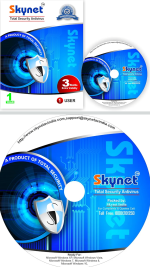
Skynet AV, Systweak AV and Siyano AV.
Attachments
Agree with your points you make, BUT BUT BUT you can delete KVRT files and restrict access once a scan is finished. Less risk for me=win.Also, from a purely technical standpoint, KVRT still requires full Admin/System privileges to scan and delete files. If the vendor’s code was truly malicious or compromised, an on-demand scanner would be just as easily weaponized as a full suite.
One thing having a temp scan with temp files vs a Kaspersky rootkit permanently installed. Plus I would never run a KVRT scan on work files, just personal.
I have nothing against Russians or KS, in fact I admire their technical skill and protection but sadly geopolitics gets in the way of using their software.

totally respect the geopolitical stance, man. Keeping it off your work files is definitely the smart play.Agree with your points you make, BUT BUT BUT you can delete KVRT files and restrict access once a scan is finished. Less risk for me=win.
One thing having a temp scan with temp files vs a Kaspersky rootkit permanently installed. Plus I would never run a KVRT scan on work files, just personal.
I have nothing against Russians or KS, in fact I admire their technical skill and protection but sadly geopolitics gets in the way of using their software.
Just a quick friendly heads up on the "delete the file" part: if a tool ever did have malicious kernel access, deleting the .exe wouldn't undo registry hooks or persistent services it might have dropped in those few seconds. A backdoor doesn't need the scanner file to stay on disk to work!
Stay safe out there, regardless of the AV!
Again you are correct. Personal vs Work though. KVRT on work = bad on personal = sort of OK but like you said there are risks.totally respect the geopolitical stance, man. Keeping it off your work files is definitely the smart play.
Just a quick friendly heads up on the "delete the file" part: if a tool ever did have malicious kernel access, deleting the .exe wouldn't undo registry hooks or persistent services it might have dropped in those few seconds. A backdoor doesn't need the scanner file to stay on disk to work!
Stay safe out there, regardless of the AV!

There is an easy way to stay protected from that "0.003%" malware: just don't download that 0.003% or execute it on your system; you are free to download and execute the remaining 99.997%. That's more than enough freedom, right?And to clarify, what I’m asking here is, what exactly does a 0.003 compromise score mean for the average Kaspersky user that relies on the security product to correct any mistakes he might make during his daily activities, such as checking emails, playing video games, and downloading necessary programs?
Should he be concerned about the compromise score in these lab tests when they involve an unrealistic amount of malware?

What it means for an average user?
Well it means that if you get infected by a common strain then you should watch a movie with Martin Short and Danny Glover called Pure Luck
Well it means that if you get infected by a common strain then you should watch a movie with Martin Short and Danny Glover called Pure Luck
Last edited:
Again you are correct. Personal vs Work though. KVRT on work = bad on personal = sort of OK but like you said there are risks.
Exactly why take the risk and make it easy for them? Kaspersky will eventually retire or be retired if he doesn't cooperate so meh why take the risk?
If my disk gets encrypted and I lose data then that's on me for not maintaining a good backup. Otherwise I have nothing on my personal PC that I can't replace with an reimage from an NVME drive to an NVME drive. At 6 GB/s the reimage takes as long as it takes to make a cup of coffee.
Being in US means that I don't need a backdoor to have my PIi compromised; large data brokers do it for me by losing troves of PII data every few months or so.
Last edited:
Recently browsing
Members who viewed this thread in the last 5 minutes
You may also like...
-

-

-

-
 Setup Idea Pretty Good PC Security Regimen
 -
