



Full STory:ChatGPT and Codex will soon add invisible watermarks to eligible text generated in the European Union. But the technology is far from an infallible AI detector.
OpenAI is preparing to add invisible watermarks to text generated by ChatGPT and Codex in the European Union, giving authorized researchers and organizations a new way to spot content produced or processed by its AI systems.
Key takeaways
The company announced the move as part of its response to the EU AI Act, which requires providers of generative AI systems to make AI-generated text identifiable in a machine-readable way.
- OpenAI will start watermarking eligible ChatGPT and Codex text in the EU over the coming weeks
- The change applies across ChatGPT plans in the EU
- The invisible watermark is embedded through subtle patterns in the words the AI chooses
- It does not identify you, your account, your prompts or your conversations
- Editing, translating or shortening AI-generated text can make the watermark much harder to detect
- A detected watermark does not prove that AI wrote an entire document, and failure to detect one does not prove a human wrote it
- OpenAI is not making its text watermark detector widely available to the public at launch
For ordinary ChatGPT users, however, the term "watermark" may give the wrong impression. Nothing will suddenly appear at the bottom of your ChatGPT responses, and copied text won't carry an obvious "made with AI" label.
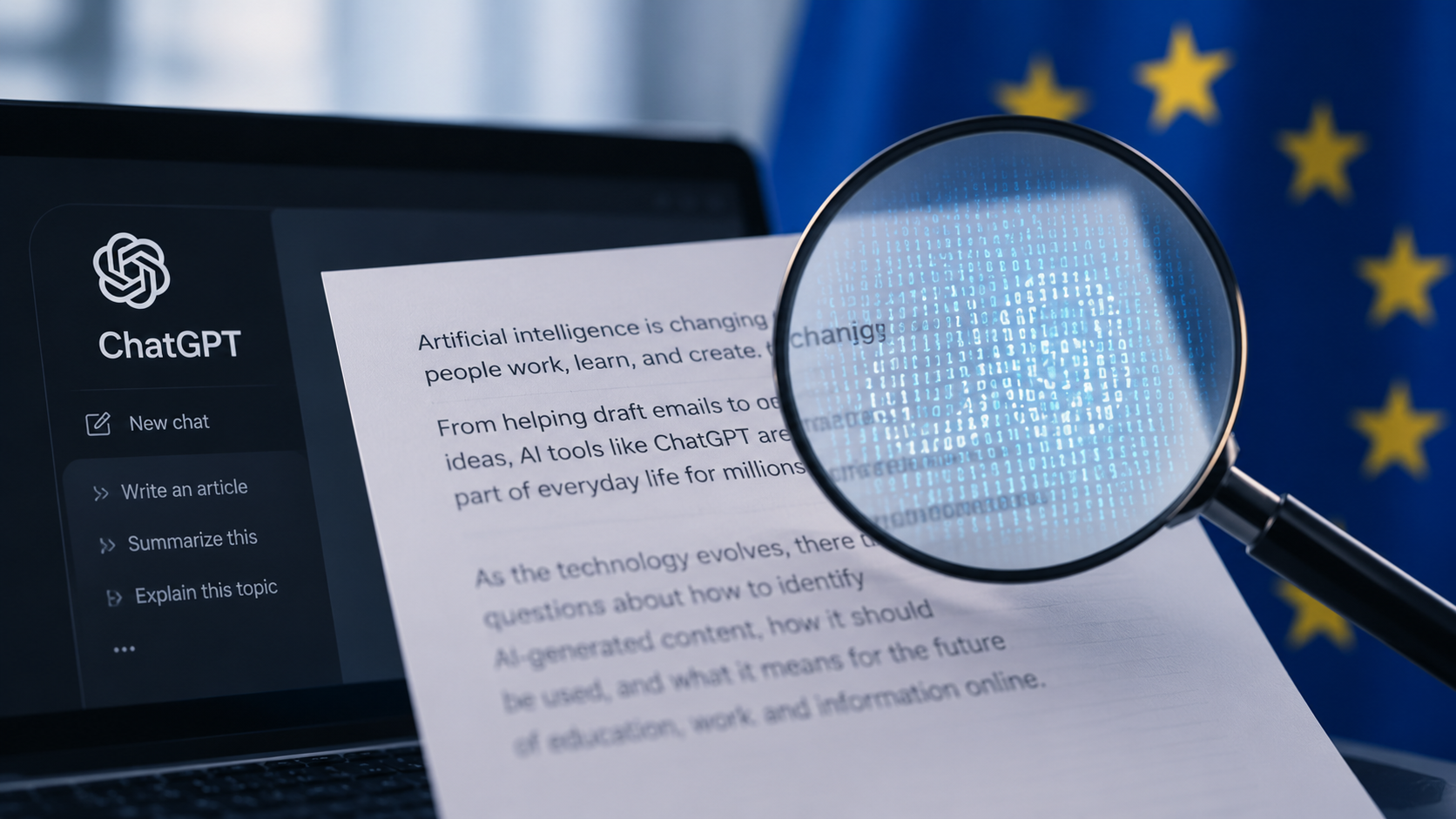
OpenAI is adding invisible watermarks to ChatGPT text. What this means for you
ChatGPT and Codex will soon add invisible watermarks to eligible text generated in the European Union.
 www.bitdefender.com


