Serious Discussion uBlock Origin Lite - General Discussions

Yes, each of you can create simple DNR rules in YAML format.
Just paste the rule taken from a list of filters or from uBo into uBoL, and it will be transformed into a DNR rule.;)

However, creating exception rules is not efficient when they are complex.
AI can also help, but it cannot exceed a certain point.
For now, natural human intelligence is still needed to achieve this goal.(y);)
 
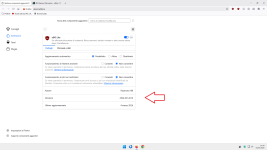
The update to the latest version of uBoL for Firefox from the Github website took place automatically without any problems:

1.png
 
I really like uBol's custom (cosmetic) rule creator. It has the option to pick and click selectors (is much more granular and accurate than AdGuard's slider).
1772733125780.png
The lowest popup box shows the initial custom rule selected by uBol when you hover over an advertisement area, the one above only uses a part (with constant/steady name) and also blocks the red advertisement placeholder. It is hard to explain, but when you try (and trial on error a bit), you will soon get the hang of it.
 
In cases where a site doesn’t work well with Brave’s shields and you need to partially disable them, uBlock Origin Lite can take over without compromising security. By keeping its lists and filters active, uBOL continues blocking trackers and unwanted content, so you don’t lose protection even if Brave has to give way on that particular site. 🛡️🔄🌐
 
EDGE s(it itself and removed all of my extensions including uBlock. Reinstalled uBlockOrigon version and it still works but should I change to uBlock Lite due to MV3?
Also experienced this behaviour in the past, i don't use Edge atm, added this switch seems working :
--disable-features=RuntimeOnMessagePromiseReturnSupport,ExtensionBrowserNamespaceAlternative
 
Why do you use uBOL with Brave? Aren't its shields adequate for your requirements?
:-) In stead of using right click inspect and see what class or ID or DIV I should use with the correct selectors, I use uBol to create cosmetic rules in Brave. Like wise I sometimes install AdGuard for its logging capabilities to create static rules (hostfile domains blocks or URL plus script/XHR) to dissect news websites completely and read them without annoying login popups or (paid) membership requests. So I only use uBol and AG on demand (removing them after use).

I use Brave Shield on demand (enabled for selected websites) only using Brave's internal Default AdBlock filter, Kees1958 most used EU + US and around 150 lines of custom rules for Dutch and English newspapers and US news websites. Cloudflare Zero Trust also does some mild adblocking.

Good question! I have some optimizing/tuning disorder. I spend saturday on saturday to (fine) tune an old classic motorbike until it had 2 hp more than it left the factory some 42 years ago (won 12hp from 72 to 84hp in total while converting it from fuel with lead to fuel without lead).

Likewise I could not stand that my wife using the same HP laptop (her SSD is 2GB, mine is 1 GB) on Windows 11 had a higher Speedometer 3.1 benchmark with Chrome (plus uBol) than my Linux Mint XFce laptop running Brave. I squeezed everything out of my config until my Linux setup more or less achieved the same benchmark result (between 18.6 and 19.1).

In Brave flags I have enabled and disabled some stuff (see spoiler) to increase Speedometer 3.1 benchmark results a little


1772778388632.png
 
Last edited:
In cases where a site doesn’t work well with Brave’s shields and you need to partially disable them, uBlock Origin Lite can take over without compromising security. By keeping its lists and filters active, uBOL continues blocking trackers and unwanted content, so you don’t lose protection even if Brave has to give way on that particular site. 🛡️🔄🌐
At the moment Brave with a decent set of uBo scriptlets implemented, is more powerful than uBol. The other way around is a good option, Using Brave with Brave Shields disabled and using uBol in basic mode (only uses Chrome's internal filtering engine without service worker needed for the extension to operate) with below lists combines efficiency (uBol in basic mode) with on demand full power adblocking (Brave shield in aggressive mode for specific websites).

1772783423253.png


Note: IMO the effeciveness of uBol's malware and phishing protection is questionable when looking at the update frequency of uBol (and it static filters) compared to the (short) life of most malware and phishing websites. Using a DNS with malware filters combined with browser's internal safe browsing protection and an URL filtering extension (Symantec or Avira and MalwareBytes Browser Guards with tracking/ad protection disabled or Osprey browser protection with only AlphaMountain, ControlD and Quad9 enabled) is a much more effective approach than using adblock lists which are at best updated once a week or a fortnight.

1772783588722.png
 
Last edited:
EDGE s(it itself and removed all of my extensions including uBlock. Reinstalled uBlockOrigon version and it still works but should I change to uBlock Lite due to MV3?
Both are good; I installed uBlock Origin on Edge before two weeks, but I switched back to uBOL because it gave me the same results and was lighter. I primarily use the default settings and filters, but advanced members will have different opinions because they use dynamic filters in uBlock Origin. Ultimately, it depends on your use case.
 
I completely understand @LinuxFan58's point regarding uBOL's efficiency in basic mode by delegating the work to Chrome's internal engine; technically, it is the cleanest option. In my case, I still prefer uBlock Origin (the original) for its immediate response capability, especially when YouTube changes its algorithms and filters need to be updated instantly without depending on extension store timelines.

Regarding my response to @lokamoka820 in post #113, I wanted to frame it in a simplistic way so that any non-advanced user could understand it: using uBOL alongside Brave Shields works as an excellent 'safety net.' If for some reason a site doesn't load correctly and Brave Shields need to be momentarily relaxed, having uBOL active allows navigation to remain protected in a lightweight and automatic way. My intention was to highlight that if one system has to yield for compatibility reasons, the other continues to have the user's back without them having to configure anything extra. 🛡️ 🤝 🚀
 
I always use uBoL in Basic filtering mode, so it's as if the extension isn't there because blocking is handled by Chrome itself.
Agree, that is IMO the bonus of uBol (no service worker needed) and its excellent cosmetic rule builder (cosmetic rules are also applied in basic mode) and the option to change blocking levels per website when needed are a double bonus.
 
I always use uBoL in Basic filtering mode, so it's as if the extension isn't there because blocking is handled by Chrome itself.
Same here.
Agree, that is IMO the bonus of uBol (no service worker needed) and its excellent cosmetic rule builder (cosmetic rules are also applied in basic mode) and the option to change blocking levels per website when needed are a double bonus.
Indeed, and using it this way is more secure, which was the stated purpose of MV3. My feeling is that if one is going to use MV3 extensions they should by default run this way, with no code hacks to overcome MV3 limitations. I belive Adguard is an example of the latter point, but I may be wrong.
 
@lokamoka820 To put it simply: the difference isn't about external protection, but about who does the heavy lifting.

  • Basic Mode: uBOL stays "invisible." It just hands a list of ads to Chrome, and the browser handles everything. It’s the lightest option because the extension doesn't actively analyze the websites you visit.
  • Complete Mode: uBOL has permission to "see" the page. This allows it to clean up complex ads (like those on YouTube) or remove those empty boxes left behind where ads used to be.
A note on Brave: If you use this browser, you don't really need uBOL. Its built-in "Shields" already perform this deep cleaning natively, without the limitations Google imposes on extensions.

P.S.: I’m writing this in non-technical terms to keep it quick and useful for everyone; I’m not looking to provide a deep technical thesis, just clarify the practical use.

⚡🧹🛡️
 
Although uBo's code written in Javascript is highly optimized and he uses data structures optimized for filtering, uBol using Chrome's build in (written in C++) and Brave's build in (written in Rust) use a much faster storage format for rules (and more efficient as for instace nearly 4000 ABP rules of Peter Low are constructed in just one DNR rule), meaning uBol (is a bit faster than Brave) and Brave are faster than uBo.

1772830657244.png