
I don't use extension. I am currently using Adguard DNS over HTTPs systemwide.


Open MalwareTips from your Home Screen or desktop. Follow discussions, find answers and pick up where you left off.
If you cannot find an install option, update your browser or use its bookmark option to keep MalwareTips close.
After installation, open the app and sign in. Enable push notifications in Preferences if you want alerts. On iPhone and iPad, push requires a Home Screen web app and iOS or iPadOS 16.4 or later.
Sign in to manage notificationsInstallation is optional. Your notification settings stay under your control.


I got 100% with uBO plus ControlD (hagezi TIF) and 24% with uBO disabled.Can anyone explain to me what are you guys testing with this site? I don't understand.
DNS will always get 98% because it blocks all the domains website uses. uBO will always get low percentage because it doesn't block domain, rather injects dummy script instead of ad script. This is done on purpose because blocking entire domain breaks some websites.
The low percentage uBO gets means it fooled the website and actually works correctly.
That means some websites might get broken or you'll be shown "please disable ad blocker" message.I got 100% with uBO plus ControlD (hagezi TIF) and 24% with uBO disabled.

Rarely facing such a situation; most websites load normally with uBO.That means some websites might get broken or you'll be shown "please disable ad blocker" message.
I'm just saying so you don't get surprised. I used to block everything and then I noticed it only caused me problems.Rarely facing such a situation; most websites load normally with uBO.
uBO blocks are bypassable; for average user, I recommend ControlD (hagezi multi normal) to avoid unbypassable blocks.I'm just saying so you don't get surprised. I used to block everything and then I noticed it only caused me problems.


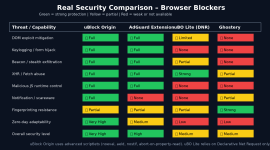

There is an option in NextDNS to allow affiliate and tracking links (which hides your IP) in Privacy, which resolves most eCommerce problems. My wife's is on NextDNS with OISD,nl and Adguard DNS privacy filters enabled. I have not heared anything about problems (and she does a lot of online shoppingSwitching to Brave full time for Youtube, uBlock for all browsers, would love to use NextDns on my machine except the filter lists I use block eCommerce sites from functioning.
 ).
).
Thanks, very interesting. Besides checking other AI-engines, I also asked the reverse (in a new session) to (try to) weed out AI-hallucinations (because I read somewhere that uBO and AG usually offer scriptlet compatibility). When asking the reverse (show me a JS exploit which passes uBO but not AG) ChatGPT reponds withI asked the AI to show me a JS exploit that bypasses the same rules entered in AG but not in uBo.
Thanks, very interesting. Besides checking other AI-engines, I also asked the reverse (in a new session) to (try to) weed out AI-hallucinations (because I read somewhere that uBO and AG usually offer scriptlet compatibility). When asking the reverse (show me a JS exploit which passes uBO but not AG) ChatGPT reponds with
View attachment 294018
The follow up question "explain those scriptlet based heuristics of AdGuard" is really interesting.
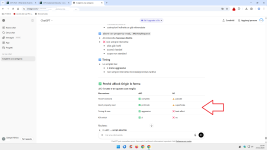

chatGPT 5.2 suggested I update my ubo to dynamic filtering Advanced user / medium mode (to start with), and it provided 2 rules with documentation, but then chatGPT was totally lost in the UI and could not direct me where in ubo to add those rules. After 45 min of putzing around, I left the chat and looked for myself and it took me about 90 seconds to see where to add the rules for dynamic filtering. OR AI/LLM still has its quirks.But I have not explored the issue further because I already use what AI has determined to be the most important aspect of mitigation, namely dynamic filtering, which is also applied in AG.
chatGPT 5.2 suggested I update my ubo to dynamic filtering Advanced user / medium mode (to start with), and it provided 2 rules with documentation, but then chatGPT was totally lost in the UI and could not direct me where in ubo to add those rules. After 45 min of putzing around, I left the chat and looked for myself and it took me about 90 seconds to see where to add the rules for dynamic filtering. OR AI/LLM still has its quirks.
You are absolutely right, look at the advice they are gving here to improve GENERA blocking for this SPECIFIC DOMAIN ONLY, it is hilariousCan anyone explain to me what are you guys testing with this site? I don't understand.
DNS will always get 98% because it blocks all the domains website uses. uBO will always get low percentage because it doesn't block domain, rather injects dummy script instead of ad script. This is done on purpose because blocking entire domain breaks some websites.
The low percentage uBO gets means it fooled the website and actually works correctly.
Members who viewed this thread in the last 5 minutes


