
Serious Discussion Why do some members disable IPv6 in their setup configurations?

Performance, security and privacy. People, who disabled it, went from 200 Mbps to 1000 Mbps instantly. It is hard to really disable it now, unticking it alone might not do.
Code:
netsh int ipv6 isatap set state disabled
netsh int teredo set state disabled
netsh interface ipv6 6to4 set state state=disabled undoonstop=disabled
reg add "HKLM\Software\Policies\Microsoft\Windows\TCPIP\v6Transition" /v "6to4_State" /t REG_SZ /d "Disabled" /f
reg add "HKLM\Software\Policies\Microsoft\Windows\TCPIP\v6Transition" /v "ISATAP_State" /t REG_SZ /d "Disabled" /f
reg add "HKLM\Software\Policies\Microsoft\Windows\TCPIP\v6Transition" /v "Teredo_State" /t REG_SZ /d "Disabled" /f
reg add "HKLM\System\CurrentControlSet\Services\Tcpip6\Parameters" /v "DisabledComponents" /t REG_DWORD /d "255" /f
reg add "HKLM\System\CurrentControlSet\Services\Tcpip6\Parameters" /v "EnableICSIPv6" /t REG_DWORD /d "255" /f
Virtually all network problems, I had with WiFi and ethernet, were caused by IPv6. It was supposed to replace IPv4, but since IPv4 is "limitless", everyone gave up on it.
IPv6 can cause leaks via VPN, thus rendering it useless. It can act as GDID and help to identify the device. In my books, enabling IPv6 is like enabling tracking.

I found that it is now considered the standard and not recommended to disable.
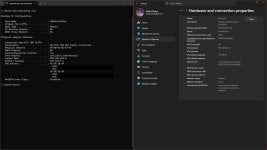
It it recommended by those, who invented it, just like QUIC, I disable that too.
 

Attachments

  • capture_08202026_075521.jpg
    capture_08202026_075521.jpg
    134.2 KB · Views: 54
For me, the important point is not whether IPv6 is enabled or disabled, but whether users understand their own configuration and make an informed choice. Every setup has different needs, and what makes sense for one person may not be necessary for another.

With IPv6, some users see it as unnecessary for their environment, while others consider it part of the natural evolution of networking. The key is understanding the trade-offs and making decisions based on knowledge rather than simply following a habit or a fear-based approach. ⚖️🌐
 
TIL, IPv4 due to NAT/CGNAT, has a negative impact on your battery life. It's probably very minor but worth knowing at least.
Android implemented DHCPv6-PD on Android recently, while many users actually wanted the full DHCPv6. It's the only stubborn OS that has refused to implement DHCPv6, but anyway, that's a different topic.
 
Most apps try IPv6 first and then if there's no response, try IPv4. In some occassions fallback to IPv4 doesn't work correctly and because of this, apps might lose internet access.

If your ISP doesn't give you IPv6 address, you should disable it as this will stop delays which occur with trying IPv6 first and prevent potential issues when fall lback doesn't work correctly.

Note: this doesn't have any positive nor negative consequences for the network security.
 
Last edited:
but i thought QUIC is supposed to be faster ? Less handshaking because it is UDP.
Less is the important part, less security in order to improve performance by a few milliseconds.
On the other hand, implementing QUIC proves that UDP is no longer unreliable, no packets loss.
 
Less is the important part, less security in order to improve performance by a few milliseconds.
This is not correct really. QUIC in fact, is secured by default. There is no plain-text or unsecured QUIC unlike HTTP/2. Even TLS 1.2 is not allowed. TLS 1.3 encryption is built into the QUIC protocol itself unlike, a TCP+TLS+HTTP combo. One of the reasons QUIC is a pain for AV products that want to do HTTPS scanning.
People had justifiable doubts regarding QUIC because it came from Google and Google started implementing it into Chromium and made their sites like Google, YouTube, Gmail load in QUIC even before it became the accepted standard. But later QUIC was further optimized, modified and hardened by RFC and became the mandatory protocol for HTTP/3. If QUIC wasn't secured, it wouldn't become the core part of HTTP/3.
One downside of QUIC at the moment is that, unlike TCP and UDP, it's not part of any OS kernel yet. It runs in user space, so it uses more CPU mainly under heavy load. I saw, I think last year, that it will become part of the Linux kernel in 2-3 years if everything goes smoothly. Once they do, other OSes might follow.
 
Last edited:
This is not correct really. QUIC in fact, is secured by default.
I do not care about the paid Google propaganda, TCP is secure, UDP is not, that is not an opinion, that is a fact, on which the whole IP internet is based for decades.
It is like people saying that passkey is more secure, because Google says so, I will never understand it. Either way, I will prefer the security over the convenience, always.
 
Last edited:
I do not care about the paid Google propaganda, TCP is secure, UDP is not, that is not an opinion, that is a fact, on which the whole IP internet is based for decades.
It is like people saying that passkey is more secure, because Google says so, I will never understand it. Either way, I will prefer the security over the convenience, always.
Screenshot_5.png
 
I do not care about the paid Google propaganda, TCP is secure, UDP is not, that is not an opinion, that is a fact, on which the whole IP internet is based for decades.
It is like people saying that passkey is more secure, because Google says so, I will never understand it. Either way, I will prefer the security over the convenience, always.
I think by security what you're talking about things like TCP's packet order, data integrity, retransmission where if a packetet is lost, TCP will halt everything till the lost packet is retransmitted to make sure everything has arrived and arrived in order (the security you're taking about) while UDP on the other hand is more like a headless chicken that doesn't care about anything, it just keep delivering packets, doesn't care what is missing, doesn't care about the order, doesn't acknowledge anything at all.

Well, you're mixing UDP and QUIC.
QUIC ≠ UDP. It uses the UDP protocol but, on top of it, adds packet retransmission, acknowledgements, and other good parts of TCP.
If these were not the case, they wouldn't be stupid enough to make QUIC the base of HTTP/3. QUIC/HTTP3 is secure.
 
For reasons unclear my ISP still don't support IPv6 they did a trial but not up & running :cool:
Same here. Apparently, ISPs in Croatia do support it, but not giving it to customers unless they specifically request it. And the amount of people asking for it is less then 0.1%. No one talks about IPv6 either, not even in IT communities and forums.

As long as everything works with IPv4, I'm happy with it and have no desire for IPv6.