
New Update Windows 11 KB5121767 released to fix shutdowns, overheating, but you don’t need it unless you own these PCs

Gandalf_The_Grey

Level 85
Thread author
Verified
Honorary Member
Top Poster
Content Creator
Well-known
Forum Veteran
Apr 24, 2016
7,868
6
83,509
8,389
55
The Netherlands
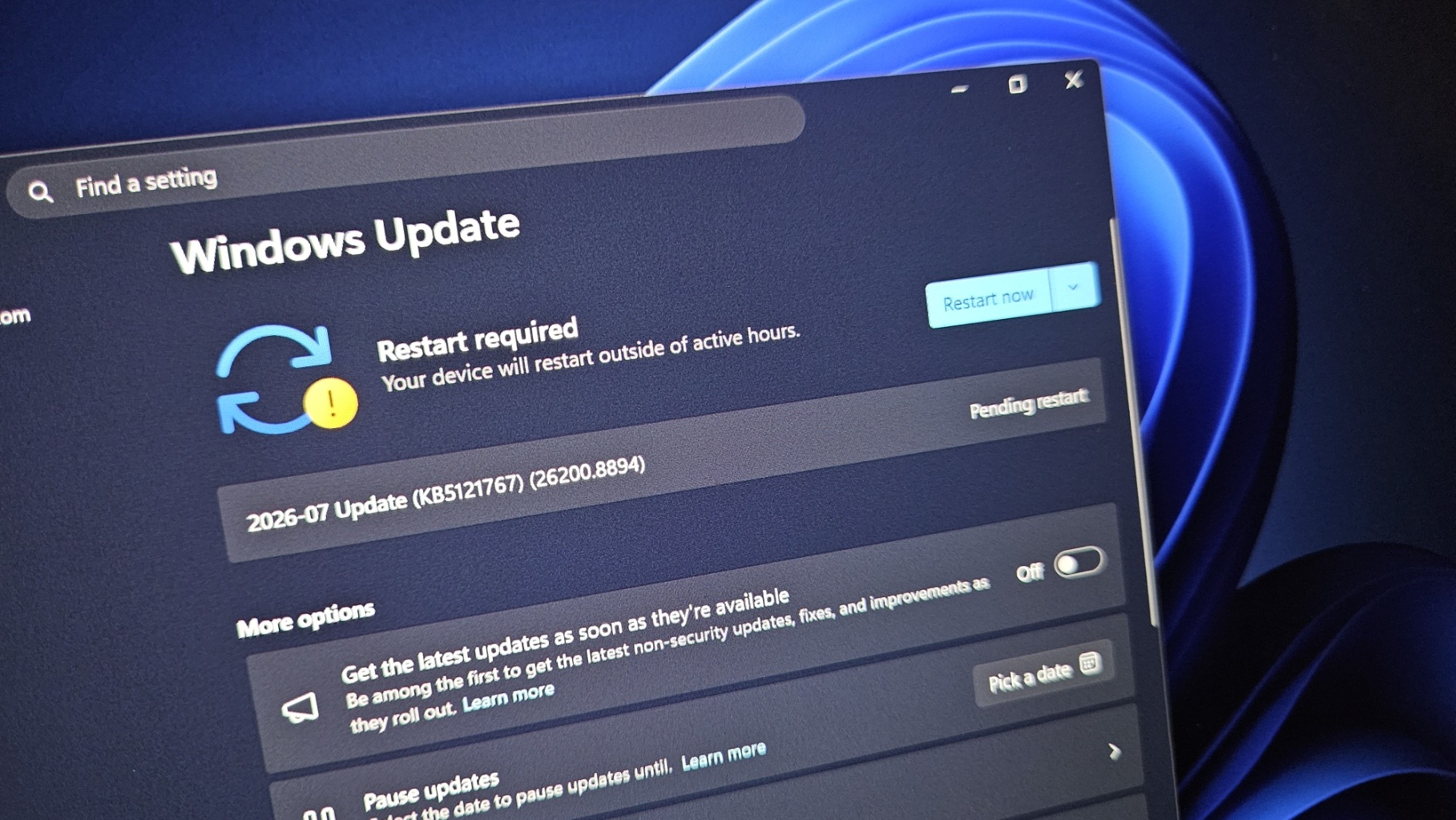
Microsoft just dropped Windows 11 KB5121767, an emergency update that replaces the July 2026 cumulative update on PCs affected by unexpected shutdowns, poor performance, overheating, and battery drain. This update shows up as “2026-07 Update (KB5121767) (26200.8894) and is available for everyone, including those unaffected.

Microsoft says the new out-of-band update is recommended only for affected Dell PCs, but Windows Latest observed that it may automatically download and install on other PCs when a specific Windows Update toggle is enabled.

Microsoft hasn’t published the list of affected PCs yet, but Windows Latest has managed to obtain it from our sources.
According to our sources, the following Dell PCs are affected and should automatically receive today’s emergency update:
  • Dell Pro Max 14 Premium MA14250
  • Dell Pro Max 16 Premium MA16250
  • Dell Pro Precision 7 14 PW714260
  • Dell Pro Precision 7 16 PW716260
  • Precision 5470, Precision 5480, Precision 5490, and Precision 5770
  • XPS 17 9720 and XPS 17 9730
Although Microsoft recommends Windows 11 KB5121767 only for affected devices, Windows Latest observed that the update begins downloading and installing on all PCs where the “Get the latest updates as soon as they’re available” toggle is turned on.

If you have already installed it without experiencing any problems, you do not need to worry. However, this is another reminder to turn off the toggle if you do not fully understand how it works. Some of you may end up unnecessarily installing today’s out-of-band update because of how it is distributed and labeled.
 
Important verification note

I cannot independently verify the claims in this article, including whether KB5121767, build 26200.8894, or the listed Dell models are genuine and currently distributed. The article is dated July 2026, so its information is also time-sensitive.

Before installing or removing anything, verify the update through official sources:

  • Check Settings > Windows Update > Update history and confirm the exact KB number and build.
  • Search the Microsoft Update Catalog for KB5121767.
  • Check the Dell Support page for your exact model and current BIOS, chipset, and driver guidance.
  • Review Microsoft’s official Windows release health documentation for known issues.

The “Get the latest updates as soon as they’re available” setting can cause a device to receive non-security updates and fixes earlier than the normal staged rollout. Disabling it is reasonable if you prefer to wait for broader validation, but it does not prevent all normal security updates.

If KB5121767 is already installed and the computer is working normally, there is no general reason to uninstall it solely because it is described as an emergency or out-of-band update. Create or verify a restore/recovery option first, and only consider removal if you are experiencing a documented problem that began after installation.

The key point is to confirm the update in Microsoft Update Catalog and Windows Update before relying on the article’s claims or taking corrective action.
 
I have had that particular setting switched off for as long as I can remember. And yet in Windows Update there was the question if I wanted to download and install it. (I clicked the X to close.)

OK, typical... Microsoft recommends this update only for people with an affected Dell as seen in the list of the opening post. And as mentioned, I never had that particular setting activated, but I just saw that every time I close that update and leave the update menu... that update is back, waiting to get downloaded and installed. Microsoft Logic... yes, that makes sense. :rolleyes:
 
I was experiencing shut downs, and wondered why, Thanks once again Gandalf for researching this and posting
I hope your problems are resolved after this update.
For me it was optional but installed it and I have no problems to report.
 
Microsoft has released KB5121767, an out-of-band (OOB) cumulative update for Windows 11 versions 22H2 and 21H2. This update addresses a system performance issue related to the Intel Innovation Platform Framework (Intel IPF) drivers.

The update was made available on July 18, 2023, specifically for devices affected by this issue, which arose after installing recent Windows updates.

Windows 11 Update to Fix Intel IPF Driver Performance Issues
According to Microsoft, the bug could lead to unexpected changes in device performance, power consumption, or overall system behavior on a limited number of Intel IPF-equipped systems.

Intel IPF is a platform-level driver framework used by modern Intel-based devices to manage hardware and operating system power, thermal, and performance capabilities. Issues in this layer can result in noticeable problems such as increased battery drain, throttling behavior, reduced responsiveness, or inconsistent performance.

This issue has also affected a limited number of Dell devices. Microsoft temporarily placed a compatibility safeguard hold on these devices, preventing them from receiving the July 2023 Windows security update, KB5101650, while investigating the Intel IPF-related behavior. With the release of KB5121767, Microsoft has confirmed that affected Dell devices can now install the OOB update.

KB5121767 is a cumulative update that includes all security and non-security fixes from previous Windows updates, as well as the Intel IPF remediation.

This package updates Windows 11 version 22H2 to Build 22621.889 and Windows 11 version 21H2 to Build 22000.889. Microsoft emphasized that organizations and consumers whose devices are not affected do not need to take any action, reducing the risk of unnecessary deployments across unaffected systems.

This release also includes servicing stack update KB5120102, Build 22000.8872, designed to enhance the reliability of the Windows update installation process.

Servicing stack updates are crucial for enterprise patch management because they improve the component that installs future Windows updates. Additionally, Microsoft has updated Windows AI components, including Image Search, Content Extraction, Semantic Analysis, and Settings Model, to version 1.2605.856.0.

Devices configured with the “Get the latest updates as soon as they’re available” setting will automatically receive the OOB update. Administrators and users who do not have this setting enabled can manually install KB5121767 via Settings > Windows Update by selecting “Download & install.”

The package is also available through the Microsoft Update Catalog, Windows Update for Business, Windows Server Update Services, and optional update deployment channels.

Enterprise administrators should identify systems running Intel IPF drivers, particularly affected Dell endpoints, and validate the update in controlled environments before wider deployment.

While Microsoft has not classified this issue as a security vulnerability, unexpected changes in power and performance can disrupt endpoint reliability, user productivity, and operational monitoring, making timely remediation crucial for organizations managing Windows 11 systems.