

A calm voice says he is Brian Lopez from a Special Resolution Unit. Your tax file is supposedly moving into final collections, and you must press 1 or call +1-855-768-8331 immediately.
Hang up. The message is a government-impersonation scam. Its only real deadline is the one the caller invents to stop you from checking with the IRS.
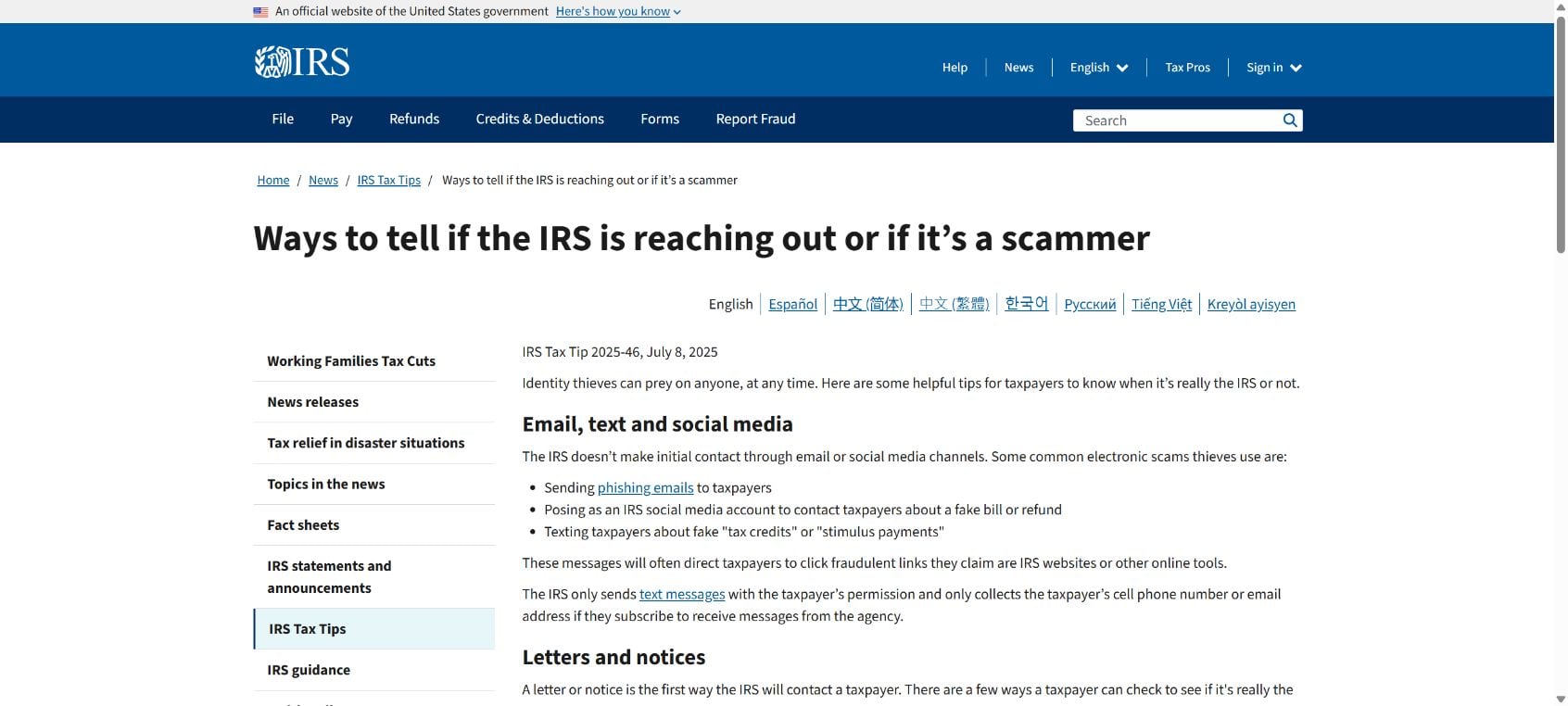
Overview of the +1-855-768-8331 Brian Lopez IRS Scam
The voicemail claims to come from Brian Lopez, a tax officer or a representative of a Special Resolution Unit. It refers to a time-sensitive tax matter, missing returns, an IRS deadline or a file that is about to enter final collections. Recipients are told to press 1 or return the call at +1-855-768-8331. Some versions also mention 877-580-0051.
The message sounds professional because it avoids the cartoonishly aggressive opening people expect from a scam. The speaker may be polite, use a department-style name and imply that there is still time to resolve the issue. The threat sits underneath the calm delivery: respond now or face collections, frozen accounts, legal action or arrest.
The call does not prove that the IRS has a case against you. The IRS normally makes first contact about a tax issue by sending a letter or notice. An agent may call in specific circumstances, but not with an unexplained robocall that demands an immediate callback and then pushes unusual payment methods.
The callback is where the fraud develops. A live operator may ask for your name, address, date of birth and Social Security number under the excuse of identity verification. After collecting personal information, the operator invents a tax balance and offers a narrow way to prevent enforcement.
Payment requests often involve gift cards, cryptocurrency, wire transfers, cash-delivery services or payment apps. The IRS does not ask for gift cards and does not demand that taxpayers send cryptocurrency to settle a bill. Once those payments are sent, they are difficult to reverse.
The name Brian Lopez is part of the script, not proof of an identifiable tax officer. Scammers can reuse names, spoof caller ID and rotate callback numbers. Judge the behavior, not the familiar area code, professional voice or name displayed on the phone.
How the Brian Lopez Tax Call Scam Works
Step 1: An automated voicemail creates uncertainty
The message does not explain the exact tax form, year, notice number or amount owed. It uses broad phrases such as time-sensitive matter, final collections and deadline. That vagueness lets the same recording frighten thousands of people.
Most adults have filed taxes and few feel completely confident about every rule. The scam exploits that ordinary uncertainty.
Step 2: The victim is pushed to press 1 or call back
The recording’s immediate goal is not payment. It first needs confirmation that a real person answers and is worried enough to engage. Pressing a key or returning the call marks the number as responsive and connects the target with a trained operator.
Step 3: A live scammer performs identity verification
The operator may already know your name or address from public records or a data breach. They ask you to confirm the rest. Each answer can become useful for identity theft even if you never send money.
A legitimate organization may verify identity, but you should never provide sensitive data to an unexpected caller whose identity you cannot independently confirm.
Step 4: The scammer invents a tax emergency
After gaining trust, the caller claims you owe back taxes, filed a return incorrectly or missed a government deadline. The amount may be described as a final settlement that is smaller than the supposed total debt.
Threats can escalate quickly. Victims may be told that a warrant is being prepared, police are on the way, a bank account will be frozen or a Social Security number will be suspended. These are pressure tactics, not normal tax administration.
Step 5: An irreversible payment is demanded
The caller gives precise instructions for buying gift cards, sending cryptocurrency, wiring money or using a payment app. They may insist that you remain on the phone while traveling to a store so nobody can interrupt the scam.
A request for gift-card numbers or cryptocurrency is enough to end the call. The IRS does not accept gift cards as tax payment.
Step 6: The scam continues after the first payment
Paying rarely closes the invented case. The caller may discover a second penalty, transfer the victim to a fake supervisor or demand another fee to release a hold. Personal information collected during the call can also be sold or reused in later fraud.
The Phrases Designed to Scare You
- Special Resolution Unit: sounds like an official department while remaining conveniently vague.
- Final collections: suggests that every earlier opportunity has passed, even though no notice was received.
- Time-sensitive matter: discourages the recipient from consulting family, an accountant or the IRS.
- Press 1 to stop further action: turns a prerecorded lure into a live manipulation session.
- One-time settlement: makes an immediate payment sound like a special chance to avoid a larger debt.
- Do not disconnect: keeps the victim isolated from warnings by store staff, banks or relatives.
Why This Is Not How the IRS Collects Tax
A letter or notice normally comes first
The IRS says that a letter or notice is usually the first contact with a taxpayer. Private collection agencies working on certain inactive debts may call, but only after written notices have been sent to the taxpayer and representative.
The IRS does not leave urgent threats
Real agents do not leave prerecorded messages claiming that immediate arrest is coming unless you call a random toll-free number. Taxpayers have appeal rights, notice procedures and time to verify what the government says they owe.
The IRS does not dictate gift cards or cryptocurrency
The IRS publishes legitimate payment methods at IRS.gov. It does not ask for store gift cards, prepaid cards or cryptocurrency. A caller who refuses normal verification and insists on an irreversible payment is exposing the scam.
Caller ID is not evidence
Phone numbers and display names can be spoofed. A call may appear local or even show IRS-related text. The only safe verification is to end the call and contact the IRS through a number obtained independently from IRS.gov or a genuine notice.
What to Do If You Receive the Voicemail
- Do not press 1 and do not call +1-855-768-8331 or any number supplied in the message.
- Do not confirm your name, birth date, address, Social Security number or tax information.
- Save the voicemail if you want evidence, then block the number.
- Check your IRS Online Account by opening IRS.gov yourself. Do not use a link sent by the caller.
- If you received a tax notice, compare it with the notices listed by the IRS and call the official number printed on a verified document.
- Report the impersonation call to the Treasury Inspector General for Tax Administration and the Federal Trade Commission.
- Tell vulnerable relatives about the script, especially anyone who may be frightened by tax or arrest threats.
What to Do If You Spoke to the Scammer
If you gave only basic information
End contact and record what you disclosed. Be alert for follow-up calls that use those details to sound more credible. Do not trust a second caller who claims to be a supervisor, police officer, bank employee or fraud investigator.
If you shared your Social Security number
Treat it as an identity-theft risk. Place a fraud alert or security freeze with the major credit bureaus, monitor credit reports and follow the identity-theft recovery steps for your country. In the United States, create an account at the official IdentityTheft.gov site.
If you shared bank or card details
Call the financial institution using the number on the card or its official website. Ask it to secure the account, replace exposed credentials and review recent transactions. Do not use a callback number the supposed tax officer gives you.
If you installed an app or granted remote access
Disconnect the device from the internet, remove remote-access software and run a complete security scan. From a clean device, change email, banking and tax-account passwords. Review active sessions and multi-factor authentication settings.
What to Do If You Paid
Act immediately. Gift cards, cryptocurrency and wires move quickly, but a provider may still be able to flag a transfer. Contact the card issuer, exchange, payment app or bank through its official fraud channel. Give it the destination, time, amount and any transaction identifiers.
Keep the voicemail, receipts, wallet addresses, gift-card numbers, chat messages and caller details. File reports with the FTC, TIGTA and local law enforcement when money or identity information was lost. A report does not guarantee recovery, but it creates the documentation banks and investigators may need.
Do not pay a recovery service that contacts you unexpectedly and promises to retrieve the funds for an advance fee. Recovery scammers target people whose details were already exposed in the first fraud.
Frequently Asked Questions
Is +1-855-768-8331 an official IRS number?
No. The number is associated with a voicemail script impersonating a tax-resolution representative. Verify all tax concerns through IRS.gov and the official contact information on a genuine notice.
Could a real IRS employee be named Brian Lopez?
Possibly, but that would not validate this call. Common names can be chosen deliberately. The unexpected threat, vague file, callback demand and payment behavior are what identify the fraud.
What if I really do owe taxes?
A real balance does not make the caller legitimate. Log in to your official IRS Online Account or contact the IRS using independently obtained details. Resolve genuine debt through official payment plans and appeal procedures.
Will the IRS arrest me for hanging up?
No. Hanging up on an unverified caller does not trigger enforcement. Real tax matters are documented and can be checked without remaining on an intimidating call.
The Bottom Line
The Brian Lopez call from +1-855-768-8331 is a blatant IRS impersonation scam. It combines a vague tax warning, an invented department and a fake deadline to pull victims into a live pressure script.
Do not call back, do not press 1 and do not provide identity information. If a tax issue is real, it will still be there after you hang up and verify it safely through IRS.gov.
