

Have you seen ads popping up claiming you can get a $100 Amazon gift card? While these offers seem tempting, they are often a scam designed to steal your personal information and money. This article will explain everything you need to know about the $100 Amazon gift card scam, including how it works, how to protect yourself, and what to do if you have fallen victim.
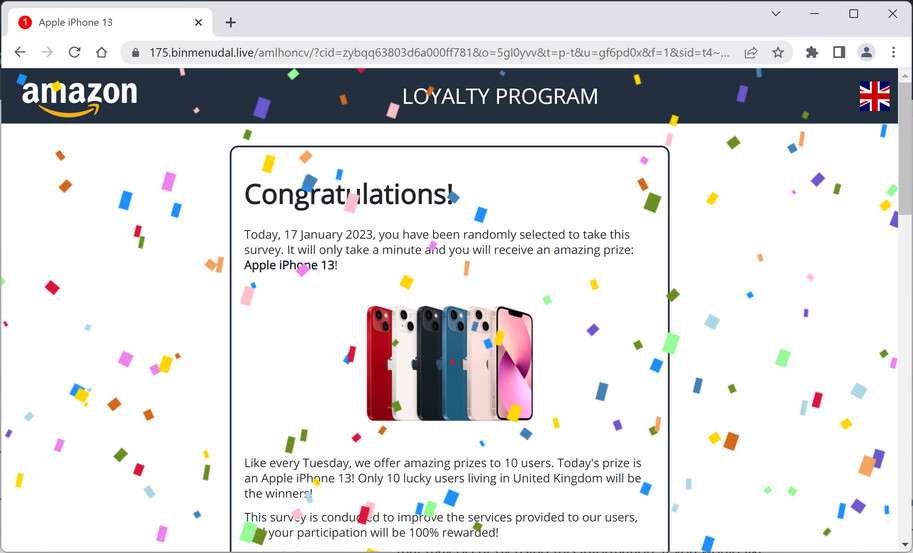
Overview of the $100 Amazon Gift Card Scam
The $100 Amazon gift card scam typically starts with an online ad stating you can get a free $100 gift card. The ads appear on social media sites, shady websites, and even legitimate websites through malicious ads.
The scam ads often say things like:
- Congratulations Amazon User! Get a $100 Amazon Gift Card!
- Amazon User You are selected to receive a $100 Amazon Gift Card!
- Amazon shoppers get a free $100 Gift Card!
Some of the common claims in the scam ads include:
- You have been specially selected to receive a $100 Amazon gift card.
- All you need to do is take a short survey to get your gift card.
- You can get the $100 gift card by clicking a link or sharing the offer with friends.
The goal is to get you to click on the link in the ad, which sends you to a fake website. The scam sites are designed to look like official Amazon pages with logos and branding.
Once you arrive at the site, you are prompted to take a “short survey” to claim your gift card. The survey starts innocently enough, asking basic questions about age, gender, Amazon shopping preferences, etc.
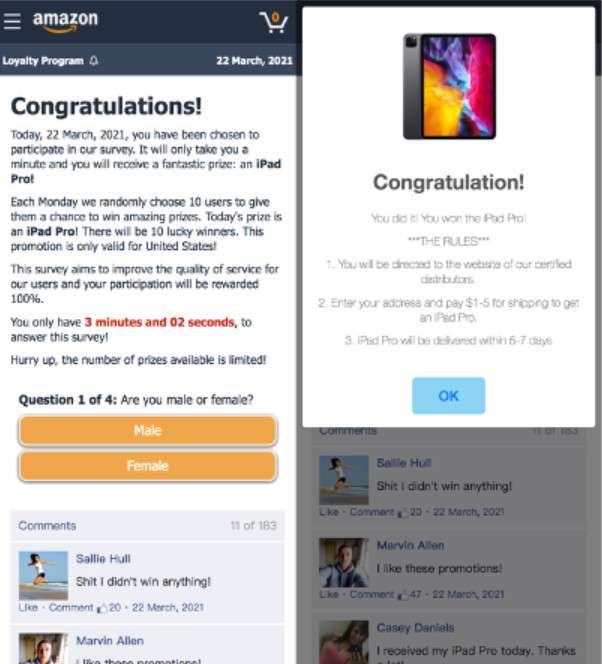
Then the questions get more detailed and personal—asking for your name, email, home address, phone number, credit card details, and more. Your sensitive information is harvested under the guise of a survey.
In some cases, the survey even asks you to login to your Amazon account to “verify” your identity. If you provide this info, the scammers gain access to your Amazon login credentials.
After the survey, you are told you need to complete one more “offer” to get the $100 gift card. This usually means signing up for a sketchy service, subscription, or downloading malware disguised as an Amazon app.
Of course, after completing all the steps—you never receive a gift card. The whole thing is a scam designed to steal your personal information and money.
How the $100 Amazon Gift Card Scam Works
Here is a step-by-step breakdown of how the $100 Amazon gift card scam operates:
Step 1) Scam Ads Lure Victims
The scam starts with fake ads designed to look like real offers from Amazon. Using images and branding identical to Amazon, the ads tout free $100 gift cards.
Common places you may encounter these scam ads include:
- Social media sites like Facebook, Instagram, Twitter
- Shady websites (illegal streaming sites, piracy sites, sketchy blogs, etc.)
- Malicious ads on otherwise legitimate websites
- Pop-up ads and banners on various sites
- Spam email campaigns
The scam ads are often targeted based on your browsing history and Amazon shopping patterns. For example, if you visit Amazon frequently or have recently made purchases, you are more likely to get targeted.
Scammers use “typosquatting” to register domains that are similar to Amazon and lure victims. For example, instead of amazon.com, it might be amason.com or amazun.com.
Step 2) Victims Sent to Fake Websites
When you click on the link in the scam ad, you are sent to a fraudulent website dressed up to look like Amazon. The site has the Amazon logo prominently displayed along with the standard color scheme and web design.
You land on a page stating you have been selected to receive a $100 Amazon gift card. All you need to do is take a short survey to claim the offer.
These fake sites utilize malicious scripts and trackers to harvest data about victims. As you take the survey, it captures information about your device, location, Amazon browsing, and shopping patterns.
Step 3) Personal Info Harvested Through Survey
The survey starts by asking basic questions about age, gender, Amazon shopping preferences and habits. This allows them to refine their targeting for maximum effectiveness.
Next, the survey requires you to enter personal details—name, home address, phone number, email, and more. When you get to the end, it asks for credit card information to “verify” your identity.
If you provide this sensitive information, the scammers immediately harvest it to commit identity fraud and steal your money.
In some cases, they ask you to login to your Amazon account through their fake site. This grants them direct access to your Amazon credentials.
Step 4) Complete an “Offer” to get the Gift Card
After completing the survey, you are told there is just “one more step” before getting your $100 Amazon gift card. This usually involves:
- Downloading a fake anti-virus or PC optimization program (malware in disguise)
- Signing up for subscription services (like a PDF editor or ebook service)
- Taking more surveys that require personal info
- Calling scam phone numbers that charge excessive fees
You must complete one of these “offers” before getting your gift card—which of course never arrives. The offers ensure scammers earn more money from each victim.
Step 5) Scammers Profit Off Stolen Data and Fraud
Once the scammers have your personal information, they leverage it in various ways:
- Selling your details on the dark web to identity thieves
- Using your credit card for fraudulent purchases
- Accessing your Amazon account to make purchases using your saved payment method
- Signing up for premium subscriptions in your name
- Taking out loans or lines of credit under your identity
The sensitive data harvested through this scam enables a variety of fraud—all while you wait for a $100 Amazon gift card that never arrives.
What to Do If You Fell For the Amazon Gift Card Scam
If you submitted personal information through this scam, here are important steps to take right away:
1. Contact your bank and credit card companies.
Alert them that your financial information may have been compromised. Watch for any suspicious charges and work with them to block fraudulent activity. Request new card numbers if needed.
2. Change your Amazon password immediately.
If you logged into your Amazon through a fake site, change your password right away. Enable two-factor authentication for added security.
3. Scan your devices for malware.
If you downloaded anything, scan your computer for viruses and malware. Wipe your device and reinstall software if infected.
4. Place a fraud alert and monitor your credit reports.
Contact one of the three credit bureaus to place an initial 90-day fraud alert. Also, check your credit reports regularly for any suspicious activity.
5. Report identity theft to the FTC.
File a complaint with the Federal Trade Commission if your identity is stolen after falling for this scam. This helps law enforcement track scams.
6. Close any compromised accounts.
If scammers now have access to your Amazon, email, or other accounts, close them immediately. Open new accounts with fresh passwords.
7. Beware of recovery scams.
You may get contacted by scammers posing as Amazon support claiming they can recover your lost money. Never give them remote access or payment.
Is Your Device Infected? Run a Free Malware Scan
Slow performance, constant pop-ups, or strange behavior? These are classic signs of a malware infection. The fastest way to find out is to scan your device with Malwarebytes Free — one of the most trusted malware removal tools available.
The free version detects and removes the most common threats, including:
- Adware — the cause of those annoying pop-ups
- Browser hijackers — unwanted redirects and changed homepages
- Trojans and spyware — hidden programs stealing your data
- Potentially unwanted programs (PUPs) — software you never asked for
👉 Select your device below — Windows, Mac, or Android — then follow the simple steps to download Malwarebytes, scan your system, and remove any threats it finds. The scan usually takes 5 to 20 minutes.
Run a Malware Scan with Malwarebytes for Windows
Malwarebytes is one of the most popular and trusted anti-malware tools for Windows — and it’s completely free for removing infections. It catches threats that many antivirus programs miss, including adware, browser hijackers, and trojans. Follow the steps below to scan and clean your PC in just a few minutes.
Download Malwarebytes
Click the button below to download the latest version of Malwarebytes for Windows from the official source. The free version is all you need — it will scan your computer and remove adware, browser hijackers, and other malicious software at no cost.
Download MalwarebytesOfficial installer for Windows 11 and 10. Your download starts right away.Want real-time protection? See Malwarebytes Premium Malwarebytes Free for WindowsScans and removes malware at no cost
-
Install Malwarebytes
When the download finishes, open your Downloads folder and double-click the MBSetup file. If Windows shows a User Account Control pop-up, click “Yes” to allow the installation.
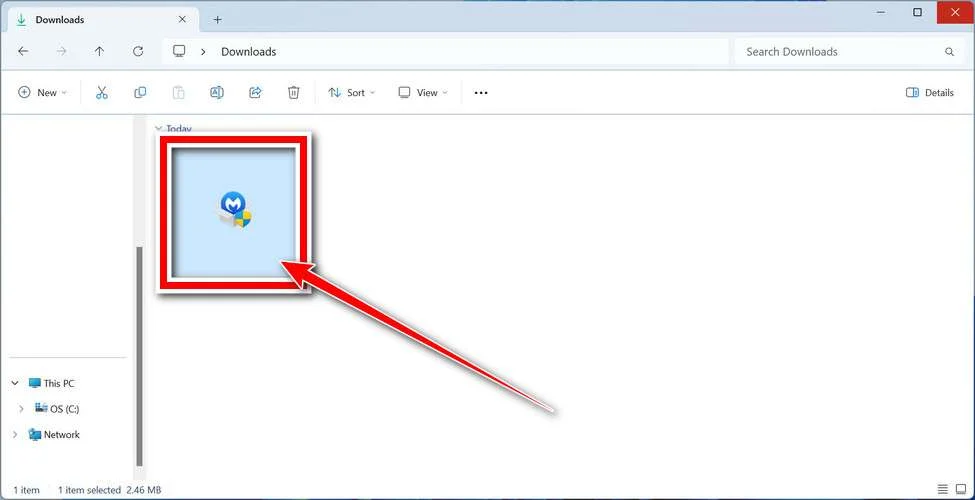
Follow the On-Screen Prompts to Install Malwarebytes
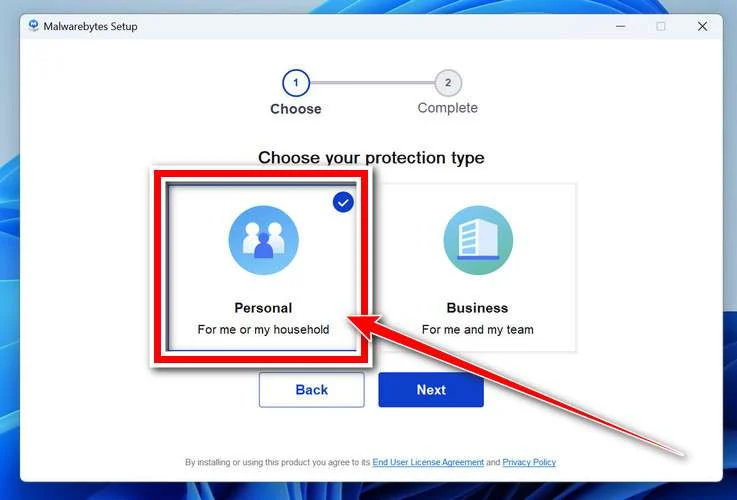
The setup wizard will walk you through a few quick screens:
-
Choose where you’re installing the program — “Personal Computer” or “Work Computer” — then click Next.
-
Malwarebytes will now install on your device. This usually takes under a minute.

-
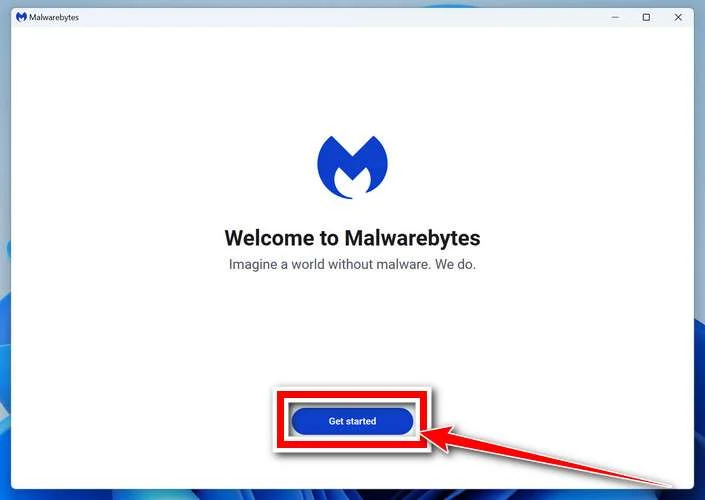
When installation is complete, the “Welcome to Malwarebytes” screen will open automatically.
-
On the final screen, click Open Malwarebytes to launch the program.

-
Enable “Scan for Rootkits”
Before scanning, turn on rootkit detection so Malwarebytes can find even the most hidden threats. Click the Settings gear icon on the left side of the screen.
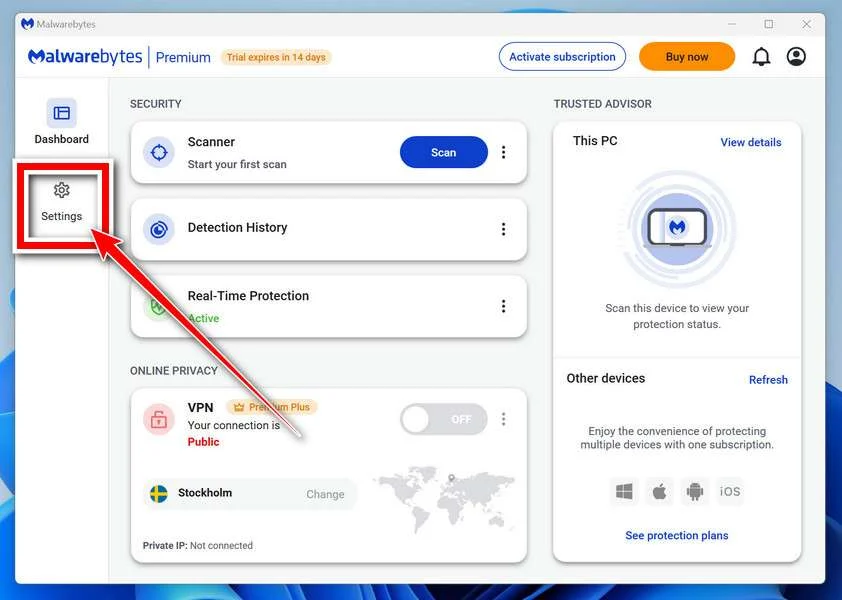
In the settings menu, find “Scan for rootkits” and click the toggle so it turns blue.

Done? Click “Dashboard” in the left pane to return to the main screen.
Start the Scan
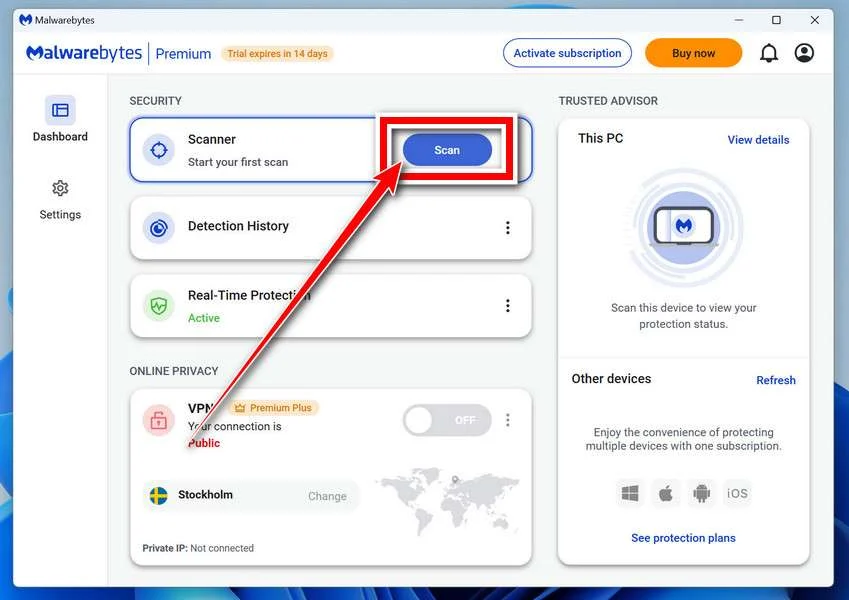
Click the blue Scan button. Malwarebytes will automatically update its virus database and start checking your computer for malware.
-
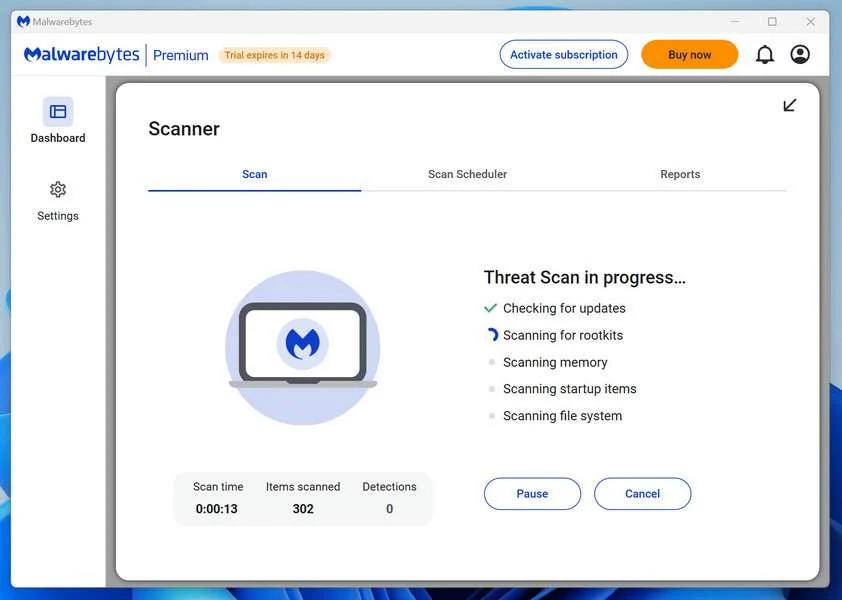
Wait for the Scan to Finish
The scan checks your entire system for browser hijackers and other malicious programs, so it can take 5 to 20 minutes depending on your computer. Feel free to do something else — just check back occasionally to see the progress.
-
Quarantine the Detected Threats
When the scan is done, you’ll see a list of everything Malwarebytes found — malware, adware, and potentially unwanted programs. Click the “Quarantine” button to remove all of them at once.
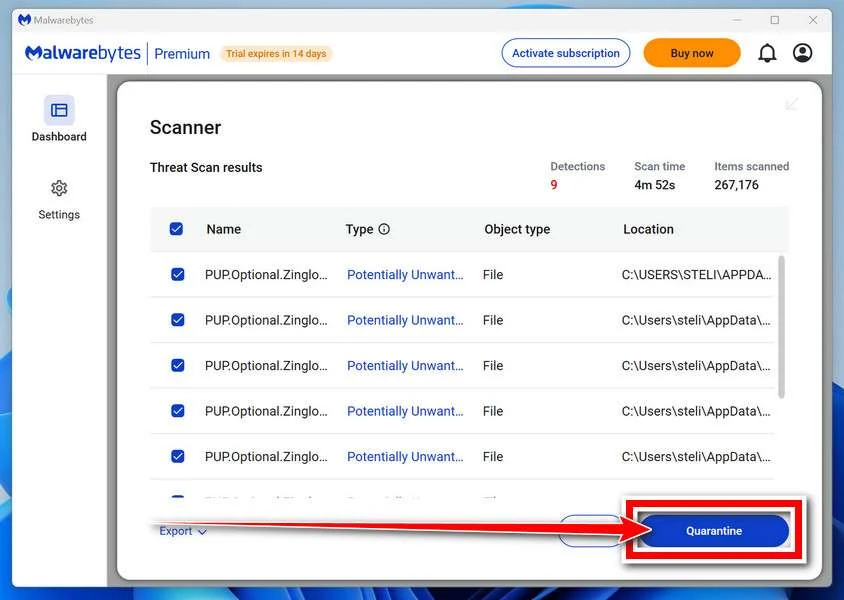
Malwarebytes will now remove the malicious files and registry entries and move them safely into quarantine.
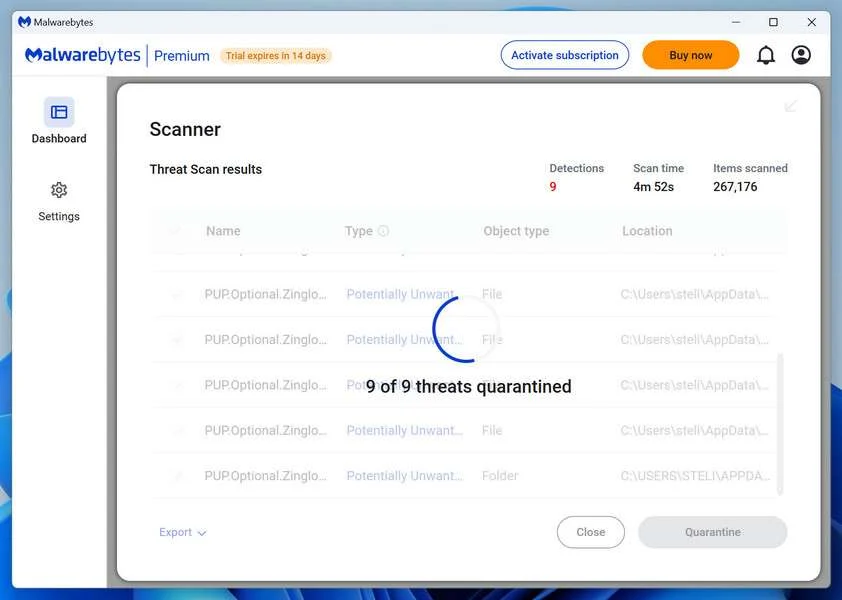
-
Restart Your Computer
Some threats can only be fully removed after a reboot. If Malwarebytes asks you to restart, click Yes. Once you’re logged back in, Malwarebytes has finished removing the threats it found.
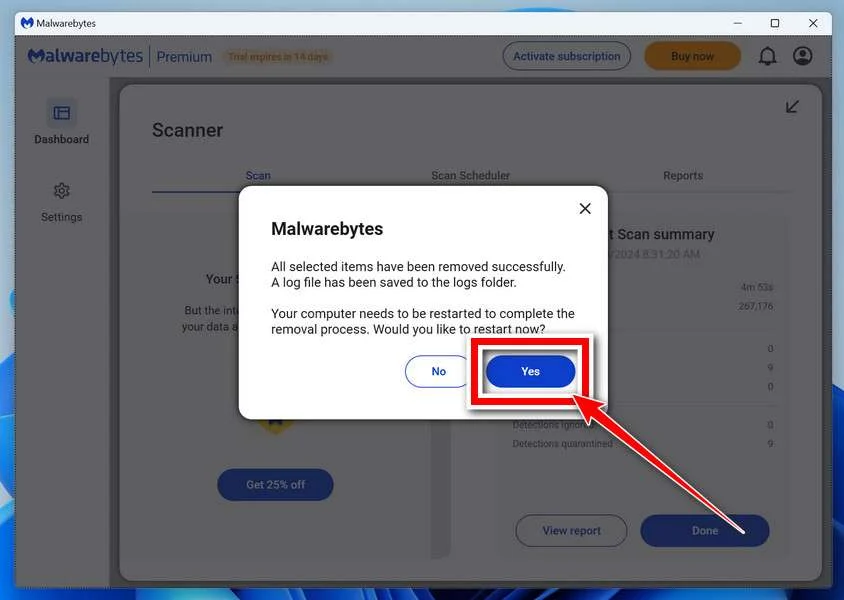
That’s it — your Windows PC is now clean of trojans, adware, and other malware, and should be back to running smoothly.
If you are still having problems with your computer after completing these instructions, then please follow one of the steps:
- Run a computer scan with ESET Online Scanner
- Ask for help in our Windows Malware Removal Help & Support forum.
Run a Malware Scan with Malwarebytes for Mac
Malwarebytes for Mac is a free on-demand scanner that removes the malware other security software tends to miss — adware, browser hijackers, and unwanted programs included. Cleaning an infected Mac with Malwarebytes has always been completely free, and it’s our go-to recommendation. Follow the steps below to scan and clean your Mac in just a few minutes.
-
Download Malwarebytes for Mac
Click the button below to download the latest version of Malwarebytes for Mac.
Download MalwarebytesOfficial installer for macOS. Your download starts right away.Want real-time protection? See Malwarebytes PremiumMalwarebytes Free for MacScans and removes malware at no cost -
Open the Malwarebytes setup file
When the download finishes, open your Downloads folder and double-click the setup file to begin the installation.
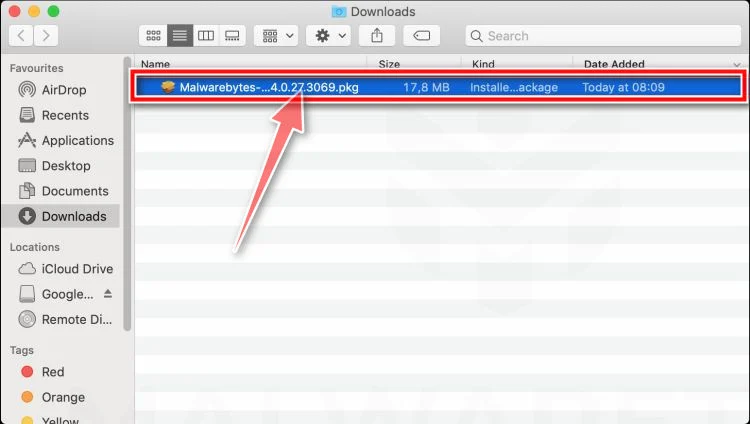
-
Follow the On-Screen Prompts to Install Malwarebytes
The Malwarebytes for Mac Installer will guide you through a few quick screens. Click “Continue” and keep following the prompts until the installation completes.
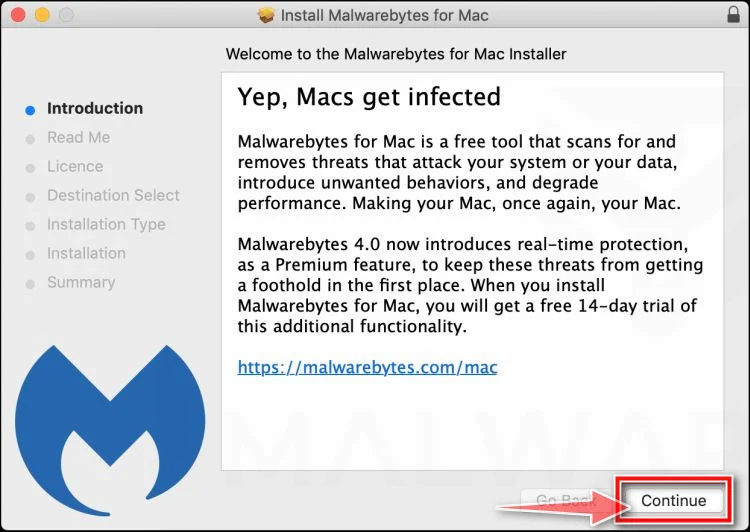
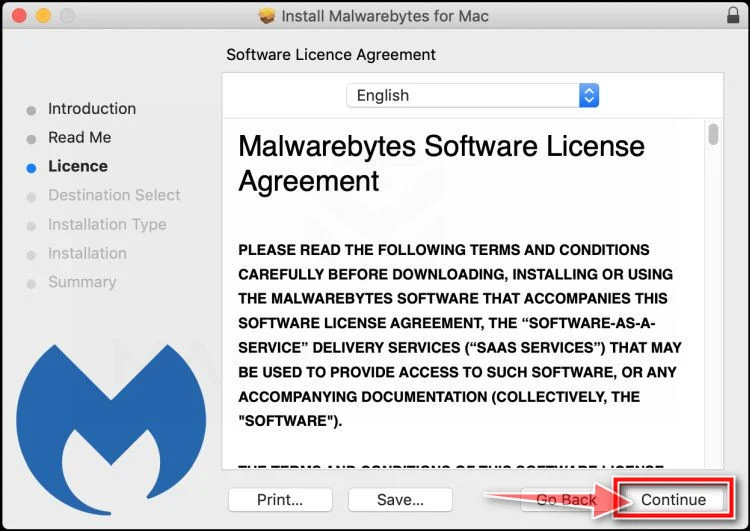
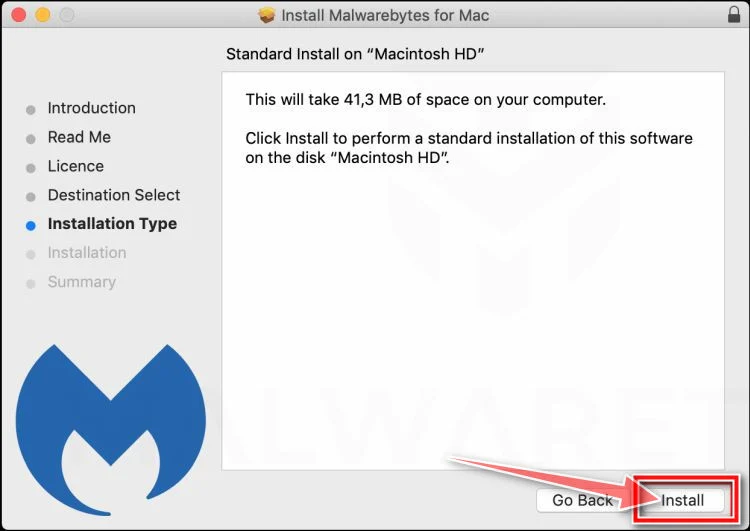
When the installation is complete, Malwarebytes opens to the Welcome to Malwarebytes screen. Click “Get started“.
-
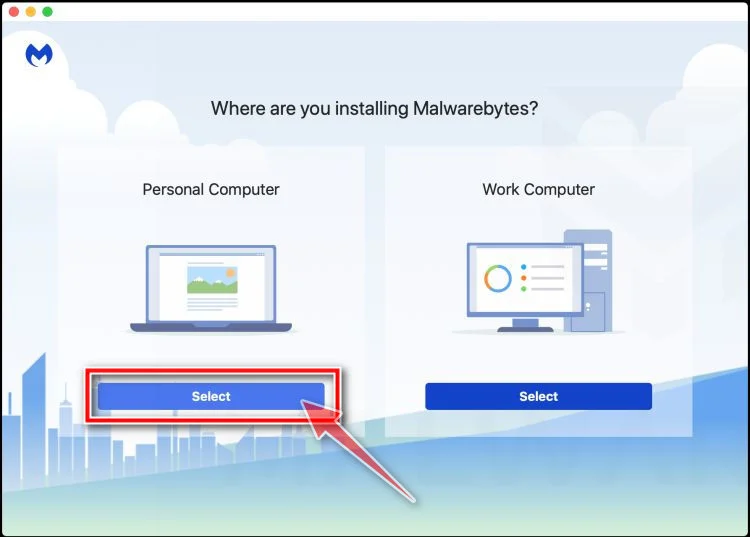
Select “Personal Computer” or “Work Computer”
Malwarebytes will ask what type of computer you’re installing it on. Click either Personal Computer or Work Computer, whichever applies.
-
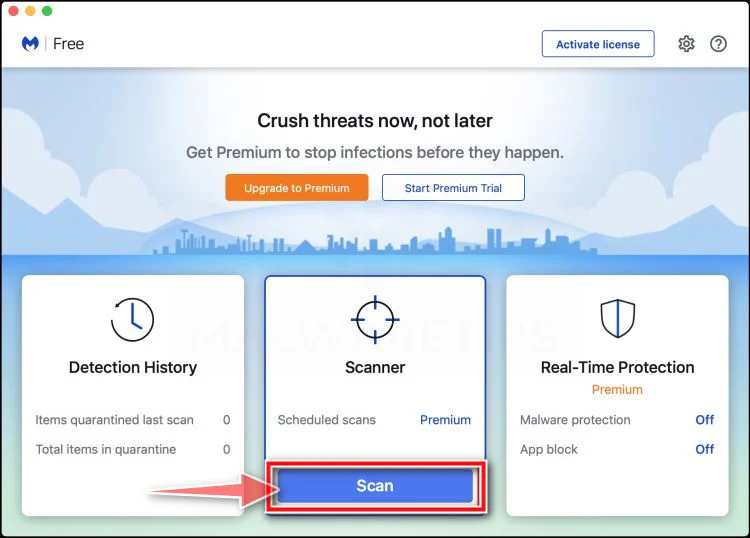
Start the Scan
Click the “Scan” button. Malwarebytes will automatically update its detection database and begin checking your Mac for malware.
-
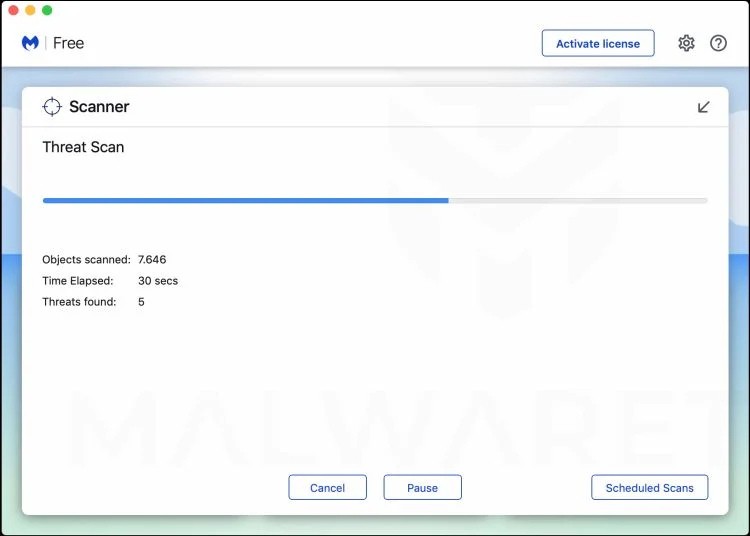
Wait for the Scan to Finish
Malwarebytes will scan your Mac for adware, browser hijackers, and other malicious programs. This can take a few minutes, so feel free to do something else — just check back occasionally to see the progress.
-
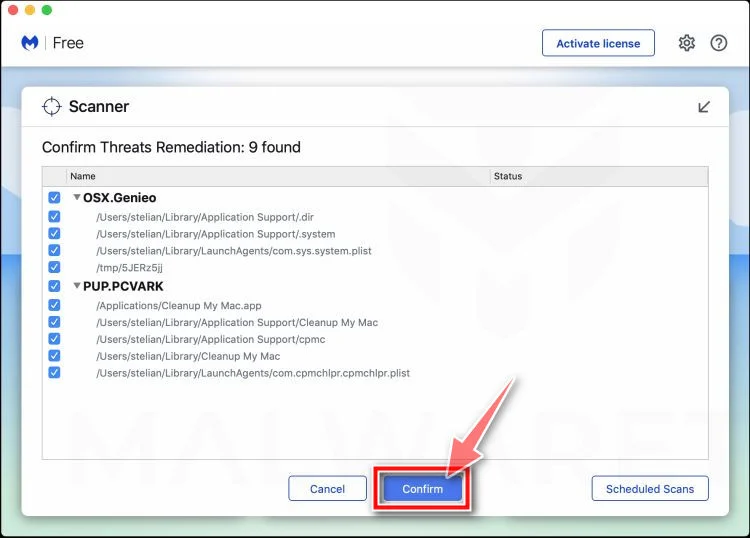
Quarantine the Detected Threats
When the scan is done, you’ll see a list of everything Malwarebytes found. Click the “Quarantine” button to remove all the threats at once.
-
Restart Your Mac
Malwarebytes will now remove all the malicious files it found. Some threats can only be fully removed after a reboot — if Malwarebytes asks you to restart, allow it. Once you’re logged back in, your Mac is clean.
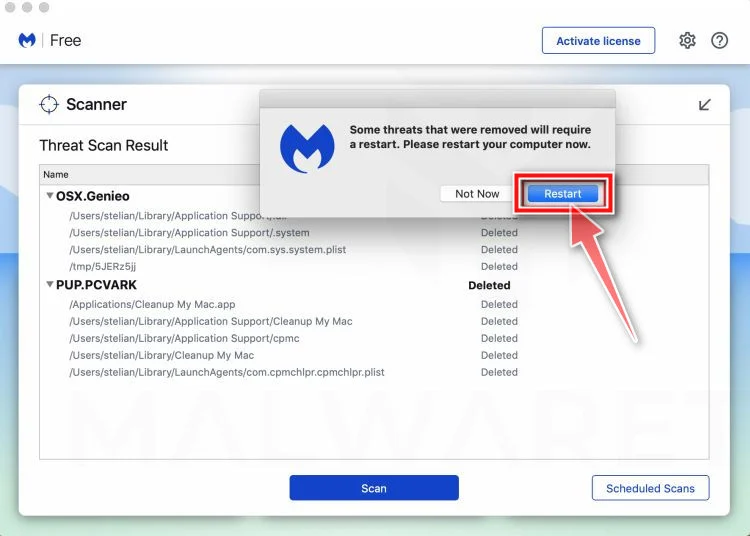
That’s it — your Mac is now free of adware, rogue browser extensions, and other potentially harmful software.
If you are still experiencing problems while trying to remove a malicious program from your computer, please ask for help in our Mac Malware Removal Help & Support forum.
Run a Malware Scan with Malwarebytes for Android
Malwarebytes for Android automatically detects and removes dangerous threats like malware and ransomware so you don’t have to worry about your most-used device being compromised. Aggressive detection of adware and potentially unwanted programs keeps your Android phone or tablet running smooth.
-
Download Malwarebytes for Android.
You can download Malwarebytes for Android by clicking the link below.
Get Malwarebytes for AndroidOpens Google Play in a new tab.Want real-time protection? See Malwarebytes Premium for AndroidMalwarebytes for AndroidScans your phone and removes malware at no cost -
Install Malwarebytes for Android on your phone.
In the Google Play Store, tap “Install” to install Malwarebytes for Android on your device.

When the installation process has finished, tap “Open” to begin using Malwarebytes for Android. You can also open Malwarebytes by tapping on its icon in your phone menu or home screen.

-
Follow the on-screen prompts to complete the setup process
When Malwarebytes will open, you will see the Malwarebytes Setup Wizard which will guide you through a series of permissions and other setup options.
This is the first of two screens that explain the difference between the Premium and Free versions. Swipe this screen to continue.
Tap on “Got it” to proceed to the next step.
Malwarebytes for Android will now ask for a set of permissions that are required to scan your device and protect it from malware. Tap on “Give permission” to continue.
Tap on “Allow” to permit Malwarebytes to access the files on your phone.
-
Update database and run a scan with Malwarebytes for Android
You will now be prompted to update the Malwarebytes database and run a full system scan.

Click on “Update database” to update the Malwarebytes for Android definitions to the latest version, then click on “Run full scan” to perform a system scan.

-
Wait for the Malwarebytes scan to complete.
Malwarebytes will now start scanning your phone for adware and other malicious apps. This process can take a few minutes, so we suggest you do something else and periodically check on the status of the scan to see when it is finished.

-
Click on “Remove Selected”.
When the scan has been completed, you will be presented with a screen showing the malware infections that Malwarebytes for Android has detected. To remove the malicious apps that Malwarebytes has found, tap on the “Remove Selected” button.

-
Restart your phone.
Malwarebytes for Android will now remove all the malicious apps that it has found. To complete the malware removal process, Malwarebytes may ask you to restart your device.
That’s it — your Android phone is now clean — no more malicious apps, adware, or browser redirects.
If you are still having problems with your phone after completing these instructions, then please follow one of the steps:
- Restore your phone to factory settings by going to Settings > General management > Reset > Factory data reset.
- Ask for help in our Mobile Malware Removal Help & Support forum.
Stay Protected: Block Ads and Malicious Sites
Now that your device is clean, keep it that way. Most infections start with a malicious ad or a fake download button — so blocking them at the source is your best defense.
We recommend AdGuard, which blocks malicious ads, phishing pages, and dangerous redirects before they can reach you.
👉 Download AdGuard and browse safely
Frequently Asked Questions About the $100 Amazon Gift Card Scam
1. How does the $100 Amazon gift card scam work?
The scam begins with an ad offering a free $100 Amazon gift card. If you click through, you are taken to a fake website dressed up to look like Amazon. You are prompted to take a survey and enter personal details to claim your “prize.” After completing the survey, you are told to finish an “offer” like downloading malware or signing up for a sketchy subscription. The scammers use your data for identity theft and profit from the ads and offers. Victims never receive a gift card.
2. What are some common claims in the $100 Amazon gift card scam ads?
Some typical claims are that you’ve been “specially selected” to receive a $100 gift card, you just need to take a short survey, or you can get the card by clicking a link or sharing with friends. The goal is to get you to a fake website to harvest your personal information.
3. What types of info do the scammers gather in the survey?
The survey starts by asking basic questions about age, gender, Amazon shopping habits. Then they ask for sensitive details like your name, home address, email, phone number, credit card number. In some cases, you are prompted to login to your Amazon account through their fake site.
4. What happens after completing the survey?
After the survey, you are told you must complete “one more offer” to get your gift card. This usually involves downloading malware, signing up for shady subscriptions, taking more surveys, or calling scam phone numbers. Of course, you never get a gift card.
5. What do scammers do with your personal info?
Scammers sell your details online to identity thieves. They use your credit card for fraudulent purchases. They access your Amazon account to make purchases. They open loans or credit cards under your name. Your data enables a variety of fraud.
6. How can you identify the $100 Amazon gift card scam?
Look for too-good-to-be-true offers. Fake sites use Amazon logos and branding but slightly altered URLs. Surveys that ask for financial details are a red flag. Claims that you must complete another “offer” before getting a prize indicate a scam.
7. What should you do if you shared your information through this scam?
Contact your bank and credit card companies to block fraudulent charges. Change your Amazon password immediately and enable two-factor authentication. Scan devices for malware. Place a fraud alert and monitor your credit reports. Report identity theft to the FTC.
8. Are there any legitimate reasons Amazon would ask for your personal information?
No, Amazon will never ask for your sensitive details like credit card information or login credentials through an online ad, survey or questionable website. Legitimate Amazon giveaways don’t require you to complete multiple steps to get a gift card.
9. How can you protect yourself from the $100 Amazon gift card scam?
Avoid clicking on random links and ads. Don’t provide info to unfamiliar sites. Use two-factor authentication on your accounts. Monitor your credit and bank statements regularly. Learn to recognize the common signs of a scam involving Amazon. Only enter info at amazon.com.
10. What should you do if you receive a recovery scam call after falling victim?
You may get calls claiming to be Amazon and offering to recover lost money. These are scammers trying to take more money from you. Never give remote access to your devices or make any payments to someone claiming to help. Contact Amazon customer service directly through their official website.
The Bottom Line
The $100 Amazon gift card scam is designed to steal your personal information and money through tempting, but fraudulent, offers. Protect yourself by learning to spot the scam ads, websites, and surveys. Never give your sensitive info to unfamiliar sites.
If you did fall victim, take action right away to minimize the damage. Alert financial institutions, place fraud alerts, monitor your credit, and change compromised credentials. Don’t trust any unsolicited contacts claiming to help recover lost money.
Stay vigilant about scams mentioning Amazon to avoid falling for this prevalent fraud. Remember, if it seems too good to be true, it usually is. Legitimate giveaways from Amazon will never ask for financial details or account logins. When in doubt, contact Amazon customer service directly through their official website.

Join the discussion
0 commentsShare your experience or ask a question about this article.
Discussion
Start the conversation
Have a question or something useful to share? Add the first comment.