


The invoice is familiar, the payment is expected, and the email seems to come from a supplier you already know. Only the banking instructions need updating.
Before you approve that change, there is one conversation worth having. A confirmed fraud case involving more than $50 million shows what can happen when that conversation never occurs.
Overview
A real payment gets a false destination
The Adebo network used fraudulent emails resembling messages from legitimate vendors, business partners, and parties to real estate transactions. Victims were instructed to wire money to specified accounts.
The requested payment could fit a real transaction. The deception concerned who sent the instructions and who actually controlled the account receiving the funds.
For a business paying an invoice, that distinction can be easy to miss. An expected expense does not make every message about that expense authentic.
The guilty plea behind this warning
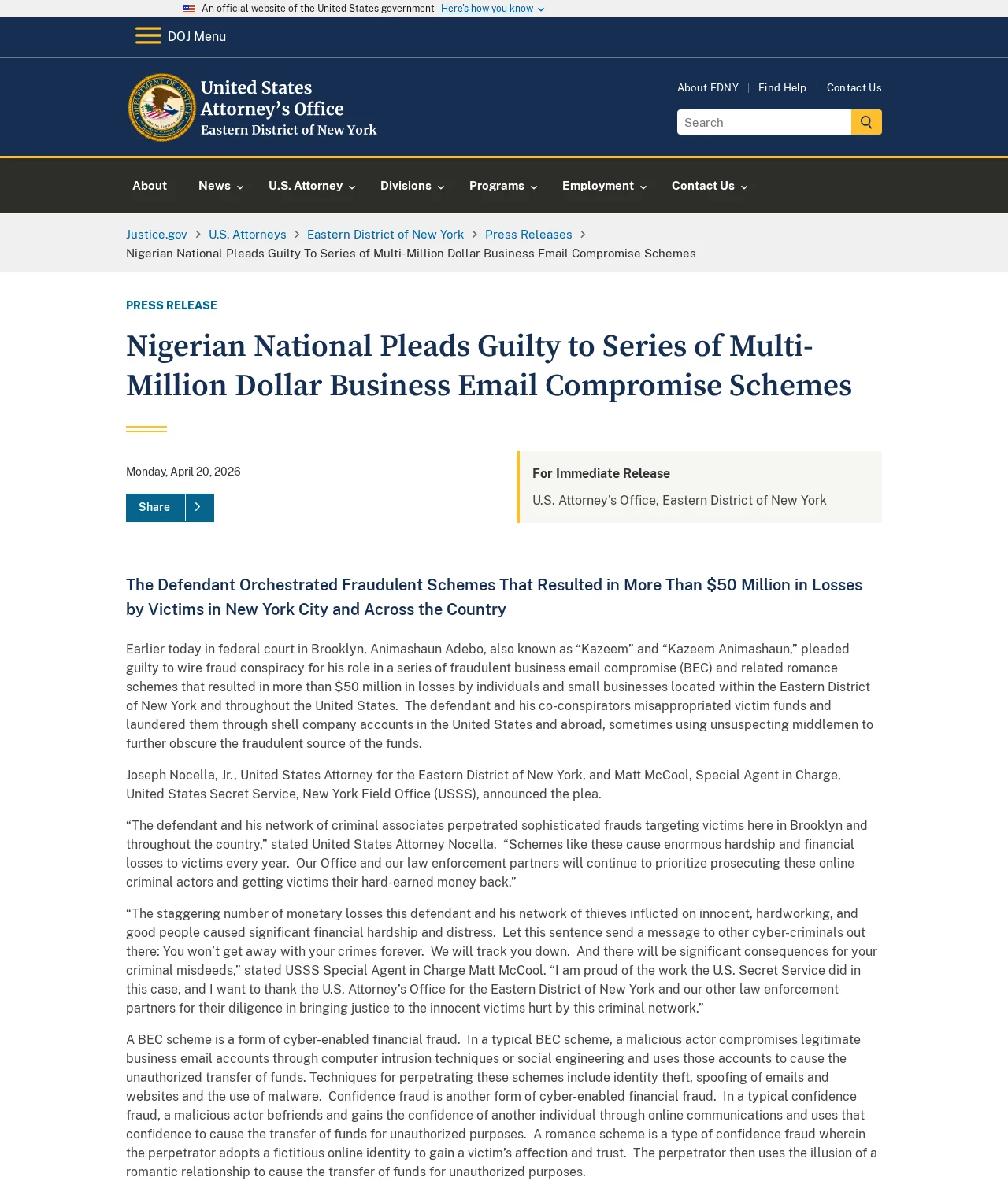
On April 20, 2026, Animashaun Adebo pleaded guilty to wire fraud conspiracy, according to the Eastern District of New York announcement. He also used the names Kazeem and Kazeem Animashaun.
The wider business email compromise and related romance schemes caused more than $50 million in losses. The described activity ran between April 2021 and March 2022.
This is a confirmed criminal fraud case. It should not be confused with an ordinary supplier changing banks or a genuine invoice containing an administrative mistake.
The check that belongs before the wire
The case involved email addresses that closely resembled legitimate contacts while differing slightly. A familiar display name could therefore conceal an unfamiliar sender address.
- Verify changed payment instructions through a contact route established before the suspicious email.
- Confirm the receiving account, rather than merely confirming the invoice amount.
- Keep payment approval separate from permission to change a vendor’s banking details.
- Contact the sending bank immediately if money has already gone to the wrong recipient.
Why the Correct Invoice Can Still Produce the Wrong Payment
An invoice tells you what a business says you owe. Payment instructions tell your bank where to send the money; these are separate pieces of information.
If you recognize the amount and purchase, you may feel that the whole request has been checked. The receiving account still needs its own verification.
Imagine a hypothetical $18,000 equipment purchase from a regular supplier. A new email quotes the correct invoice but asks you to use a different bank account.
The accurate purchase details answer a question you already knew: which goods you bought. They do not establish that the supplier authorized the new banking information.
This is why confirming only the amount leaves the important change untested. The fraud can leave the legitimate purchase intact while redirecting the money meant to pay for it.
An employee might then believe the supplier has been paid, while the supplier still shows an unpaid balance. The disagreement appears after the transfer has already left.
That can create pressure to resolve two problems at once: recovering the wire and keeping a genuine business relationship working. Early independent contact helps address both.
The same distinction applies when an email looks polished and contains a proper signature. Formatting is presentation, while authority to redirect payment needs separate evidence.
How the Fake Vendor Payment Email Scam Works
Step 1: The message enters an existing business expectation
The network impersonated legitimate parties to transactions. The messages therefore arrived in a setting where a payment request could look routine rather than extraordinary.
Someone handling accounts may already be expecting an invoice, a deposit, or a settlement payment. That expectation can reduce attention to a newly introduced banking detail.
You do not need to decide whether every line is fabricated. Identify what action the message asks you to take and which information would change if you complied.
Step 2: A lookalike address borrows the contact’s identity
The official account describes fraudulent addresses that were similar to the genuine parties’ addresses. Small differences helped the messages appear connected to an established relationship.
Expand the sender information instead of relying only on the displayed name. Compare the complete address with previous genuine correspondence, including the domain after the at-sign.
A match still does not eliminate every form of email fraud. It simply addresses one check; independent confirmation remains important for a material change to payment instructions.
Step 3: The email supplies the receiving bank account
Victims were directed to send wires to accounts specified in the fraudulent communications. This was the point where the false identity became an instruction affecting real money.
The recipient name, bank, and account details should be treated as a payment destination to verify. An attachment containing those details does not authenticate itself.
If a message arrives shortly before a payment deadline, do not let the deadline redefine verification as optional. Escalate the delay to the genuine supplier or your authorized manager.
Step 4: A legitimate bank processes an illegitimate instruction
The transfer can travel through ordinary banking systems after the victim approves it. Successful processing does not show that the person requesting the payment was authorized.
Once sent, the funds were misappropriated and moved through accounts controlled by the conspirators. The existence of a real account provided a route for theft.
Step 5: The money moves beyond the original receiving account
The case describes laundering through company accounts and other intermediaries. Those movements obscured the money’s origin and complicated the task of tracing it.
A bank receipt proves that a transfer occurred. It does not establish that the money satisfied the genuine supplier’s invoice.
For a victim, the practical response is speed and precision. The bank needs the actual transfer reference and beneficiary details, rather than a general description of an email scam.
Do not wait for a supplier dispute to be resolved before reporting a potentially fraudulent wire. Tell the bank what happened while the relevant transaction is still identifiable.
Vendor Identity, Email Addresses, and Bank Details
The supplier and the email sender are different checks
You may know that the supplier is a real company. The next question is whether this particular communication came from somebody authorized to issue its payment instructions.
Fraudsters can impersonate real businesses without those businesses participating in the scheme. Keep the accusation attached to the deceptive message and the people directing the theft.
A supplier can also be a useful partner in stopping the problem. Give its established contact the suspicious message so it can confirm whether it authorized the instructions.
The callback must leave the suspicious message
Call the number stored in your established vendor record or an earlier independently verified contract. Do not use a replacement number supplied by the payment-change email.
Ask the known contact to confirm the invoice and the requested banking change. Explain that you are verifying payment instructions before releasing funds.
If the contact is unavailable, keep the payment on hold and escalate through your usual approval process. An unanswered callback does not authenticate the original request.
The person approving the invoice may not control vendor changes
In a small business, the same person may receive invoices, update supplier records, and release wires. That makes a false message easier to turn into a completed transfer.
Separate those payment decisions whenever staffing permits. A request to change an account should receive independent attention even when the underlying invoice has already been approved.
If staffing makes separation difficult, require the independent callback before making the change. Record who confirmed it, which established number was used, and what details were checked.
A Practical Check Before Paying a Changed Account
Begin with the last trusted version of the vendor’s payment information. Identify the specific account or beneficiary change introduced by the new message.
Then contact the vendor independently and describe the change. Ask whether the named person sent the instruction and whether the vendor controls the receiving account.
Do not offer a rushed yes-or-no question such as whether a payment is due. A legitimate payment can be due while the proposed destination is fraudulent.
Read back the relevant details through the trusted contact process your organization uses. Avoid sending full banking information into an unverified email thread for confirmation.
When the vendor confirms an authorized change, document the callback and use your normal approval controls. If its answer differs, stop and preserve both sets of instructions.
If the vendor says it sent nothing, tell your bank or payment team before any scheduled release. Also alert colleagues handling other payments to the same recipient.
Describe the problem accurately when warning coworkers. A copied supplier identity does not justify declaring that the actual supplier stole the money.
Keep the warning useful by identifying the suspicious message and the requested account change. Do not forward an active instruction as though it were a corrected invoice.
What to Do if You Have Fallen Victim to This Scam
- Call the sending bank’s verified wire or fraud contact immediately. Say that an impersonation email caused a transfer to a potentially fraudulent beneficiary and ask whether release can be stopped.
- Provide the amount, date, reference, receiving bank, beneficiary, and account information through the bank’s secure process. Ask about a recall and contact with the receiving institution.
- Record what the bank actually did and obtain its case reference. A recall request is different from confirmed recovery; ask when and how to follow up.
- Contact the genuine vendor through your established details. Confirm whether it received anything, preserve its response, and agree how to handle the legitimate invoice while the fraud is investigated.
- Preserve the original email and attachment, including complete message headers if your mail system allows export. Keep the bank confirmation and the last genuine payment instructions alongside them.
- Tell your organization’s authorized finance and security staff. Identify any other scheduled payment using the same destination so they can check it before additional money leaves.
- Contact the Eastern District of New York office at 718-254-7000 if the transaction may relate to Adebo. Request the appropriate victim-assistance or case-reporting contact.
- Give the case name and explain the connection you actually know. Ask how to provide documents securely and how to confirm that the office received your submission.
- If you cannot establish a connection with this particular case, report the incident to the authorities handling your location. Keep their reference with the bank’s record.
- Reject anyone demanding a new transfer to unlock stolen funds. A supposed recovery agent knowing the invoice amount does not establish authority over your claim or bank account.
If your organization believes an actual mailbox was accessed, use its authorized incident-response process. Lookalike emails alone do not prove that your computer or your supplier’s mailbox was infected.
Do not delete suspicious messages merely because the payment has been stopped. They may identify the attempted destination and help prevent a second employee from acting on the same instructions.
If you authorized a vendor-record change, tell the person responsible for maintaining that record. Stopping one wire does not necessarily remove the changed information from future payment runs.
After the immediate response, compare the sequence with your approval process. The useful improvement is the specific check that would have interrupted the unauthorized account change.
Avoid treating the employee who clicked approve as the entire explanation. The process should let employees question a convincing message without feeling that they must ignore a genuine deadline.
Keep a separate note of rejected banking instructions and the verified contact used. That helps prevent a later employee from treating the same attachment as new evidence.
Check whether another scheduled payment still uses the disputed account. Ask the authorized payment team to hold it until the beneficiary has been independently confirmed.
Frequently Asked Questions
Is the Adebo case a confirmed fraud case?
Adebo pleaded guilty to wire fraud conspiracy. The official announcement describes a wider network using deceptive email instructions and related schemes to misappropriate victim funds.
Can a genuine invoice be used in a payment scam?
A real invoice can make the payment expected while the account instructions remain false. Verify the destination independently instead of treating the correct amount as sufficient confirmation.
Is the real supplier necessarily involved?
A supplier’s identity can be copied by somebody else. Contact the genuine business independently before assuming it sent the message or received the money.
What if the sender address looks almost right?
Treat the difference as a reason to pause, even if the display name is familiar. Use an established contact route to verify the requested change.
Does a successful bank transfer prove that the vendor was paid?
It proves the bank processed a transfer, but not that the beneficiary was authorized. Ask the genuine vendor and report a suspected misdirection to the bank promptly.
Should I wait for a police report before contacting my bank?
Contact the bank immediately about a potentially fraudulent wire. You can supply a law-enforcement reference later without delaying the initial request to stop or recall funds.
The Bottom Line
Do not change a supplier’s bank details because an email asks you to. Verify the destination with an established contact before releasing money, even when the invoice itself is genuine.
If you already paid, call the sending bank immediately and preserve the original instructions. Then contact the genuine supplier and the appropriate authorities through independently verified routes.

Join the discussion
0 commentsShare your experience or ask a question about this article.
Community experiences
Did this happen to you?
Your experience could help someone recognize the same scam. Submit a private report for our team to review.
I experienced this tooReports are reviewed before publication. Sharing publicly is always your choice.
Discussion
Start the conversation
Have a question or something useful to share? Add the first comment.