


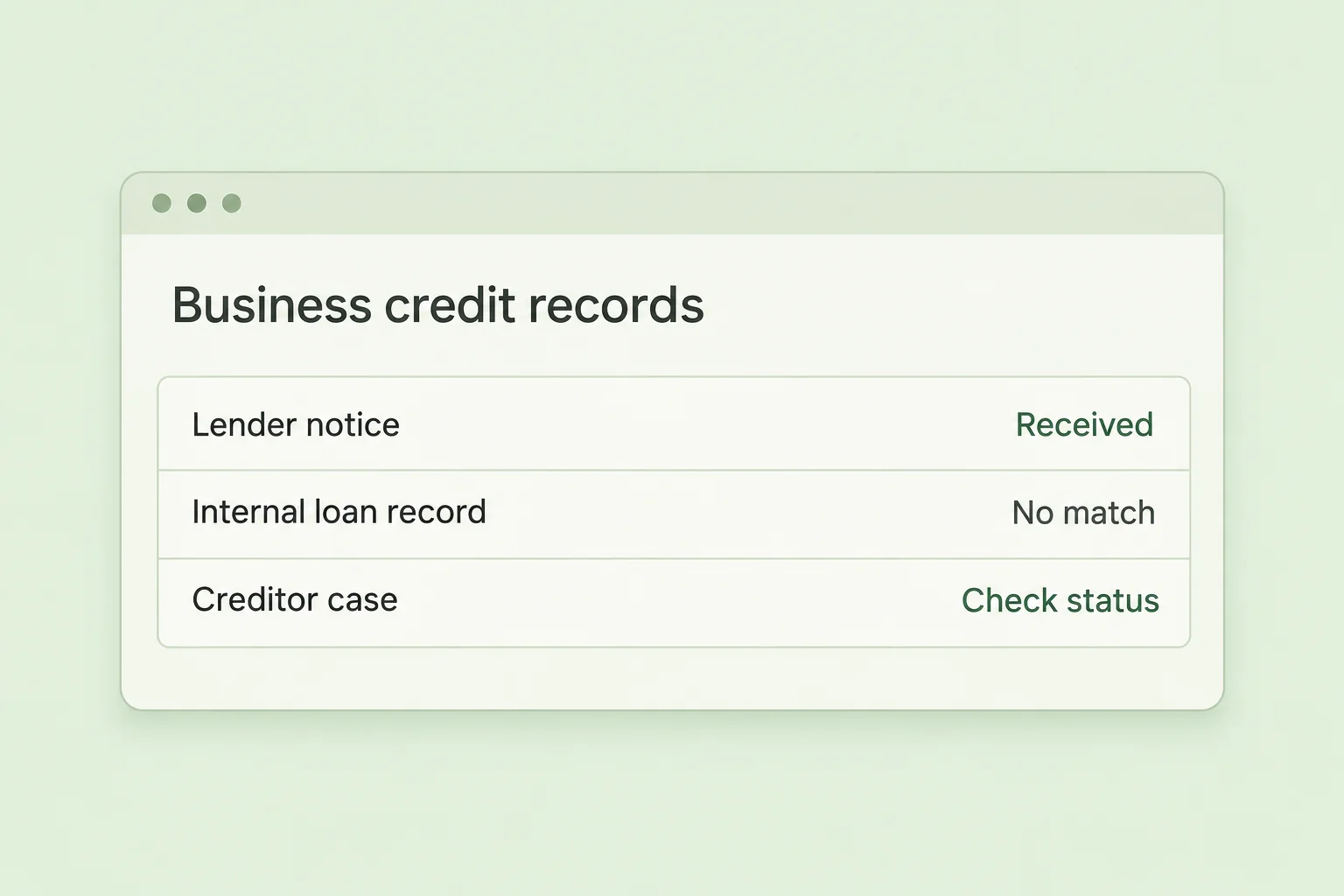
A lender says your business missed a payment, but nobody at the office can find the loan. The notice lists a company name you recognize and an account you don’t.
Before entering your tax ID or paying to clear the balance, determine who issued the notice. An unfamiliar credit inquiry, a reporting error, and a funded loan need different responses.
Overview
Verify the lender and the record independently
A fraudulent collection message can name your real company. A legitimate lender can also have an account in your company’s name that no authorized person opened.
Open the lender’s official site or an existing verified channel yourself. Give the minimum information needed to ask whether the reference is real, and don’t use the caller’s link.
Sort the evidence by the kind of record
A single identifier on a notice doesn’t tell you whether the application was approved, money moved, or your tax account was affected.
- Ask whether the lender found an inquiry, pending application, active account, or actual disbursement.
- Get the commercial report that shows the item and identify the bureau and lender.
- Use a separate process for an unauthorized public filing, personal credit entry, or tax notice.
An IRS affidavit does not correct a lender’s records
The IRS’s business identity theft guidance explains when to use Form 14039-B. A commercial credit dispute alone is not a reason to assume a fraudulent tax filing.
If a lender really opened an account, it needs its own report. If an entry appears in a bureau’s report, the bureau needs the exact item and business identity.
What to Do if Someone Opened Credit in Your Business’s Name
- Save the notice or report page without replying to the sender. Record the alleged lender, date, masked account reference, and any stated deadline.
- Check with people authorized to open credit. Compare the claim with approved applications, loans, cards, leases, and supplier accounts, including those under another legal or trade name.
- Reach the verified lender’s fraud or commercial credit team. Ask what it found, request a case number, and follow its secure dispute process.
- If a commercial credit report contains the item, dispute it with the bureau that shows it. Identify the exact record and provide relevant evidence through its verified channel.
- Check separately for a state filing change, personal exposure, or tax notice. Contact the appropriate institution if you find one rather than sending the same documents to everyone.
If you received a court notice or a genuine deadline, don’t wait for the lender’s fraud department to finish its review before seeking qualified help.
A legitimate creditor can explain how you can establish authority to act for a business. You shouldn’t need to put a complete tax record in an unsolicited email.
Check the Claim Before Treating It as a Real Debt
Find the business’s legal name, approved trade names, and the address it actually used when an account would have opened. Similar names or addresses can cause confusion.
Ask staff who approve financing whether they worked with the lender or with a broker. A lender’s name may be unfamiliar even if someone authorized a matching application.
Compare names, dates, amounts, and account purpose rather than taking a vague recollection as confirmation. If a vendor says it arranged financing, request the records from the known vendor contact.
If the lender cannot confirm the account using its own channels, treat the notice as unverified.
Save it and watch for follow-up rather than paying to make it go away.
If the lender finds a real record, ask about the approved amount, current status, and whether any money actually left. Ask what it can disclose to an authorized representative.
A credit inquiry is not a disbursement
If the file only has an inquiry, ask which institution made it and whether it was associated with an application. A company may check credit without opening an account.
If the lender finds a pending application you didn’t authorize, ask whether it can stop further processing while it investigates. Ask how it will confirm the request was stopped.
If the loan has funded, tell the verified fraud team that no authorized signer approved it, if that is what your records show. Ask for the institution’s specific dispute instructions.
When the record was transferred to a collector, confirm the original creditor and current holder independently. Keep written responses from each and don’t treat a payment demand as proof.
The notice may mix up two businesses
Exact spelling, location and other nonpublic identifiers help the lender or bureau distinguish similar names. Provide sensitive identifiers only through the recorded and verified dispute process.
If the account belongs to an unrelated business, ask the institution how it will correct the mismatch. Get the corrected record or other confirmation when it becomes available.
If you find an innocent explanation, close the internal incident with the information you verified. Do not leave a false fraud alert in your own company records.
Track the Lender’s Case and the Credit Bureau’s Case Separately
Give the lender a narrowly worded report: you do not recognize the entry and are disputing authorization. If your records establish more, attach what supports that finding.
Ask whether the account is restricted while the lender investigates, whether its reporting can be updated, and how the decision will reach you. Ask for the lender’s answer in writing.
Request the documents the lender can provide through its process, such as the application record or disputed contract.
Don’t assume a personal identity theft remedy automatically applies to a commercial borrower.
A bureau correction still matters if the creditor says it closed the account. Closing an account and correcting an incorrect or fraudulent entry are different outcomes.
A worked example using a commercial credit report
Experian’s commercial report instructions say to obtain your business report and use Submit Data Dispute at the bottom of the current report.
Open that copy, find the disputed lender and entry, and note the report date. Use the dispute form to identify the item and explain what does not match.
Keep the submission confirmation and check the report again when the bureau tells you it finished. Ask for help through its verified commercial channel if the option is missing.
If the item appears at another bureau, use that bureau’s process for its own record. Don’t assume a correction provides updates to every other provider automatically.
Check the Tax File Only When the Evidence Points There
Common reasons to check for business tax identity theft include a tax return you didn’t file, an unfamiliar W-2 filing notice, or a duplicate-return rejection you cannot explain.
Compare a duplicate filing notice with your accountant’s submission records before deciding that the return belongs to someone else. Save the original notice and verify it through the IRS.
For a genuine issue involving your US business tax records, get Form 14039-B through the IRS business identity theft page. Match the event to the form instructions.
Have an authorized representative sign it, assemble the required documentation, and follow the verified IRS notice or instructions for your situation. Keep what you sent and how.
If the IRS assigned an EIN you didn’t request, check whether an accountant, partner, trustee, or other authorized person requested it for a legitimate reason.
If a legitimate request is ruled out, the IRS lists an online option for this situation, alongside instructions for other ways to submit the affidavit.
A credit report entry by itself doesn’t establish misuse of an EIN on a tax return.
Do not submit a tax identity theft affidavit for a breach with no tax impact.
Isolate the Records Outside the Lender’s File
If a business registration entry changed, start with the official registry for your jurisdiction. Compare the current record with the previous filing and determine which change you dispute.
Call the filing agency through its own website and ask how it handles an unauthorized submission. Keep its reference separate from the bank and bureau references.
If the claim also uses a person’s Social Security number or a purported personal guarantee, ask the lender to identify that part without forwarding the details to an unverified contact.
The person affected should check the personal side separately. IdentityTheft.gov can help US individuals organize a recovery plan when their identity information was used.
A business may have a bank account that wasn’t affected by the new credit account. Check it independently and notify the bank promptly if you find an unauthorized transaction.
If the Notice Involves a US Small Business Administration Loan
An SBA loan calls for its own reporting route. Verify whether the notice actually concerns SBA funding before sending records or signing a declaration on that basis.
The SBA’s identity theft instructions call for a photo ID copy, an identity theft report from the FTC or police, and its signed identity theft declaration.
Download the declaration through the SBA’s official page. Save the report and signed version, and use the portal or verified submission route appropriate for that lending program.
Ask whether another participating lender also needs notice. Keep the dates and references from both institutions if both are involved, because one response may not close the other file.
If the notice is only an invitation to apply for an SBA loan, the identity theft declaration may not fit.
Check whether a real loan record exists before treating it as opened.
Keep proof of authority and proof of the dispute separate
A lender might need a document showing you can act for the business. That lets it verify the person reporting the issue, not decide that the account was authorized.
Ask which evidence it needs for each purpose and how to submit it securely. Do not send a full customer file or employee roster when a narrower record will do.
Save the written terms it gives you, including where to send a response and when it will review the case. Note whether it asked for copies rather than originals.
Give a clear explanation when a former owner, partner, or employee had authority at another time. Keep the actual authorization dates separate from opinions about who submitted the application.
A useful resolution notice identifies what was corrected
When the lender says the matter is resolved, ask which reference it closed and whether any reported balance remains. Compare the response with the actual entry you disputed.
If a bureau tells you the line was corrected, pull the updated commercial record through the same verified route. Look for both the named account and the relevant inquiry.
If the correction appears in one place but not another, bring the confirmation to the remaining institution. Ask it what additional evidence it needs rather than assuming delay means refusal.
Keep copies of the original notice, the reports before and after correction, and correspondence with the exact dates. A future collector might have received an older file.
Make the next financing application easier to verify
Keep a private list of authorized lenders, approved brokers, applicant dates, and responsible people. This is more useful than a list of names without any transaction context.
Identify which staff member should receive unfamiliar credit notices. A payment team shouldn’t settle an alleged new loan just because it recognizes the company name on the letter.
Verify new collection instructions through the original creditor and your own records. If a genuine debt was assigned, ask how to confirm the new holder before sharing details.
When you determine that the same contact was sending fake notices without a real credit record, save the evidence and consider a report through FTC ReportFraud.
Avoid trying to investigate the sender on your own.
Frequently Asked Questions
Is an unfamiliar inquiry proof someone borrowed in my company’s name?
No, because an inquiry can occur without a funded loan. Ask the verified lender whether there was an application, an approval, or any actual disbursement.
Can I fix the commercial report by calling the lender only?
The lender should investigate its records. If the error appears in a commercial report, also use that bureau’s dispute process and confirm what changed afterward.
Should I file Form 14039-B for every unfamiliar balance?
No, because Form 14039-B concerns business tax identity theft. Start with the lender for a credit account and check the IRS route if there are separate tax signs.
What if the lender will not discuss the case with me?
Ask what proof it needs from an authorized representative. Use its verified secure channel rather than sending company records to a number supplied by the original caller.
Does a personal credit freeze cover my business credit file?
Do not assume the controls are interchangeable. Check which record was affected and ask the relevant commercial bureau or lender what restrictions and disputes are available.
Is a fake collection notice the same as business identity theft?
Not necessarily, because the sender might only be trying to collect a fictitious debt. Contact the claimed lender independently to see whether any real credit record exists.
The Bottom Line
Never pay or disclose business records solely because a notice names your company. Confirm the lender, establish the account’s status, and dispute the exact entry through verified channels.
If the same incident also affects a public filing, personal credit, or an IRS record, open separate cases for those problems. Save the responses so you can confirm each correction.

Join the discussion
0 commentsShare your experience or ask a question about this article.
Community experiences
Did this happen to you?
Your experience could help someone recognize the same scam. Submit a private report for our team to review.
I experienced this tooReports are reviewed before publication. Sharing publicly is always your choice.
Discussion
Start the conversation
Have a question or something useful to share? Add the first comment.