


A caller says your car warranty is about to end. They know which car you drive, but when you ask for the current contract, they offer to take a payment.
Before deciding whether you need coverage, check which warranty you already have and what the caller is trying to sell. The answers may come from different providers.
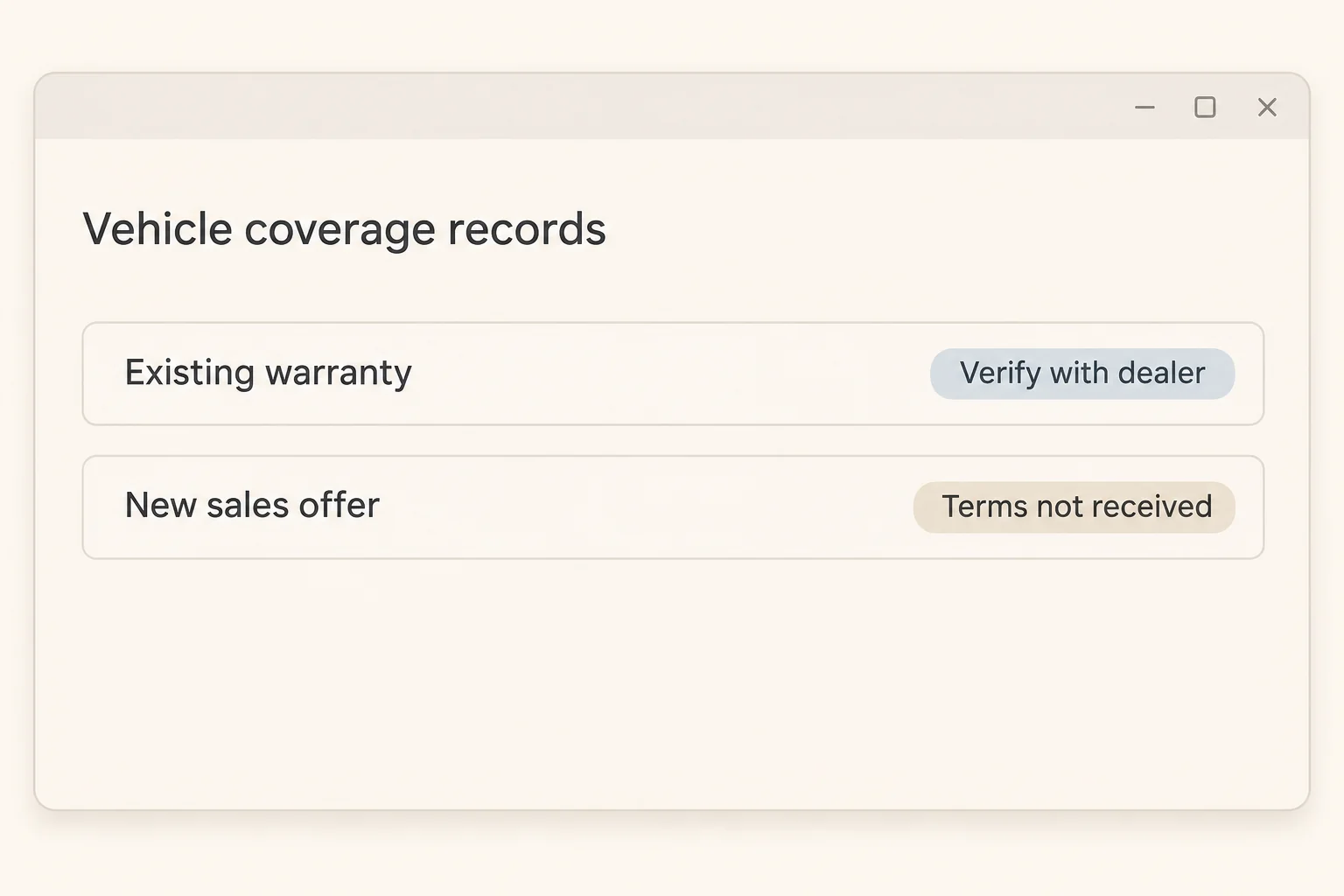
Overview
The expiration claim doesn’t prove an existing relationship
The FTC warns that some callers imply they represent your dealer or manufacturer while trying to sell a different vehicle service contract.
A make, model, or mileage estimate isn’t proof they manage your coverage. Look up the actual warranty through a contact you established independently.
A separately purchased product may have different terms
A manufacturer’s warranty comes with eligible coverage, while an auto service contract is separately purchased. The term “extended warranty” in a sales pitch can obscure that difference.
- Check what protection already applies and when it ends.
- Ask for the written service contract before discussing a payment.
- Identify the seller, the party administering claims, and any payment company separately.
Canceling a payment and canceling a contract aren’t identical
If you bought something on the call, look for contract notices and earlier charges before approving any more payments. Confirm the cancellation instructions with an independently verified party.
A card issuer can explain options for an unauthorized payment or a dispute. It does not automatically cancel an agreement simply because you contacted its fraud team.
What to Do After a Car Warranty Scam Call
- End the unsolicited call without confirming billing details. Keep the voicemail or note the displayed number and time, but don’t rely on that number for verification.
- Find the current warranty or service agreement in your purchase records. Contact the dealer, manufacturer, or administrator through an independently verified channel.
- Ask what coverage is active, who provides it, and how the limits are calculated. Compare the answer with what the caller actually offered.
- If you paid, save the receipt and written terms. Contact the verified contract party about cancellation and your bank about any unauthorized or disputed transaction.
- Report suspected deception through FTC ReportFraud. Keep the documents and references for any cancellation, investigation, or card dispute.
Don’t trust another caller who says they can reverse the charge for a fee. Check the first report with the institution that opened it.
If you only listened and disclosed nothing, there’s no reason to replace a card or change a password because of the call alone. Keep notes if the calls continue.
Verify the Warranty You Bought the Car With
Find the warranty booklet, buyer paperwork, or purchase records you already trust. Used-car paperwork can identify a dealer warranty or indicate that the vehicle was sold as is.
Check whether the coverage comes from the manufacturer, a dealer, or a separately purchased agreement. Each may have a different contact and process for a repair.
Use the manufacturer’s official site or your known dealership to reach the right department. If it needs your vehicle identification number, provide it only through that verified channel.
Ask when the vehicle first went into service if that date is relevant. Warranty periods may use both time and mileage; a purchase date alone may not settle it.
Ask which coverage actually ends and what remains. Powertrain coverage, corrosion protection, a separate service plan, or emissions-related provisions can have different applicable terms.
Ask for written confirmation if the provider offers it. That gives you something specific to compare with the caller’s claim instead of relying on broad terms like “full protection.”
Don’t confuse a service contract with a recall
A recall notice concerns a separate question from whether you should buy a new contract. A caller cannot use a genuine recall to authenticate a paid offer.
Use the verified manufacturer or dealer to check whether the vehicle has an open recall. Ask separately which repair or inspection the recall covers and how to arrange it.
Don’t assume a repair must be eligible because the car is covered for something else. Ask the shop to identify the particular program that applies to that work.
If you bought the car with an add-on
Look for a separately listed service agreement in your signed purchase paperwork. A monthly payment or dealer receipt alone may not state what the plan actually covers.
Find the name of the party responsible for the agreement, its contact, and the procedures for repairs and cancellation. The brand in a sales call may not be the administrator.
If the cost was financed, ask the verified lender or administrator how a cancellation would affect your balance. Don’t expect any refund to arrive in a particular form.
Compare the New Offer With What You Actually Need
The FTC’s auto warranty and service contract guide distinguishes a separately purchased agreement from the warranty included with a vehicle. Ask for the whole proposed contract before paying.
Start by listing the repair the caller says is covered. Find it in the agreement and check restrictions that matter for your vehicle, such as mileage or prior damage.
Check whether the shop needs approval before repairs, who pays the facility, and whether you must pay first and file a claim later.
Ask how the deductible applies if several repairs are needed in one visit. Compare the complete cost and deductible against the coverage you already have.
Read the advertised start time against waiting periods and effective dates. If the seller says coverage starts today, make sure the written agreement says what qualifies today.
Look for excluded expenses and related services such as diagnostics, towing, or rental transport. Do not assume “bumper-to-bumper” means every component and expense is paid.
If you cannot get the written terms without making a deposit, decline the offer. A promise to send paperwork afterward leaves the cost and terms unverified.
Read the cancellation provision while you still have a choice
Find who receives a cancellation request, how it must be sent, and which dates or mileage affect the amount. Don’t rely on a slogan about refunds.
Ask what happens to ongoing installments if you cancel. Get distinctions between the contract, financed purchase, and billing authorization in writing before relying on a sales answer.
Search for support information through the independently verified seller or administrator. A phone number repeated in a follow-up text doesn’t confirm that it represents that organization.
What a documented enforcement case shows
The FTC’s American Vehicle Protection settlement notice describes allegations of false dealer or manufacturer affiliations and misleading promises about coverage. The case ended in a settlement.
The FTC’s AVP refund page covers particular distributions to eligible past purchasers. It was not a refund program for everyone who received an auto warranty call.
If someone refers to that case and claims a refund is ready for another fee, verify the program through the FTC. Don’t use the incoming number or pay to qualify.
Our guide to Vehicle Services Group warranty calls covers a particular name used in offers. Don’t assign that name to your caller without evidence.
If You Paid, Handle the Agreement and the Charge Together
Save the written offer, purchase confirmation, actual contract, and first statement that identifies the merchant. Record dates without rewriting the documents after the fact.
If the contract was sent after the call, compare delivery and effective dates with any cancellation window stated in it. Ask the verified administrator about the applicable procedure.
Follow the documented cancellation route if it applies. Save the notice and submission proof, and ask for confirmation of cancellation, any amount due, and the date billing stops.
If the payment was never authorized, tell your issuer that. If you authorized a deposit but the seller misrepresented the agreement, explain the dispute accurately and include the terms.
Ask the issuer about deadlines, paperwork, and steps for future charges from the same merchant. An initial card dispute is not a confirmation that recurring billing has ended.
Match account protection to the details you shared
A vehicle identification number by itself isn’t the same as a card number, bank password, or verification code. Tell the relevant institution precisely which data you provided.
If you supplied card or bank details, contact the provider through its real app or known number. Ask how it can protect the account and what activity to check.
If a supposed seller asked you to sign into a third-party account or approve a security request, check that account through its legitimate service.
Do not approve follow-up requests.
If you got only a recorded message, consider your carrier’s legitimate spam controls. They can reduce interruptions, but won’t make a familiar caller ID proof that a call is genuine.
A Worked Example: Compare the Effective Dates, Not the Labels
Suppose your dealer confirms that one part of your warranty ends this year but powertrain coverage continues. A cold caller saying “your warranty ends” has left out an important detail.
If the new agreement mostly repeats protection you already have for the next year, compare its start and end dates before deciding what its price buys.
If you’re concerned about a particular repair, ask the administrator to show the effect of exclusions and deductibles on that repair. A coverage heading alone won’t answer the cost question.
Write down the deductible, inspection requirements, and repair authorization rules. Keep each answer next to the clause it came from so the pitch doesn’t replace the contract later.
If the provider can’t explain what happens while the car is already at a shop, do not assume it will reimburse the work. Ask before authorizing a repair expecting coverage.
You can check a recall without accepting the sales pitch
In the US, use the NHTSA recall lookup or the manufacturer’s verified route. Enter the vehicle details there rather than reading them to the caller.
If you find a recall for your vehicle, contact the manufacturer or dealer you verified about the remedy. Keep it separate from the caller’s new sales offer.
If the lookup doesn’t list what you were told, ask the verified dealer to check. A lookup isn’t a warranty status report or the final word on a new notice.
Make a Cancellation Record That Can Survive a Handoff
Note the account or agreement reference, the date you received the terms, and the exact notice you sent.
Keep copies in a place you can reach if the seller portal disappears.
If a request goes by mail or through an account portal, keep delivery or submission confirmation. Ask the verified administrator whether another party must receive it as well.
When a representative says the plan is canceled, ask for the effective date and whether any future payment is expected. Check the next statement rather than relying on the call.
If the seller and the statement descriptor differ, identify both in your correspondence. Ask the administrator what company is collecting payments before making a claim about a particular charge.
If coverage was tied to a financed purchase, keep the cancellation confirmation and look for the applicable change in the lender’s account. Contact the lender if it doesn’t match.
Pay attention to a promised payout after the cancellation
If you are told the refund requires a new deposit or banking code, don’t proceed. Check the verified party handling the cancellation or any government program being cited.
Tell the bank when the most recent payment actually posted. An old voicemail date might not help it locate the charge or explain which dispute deadline applies.
Keep your normal repair planning separate while the payment issue is unresolved. If the car needs work, ask the repair facility about estimates and the coverage you can verify.
Frequently Asked Questions
Does the caller knowing my car mean they represent my dealer?
No, because knowledge of the vehicle does not establish a relationship. Contact your real dealer or manufacturer independently and ask whether the offer came from them.
Is every vehicle service contract an extended factory warranty?
No, there are separately purchased service contracts with their own terms and administrators. Compare the documents rather than assuming the sales description matches your existing warranty.
Should I give the caller my vehicle identification number?
Don’t provide it as part of an unsolicited sales call. Give it to the verified dealer or manufacturer only when you need them to check your coverage.
Can I cancel a contract by asking my bank to block the payments?
Ask the issuer how billing disputes work, but verify cancellation separately. Retain proof of notice and request written confirmation from the party responsible for the agreement.
Does the FTC case guarantee a refund for what I bought?
No, because distributions are specific to an enforcement case and eligible recipients. Check the genuine notice and never pay a person who promises an FTC refund.
How do I find out if my coverage really expired?
Check your written terms, mileage, and any relevant in-service date. Ask the verified provider which coverage applies to the vehicle and what has actually ended.
The Bottom Line
Don’t buy coverage on the strength of a surprise expiration call. Check your current warranty independently and refuse to pay until the written terms and provider are verified.
If you already paid, document both the agreement and the transaction. Follow the applicable cancellation route and contact your financial provider if the charge is unauthorized or disputed.

Join the discussion
0 commentsShare your experience or ask a question about this article.
Community experiences
Did this happen to you?
Your experience could help someone recognize the same scam. Submit a private report for our team to review.
I experienced this tooReports are reviewed before publication. Sharing publicly is always your choice.
Discussion
Start the conversation
Have a question or something useful to share? Add the first comment.