

An email says two-factor authentication has just been enabled on your webmail account. There is a security notice, a familiar logo, and an instruction to act.
If you depend on that inbox for work, even a brief interruption matters. Before refreshing anything, look closely at what the notice is asking you to trust.
Overview
The security change is the hook
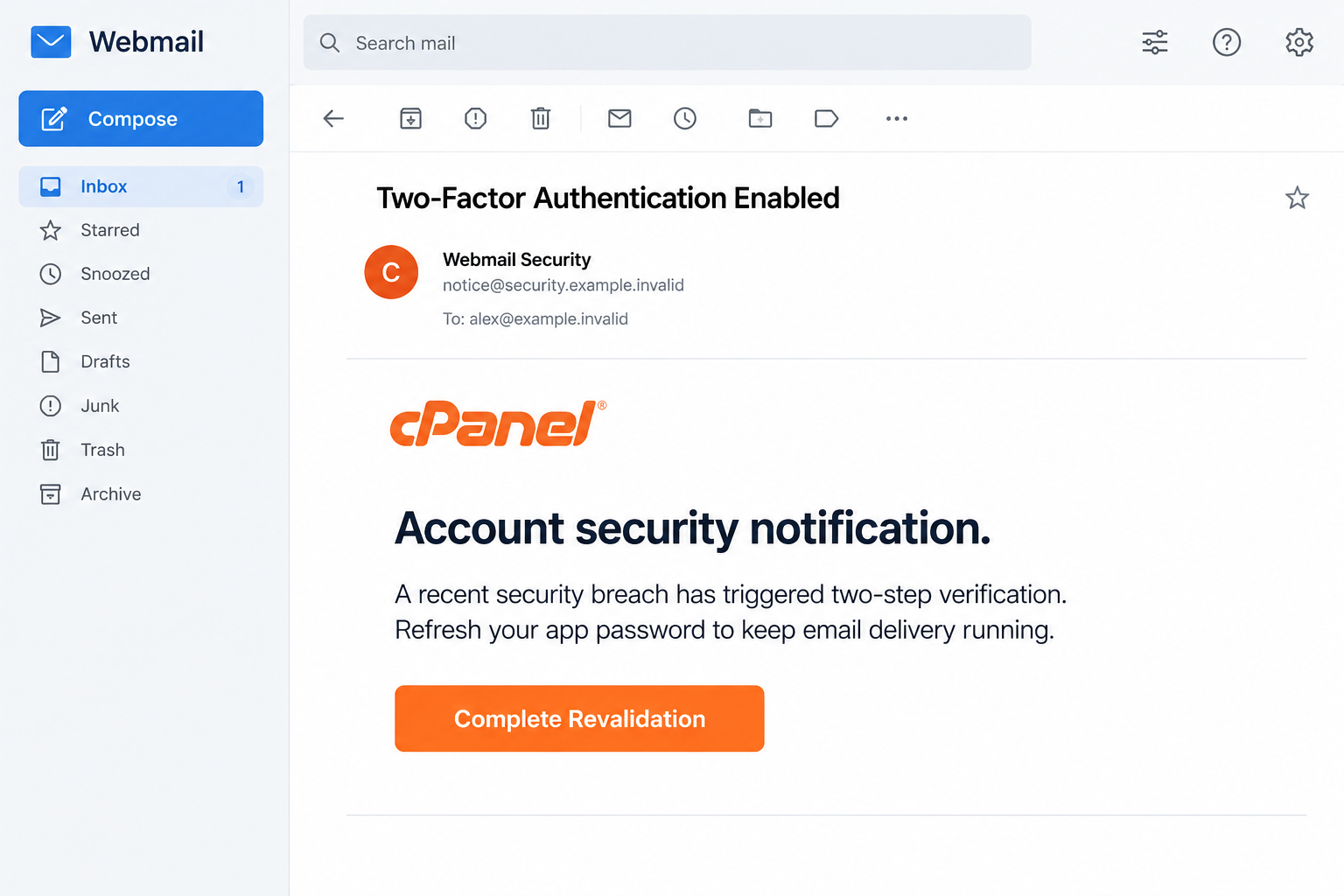
The cPanel Security Breach email scam turns account protection into an excuse for a password request. Its reported subject announces that two-factor authentication has been enabled.
The message attributes the change to a breach, then directs the recipient to refresh an app password using a revalidation button.
Those are the sender’s claims. A copied cPanel logo does not establish that your hosting company detected an intrusion or changed your account.
The illustrated notice uses fictional account details. It shows the kind of instruction to examine, not an actual notification from your hosting provider.
cPanel is real, but the request needs a separate check
cPanel is hosting-management software. Your hosting provider may use it to manage email, websites, and account settings, but the software name is not a universal support identity.
Actual security notifications can exist. The problem is not that an email mentions authentication. It is that this unsolicited instruction supplies its own route for surrendering credentials.
Your provider’s existing customer portal, known support channel, and account settings offer a safer way to establish whether anything changed.
The main exposure is account access
The campaign is a credential-phishing attempt. Its linked destination was unavailable in the reported examination, so its precise login layout cannot be treated as confirmed.
Do not assume every recipient sees an identical screen. The decision remains straightforward: an unverified email is not a suitable place to authorize a password change.
- A breach claim is different from a verified incident in your provider’s records.
- The security logo does not identify the organization receiving your password.
- A real authentication change should be checked through an independently opened account.
- If credentials were entered, secure the affected account rather than relying only on a device scan.
Why a Protection Notice Can Feel So Convincing
Most people expect an attack to ask them to weaken security. A message claiming to strengthen it can slip past that expectation.
Two-factor authentication sounds like a sensible response to a breach. The email connects a frightening event with a reassuring action before you have verified either.
There is also a practical worry: your desktop email program might stop receiving messages. The proposed password refresh appears to solve that problem.
A business owner may be waiting for customer inquiries. An employee may be expecting approvals. The lure works without promising a prize or threatening an implausible fine.
That does not mean your mailbox has already been penetrated. The sender only needs you to believe there is a routine administrative task waiting.
Think of the button as a proposed destination, not a security instruction. You still need to know who operates the destination and why it needs your secret.
Confidentiality notices and automated-message footers do not answer those questions. They can be copied as easily as a heading or an orange logo.
An account identifier can also be invented. Even a correct email address can come from public information, an old mailing list, or a previous breach.
The crucial check is whether the actual provider recognizes the event. That answer should come from outside the message’s own links and contact details.
How the cPanel Security Breach Email Scam Works
Step 1: The message introduces a security task you did not start
The email arrives as an account notice rather than a request from a stranger. It wants to be handled like routine hosting correspondence.
If you use hosted email, that framing can fit your day. You may have seen genuine quota notices, login notifications, or support updates before.
Scammers benefit from that familiarity. The recipient begins with the question, “What should I update?” instead of “Who sent this?”
Pause before accepting the task. A genuine message should withstand verification through the provider’s normal portal without requiring you to follow its preferred link.
If you do not use cPanel-based hosting, there is an additional mismatch. Do not investigate by signing into an unfamiliar service to see what happens.
Step 2: A claimed protection change supplies the reason to comply
The supposed authentication change makes the password instruction appear connected to an existing security process. That relationship is what the attacker wants you to accept.
A legitimate provider might introduce new controls. But an email describing such a change does not establish which accounts, applications, or protocols are actually affected.
cPanel’s documentation distinguishes cPanel two-factor authentication from Webmail settings. Avoid treating those features as interchangeable just because a notice groups them together.
If your provider truly requires an app-specific credential, it should explain that requirement inside a trusted account or through independently verified support.
Never send an existing password to a stranger so they can “refresh” it. A password is authorization material, not a harmless account reference.
Step 3: The revalidation link moves you away from your trusted account
A button can display any phrase the sender chooses. The label tells you what the sender wants you to think, not where the browser will go.
On a desktop, inspect the destination without opening it. Compare the complete hostname with the hosting portal you already know.
Do not accept a match based on the word cPanel somewhere in the address. A brand can appear in a path or an unrelated subdomain.
Hostnames sometimes contain several names separated by dots. Read the actual domain, rather than stopping when you encounter something familiar.
When the destination cannot be verified, leave it alone. You do not need a working phishing page to reject an unauthorized password request.
Step 4: A familiar login can turn the instruction into credential exposure
If the destination presents a login, the risk is where the entered information goes. A familiar design does not make that recipient trustworthy.
A copied form may request a mailbox password, a hosting credential, or an additional security code. Consider each item disclosed separately during recovery.
The exact live form in this campaign has not been confirmed here. These are possible phishing requests, not a claim that every version collects every item.
Typing a password can matter even before pressing a final button. An untrusted page may record input while you interact with its fields.
If a password manager refuses to fill your saved login, do not immediately override it. A different domain may be the reason.
Check the address and the account context. A request for your email password is particularly concerning when the promised task is merely to confirm service availability.
Step 5: Mailbox access can become a route into other relationships
A stolen credential may permit attempted access, depending on the account’s protections. It does not guarantee that a login succeeded.
If access occurs, an inbox can reveal ongoing conversations, invoices, reset links, and the names of people who trust you.
That gives an attacker opportunities beyond reading mail. A message sent from your account may be more convincing than the notice that originally reached you.
For a business mailbox, payment conversations deserve particular attention. Confirm unexpected bank-detail changes by a known channel, not by replying within the questionable thread.
Recovery therefore includes sessions, forwarding, connected applications, and relevant contacts. Replacing one password is important, but it is not the entire account review.
Check the Hosting Provider, Not the Email’s Support Story
Find the account you normally use
Open a saved bookmark or type the provider’s established address. If you have several hosting services, identify which one manages the affected mailbox.
Use past invoices, your existing administrator, or previously verified records to locate support. Avoid search advertisements that appear when you look for emergency help.
Ask whether there was an authentication change and whether your particular account requires action. Do not provide a password to make the inquiry.
For employer-managed email, contact the internal help desk. An employee should not alter company hosting settings simply because a threatening notice arrived.
Separate a webmail account from the hosting administrator
A mailbox password and a hosting-panel password can protect different scopes. One might allow email access; the other might affect websites or multiple mailboxes.
If you reused a secret across those accounts, disclose that fact to trusted support. It changes which credentials need replacement and which activity should be checked.
Do not infer full server compromise from a phishing email alone. Equally, do not ignore broader access if an administrative password was actually exposed.
cPanel’s Webmail settings documentation describes legitimate account controls. Your provider can explain which features are available in its setup.
Preserve the message without giving it another chance
Save the original email for support, including its headers when possible. Those records can help identify the sender and the link chain.
A screenshot is useful for the visible instruction, but it may omit the actual destination. Do not reclick the button merely to produce a better screenshot.
Keep any security alerts that arrived around the same time. Record whether you entered information, downloaded anything, or allowed a remote session.
A concise timeline helps support distinguish an attempted lure from a successful login or an unrelated delivery problem.
What to Do if You Have Fallen Victim to This Scam
Stop the revalidation process. Close the suspicious page and do not contact the support number supplied by the message.
If you only read the email, report it as phishing. There is no reason to change server settings based on the warning alone.
Tell the actual hosting provider what happened. Use its known portal or your established administrator. Specify which account and credentials were involved.
Ask whether unexpected logins or account changes are visible. If the mailbox belongs to work, let IT coordinate the response.
Replace exposed passwords through trusted settings. Use an unaffected device if software was installed or remote access was granted.
Choose a unique replacement. Update other accounts that used the same secret, prioritizing hosting administration, email, and financial services.
Remove access that a password change may leave behind. Review signed-in devices, application permissions, forwarding destinations, mailbox rules, and recovery contact information.
Ask your provider about revoking sessions and app credentials. Remove only entries you can identify as unauthorized, preserving evidence first when appropriate.
Restore stronger authentication. Enable the protection your provider supports and check that its recovery methods belong to you.
If you also gave away a one-time code, tell support. A fresh code does not necessarily cancel an access session created earlier.
Review sensitive conversations and transactions. Look for unfamiliar sent messages, deleted security notices, and changes to payment instructions.
Warn affected contacts through a separate trusted route. If money was sent, contact the bank promptly and ask what recovery options remain.
Address device exposure where it occurred. If the page delivered software or you ran a download, scan with a current, genuine copy of Malwarebytes.
AdGuard can help reduce some malicious advertising during later browsing. Neither tool revokes stolen account sessions or reverses a transfer.
Keep checking the account after the initial cleanup. Retain the incident details and ask support to investigate new unexplained changes.
Report the message through your mail provider. Do not pay an unsolicited helper who promises to recover the account using a secret service.
Is Your Device Infected? Run a Free Malware Scan
Slow performance, constant pop-ups, or strange behavior? These are classic signs of a malware infection. The fastest way to find out is to scan your device with Malwarebytes Free — one of the most trusted malware removal tools available.
The free version detects and removes the most common threats, including:
- Adware — the cause of those annoying pop-ups
- Browser hijackers — unwanted redirects and changed homepages
- Trojans and spyware — hidden programs stealing your data
- Potentially unwanted programs (PUPs) — software you never asked for
👉 Select your device below — Windows, Mac, or Android — then follow the simple steps to download Malwarebytes, scan your system, and remove any threats it finds. The scan usually takes 5 to 20 minutes.
Run a Malware Scan with Malwarebytes for Windows
Malwarebytes is one of the most popular and trusted anti-malware tools for Windows — and it’s completely free for removing infections. It catches threats that many antivirus programs miss, including adware, browser hijackers, and trojans. Follow the steps below to scan and clean your PC in just a few minutes.
Download Malwarebytes
Click the button below to download the latest version of Malwarebytes for Windows from the official source. The free version is all you need — it will scan your computer and remove adware, browser hijackers, and other malicious software at no cost.
Download MalwarebytesOfficial installer for Windows 11 and 10. Your download starts right away.Want real-time protection? See Malwarebytes Premium Malwarebytes Free for WindowsScans and removes malware at no cost
-
Install Malwarebytes
When the download finishes, open your Downloads folder and double-click the MBSetup file. If Windows shows a User Account Control pop-up, click “Yes” to allow the installation.
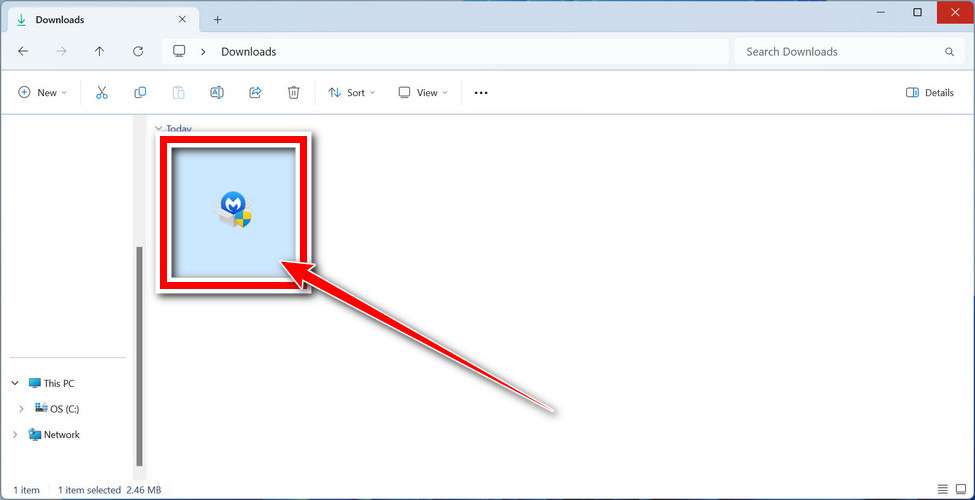
Follow the On-Screen Prompts to Install Malwarebytes
The setup wizard will walk you through a few quick screens:
-
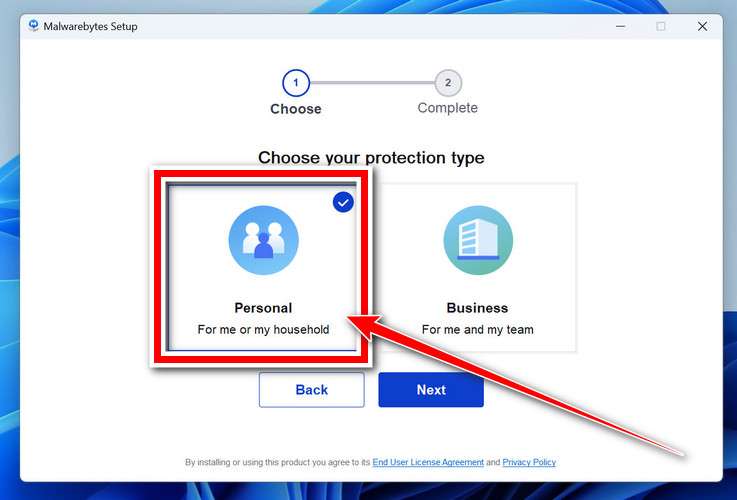
Choose where you’re installing the program — “Personal Computer” or “Work Computer” — then click Next.
-
Malwarebytes will now install on your device. This usually takes under a minute.

-
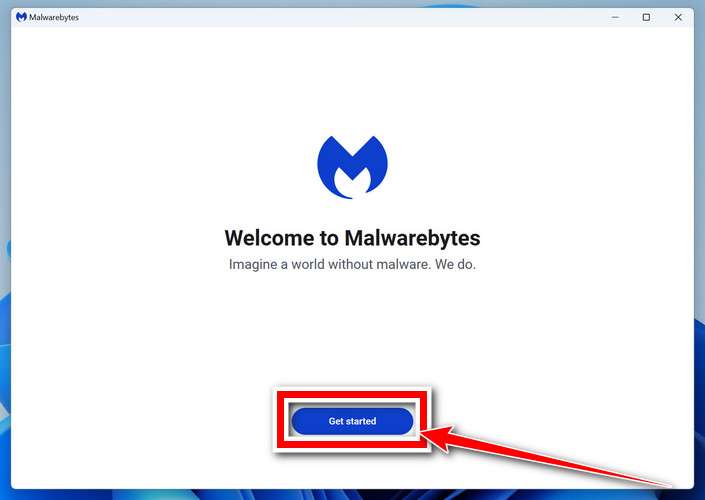
When installation is complete, the “Welcome to Malwarebytes” screen will open automatically.
-
On the final screen, click Open Malwarebytes to launch the program.

-
Enable “Scan for Rootkits”
Before scanning, turn on rootkit detection so Malwarebytes can find even the most hidden threats. Click the Settings gear icon on the left side of the screen.
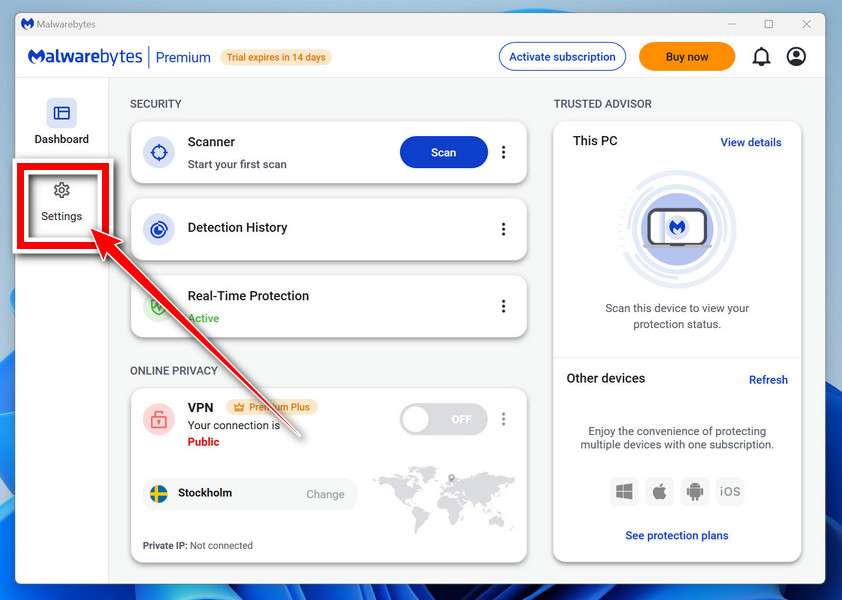
In the settings menu, find “Scan for rootkits” and click the toggle so it turns blue.

Done? Click “Dashboard” in the left pane to return to the main screen.
Start the Scan
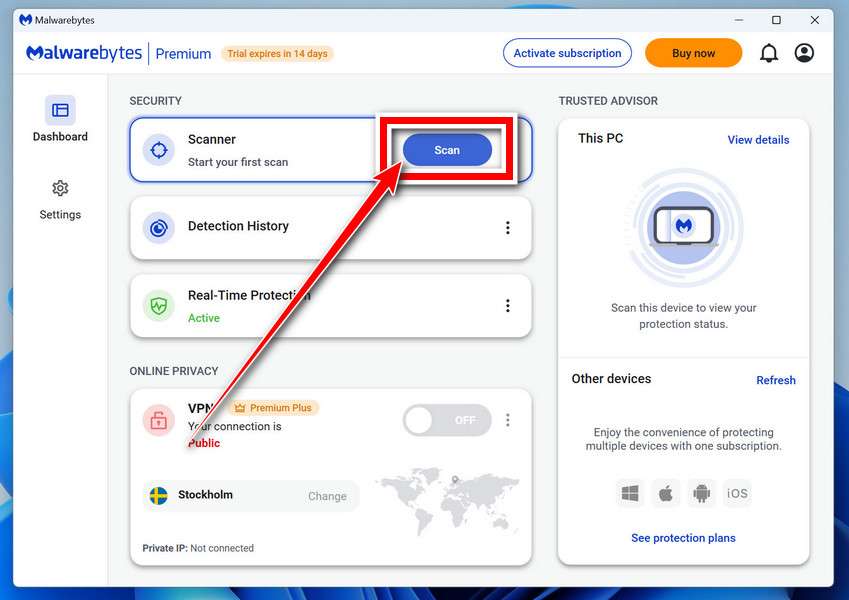
Click the blue Scan button. Malwarebytes will automatically update its virus database and start checking your computer for malware.
-
Wait for the Scan to Finish
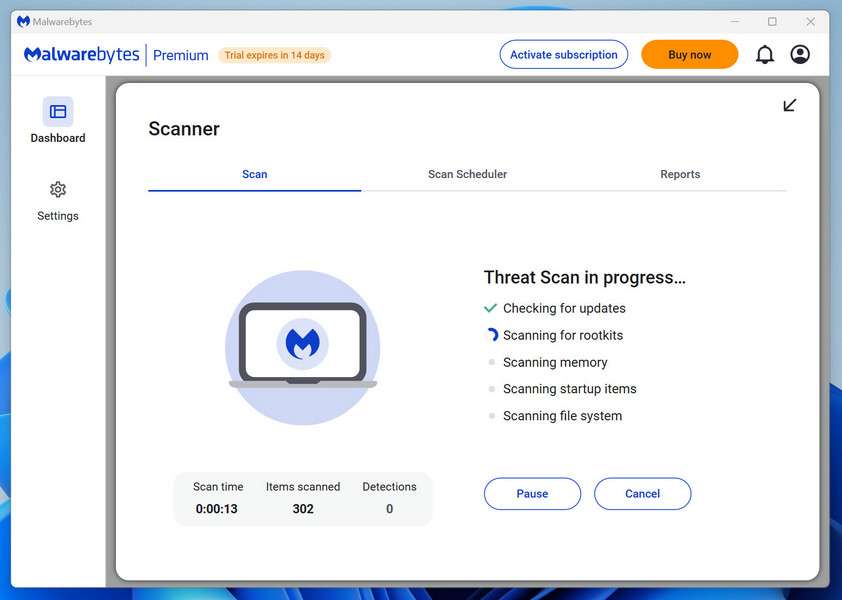
The scan checks your entire system for browser hijackers and other malicious programs, so it can take 5 to 20 minutes depending on your computer. Feel free to do something else — just check back occasionally to see the progress.
-
Quarantine the Detected Threats
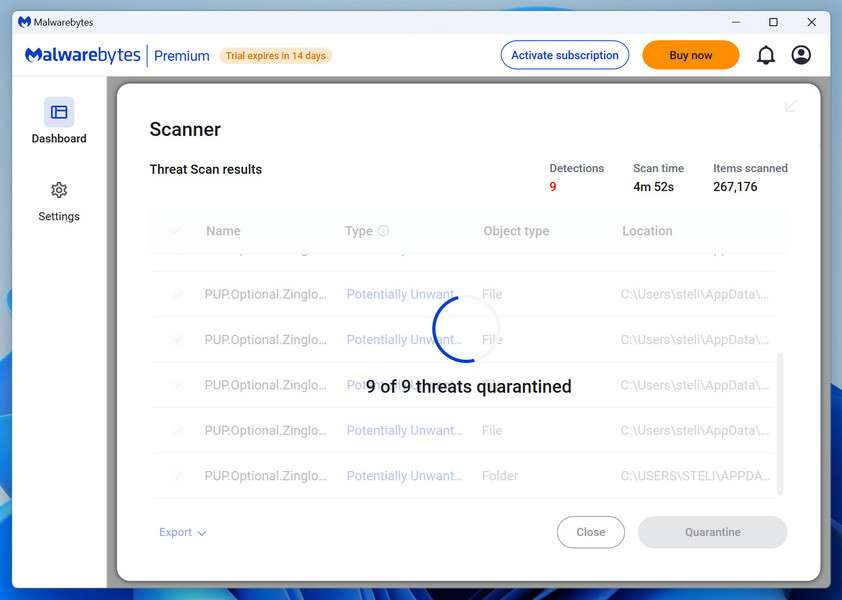
When the scan is done, you’ll see a list of everything Malwarebytes found — malware, adware, and potentially unwanted programs. Click the “Quarantine” button to remove all of them at once.
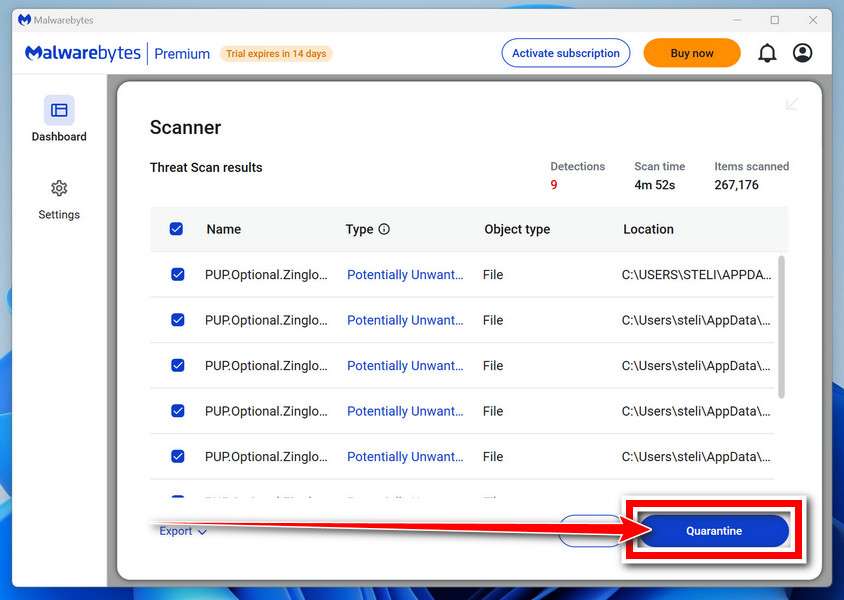
Malwarebytes will now remove the malicious files and registry entries and move them safely into quarantine.
-
Restart Your Computer
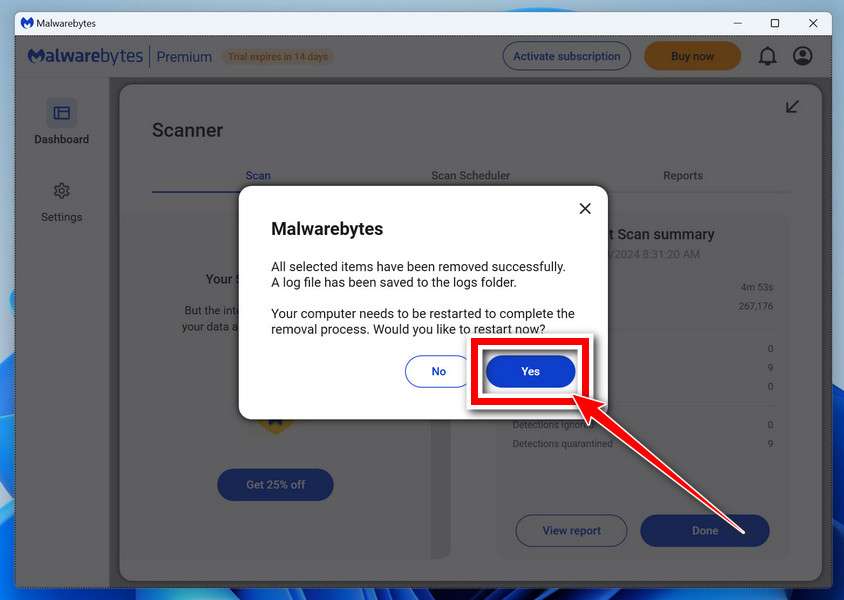
Some threats can only be fully removed after a reboot. If Malwarebytes asks you to restart, click Yes. Once you’re logged back in, Malwarebytes has finished removing the threats it found.
That’s it — your Windows PC is now clean of trojans, adware, and other malware, and should be back to running smoothly.
If you are still having problems with your computer after completing these instructions, then please follow one of the steps:
- Run a computer scan with ESET Online Scanner
- Ask for help in our Windows Malware Removal Help & Support forum.
Run a Malware Scan with Malwarebytes for Mac
Malwarebytes for Mac is a free on-demand scanner that removes the malware other security software tends to miss — adware, browser hijackers, and unwanted programs included. Cleaning an infected Mac with Malwarebytes has always been completely free, and it’s our go-to recommendation. Follow the steps below to scan and clean your Mac in just a few minutes.
-
Download Malwarebytes for Mac
Click the button below to download the latest version of Malwarebytes for Mac.
Download MalwarebytesOfficial installer for macOS. Your download starts right away.Want real-time protection? See Malwarebytes PremiumMalwarebytes Free for MacScans and removes malware at no cost -
Open the Malwarebytes setup file
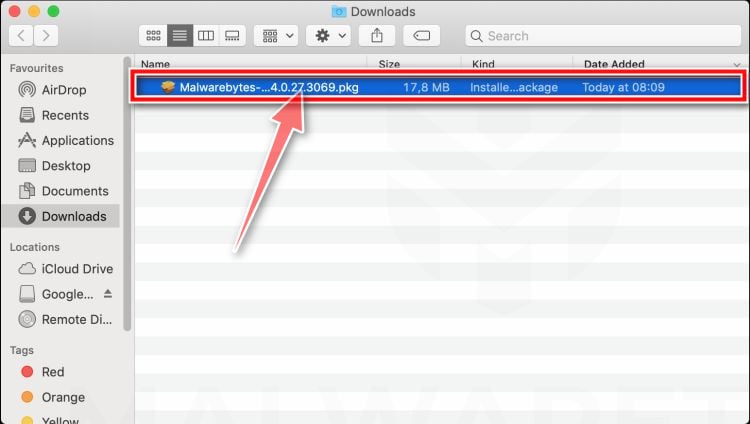
When the download finishes, open your Downloads folder and double-click the setup file to begin the installation.
-
Follow the On-Screen Prompts to Install Malwarebytes
The Malwarebytes for Mac Installer will guide you through a few quick screens. Click “Continue” and keep following the prompts until the installation completes.
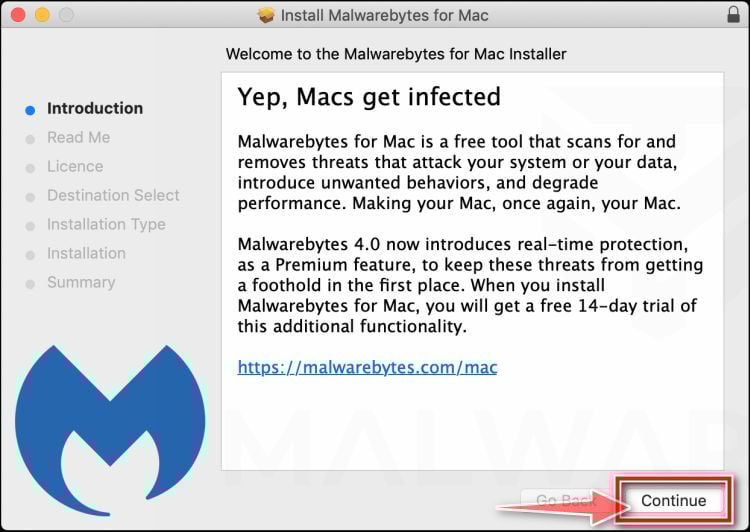
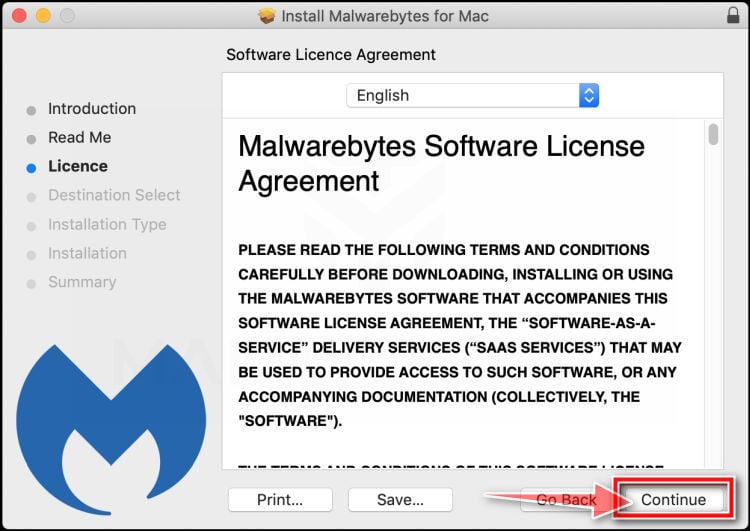
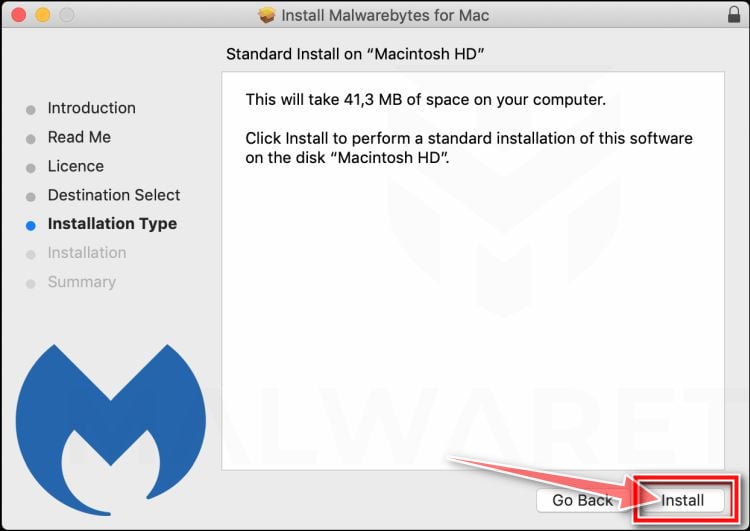
When the installation is complete, Malwarebytes opens to the Welcome to Malwarebytes screen. Click “Get started“.
-
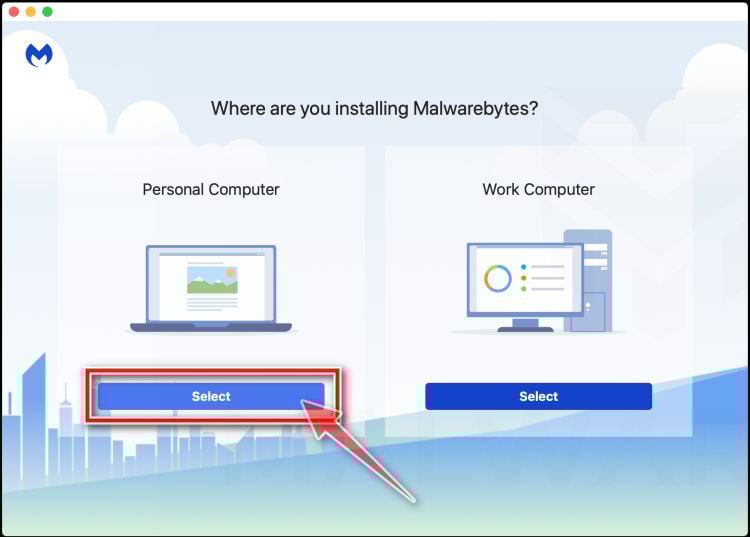
Select “Personal Computer” or “Work Computer”
Malwarebytes will ask what type of computer you’re installing it on. Click either Personal Computer or Work Computer, whichever applies.
-
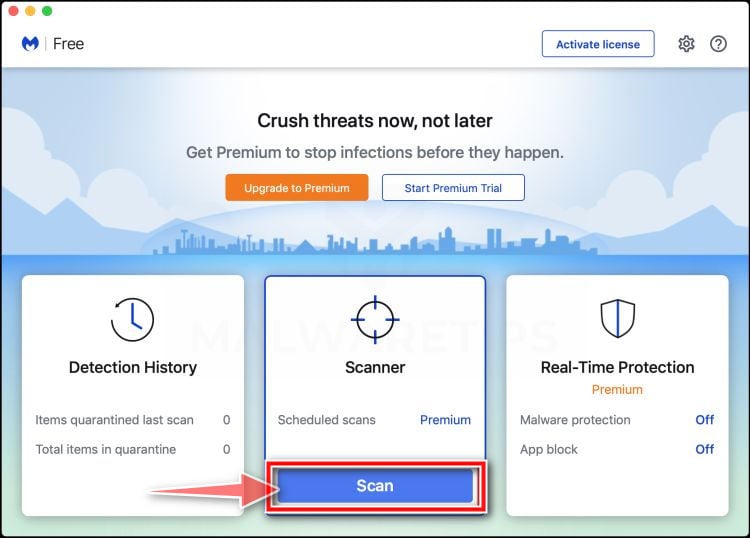
Start the Scan
Click the “Scan” button. Malwarebytes will automatically update its detection database and begin checking your Mac for malware.
-
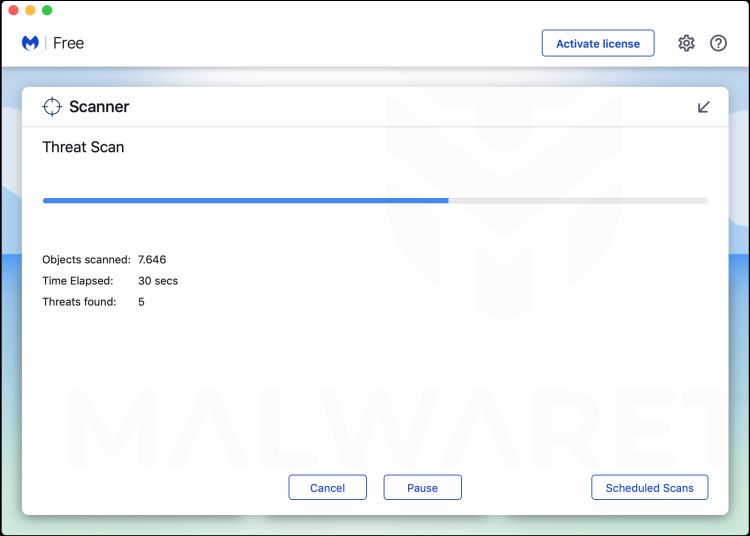
Wait for the Scan to Finish
Malwarebytes will scan your Mac for adware, browser hijackers, and other malicious programs. This can take a few minutes, so feel free to do something else — just check back occasionally to see the progress.
-
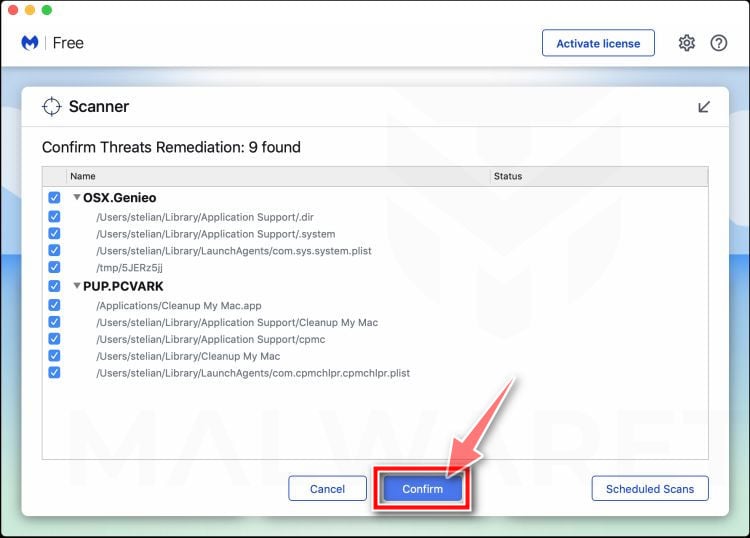
Quarantine the Detected Threats
When the scan is done, you’ll see a list of everything Malwarebytes found. Click the “Quarantine” button to remove all the threats at once.
-
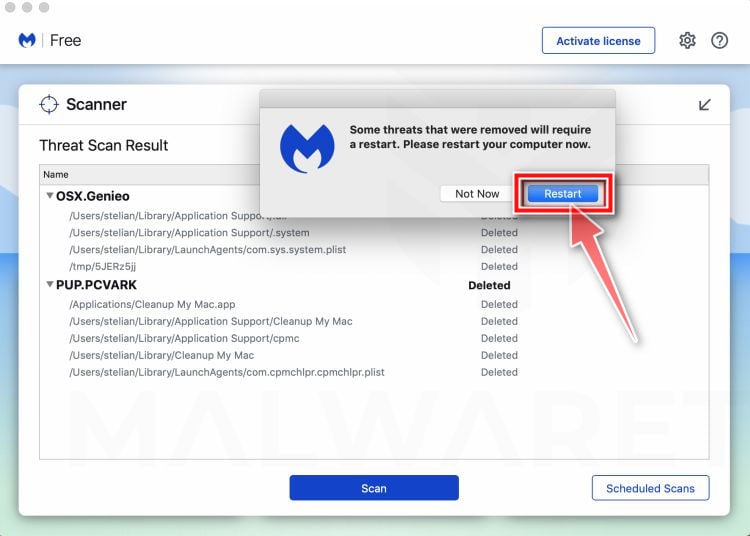
Restart Your Mac
Malwarebytes will now remove all the malicious files it found. Some threats can only be fully removed after a reboot — if Malwarebytes asks you to restart, allow it. Once you’re logged back in, your Mac is clean.
That’s it — your Mac is now free of adware, rogue browser extensions, and other potentially harmful software.
If you are still experiencing problems while trying to remove a malicious program from your computer, please ask for help in our Mac Malware Removal Help & Support forum.
Run a Malware Scan with Malwarebytes for Android
Malwarebytes for Android automatically detects and removes dangerous threats like malware and ransomware so you don’t have to worry about your most-used device being compromised. Aggressive detection of adware and potentially unwanted programs keeps your Android phone or tablet running smooth.
-
Download Malwarebytes for Android.
You can download Malwarebytes for Android by clicking the link below.
Get Malwarebytes for AndroidOpens Google Play in a new tab.Want real-time protection? See Malwarebytes Premium for AndroidMalwarebytes for AndroidScans your phone and removes malware at no cost -
Install Malwarebytes for Android on your phone.
In the Google Play Store, tap “Install” to install Malwarebytes for Android on your device.

When the installation process has finished, tap “Open” to begin using Malwarebytes for Android. You can also open Malwarebytes by tapping on its icon in your phone menu or home screen.

-
Follow the on-screen prompts to complete the setup process
When Malwarebytes will open, you will see the Malwarebytes Setup Wizard which will guide you through a series of permissions and other setup options.
This is the first of two screens that explain the difference between the Premium and Free versions. Swipe this screen to continue.
Tap on “Got it” to proceed to the next step.
Malwarebytes for Android will now ask for a set of permissions that are required to scan your device and protect it from malware. Tap on “Give permission” to continue.
Tap on “Allow” to permit Malwarebytes to access the files on your phone.
-
Update database and run a scan with Malwarebytes for Android
You will now be prompted to update the Malwarebytes database and run a full system scan.

Click on “Update database” to update the Malwarebytes for Android definitions to the latest version, then click on “Run full scan” to perform a system scan.

-
Wait for the Malwarebytes scan to complete.
Malwarebytes will now start scanning your phone for adware and other malicious apps. This process can take a few minutes, so we suggest you do something else and periodically check on the status of the scan to see when it is finished.

-
Click on “Remove Selected”.
When the scan has been completed, you will be presented with a screen showing the malware infections that Malwarebytes for Android has detected. To remove the malicious apps that Malwarebytes has found, tap on the “Remove Selected” button.

-
Restart your phone.
Malwarebytes for Android will now remove all the malicious apps that it has found. To complete the malware removal process, Malwarebytes may ask you to restart your device.
That’s it — your Android phone is now clean — no more malicious apps, adware, or browser redirects.
If you are still having problems with your phone after completing these instructions, then please follow one of the steps:
- Restore your phone to factory settings by going to Settings > General management > Reset > Factory data reset.
- Ask for help in our Mobile Malware Removal Help & Support forum.
Stay Protected: Block Ads and Malicious Sites
Now that your device is clean, keep it that way. Most infections start with a malicious ad or a fake download button — so blocking them at the source is your best defense.
We recommend AdGuard, which blocks malicious ads, phishing pages, and dangerous redirects before they can reach you.
👉 Download AdGuard and browse safely
If Email Stops Working After a Real Security Change
A genuine delivery problem deserves troubleshooting, but it does not validate this email. Keep diagnosis separate from the instruction that brought you here.
Check whether webmail works through your normal portal. Then ask the provider about the desktop client’s authentication settings and any documented service changes.
Do not keep entering passwords into the notice’s destination while testing. That gives an untrusted form more information without fixing the client.
Likewise, avoid disabling authentication just to make an older application connect. Your provider may offer an approved setup or a supported alternative.
Some accounts are controlled by administrators rather than individual mailbox owners. A company-managed change should follow the organization’s established process.
If you recently updated a password, an email client may still hold the old credential. That ordinary possibility is not evidence of the claimed breach.
Give support the exact error shown by the real application. A precise error is more useful than the alarming language in an unsolicited notice.
You can take a real service interruption seriously while refusing an unverified request. The safe route is independent confirmation, not blind dismissal or blind compliance.
Frequently Asked Questions
Is the cPanel Security Breach email a legitimate authentication notice?
The campaign described here is phishing. Check any actual security change through your hosting provider’s established account and support channels, not the email’s revalidation link.
Does receiving this email mean my hosting account was breached?
No. The email’s allegation does not prove account access. Review real security activity separately, especially if you disclosed credentials or noticed unexplained changes.
Can cPanel send genuine account notifications?
Yes, supported installations can provide notifications. Their existence does not authenticate this message or make every cPanel-branded link safe.
Should I refresh an app password using the button?
No. Verify the requirement inside your known provider account. Generate or change credentials only through a trusted, independently opened process.
What if I entered a password but the page did not finish loading?
Treat the password as exposed. A failed page or missing confirmation does not show that the entered information stayed private.
Will a clean malware scan secure my mailbox?
Not by itself. Scanning addresses malicious software; mailbox recovery also requires credential changes, access review, and removal of unauthorized account settings.
The Bottom Line
Do not use the cPanel breach notice to refresh credentials. A security-themed instruction still needs confirmation from the provider that actually manages your account.
If you already entered a secret, secure that account now and involve trusted support. Check lasting access, not just whether your email still appears to work.








