


The tip comes from a Telegram group. A new token is climbing, the buy goes through, and your wallet shows a balance.
You decide to take a little off the table. That’s when the trade starts to look different from the one you thought you made.
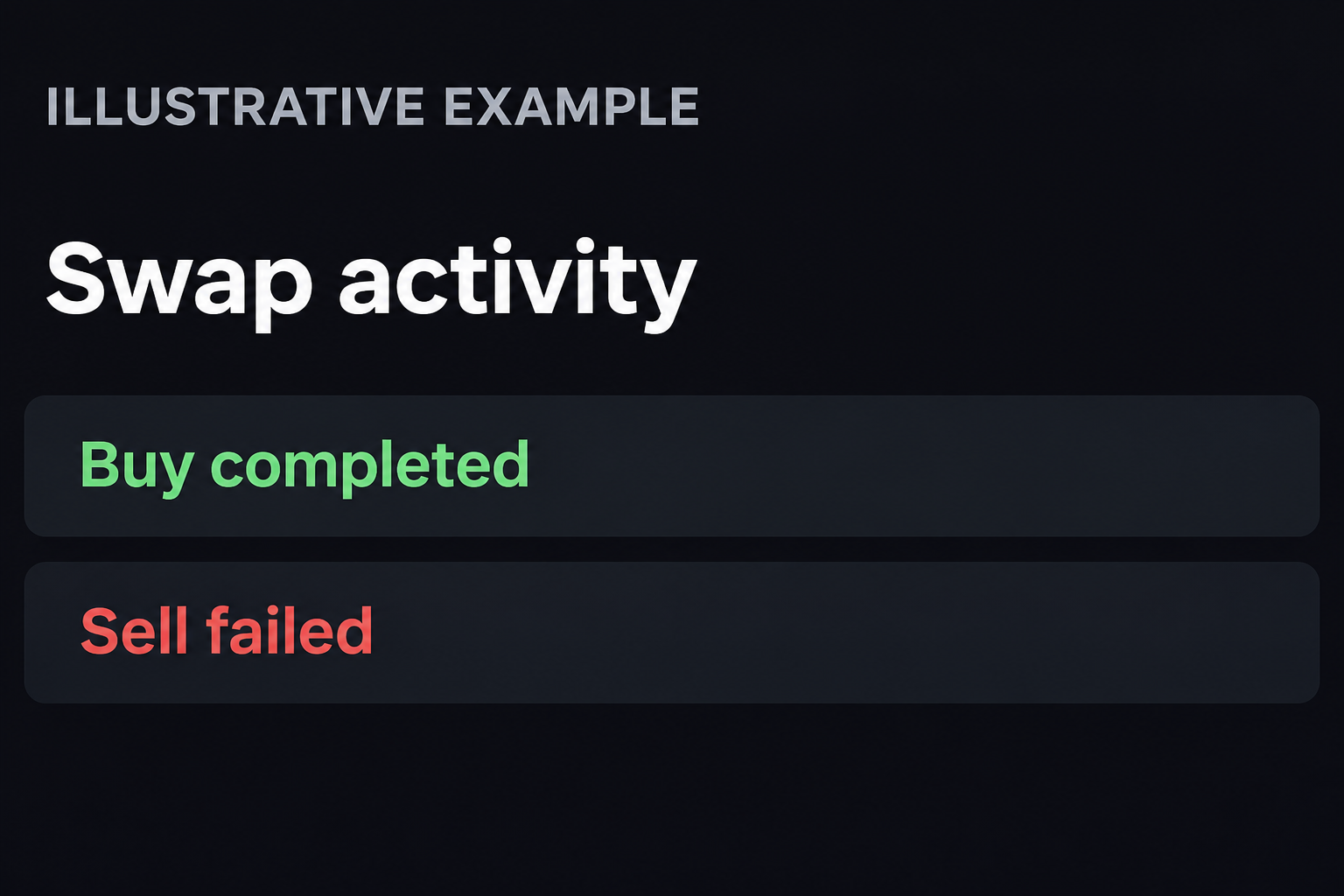
Overview
The token can arrive even though buyers can’t sell it
A crypto honeypot scam can deliver exactly what you bought: a token that appears in your wallet. The trick is what you can do with it afterward.
In the kind of honeypot discussed here, the token lets purchases go through while preventing ordinary buyers from selling or making a sale prohibitively expensive.
That’s different from a fake investment dashboard. Your purchase can appear in a public transaction record and still leave you holding something you can’t trade back.
The balance also isn’t an account held by a customer service department. A moderator cannot release your money by manually changing the number on your screen.
Telegram groups have been used to steer people into these trades
Researchers studying Telegram bait-and-trap schemes found organizers using the familiar language of pump groups to direct buyers to tokens they couldn’t sell.
The October 2026 preprint looked at 83 Telegram channels and 3,677 promotion events on Ethereum and BNB Smart Chain. Those figures describe the study, not the whole market.
The useful finding is simpler than the numbers: the group doesn’t need to be good at predicting prices if members can buy but can’t get out.
The label also covers a particular trap, not every fraudulent crypto investment. A fake exchange that refuses a withdrawal can steal funds without issuing a token at all.
A failed sale isn’t enough to identify a honeypot
Bad trades and failed transactions happen without fraud. The deciding question is whether the token behaves differently for ordinary holders than the promotion led them to expect.
- A public record of a successful purchase proves the purchase happened, not that the reverse trade will work.
- A quoted price doesn’t tell you what your wallet would actually receive if you sold.
- A recent sale from another wallet doesn’t show that your wallet has the same ability to sell.
- A fee request in a private message won’t change the rules that blocked your transaction.
If you’re still deciding whether to buy, you don’t need to settle every technical question. An unexplained restriction on selling is enough reason to pass.
How the Crypto Honeypot Scam Works
Step 1: The tip makes buying feel time-sensitive
The recommendation might be framed as an early announcement or a chance to buy before a bigger group finds the token. The promised advantage is getting there first.
There may be no established project to evaluate, just a ticker, a growing chat, and a chart. The pitch makes those things feel like independent confirmation.
They’re often part of the same story. The chat points you to the chart, and the chart makes the chat look as though it called the move correctly.
If asking about the exit supposedly means missing the opportunity, take that as a reason to stop. You don’t owe the group a trade.
Step 2: A genuine swap makes the pitch seem credible
On a decentralized exchange, a swap exchanges one asset for another. A completed buy means the network accepted that exchange under the conditions in force at the time.
You may see the asset in a wallet and recognize the transaction on an explorer. Neither one can promise that a second exchange in the other direction will succeed.
Think of the buy and the sell as separate events, not two ends of one receipt. Finishing the first doesn’t give you an automatic right to finish the second.
Even a well-known wallet or exchange interface can display a trade involving an unsafe token. The tool you used and the asset you received are different things.
Step 3: The displayed gain makes holding feel like the smart move
A wallet or chart can assign a value using recent activity. That figure is easy to read as cash you could take out at any time.
On a thin market, a small trade can move the quoted price without showing what a larger sale would return. The amount shown beside your balance is only an estimate.
Now add the honeypot restriction. The price can still move on the screen while your account has no practical way to realize the gain.
That’s why a screenshot celebrating a return doesn’t answer the question that matters. Did an ordinary buyer complete a sale and receive the other asset?
Step 4: The restriction shows up when you try to leave
The sell may fail, or the amount you’d receive may be drastically lower than the amount the balance suggests. Either result can leave you unable to recover the purchase.
It can be especially confusing when other sales appear in the same market. A transaction record shows that a specific wallet sold, not that all holders can.
Do not assume that paying for a faster transaction will fix it. A network fee pays for processing; it doesn’t change whether the token permits the trade.
If a failed attempt was recorded on-chain, you may have paid a fee even though the swap didn’t happen. Stop repeating the same trade while you investigate.
Step 5: Someone offers an explanation that costs you more
After the failure, a group moderator or someone pretending to be support may tell you to pay to verify the wallet, release the position, or move it.
That’s a possible second scam, not a step every honeypot uses. It targets the moment when paying a little more feels easier than accepting the first loss.
A fake recovery service may also ask you to sign a permission request. That can put unrelated assets at risk even though the original token remains stuck.
Don’t assume the person who promoted the token has a safe workaround. Save what they sent before blocking them, particularly if they gave you payment instructions.
What a Failed Crypto Sale Can Actually Tell You
Check whether the wallet broadcast anything
A rejection before a transaction was sent isn’t the same as a failed transaction recorded by the network. Look for a transaction ID in your wallet’s activity.
No record can mean the interface rejected the request or the wallet never sent it. It doesn’t show that a sale succeeded or that the contract blocked it.
If there is a record, a block explorer for that chain can show whether it succeeded or failed. Read the status without connecting your wallet to a new site.
Check the original purchase too. If the supposed buy isn’t on-chain and only a website shows a balance, you may be dealing with a fake trading platform instead.
Don’t confuse a poor market with a rule against selling
A small pool can make the price move sharply when you try to sell. A stale quote, insufficient funds for fees, or a temporary service error can also interfere.
Those explanations don’t make the token safe. They do mean a single error message isn’t enough to accuse a project of deliberately trapping buyers.
Compare records for the exact token and chain. A familiar name or ticker doesn’t identify the asset, and results for a different contract don’t answer your question.
A reputable read-only check can flag a possible restriction. No scanner can promise a future sale will work, especially if the rules or market conditions can change.
Check what moved, not just what the app says it was worth
Look for the asset that left your wallet, the token you received, and any separate permissions you granted. Keeping those records distinct makes the next steps clearer.
A price chart doesn’t show whether the transfer into your wallet was a purchase, a promotion, or a token dropped into many wallets without consent.
Don’t interact with an unexpected token to make it disappear or to see if it has value. If your wallet offers a hide option, that is different from trading.
Likewise, a balance of the original token isn’t evidence that the money you spent is recoverable. It shows you hold the asset, not that someone will buy it.
Learn what a sell quote leaves out
A quote estimates the proceeds for a particular order size at a particular moment. It isn’t a receipt, and a new quote isn’t evidence that a trade settled.
Compare what the interface says you would receive with what a completed trade actually delivered. A figure beside the token balance answers neither question on its own.
A historical sale can be more informative than a chart, but it still applies to one wallet at one moment. It doesn’t insure anyone else’s trade.
If you can’t make sense of the discrepancy, leave the token alone. Don’t make a small purchase simply to test what a promoter says about selling.
Recognize when the problem is no longer just the token
If the only loss is what you paid for the token, that’s different from finding transfers you didn’t authorize. Check the timeline before guessing what happened.
Save any unfamiliar transaction separately. Note which asset moved and whether it left through a permission you recognize. That will help your wallet provider understand the concern.
Do not assume an unfamiliar asset arriving in your wallet proves somebody took control of it. An incoming token and an unexplained outgoing transfer deserve different responses.
What to Do if You Have Fallen Victim to This Scam
-
Stop spending on the position. Don’t buy more to average down or send a release fee. Leave the promoter’s chat links alone, including any new trading page.
A legitimate network fee is distinct from money sent to someone who promises to restore your ability to sell. Don’t pay the latter.
-
Save the transaction details before the chat disappears. Record the network, token address, public wallet addresses, transaction IDs, dates, and amounts. Preserve the original invitation and related messages.
Keep a screenshot of the trade status. If you report the incident, the public transaction ID is more useful than a screenshot of the balance alone.
-
Review any spending permissions from the trade. An approval can let an app spend a particular asset. An unrelated token or permission matters even if the blocked trade failed.
Use trusted wallet tools and the guidance on revoking token access. Revoking a permission can prevent later spending under that approval; it cannot refund the purchase.
-
If you shared your recovery phrase, treat the whole wallet as exposed. Changing an app password won’t make that phrase private again.
Seek help through the wallet provider’s official support route. From a safe device, move unaffected assets to a new wallet you control when you can do so safely.
-
Tell the exchange if it handled part of the transaction. Use its own support channel. Share the transaction record and ask what it can investigate or flag.
Be clear whether the exchange sent funds to your wallet or hosted the trade. Its ability to act depends on which part of the transaction it controlled.
-
Report the promotion and the loss. Report the account or group through the platform. In the US, follow FBI guidance for cryptocurrency scam victims.
Give investigators the public transaction records. Keep passwords, wallet backups, recovery phrases, and private keys out of reports and screenshots.
-
Turn down private recovery offers. The FBI warns about fake crypto recovery services that request upfront fees or claim authority they don’t have.
Someone repeating your exact loss amount or transaction ID may have read public records. That doesn’t show they have access to the funds or can return them.
Frequently Asked Questions
Is a crypto honeypot the same as a rug pull?
They can overlap. A honeypot restricts your exit; a liquidity rug pull removes assets buyers need to trade against. Either can leave the remaining tokens hard to sell.
Can a token be a honeypot if I bought it through a well-known exchange interface?
Yes. An interface can allow a swap for a token without guaranteeing that its rules will allow the reverse trade.
Why are there successful sales on the chart if my sale fails?
Those wallets may not be subject to the same conditions. Check whether the transactions concern the same contract and whether the market was in the same state.
Should I increase slippage to make the sale go through?
Don’t do it just to overcome an unexplained failure. Accepting a worse price doesn’t remove a contract restriction and can leave you with much less than you expected.
Will disconnecting the trading site remove its permissions?
Not necessarily. Disconnecting a site from the app isn’t the same as canceling a spending permission already recorded on the network.
Does buying a honeypot mean my other coins have been stolen?
No. A bad swap and a compromised wallet are different problems. Review any permissions or sensitive information you shared before deciding how to secure the remaining assets.
The Bottom Line
Skip a token if you can’t make sense of how ordinary buyers can sell it. A successful buy and a rising chart don’t answer that question.
If a crypto honeypot scam has already caught you, stop sending money. Save the transaction history, check the wallet’s permissions, and report the promotion through official channels.

Join the discussion
0 commentsShare your experience or ask a question about this article.
Discussion
Start the conversation
Have a question or something useful to share? Add the first comment.