


A few days after you meet a board member over dinner, an email arrives in their name. They have a task for you and would like your number.
You send it, and a text follows. The assignment sounds more personal than anything you discussed at dinner.
Overview
The email asked for a phone number first
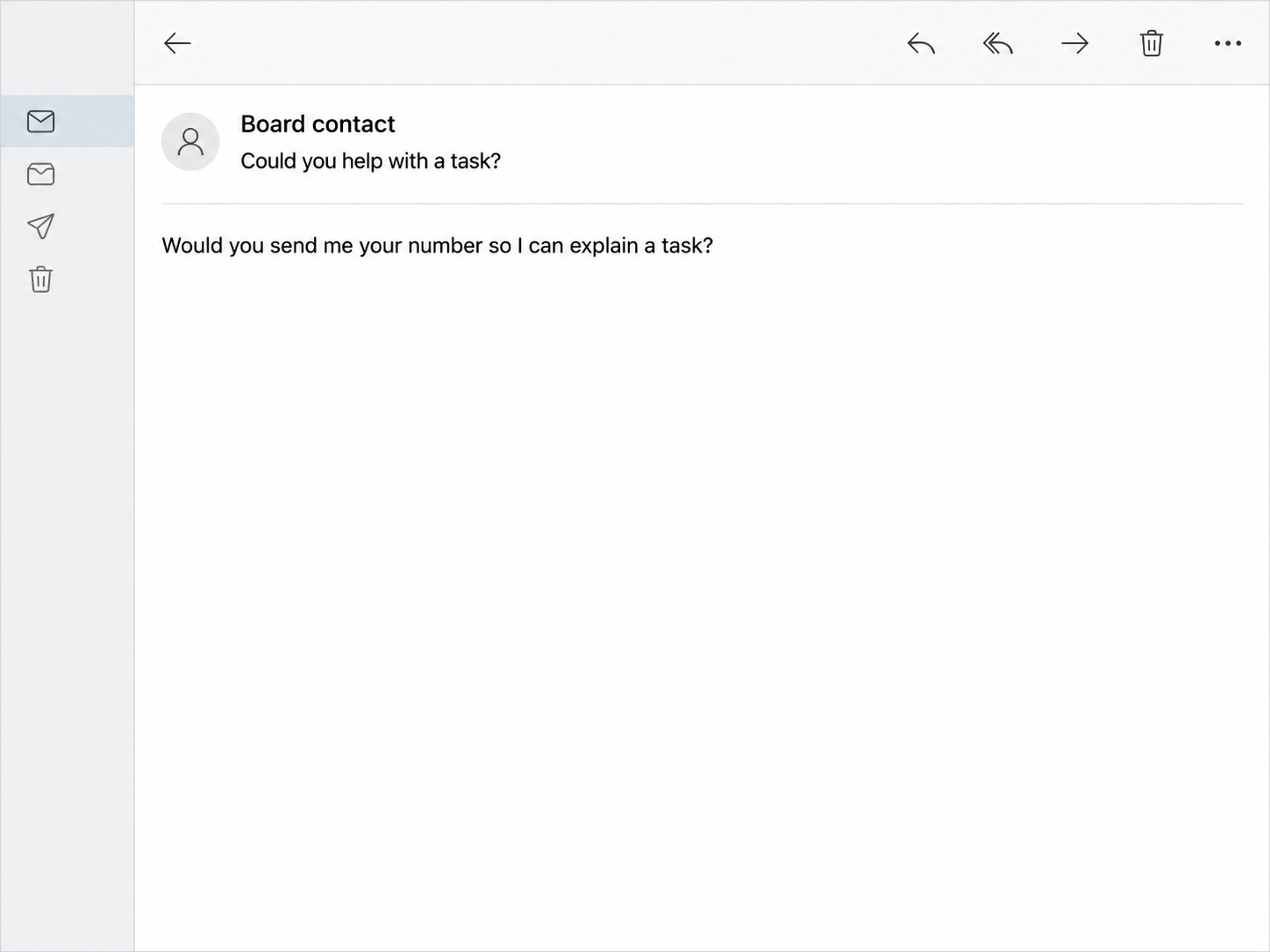
An employee reported hearing from someone who used the name of a board member they had recently met. The first thing the sender asked for was a phone number.
After the employee gave it, a text came through about a surprise for staff. The supposed board member wanted the employee to buy gift cards at a grocery store.
The opening image reconstructs the first request for a number. The gift cards were mentioned only after the conversation moved to text.
The request ended when the employee asked to speak
The employee said they were unavailable and asked for a call. The sender stopped texting when asked to speak.
Another email asked for their number again, this time in connection with coordination. The employee reported no purchase, no shared gift card codes and no further verification through the sender.
The timing made the name familiar. The account gives no evidence that the impostor knew about the dinner or had access to either person’s work inbox.
You can preserve a real staff surprise without buying anything
The FTC warns about boss impersonation and gift cards. Its advice is to check through a contact you already trust before spending money.
- Find the board member’s contact in your existing directory or ask an established office contact.
- Check who can authorize the purchase and where the receipt belongs.
- Leave gift card numbers and photographs out of the conversation.
- Send the suspicious email to your workplace security contact with the texts attached privately.
A real request can be verified without revealing a surprise to the whole office. Ask the person or the staff member who normally handles expenses through a separate conversation.
How the Request Changed Once It Moved to Text
The email gave the employee very little to evaluate. A task might be a document, a meeting or a question about a person they had just met.
The first reply handed the sender another place to reach the employee. The explanation arrived on a phone, where the employee may have been less likely to check a directory.
Even a message that comes from a real company address can need verification. Accounts can be misused, and a person reading on a phone often sees just a display name.
Here the sender used both channels to make one request feel continuous. The employee’s own reply connected the work email and the text thread.
If you have a directory entry, you can verify the change in channel with one call. Use the number already stored there instead of the one that just appeared.
The FTC’s guidance for staff starting a new job describes a similar use of unfamiliar authority. A recent meeting can create that uncertainty even when you already work there.
The grocery store detail makes the task feel small
Buying cards in person sounds like an ordinary errand. The supposed staff surprise offers an explanation for why the board member has asked for help away from normal purchasing.
That explanation does not tell the employee how the expense will be approved. Ask which department is paying, how it normally buys employee rewards and who can confirm the request.
You can ask those questions without saying which employees are supposed to receive anything. Surprise recipients and authorized purchasers are different people in a normal workplace.
A request for codes would be a separate event
The account ends before the employee bought anything. It does not say that the sender requested a photo of the cards or tried to redeem one.
In other cases, an impersonator may ask for the card numbers or a photo after someone buys the cards. Once shared, the numbers can let someone use the balance.
The distinction matters if you already went to the store. Tell the issuer whether you bought the cards, exposed the codes or found that the cards were already redeemed.
How the Fake Board Member Gift Card Scam Works
Step 1: A familiar name gets an unfamiliar request into the inbox
The employee recognized the name because they had met the board member in person. The sender wrote about a task without supplying enough information to identify it.
You might know someone’s face without knowing their work email or mobile number. The gap is enough to make an unsolicited message look plausible.
Step 2: The recipient is asked to move the conversation to a phone
The email sought a number and the employee supplied it. A text followed from a contact the employee had not independently verified.
The sender can sound like the same person without proving that the address or number belongs to the board member. Check the person through an established route.
Step 3: The task turns into a request to buy gift cards
The text described a surprise for staff and a trip to a grocery store. It gave the employee something specific to do without naming an approved expense.
In this instance, the action would have used the employee’s own time and possibly their own money. That makes approval a practical question, even if the sender sounds senior.
Step 4: The sender avoids a normal conversation
The employee asked for a call rather than making the purchase. According to the report, the text exchange stopped, and email later returned to asking for the number.
Treat any second request as part of the same unresolved contact. A polite reminder does not answer the verification question an actual phone call could settle.
Where to Verify a Request at Work
Use the directory that existed before the message
Open a staff directory, established group channel or previously used contact record. If a board member has no public mobile number, ask their assistant or the board secretary.
Keep the first verification question simple. Ask whether the person requested your phone number or wants you to buy gift cards for a staff event.
An unfamiliar sender might say they are using a personal phone for an event. You can still reach the person through the route the organization uses regularly.
If you cannot reach anyone, set the purchase aside. An unverified request can wait until the usual approver is available.
Check who is authorized to spend
Ask whether anyone else at work knows about the purchase. Someone in finance or people operations may already run the program the message claims to be organizing.
A real request might have a budget and instructions for submitting a receipt. If nobody can identify either, wait for a confirmed purchase order or other approved route.
Employees who travel or work remotely can verify by calling the known office. There is no need to use the mobile number supplied after the first email.
Preserve the two contacts as one report
Keep the initial email and the later texts together. The security team may want to know when the request moved to a personal phone.
Keep the later email, which shows the sender asked for the number again after the employee requested a call.
If an email is attached to a security report, preserve its original address information. Forward screenshots through the channel your employer uses for handling suspicious messages.
Tell your team which details came from the sender and which were already familiar to you. That can help someone distinguish a convincing coincidence from evidence about mailbox access.
If You Already Bought the Cards
Keep the cards under your control
Put the cards and receipts together as soon as you suspect impersonation. Leave any unopened packaging intact while you ask the issuer what it needs to check.
A text might tell you to send a photograph as proof of purchase. A receipt can contain sensitive numbers too, so confirm what finance actually requires before sharing a photo.
If you paid but never sent codes, ask the store or issuer whether the cards can be returned or canceled. Their rules can vary by card and retailer.
If you shared a number, tell the issuer that rather than describing the cards as lost. It needs to know that someone might already be using the balance.
Get the right people involved at work
If a company card was used, tell the person responsible for it. They can keep an internal record and check whether earlier purchases are tied to the same request.
If you used your own card, explain that to both finance and the issuer. Keep the receipt so neither has to rely on a text from the person seeking reimbursement.
An expense approver can check whether anyone actually commissioned a staff surprise. Ask them to share that result with other employees who might receive the same request.
Help coworkers recognize the first email, too
A colleague may receive the initial request for a number without seeing the gift card text. Tell the security team the subject and what changed when the message moved channels.
If the board member is well known in your organization, bring the incident to their office’s attention. They can clarify which contact methods staff should use for urgent requests.
Try to report an exact sender address or phone number privately. A display name can be the same across multiple messages without identifying where any of them came from.
If you had to pause a real purchase while checking, explain that to the legitimate requester.
If two employees receive the same request, ask them to report it separately. Comparing the timestamps and sender details can help security see how widely it spread.
A brief delay costs much less than sending codes to someone your office cannot identify.
After a verified request, resume through the normal expense process. That gives both you and the person approving the purchase a record your workplace can use later.
What to Do if You Have Fallen Victim to This Scam
-
Pause the purchase and save the email and text exchange, including the times, sender details and the point where the request changed.
-
Reach the board member or their office through your organization’s directory and confirm whether they asked for your number or authorized any purchase.
-
Tell your workplace security or finance contact what you shared and whether the sender asked other people on your team for money.
-
If you bought cards, keep both the cards and receipts, and use the issuer’s own contact details to report any codes you shared.
-
Contact the card issuer or bank that handled any related payment and explain what happened, including whether any of the cards have been used.
-
Use FTC ReportFraud for a United States consumer report and save any reference provided by your employer and the issuers.
The FTC’s gift card reporting guide explains why you should keep the cards and store receipts. The issuer can use that information to check what happened.
If you only shared a phone number, the next risk is another person texting or calling about the task. Warn your security team and avoid supplying any new details.
If someone claims they will reimburse a failed purchase, check with the issuer and your employer.
A stranger who knows the card amount may have learned it during the original request.
Frequently Asked Questions
What if I actually met the person whose name appears on the email?
That meeting explains why the request felt familiar. Verify the message through a number or workplace contact you already had before doing anything with company money.
Does switching to text always mean the message is fake?
Coworkers can use text for legitimate work. A new number asking you to make a purchase still needs verification through an established work contact.
What if the gift cards are supposed to be a surprise?
Confirm approval privately with the real requester or the person responsible for the budget. You can keep a surprise from recipients while checking who authorized it.
Can someone use a card from a picture of the back?
Someone with the necessary number and code may be able to redeem the balance. Report the exposure to the issuer even if you still have the physical card.
Should I change my password if I only shared my number?
A phone number alone does not identify a password exposure. Watch for follow-up calls and report any further disclosure to the provider responsible for the information you shared.
What should I do if someone follows up from another number?
Save the new message with the others and contact work through the same directory or established channel. A second number does not establish that the original request was approved.
The Bottom Line
Check with the board member or finance before you spend anything. They can confirm whether the staff gift cards were approved.
If you bought cards or shared their numbers, contact the issuer and keep the receipts. Tell your workplace how the message started so colleagues can recognize the same request.

Join the discussion
0 commentsShare your experience or ask a question about this article.
Community experiences
Did this happen to you?
Your experience could help someone recognize the same scam. Submit a private report for our team to review.
I experienced this tooReports are reviewed before publication. Sharing publicly is always your choice.
Discussion
Start the conversation
Have a question or something useful to share? Add the first comment.