


The caller says an unfamiliar payment has already been stopped. Then an alert appears in your banking app, just as they said it would.
That’s usually the moment you start to trust the voice. Before you answer the caller’s next question, look at what the app is actually asking you to confirm.
Overview
A real payment alert can arrive during a fake call
The Barclays payment declined phone scam uses the bank’s name and a supposed fraud check to start a conversation. The app alert itself deserves separate attention.
In one reported account, a caller discussed unfamiliar card attempts, and the customer says they saw requests to decline transactions in the Barclays app during the exchange.
The customer described different merchants and said the caller eventually asked for ten digits of the current card. They refused and contacted Barclays through the real fraud team.
That account does not independently establish how the attempts started. The important point is that a real bank record and an impersonation call can exist at the same time.
A transaction prompt isn’t the same as caller identification
Barclays describes two distinct uses of its app in its App ID guide. One can identify the colleague on a call. Another checks who is making an online payment.
A transaction prompt concerns a payment. It does not establish that a stranger telling you about that payment works for Barclays, even if the amount is right.
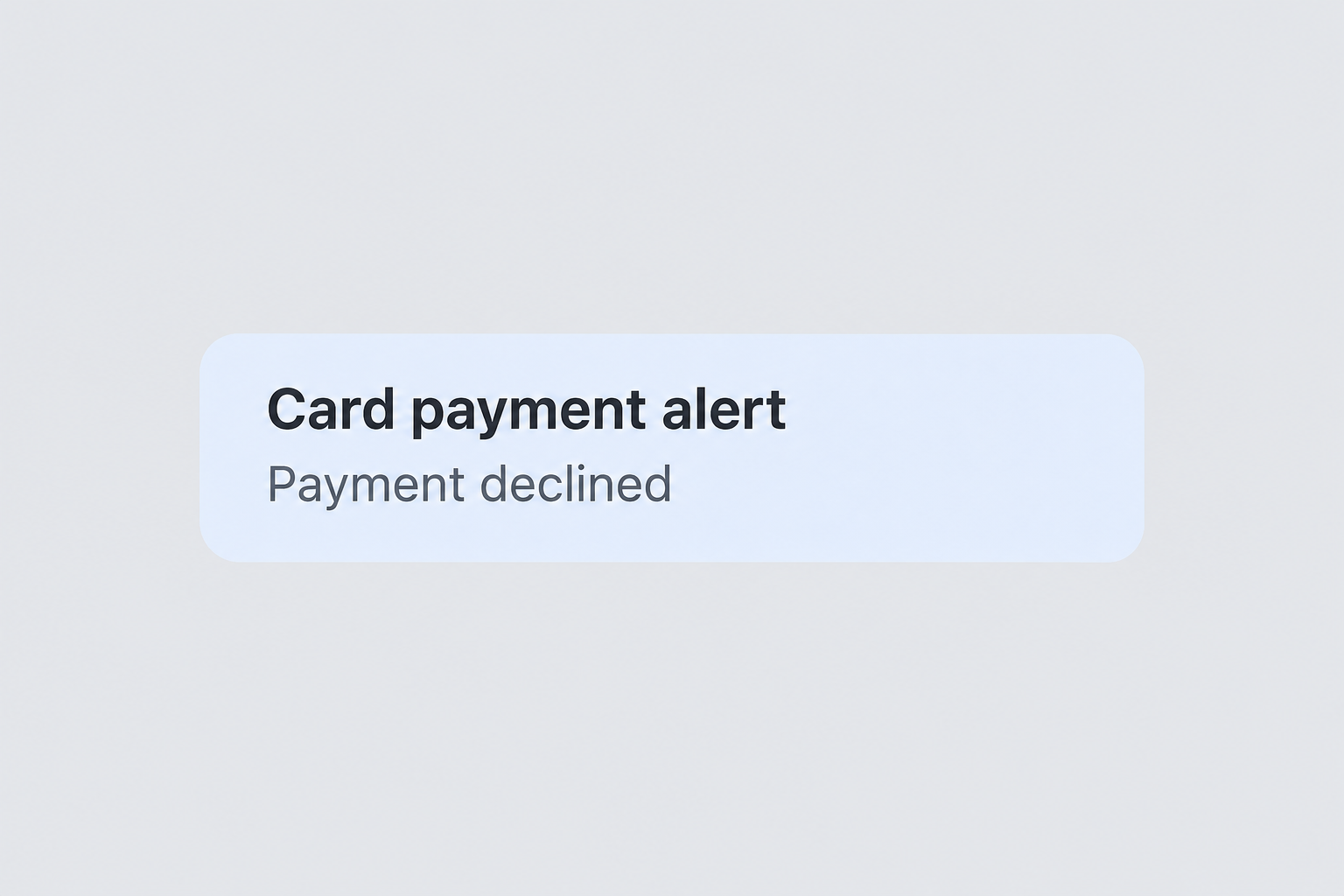
The image above is a generic illustration of a payment alert, not an original screenshot or a copy of Barclays App ID. An actual screen may look different.
A blocked payment doesn’t settle the whole incident
A card attempt may be declined and still deserve a fraud report. Protecting the card is a separate task from deciding whether an incoming call was genuine.
- A pending or declined payment is not the same as a completed charge on your statement.
- A bank app prompt can refer to a transaction without confirming who called about it.
- The person on the phone does not need a portion of your card number to let you hang up and check.
How the Barclays Payment Declined Phone Scam Works
Step 1: The call starts with a payment you don’t recognize
The caller presents the contact as routine fraud prevention. They may say payment has already been declined, so you feel fortunate they’ve caught the problem in time.
In the reported exchange, the caller named a travel merchant and a large amount. The customer also described a smaller payment request that appeared in the app.
It is easy to fixate on the largest figure and overlook the smaller request. The size of an attempt tells you little about whether the caller is the bank.
A merchant name is also a clue about the transaction, not an accusation against the merchant. A shop can show up in an unauthorized attempt without participating in the scam.
Step 2: An app alert makes the caller’s story feel verified
The most convincing moment is when you see a transaction the caller just mentioned. It may look like they proved their identity by predicting what the bank would show you.
What you actually learned is narrower: the alert may concern a real card attempt. It does not explain who initiated the attempt or who is speaking to you.
In a separate Financial Ombudsman Service decision, the payment prompts displayed the merchant and amount. The decision describes what the prompts show, not who made the calls discussed here.
The useful distinction is simple: believe what your app says about a specific transaction, but don’t let a caller supply the meaning of the screen for you.
Step 3: Several checks make the conversation feel official
The customer said they initially declined an unfamiliar request. On a later call, there was time to open the app separately before the caller rang again.
That pause may feel like a sign the other person has nothing to hide. It does not turn their next call into an independently verified one.
The customer also described hearing language about recording the call. A scripted introduction or a courteous tone tells you nothing about who controls the line.
A safer pause ends the exchange completely. Follow it by starting a new call through your card or the help section of the app you already use.
Step 4: The request moves from reviewing a payment to handing over card details
The caller said the card would be replaced and asked for ten card digits under the pretext of adding protection. The customer did not provide them.
The customer said the attempts involved an older card, although the caller seemed to know a few digits of the current one. Neither detail establishes access to the account.
Knowing part of a card number does not entitle someone to the rest. Don’t read out more digits, the expiry date, a security code, or a PIN.
Declining a transaction and replacing a card are separate actions. A legitimate conversation about either can resume after you contact the bank yourself.
Step 5: A declined attempt can leave another issue unresolved
The first question is whether funds actually moved. The second is whether card details, account access, or any banking approval may still be open to abuse.
Someone may decline a prompt and assume the whole matter has ended. The decline only tells you what happened to the request you saw, not what happened elsewhere.
If you already hung up, use that moment to write down what you remember. Include the order of calls, alerts, and anything you were asked to disclose.
There was no confirmed loss in the reported account. The point of acting early is to help the bank assess what happened without waiting for money to leave.
How to Verify a Barclays Alert Without Trusting the Caller
Read the app prompt for what it says
An online purchase check may identify an amount and merchant. A colleague verification prompt has a different purpose and, Barclays says, can identify the employee you’re speaking to.
Read the request in the app after ending the incoming call. Never approve a transaction you don’t recognize or an action you don’t understand simply to clear a notification.
People sometimes hear that banks ask you to confirm things and assume all confirmation screens work alike. A purchase approval, a login, and an identity check have different consequences.
If you see a screen you cannot identify, back out without approving it and contact the bank. You don’t have to complete a prompt to ask what it was for.
Start a fresh conversation through a route you choose
Barclays directs customers with an unrecognized transaction to the number on their card or the call option in the app’s Help section.
Use the details you already have, not a number dictated to you. If the incoming call was on a landline, use another phone if you’re unsure it disconnected.
You can tell the bank you were speaking to somebody who claimed to work there. Ask it to check the transaction and the earlier contact separately.
If another account holder sometimes uses the card, check whether they recognize the merchant. Don’t let a caller’s explanation prevent quick reporting when you still suspect fraud.
Tell an attempt from a debit before deciding what needs disputing
One screen may say the payment was declined; another may show an authorization that is still pending. A completed charge is different from either one.
Don’t wait for an unfamiliar payment to settle before flagging the situation. Ask the bank which entries were blocked, which are pending, and what it needs from you.
If two cards are linked to your account, tell the bank which references you actually saw. Keep full account and card numbers out of any screenshots you share publicly.
Barclays also explains how its genuine fraud texts work. Its guidance says it doesn’t call customers to coach them through replying to those alerts.
Keep a short timeline the fraud team can use
Use separate lines for the call and the app entry, even if they happened within seconds of each other. A bank representative can then compare the timing against its records.
Record the merchant label and amount shown in the app, not just the amount the caller quoted. If two amounts differ, keep both and identify where each came from.
If an alert has disappeared, say that when you report it. Don’t try to recreate the screen, repeat a declined purchase, or ask the caller to resend anything.
If your household has both a Barclays debit card and a Barclaycard, ask which product the alert concerned. Don’t assume a control you changed on one card applies to another.
What to Do if You Have Fallen Victim to This Scam
If you are still on the call, stop there. Once you have ended it, the next action depends on what you shared or approved, not how official it sounded.
- End the call before opening another prompt.
Don’t wait for the caller to finish a security process or promise a callback. An independent check doesn’t require permission from the person who rang you.
If you never shared anything, you can still report the impersonation and ask about the card attempts. Do not call the number shown in the incoming call log.
- Tell Barclays which card details were disclosed.
Say whether you read out part of the number, its expiry date, the security code, or your PIN. Explain if the caller claimed to be replacing a card.
Use the bank’s own card controls if it offers a temporary freeze while you reach support. A freeze is not a substitute for reporting possible compromise.
- Describe any instruction you followed in the app.
Tell the bank whether you declined a transaction, approved one, or accepted a sign-in or security request. Say if you’re unsure what the prompt was for.
If you read out a code, tell the bank what the message said it authorized. Keep the actual code private and report quickly rather than waiting for a statement.
- Report any real movement of your money.
Give the bank the amount and approximate time of the actual entry. Explain whether you saw it pending, completed, or reversed, without guessing that those statuses mean the same thing.
If you initiated a payment because of deception, say so. Ask what can still be blocked, traced, or disputed, and keep the reference for your report.
- Keep records, then report the impersonation.
Save the call time, any voicemail, and the name the caller used. Keep screenshots of the alerts privately so you can give them to the bank if asked.
In England, Wales, or Northern Ireland, use Report Fraud for the appropriate police reporting route. Its guidance directs people in Scotland to Police Scotland.
Ask what changes if the bank replaces your card
Before ending your verified call, ask which card has been canceled and whether any further controls are needed. If another card was mentioned, have it checked separately.
Barclays describes a temporary freeze for debit cards. That control can buy time while you contact support, but don’t treat it as confirmation that the replacement is underway.
Check essential subscriptions or bills once you know which card is affected. Update payment details only through the genuine merchants that need them, not through a caller’s link.
Make a note of the case reference and what the bank said it would do next. If someone calls about the same incident, return through the verified channel again.
Frequently Asked Questions
Does an alert in the Barclays app prove the caller is from Barclays?
A payment alert does not prove the caller’s identity. Barclays describes a separate colleague verification function; if you’re concerned, end the call and reach the bank yourself.
Can a real payment attempt be declined during a scam call?
Yes, a genuine payment prompt can appear while you are speaking to an impostor. The unusual transaction and the caller’s authority need to be checked independently.
Does it matter if the caller knew the first few digits?
Knowing some digits doesn’t show the caller is authorized to handle your card. Don’t fill in what they don’t know, even when they say it’s for a replacement.
Do I need to report anything if I declined the payment?
Tell your bank about the unfamiliar attempt and the incoming call. A declined payment is not a posted debit, but it can still be important to the bank’s review.
Should I trust a second call if I asked for time to check?
A callback follows the caller’s route, not yours. Contact Barclays using the app or card even if the other person was willing to wait.
Is the named store or travel business part of the scam?
The appearance of a merchant name on a prompt does not establish involvement. Report the entry to your bank and let it determine where the payment attempt came from.
The Bottom Line
An unfamiliar card alert deserves attention, but it does not give the person on the phone authority over it. Hang up and verify the payment through Barclays independently.
If you shared digits, approved a prompt, or saw money leave, report that exact action to the bank. Don’t wait for the caller to finish supposedly protecting the card.

Join the discussion
0 commentsShare your experience or ask a question about this article.
Community experiences
Did this happen to you?
Your experience could help someone recognize the same scam. Submit a private report for our team to review.
I experienced this tooReports are reviewed before publication. Sharing publicly is always your choice.
Discussion
Start the conversation
Have a question or something useful to share? Add the first comment.