

The casino screen looks busy enough to feel real. Reels spin, a balance climbs, and a welcome bonus appears before the player has had time to ask who actually runs the platform.
The first deposit is often small. That is part of the appeal. A few taps can make the experience feel like ordinary entertainment, especially when the account seems to win quickly.
The trouble begins when the numbers on the screen are treated as money. This report follows the path from a social media link to the moment a supposed payout becomes another demand for payment.

Overview
What “scambling” means
Australian authorities use the term “scambling” for fake online gambling and casino platforms built to take deposits rather than provide a genuine, regulated gambling service. The sites and apps can imitate slot games, betting pages, wallets, bonuses, and account histories.
The display may suggest that the player is winning. The operator can control the result, the balance, and every withdrawal message. A number shown inside an unverified account is not proof that money is held for the player.
What authorities have confirmed
The Australian Competition and Consumer Commission says these platforms manipulate outcomes, withhold supposed winnings, and may demand further payments. Scamwatch received 806 scambling reports in 2025, up from 677 in 2024.
Reported losses more than tripled from about $449,000 in 2024 to $1.6 million in 2025. The National Anti-Scam Centre believes the problem is underreported because some victims think they simply lost at gambling.
The warning signs that matter most
The clearest warning is not a bad run of luck. It is a platform that controls access to the balance and turns every withdrawal attempt into a new condition.
- The casino arrives through an unsolicited social media or messaging link.
- A small deposit is matched with a large bonus or unusually easy wins.
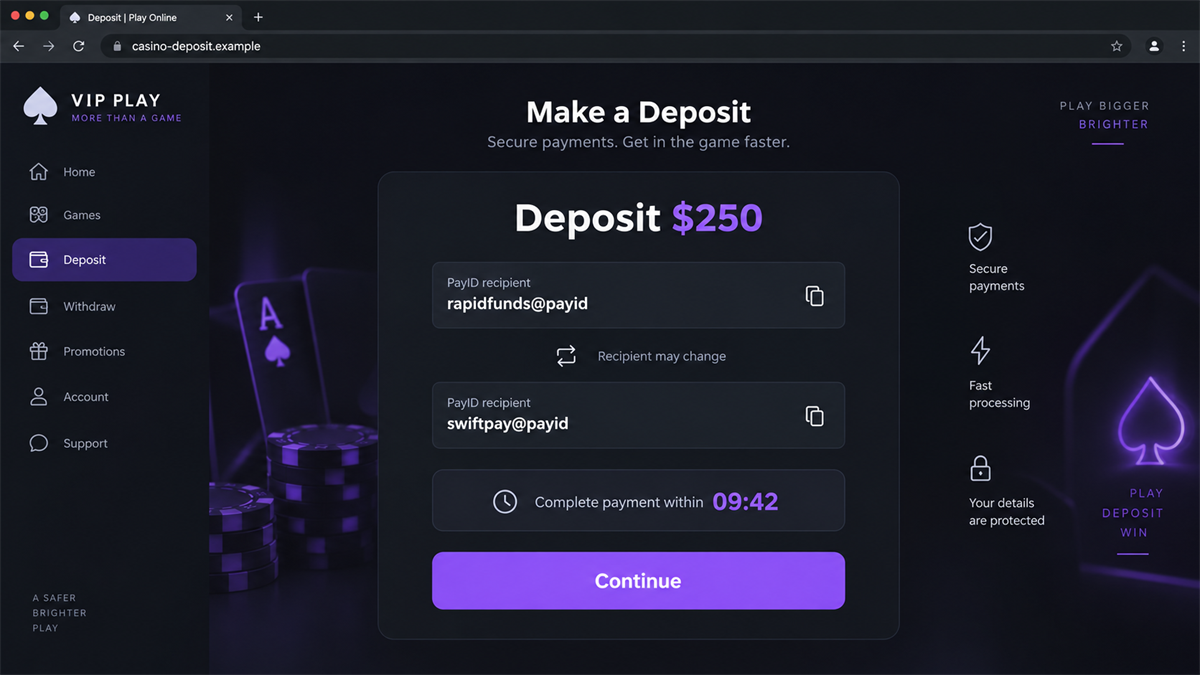
- Payments go to changing PayIDs, personal accounts, or unrelated recipients.
- The operator asks the player to recruit friends for extra credit.
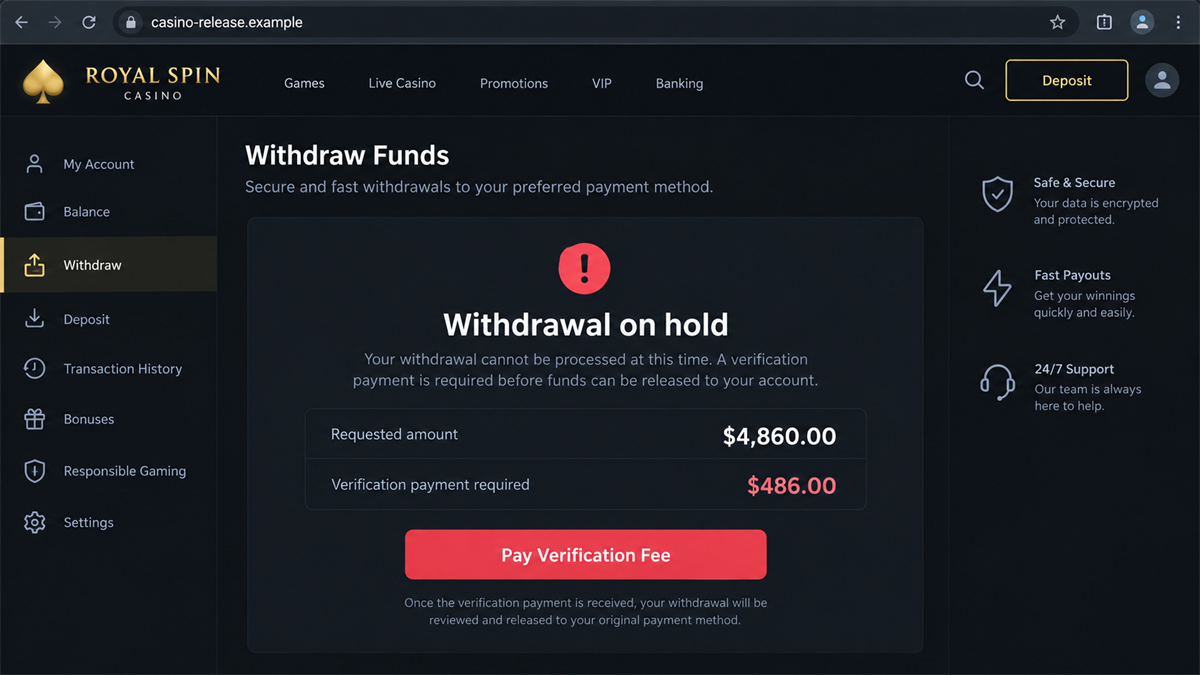
- A withdrawal requires another deposit, tax, verification charge, or turnover fee.
- The legal operator and gambling license cannot be verified independently.
Why a Fake Casino Can Feel Like a Real Game
A scambling platform does not need to recreate a major casino perfectly. It only needs enough familiar elements to keep a new user moving. A registration page, a deposit button, animated games, and a balance are inexpensive to build or purchase as a template.
The player supplies the emotional momentum. A bonus feels like free value. A quick win feels like evidence. A referral reward makes sharing the platform feel helpful rather than risky.
Unlike a fair game, the operator is not limited by a real outcome. It can display a win whenever confidence is falling, delay a withdrawal whenever money might leave, and invent a new rule whenever a victim asks questions.
Some platforms may provide a small early payout. That does not establish legitimacy. A controlled payment can be used to convince a player that a much larger deposit is safe.
The official ACCC scambling warning explains that professional design and positive reviews do not prove a service is genuine. The regulator specifically warns about manipulated outcomes, repeated low-value payments, referral incentives, and blocked withdrawals.
How the Fake Online Casino Scam Works
Step 1: A social post promises easy entertainment
The funnel often begins with a link in a social media post, private message, community group, or short video. The pitch may emphasize a small opening deposit, a no-risk bonus, local winners, or a limited invitation.
The advertisement is designed to feel casual. It does not lead with legal ownership, licensing, or withdrawal conditions. It leads with the size of the bonus and how quickly someone can start playing.
Step 2: Registration collects more than a username
The account form may request a phone number, email address, date of birth, bank details, or identity documents. Some of that information resembles the checks used by regulated services, which helps the platform look legitimate.
On an unverified platform, the same information can be used for identity theft, targeted phishing, or account opening. A request labeled “Know Your Customer” is not trustworthy simply because it uses compliance language.
Step 3: A small payment unlocks a large balance
The first deposit is intentionally manageable. The platform may double it, add free spins, or display an immediate win. A player who sees a balance several times larger than the deposit begins thinking about the payout rather than the original risk.
Payments may be divided among multiple PayIDs or bank accounts. That is not normal payment routing for a regulated operator. It can be a way to move funds through mule accounts and make recovery more difficult.
Step 4: Controlled wins create confidence
The game appears to produce favorable results. The balance rises, celebratory animations appear, and the account may receive a higher status. Nothing on the screen proves that the outcomes are random or connected to real funds.
The operator can tune the experience around the victim. When the player hesitates, another win may appear. When the player deposits more, a larger bonus can make the account feel too valuable to abandon.
Step 5: Referrals turn victims into promoters
Some scambling platforms offer credit for inviting relatives, friends, or community members. The referrer may honestly believe the platform is paying because the displayed balance continues to grow.
This stage is especially damaging. Trust moves from the unknown advertisement to a familiar person. New participants may skip basic checks because the invitation came from someone they know.
Step 6: Withdrawal becomes another deposit request
When the player tries to withdraw, the platform may cite wagering requirements, identity verification, tax, account activation, anti-money-laundering checks, or a minimum balance. Each explanation points to the same action: send more money first.
Paying does not create a genuine payout obligation. The operator can invent another threshold immediately. The account may then be frozen, support may disappear, or the website may move to a new domain.
The Balance Is Part of the Sales Script
A real balance can be reconciled with independently verifiable transactions and a regulated operator. A scam balance exists only inside a screen controlled by the person asking for money.
Look at what happens outside the game. Which legal entity received the deposit? Does the recipient match the licensed operator? Can the license be confirmed through the regulator rather than a logo on the site?
A platform that sends a small payout may still be running a scam. That payment can be marketing spend. It is cheap compared with the larger deposits a victim may make after believing withdrawals work.
MalwareTips has seen the same technique in the Wolf Gold Casino withdrawal-fee trap, where the apparent prize became leverage for another charge. The name and design can change while the pressure remains familiar.
Scambling rarely begins with the largest amount the operator hopes to steal. A low opening deposit reduces hesitation and gives the victim a reason to create an account before checking the company behind it.
Once money has been sent, the platform can frame every later payment as a way to protect that first deposit. The player is no longer deciding whether to join. The decision now feels like whether to abandon a growing balance.
That change matters. Someone who would reject a $500 payment at the beginning may send five smaller payments while trying to recover money that already appears to be inside the account.
Changing recipients also make the losses harder to see as one event. Save every transfer together. The pattern may be clearer to a bank or investigator when the PayIDs, recipient names, times, and amounts are viewed as a single case.
Red Flags Around Scam Casino Platforms
Any one design element can be copied. Judge the entire payment and withdrawal path rather than the appearance of the home page.
- The site offers real-money casino games where that service is not legally permitted.
- The advertisement promises unusually high returns or nearly guaranteed wins.
- The domain is new, changes frequently, or differs from the name shown in the app.
- The app is installed from a direct download rather than an official store.
- Deposits are split across several personal PayIDs or bank accounts.
- Support exists only through a private chat account.
- Terms do not identify a verifiable operator, jurisdiction, or license.
- Reviews repeat the same language or discuss bonuses without successful withdrawals.
- The platform rewards users for recruiting people they know.
- Support demands more money before releasing a balance.
Company and Checkout Checks
Identify the operator behind the casino name
Find the legal company in the terms, privacy policy, payment receipt, and app-store listing. A colorful brand name is not a legal identity. If the documents name different companies or no company at all, do not deposit.
Verify the license with the regulator
Do not trust a license badge or a number printed in the footer. Search the regulator’s own database for the exact company and domain. In Australia, use the Australian Communications and Media Authority to check whether the service is legal.
Match the payment recipient
The bank account, PayID, card merchant, or wallet recipient should match the verified operator. Changing personal recipients are a serious warning. Do not accept an explanation that a “payment agent” must process deposits unless that relationship is independently documented.
Read withdrawal rules before depositing
Check wagering requirements, identity checks, fees, limits, and dispute procedures before money is sent. A rule disclosed only after a win is not a meaningful safeguard. Never pay a new fee solely to unlock an existing balance.
What to Do if You Have Fallen Victim to This Scam
- Stop depositing immediately. Do not pay a tax, verification charge, turnover requirement, wallet fee, or recovery payment.
- Contact your bank or payment provider. Explain that the payments went to a suspected fake gambling platform. Ask about recalls, disputes, recipient-account reporting, and card replacement.
- Save the evidence. Keep the advertisement, domain, app file, account history, chats, recipient names, PayIDs, bank details, wallet addresses, and every withdrawal message.
- Secure your identity. If you uploaded identification, contact the issuing agency and follow its compromised-document guidance. Monitor credit and financial accounts for unfamiliar activity.
- Change exposed passwords. Use a clean device, replace reused passwords, enable multi-factor authentication, and review email forwarding rules and active sessions.
- Remove suspicious software. If you installed an app outside an official store or opened a file from support, disconnect the device and run a full scan. Malwarebytes can help identify malicious installers, credential stealers, and remote-access tools.
- Warn anyone you recruited. Tell them plainly that the platform may be fraudulent and that displayed winnings should not lead to another deposit.
- Report the platform. Report it to the advertising service, app store, bank, relevant gambling regulator, and national fraud-reporting service.
An ad and tracker blocker such as AdGuard can reduce exposure to malicious casino advertisements and redirect chains. It cannot verify a gambling license, so independent checks remain essential.
How to Check a Casino Before You Pay
Start with legality, not reviews. A site can purchase praise, copy a regulator badge, and manufacture screenshots. It cannot create a valid entry in an independent regulator’s database.
Search the exact company, domain, and app publisher. Check when the domain appeared and whether the legal documents use the same identity. A long set of terms is not useful if it belongs to another company.
Look at the payment path. A regulated operator should not need a chain of personal accounts to accept deposits. The recipient should remain stable and match the verified business.
Finally, assume that money shown on the screen is unavailable until it reaches an account you control without an extra payment. Do not increase the loss to prove that a withdrawal promise is false.
Frequently Asked Questions
Is scambling the same as losing at a real casino?
No. Scambling describes a fake or manipulated platform designed to take money. The operator may control the outcomes, display fictional winnings, block withdrawals, and demand more payments.
Can a fake casino allow a small withdrawal?
Yes. A small payout can be used to build trust and encourage a larger deposit. Verify the operator and license independently even if an early payment arrives.
Why does the platform use several PayIDs?
Changing recipients can indicate that the operator is routing money through mule accounts. Stop paying and give the recipient details to your bank.
Should I pay a tax to release casino winnings?
No. Do not send another payment to unlock a balance on an unverified platform. Save the demand and contact your payment provider.
What if I referred friends to the casino?
Warn them immediately. Ask them to stop depositing, preserve their records, and contact their banks if they sent money.
Can positive reviews prove the casino is legitimate?
No. Reviews can be fabricated, purchased, or written before withdrawal problems appear. Licensing, legal identity, payment recipients, and successful independent withdrawals matter more.
The Bottom Line
Fake casino platforms turn the appearance of gambling into a controlled payment funnel. The wins, bonus, and balance can all be staged while the victim’s deposits are real.
If a platform cannot prove who operates it, where it is licensed, and why the payment recipient matches that business, do not fund it. If a withdrawal requires more money, stop paying and contact your bank immediately.

Join the discussion
0 commentsShare your experience or ask a question about this article.
Discussion
Start the conversation
Have a question or something useful to share? Add the first comment.