


An IRS-style letter arrives with a notice number, tax language, and a deadline. It asks you to complete something called the Digital Asset Compliance Portal.
If you hold cryptocurrency, that combination can make an ordinary afternoon feel urgent. Before following the instructions, take a moment to understand what you’re being asked to trust.
Overview
The enrollment demand is an impersonation
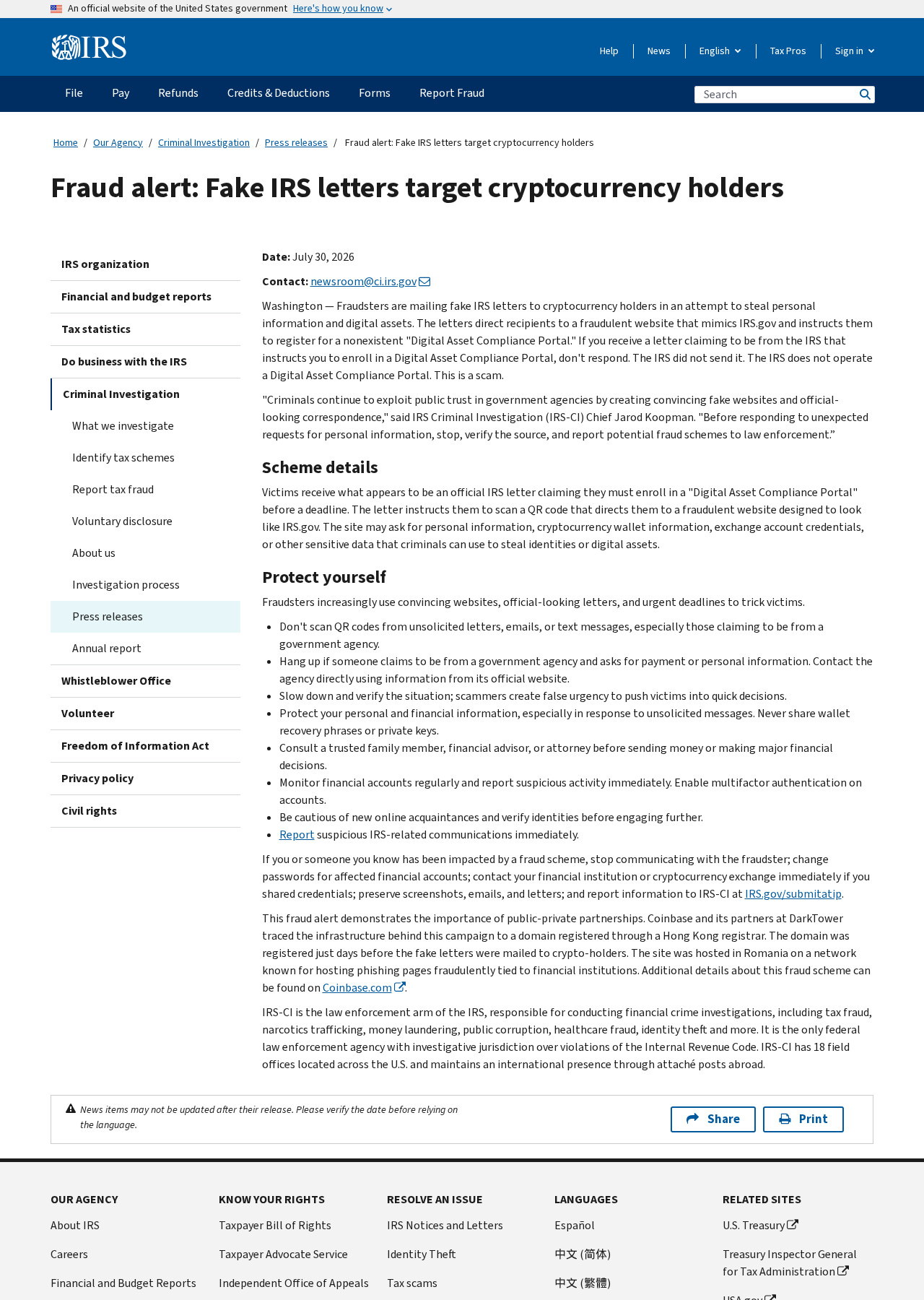
The IRS warns that these letters are fraudulent. It does not operate the Digital Asset Compliance Portal, also called DACP.
This isn’t a dispute about whether cryptocurrency can create tax obligations. It’s a fake enrollment process borrowing a government agency’s identity.
The form prepares a more convincing approach
Coinbase Security and DarkTower documented a mailed notice marked CP14-432RA. Its QR code led to a government-styled website that asked about wallets, exchanges, holdings, and a telephone number.
Those questions matter even before anyone asks for a password. They turn an unknown recipient into a person whose financial setup the impersonator can describe.
Your response depends on what you shared
Receiving paper, opening a website, disclosing account access, and sending cryptocurrency are different events. Treat the action you actually took, not the worst outcome you can imagine.
- Letter only: keep it as evidence and verify independently.
- Personal details submitted: expect targeted follow-up and refuse verification calls.
- Account secrets exposed: use the real provider’s emergency security process.
- Funds sent: report the transaction promptly, without paying someone who promises recovery.
How the Fake IRS Crypto Letter Scam Works
Step 1: A paper notice creates an obligation
A physical envelope can feel more serious than a message in a spam folder. You can hold it, put it beside your tax records, and worry about overlooking it.
In this case, the requested task is the problem. A polished notice number doesn’t turn an invented enrollment program into a real requirement.
Don’t spend the evening comparing fonts or trying to decide whether the paper feels official. Confirm the underlying request through a route the letter doesn’t control.
Step 2: The QR code carries that trust onto a website
The code makes the transition convenient. Instead of typing an unfamiliar address, you point a camera at the page and arrive at something that appears connected.
But the website’s authority doesn’t come from the paper that sent you there. Both parts of the journey can be created by the same impersonator.
A flag, agency logo, or government-style navigation menu is page content. It cannot tell you who controls the destination in your browser’s address bar.
For example, irs.digitalcomplianceportal[.]com puts “irs” before a separate .com domain. Read the whole hostname, not just a familiar word at its beginning.
You don’t need to reopen the code to investigate. Keep the letter and begin a separate search for help from the genuine agency.
Step 3: Small questions reveal the financial target
The documented portal presented wallet and exchange choices, followed by value brackets reaching $100,000+. It then displayed a provider-approval stage.
Choosing a platform can seem less sensitive than entering a password. Yet it tells a future caller which account to mention and which support identity to imitate.
A balance range supplies another useful detail. Someone who knows where you keep assets and roughly what they’re worth can make a much more focused approach.
There is no reason to complete a little more of this form just to see where it goes. The unanswered questions are information you still control.
Step 4: A promised verification call supplies the next opening
The site requested a phone number and promised a representative’s call. Investigators supplied a burner number, but it went dark before that process could be followed.
The report doesn’t show a completed verification call or a victim’s transfer. If you entered a number, focus on refusing follow-up and checking actual account activity.
The practical risk is still clear. A later caller can connect the call to the form you remember completing, making an unsolicited approach feel expected.
Expecting a call doesn’t authenticate its speaker. Neither does a caller repeating details that you entered into an untrusted website.
Step 5: A plausible explanation can become an access request
A follow-up impersonator could ask you to approve a sign-in, disclose a code, reveal recovery words, or use a wallet presented as protective.
Don’t mistake the explanation for the action. A caller may describe something as verification while your screen is actually asking permission to sign in or send assets.
Read the message on your own device. If it describes an action you didn’t independently initiate, stop rather than letting the caller reinterpret it for you.
You can end the conversation without winning an argument about tax law. The safest useful response is to take the issue to a separately verified contact.
Check the Letter Without Using Its Instructions
Start a separate conversation with the real agency
Open the IRS website yourself. Its individual online-account page provides access to balances, tax records, and available digital notices.
If an account doesn’t answer your question, find an official assistance route or ask your established tax professional. Don’t use a number supplied by the suspicious sender.
Keep the real tax question separate from the fake enrollment. Rejecting this portal is not a reason to ignore unrelated correspondence or filing responsibilities.
Read the request, not just the reassuring details
A real-looking code can be copied. Your correct address only proves the sender had an address, not that it has authority over your tax affairs.
Likewise, recognizing a tax term doesn’t validate everything printed around it. Familiar language can make an unfamiliar instruction sound routine.
Ask one concrete question: what action is this person trying to get me to perform? That cuts through seals, reference numbers, and polished explanations.
Bring another person into the decision
If you’re anxious, show the letter to someone you trust before doing anything with accounts or assets. A second person can help slow the situation down.
You don’t need to disclose balances or recovery words to get that help. Explain the request and the route you’re being told to follow.
If someone insists that verification must remain secret, refuse that condition. A genuine concern about your finances shouldn’t isolate you from your own adviser.
What to Do if You Have Fallen Victim to This Scam
You don’t have to solve every possible consequence at once. Start with the highest-risk thing you shared, then work through the actions that fit.
-
Stop the conversation and record your actual exposure.
Close the portal and don’t answer its follow-up requests. Write down whether you submitted a phone number, entered credentials, approved anything, or sent funds.
If you only received the letter, you don’t need to change every password in panic. If you opened a page, that alone doesn’t establish infection or asset theft.
Be precise when asking for help. Saying what happened is more useful than assuming the website must have done something you never saw.
-
Preserve evidence without continuing the process.
Keep the envelope, letter, screenshots already available, messages, and call times. Save a copy before blocking the sender, where doing so is safe.
Don’t scan the code again to obtain a better picture. Photograph the paper instead, keeping personal details private when sharing it outside an official report.
Separate confirmed events from guesses in your notes. For example, record that someone requested a code, rather than writing that they accessed an account without checking.
-
If exchange access was exposed, contact that exchange immediately.
Use the installed official app or a known website, not a caller’s link. Tell support that a fraudulent tax-enrollment process may have exposed your sign-in information.
Kraken’s compromised-account guidance, for example, directs customers to its account-security form and explains that recovery requires several steps.
Ask your own provider about account restrictions, open sessions, unfamiliar withdrawals, and restoring trusted authentication. Follow its incident process rather than instructions from a supposed compliance representative.
A new password is important where one was exposed, but don’t assume it explains every existing session or authorization. Give support the relevant times and alerts.
-
Protect the email account used for recovery.
From a trusted device, review its security activity, recovery methods, connected applications, and forwarding settings. Investigate unfamiliar changes rather than merely dismissing notification emails.
Google’s compromised-account instructions explain its recovery and security checks. Use the equivalent official process for another email provider.
If the same exposed password protected several services, replace those passwords with different ones. Keep stronger authentication under your control and reject unexpected approval prompts.
Tell legitimate support if you also lost access to email. An account-recovery plan needs to account for that, not rely on a mailbox someone else may control.
-
Treat disclosed wallet recovery words as a separate emergency.
A self-custody wallet’s recovery phrase is different from an exchange password. Changing an app password or hardware-wallet PIN does not invalidate a phrase another person already possesses.
Trezor’s compromised-backup guidance describes moving assets to a wallet with a new backup. Use the verified instructions for your own wallet and circumstances.
Create the replacement through a trusted setup you control. Never use recovery words or a destination supplied by the caller who is supposedly helping with the letter.
Don’t wipe a device or destroy backups before you understand the recovery plan. Ask verified support for guidance if you cannot safely identify your assets and access.
Moving assets can involve irreversible mistakes, network choices, and fees. Urgency is a reason to get trustworthy help, not to let a stranger direct the transfer.
-
If funds moved, report the transaction promptly.
Contact the sending exchange or wallet provider through its official support route. Provide the transaction identifier, network, destination, time, and amount where available.
Ask what action is possible without assuming a reversal or refund. Keep the original records even if the provider cannot recover the transfer.
Do not pay another transfer described as a release fee, tax clearance, or proof that you own the wallet. It creates another loss, not proof of recovery.
-
Report the impersonation and avoid recovery offers.
Start at the IRS fraud-reporting hub and choose the instructions for impersonation. You can also report fraud at ReportFraud.ftc.gov.
Describe the mailed letter and online interaction separately. Include actual transaction details if money moved, but never include passwords, seed words, or live authentication codes.
The FTC warns about unsolicited crypto-recovery offers demanding fees or financial access. Don’t hire someone because they contacted you after a public complaint.
Keep reporting and recovery conversations private. Publishing an account balance or contact details can give the next impersonator an easier starting point.
Keep Tax Verification Separate From Asset Control
Understanding what happened shouldn’t leave you afraid of every financial task. It should give you a boundary you can use when the next message arrives.
A tax question belongs with the genuine agency or your chosen tax professional. An exchange-security problem belongs with support reached through that exchange’s verified service.
A wallet-recovery problem needs instructions for the wallet you actually control. These aren’t interchangeable processes, even when a caller claims to manage all three.
Consider a simple example: someone says your portal registration failed and asks for a sign-in code. The explanation concerns taxes; the requested action concerns account access.
That mismatch is enough to stop. You don’t have to establish the caller’s real name, locate the website owner, or prove how the mailing list was obtained.
There is also no need to install a scanner merely because a letter arrived. This documented case concerns impersonation and information collection, not an established malware download.
If you separately installed software at someone’s direction, describe that to trusted technical support. Don’t let a clean device check distract from compromised account access.
Frequently Asked Questions
Is the Digital Asset Compliance Portal a real IRS service?
No. The enrollment request described here is fraudulent. Don’t complete it, and take any separate tax concern to the genuine agency through an independently chosen route.
Does the CP14-432RA number prove my letter is authentic?
No. A reference number printed on paper cannot authenticate the sender. Verify the underlying request without relying on the letter’s links, code, or contact instructions.
Have I lost my crypto if I only scanned the QR code?
That action alone doesn’t establish a loss. Close the page, note anything you entered or approved, and follow the response matching that exposure.
Why should I worry if I only provided my phone number?
It gives someone a way to approach you directly. Refuse related verification calls, particularly when the caller uses details from the form to appear credible.
Can a password change protect a disclosed recovery phrase?
No. Account passwords and wallet recovery words solve different problems. Use verified wallet guidance for a replacement wallet rather than trusting an app-password change.
Should I pay someone who says they can recover a transfer?
Don’t accept unsolicited recovery offers or send an advance fee. Start with your actual provider and official reporting channels, without expecting guaranteed recovery.
The Bottom Line
Do not enroll through this fake IRS crypto letter or take its verification call. The tax-looking paperwork is not a reason to surrender control of accounts or assets.
If you already responded, preserve the evidence and secure the access you exposed. Use genuine agency, exchange, and wallet channels, never the portal’s instructions.

Join the discussion
0 commentsShare your experience or ask a question about this article.
Discussion
Start the conversation
Have a question or something useful to share? Add the first comment.