


A job abroad can sound like the chance you’ve been waiting for. The title makes sense, the recruiter says everything is arranged, and there’s suddenly a date to leave.
Before taking that trip, make sure you know who would meet you, where you’d actually work, and how you’d get home without the recruiter’s help.
Overview
The Jobs Promised to Workers Who Ended Up in Scam Centers
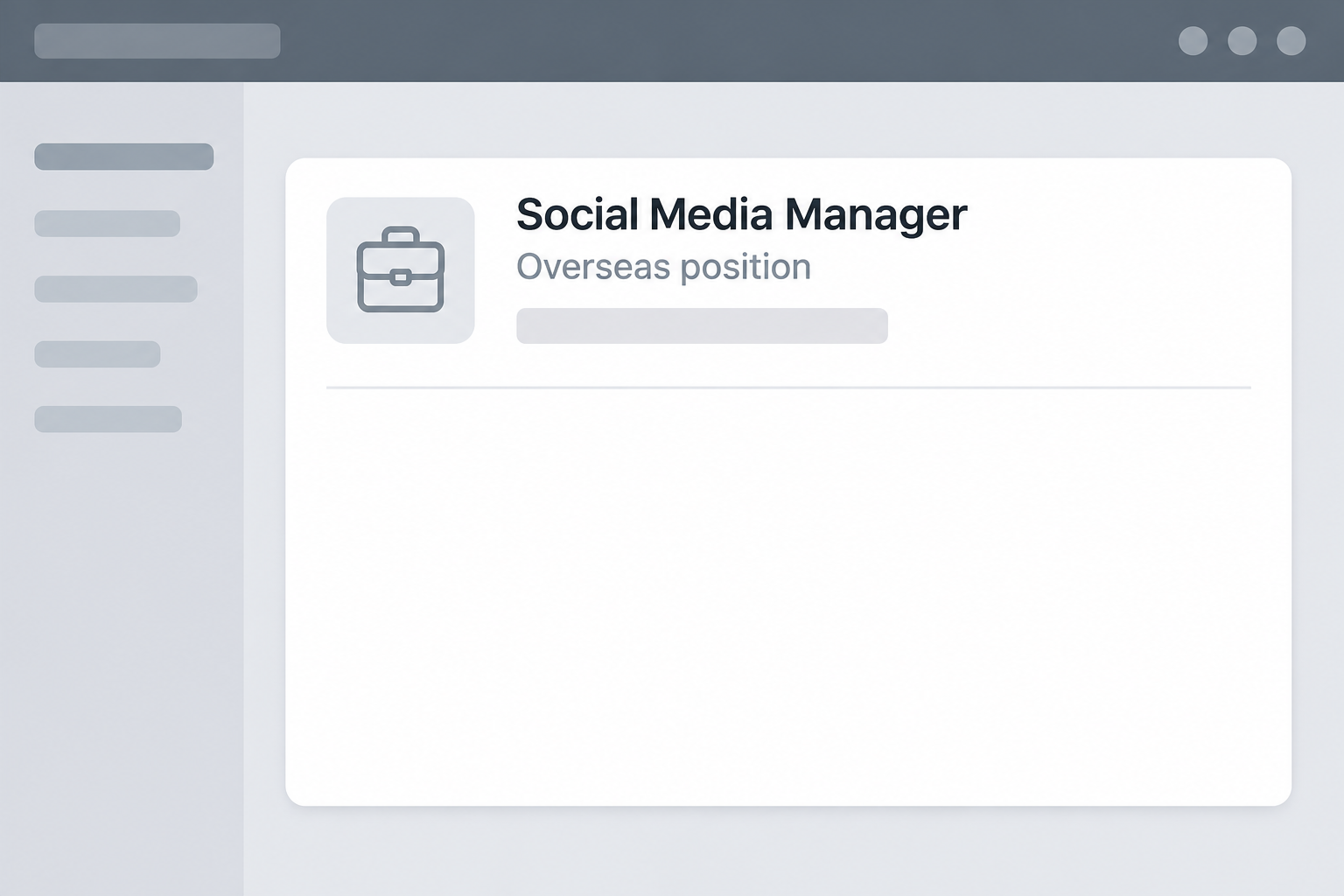
In The Guardian’s investigation, a Ugandan woman called Sarah described being promised a social media job in Laos. The report uses a different name to protect her identity.
Instead of the job she expected, Sarah said she was moved among three scam compounds in the Golden Triangle. There, she was forced to take part in online fraud.
Another survivor in the report, a Lao woman called Ketsana, expected work as a housekeeper.
A third accepted what she thought was factory work in Thailand but ended up in Myanmar.
The image illustrates the type of offer described. It isn’t a screenshot of an advertisement seen by Sarah or any of the other women.
Why There Are Two Sets of Victims
The workers in these accounts were deceived about jobs and put into conditions they couldn’t freely leave. The people they were made to contact could also lose money.
INTERPOL documents both sides of this crime. Deceptive job offers can trap workers, while the operation targets other people with investment fraud and other online scams.
That does not mean every person who sends a fraudulent message was trafficked. It does mean a person being forced to send those messages can need protection as a victim.
What to Verify Before You Agree to Travel
- Identify the legal employer, the worksite, the hiring manager, and any agency arranging the job.
- Confirm those details separately rather than using only the links or contacts sent by the recruiter.
- Check what work permission you would need with an official government source for that country.
- Keep control of your original documents and make an independent plan to leave if the job changes.
- Share the agreed worksite and travel plan privately with someone you trust.
An actual company can be impersonated, and a real recruiter can still be offering an unverified placement. Check who’s responsible for the job before treating the paperwork as confirmation.
How Fake Overseas Job Offers Lead to Scam Compounds
Step 1: The Job Sounds Ordinary Enough to Accept
Sarah expected to work in social media, and Ketsana expected to work as a housekeeper. Neither offer had anything to do with crypto trading.
That is one reason a person can miss the risk. They may be deciding between familiar jobs rather than evaluating what they think is a suspicious overseas opportunity.
Ask for the employer’s legal name and the full address where you would report to work. A city name or a promise to explain after arrival is not enough.
If an agency is involved, check that it’s authorized where required. Then confirm through the employer that it uses that agency and recognizes the role on offer.
Step 2: The Recruiter Becomes Your Only Source of Information
A recruiter might arrange legitimate paperwork or travel. It becomes harder to check the situation when the same person controls every document and answers every question.
The FBI’s warning about false overseas jobs describes cases involving misleading employment ads, altered conditions, and control over people’s documents once they arrived.
Make your own checks while you can still decide freely. Find a public business number or an official licensing record that does not come from the person making the offer.
Get the worksite and travel details in writing. Store them somewhere you can access without the phone number or account the recruiter sets up for you.
Step 3: The Work or Destination Changes
The Guardian described a woman who expected factory work in Thailand but was taken to scam operations in Myanmar. That is not a routine change of shift or office.
A new pickup point, employer, or border crossing deserves independent verification. It can be safer to stop and check while you’re somewhere public than to accept a change in transit.
If you’re free to leave and something doesn’t match, don’t go on to an unfamiliar site to settle the issue. Contact a trusted person or your consulate from somewhere safe.
If you are already being controlled or watched, prioritize your safety. Don’t challenge the people holding you or send messages that could put you or someone else in danger.
Step 4: Control Replaces the Promised Employment
Being prevented from leaving or pressured to do work you never agreed to changes the situation. This is no longer a normal disagreement with an employer.
The people interviewed by The Guardian described being forced to deceive others online. That was not the job they accepted before they set out.
If you believe someone is being held, give the information to appropriate authorities or consular staff. Don’t attempt to negotiate their release through the same contact that arranged the job.
A family can report suspected exploitation without proving the site’s ownership. Give what you actually know, and explain which details are still uncertain.
How to Check an Overseas Placement Before Accepting
Get a Second Source for the Employer and Worksite
Ask for the business name exactly as it appears on its records. If the country has a public register you can use, open it yourself and check the entry.
Even a matching entry isn’t enough. Call the employer using contact information you found independently and ask whether it can confirm the recruiter, job, and address.
If it is a subcontracted placement, ask who pays you and who supervises you. Find out who actually operates the building where you’ll spend the working day.
If the employer will not confirm the placement, postpone it. A private introduction from a friend or relative can be genuine without answering these questions.
Check the Work Permission and Travel Route Separately
Use the destination country’s official immigration website or embassy to see what permission the job requires. A recruiter should not be your only source on whether you can work lawfully.
Then check your own government’s travel advice for the specific province and district. The US advisory for Laos, for example, warns about special economic zones including the one in Bokeo.
A national overview can miss the risk around an individual site. Compare the actual workplace and transfer route with the areas the advisory discusses.
Don’t agree to an unexpected border crossing because someone tells you it will be quicker. Pause the journey if you can safely do so and verify the change.
Give Somebody a Plan They Can Act On
Share the employer’s name, the work address, travel references, and a local contact privately. Agree when you will check in and what they should do if you miss it.
Give that person your embassy’s or consulate’s contact details. Save a copy yourself somewhere you can reach without relying on the recruiter’s phone or internet access.
Avoid sending original documents to someone who hasn’t explained why they need them. For any legitimate submission, verify the recipient and how the documents are collected and returned.
What a Family Can Include in Its First Report
Put the Last Confirmed Facts First
Start with the person’s last confirmed location and the time of the last contact. Say what the person reported directly and what you learned from the recruiter.
Mention changes to the intended route, the job, or the person expected to meet them. If a detail was never independently checked, tell the official before they rely on it.
If they’ve said a call could put them at risk, explain that at the start. Ask the official how to pass on updates safely.
Keep One Private Record of Replies and Case Numbers
Write down which agencies or consular staff you spoke with and which file number each gave you. That helps someone else in the family follow up without repeating the search.
Preserve new demands or messages if that doesn’t put anybody at risk. Tell the official about threats or deadlines before deciding what to say to a person demanding money.
Don’t mistake an unverified private contact for the agency handling the report. Check any claimed role through the agency’s own number before sharing documents or travel details.
What to Do if You Have Fallen Victim to This Scam
Stop before you travel if you cannot verify the placement.
Tell a trusted person where the offer came from and which details changed. Don’t send more money or documents while the employer or worksite remains unverified.
Contact the genuine employer or agency independently. If someone else booked the tickets, check cancellation or changes directly with the airline when you can do so safely.
Seek immediate help if you are being prevented from leaving.
Contact local emergency services or your country’s consulate if it is safe to do so. If communication is monitored, prioritize safety and use a trusted channel when you can.
State that you may be held or forced to work. Give your last known location and any information that makes it unsafe to call you back.
If a loved one may be trapped, report it as a safety issue.
Contact the nearest relevant consular office and local police through independently verified details. Share the itinerary, last contact, worksite information, and any immediate threats.
Keep the file number and ask how to provide updates. Don’t post identifying travel or location details publicly or pay strangers who claim they can arrange a rescue.
Save the evidence you already have without creating new risk.
Keep the offer, receipts, travel bookings, contact names, and message timestamps. Write down which details you verified yourself and what the recruiter told you.
Don’t ask someone in danger to collect photographs or send them from a monitored device. A report with limited information is safer than one that requires them to take risks.
Deal with payment and identity risks when it’s safe.
Contact your own bank if you paid a recruiter or shared payment details. Give the dates and actual recipient, and ask what dispute or recall process applies.
If you lost control of an identity document, ask the issuing authority or consulate about replacement and possible misuse. Don’t send sensitive data to a supposed recovery service.
Request support after the immediate emergency.
Ask consular staff or local authorities about victim services, medical support, and safe arrangements for returning home. Tell them if authorities or others have misunderstood why you were there.
If you are reporting from the United States, the FBI’s trafficking information can help you find the appropriate reporting channel for a US connection.
Frequently Asked Questions
Was Every Overseas Job Advertised in This Way a Scam?
Real employers recruit overseas and may use agencies. A legitimate offer still needs a verifiable employer and worksite, plus a way to check the conditions without the sender.
Don’t assume a particular role is safe because it usually exists. The fake offers reported in these cases named ordinary jobs, not work inside a scam operation.
Does a Ticket or Work Contract Prove the Offer Is Real?
A booking shows that someone made travel arrangements. A document shows what it says, but not necessarily that the named employer issued it or that the work exists.
Verify both separately through the airline and the employer. Ask who will have control over your travel or documents once you arrive.
What If the Recruiter Says the Worksite Will Be Revealed on Arrival?
Do not travel on that basis alone. You need an address, an independently confirmed contact, and time to check how you would safely get there and back.
If they supply the address late, postpone the trip until you’ve checked it. You shouldn’t have to be en route before basic employment details become available.
Is Someone Who Was Forced to Send Scam Messages Also a Victim?
Someone held and forced to work may be a victim of trafficking. The people deceived online can also be victims of the financial fraud.
Describe any coercion to authorities or a qualified adviser without assuming how they will handle the case. Save relevant information only when it’s safe.
What Should a Family Do if a Recruiter Demands Money to Release Someone?
Treat it as an urgent safety matter and report the demand. Keep the message and speak to police or consular staff through a separately found official number.
Don’t assume the sender can secure anyone’s release or that paying ends the danger. Follow guidance from the officials handling the case.
What If All I Know Is the Last Place They Contacted Me From?
Start there and tell the reporting official when that contact happened. Add the advertised worksite, employer name, and itinerary if you have any of them.
Don’t wait to identify the building yourself if someone may be in danger. Record which location is confirmed and which one came from the recruiter.
The Bottom Line
Don’t travel for an overseas job until you have independently checked the employer, worksite, and work permission. Keep your own documents and an independent way to leave.
If someone may already be held or forced to work, treat it as a safety emergency. Contact appropriate authorities or a consulate through a safe, verified channel.

Join the discussion
0 commentsShare your experience or ask a question about this article.
Community experiences
Did this happen to you?
Your experience could help someone recognize the same scam. Submit a private report for our team to review.
I experienced this tooReports are reviewed before publication. Sharing publicly is always your choice.
Discussion
Start the conversation
Have a question or something useful to share? Add the first comment.