


An insurance claim came with something stronger than a written explanation: a video. At first, it seemed to show what had happened inside a parked car.
The damage and the footage were real things investigators could examine. The question was whether the story connecting them was true.
Overview
What Investigators Found in Operation Bear Claw
The California Department of Insurance says a claim attributed interior damage to a bear at Lake Arrowhead. The vehicle was a Rolls-Royce Ghost, and the claim included video.
Investigators concluded the figure in the footage was a person in a costume. They identified two similar claims involving other vehicles and different insurers.
The Guardian covered the court outcomes. In April 2026, the department reported three felony insurance fraud convictions following no-contest pleas.
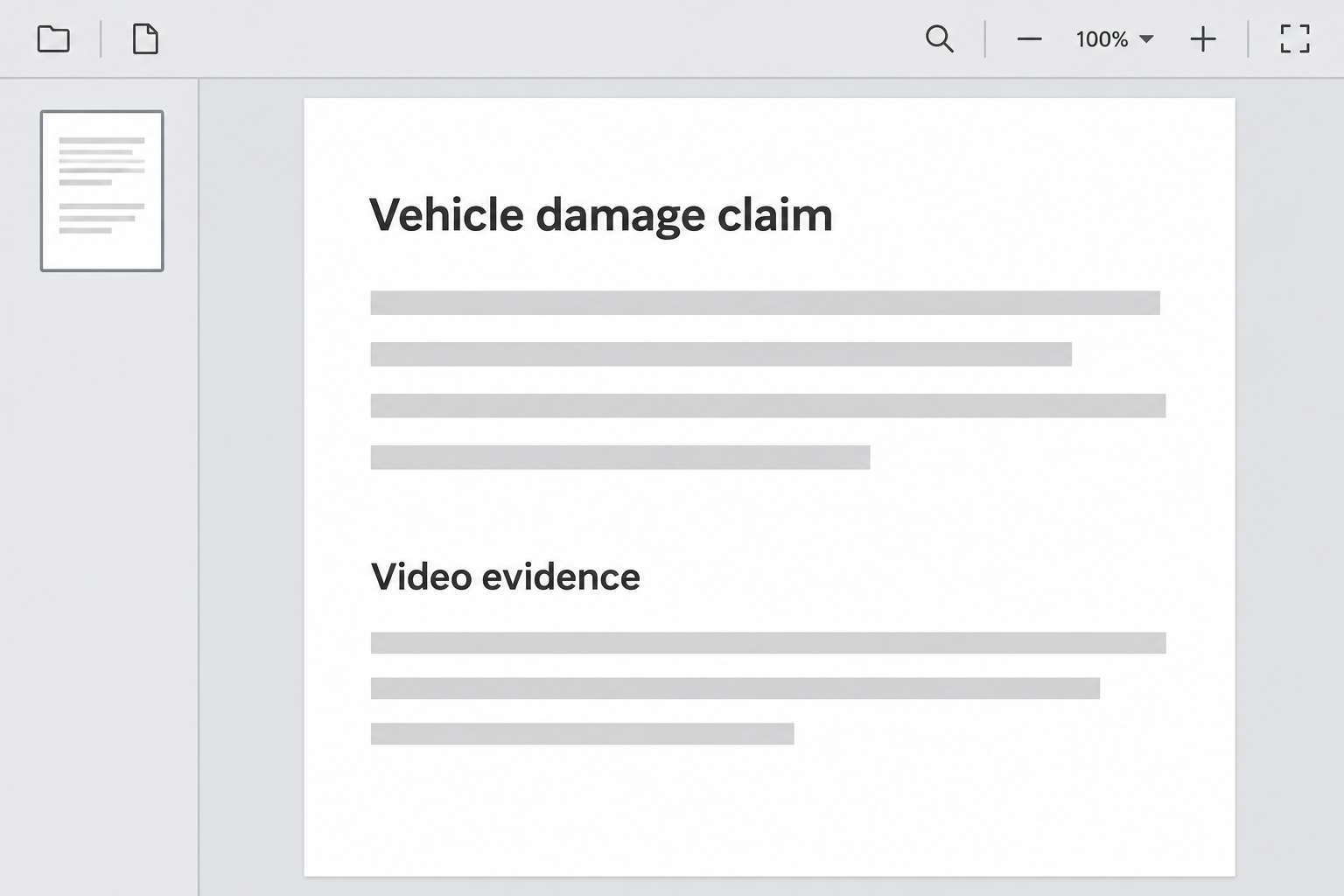
The lead image illustrates a claim file with a video attachment. It does not reproduce the submitted footage or any of the insurers’ records.
A Video Can Be Real and Still Support a False Story
The central claim was that the video depicted a real animal causing damage. Seeing the file and verifying what it showed were two different tasks.
The department brought in a wildlife biologist to assess what was shown. That review helped challenge an explanation that an ordinary viewer might have taken at face value.
There is a distinction between observing damage and deciding what caused it. You can observe the first accurately and still be mistaken or misled about the second.
What to Check Before Approving a Claim Prepared by Someone Else
- Read the cause of loss in the draft claim, not just the repair total or vehicle description.
- Remove statements that say you witnessed something you didn’t see.
- Compare the dates, location, and vehicle details with your own records.
- Keep original photos and footage separate from copies someone has shortened or annotated.
- Send corrections directly to the insurer through a channel you know is genuine.
This case involved false claims, not a general reason to distrust people reporting animal damage. Real damage deserves an evaluation based on what actually happened.
How the False Auto Insurance Claims Came Apart
Step 1: The Claim Linked Real-Looking Damage to a Specific Cause
The first claim said a bear damaged the interior of a parked car. That is a statement about the cause of the damage, not just a description of its appearance.
The distinction matters because a policy can handle different causes differently. A claim marked as animal damage should not be based solely on somebody saying the marks look that way.
If you find damage after returning to your vehicle, tell the insurer when you noticed it. Explain how you learned anything else, including who provided any footage.
Let the insurer decide what else it needs. You can supply useful evidence without trying to settle the question of cause yourself.
Step 2: The Attached Video Appeared to Confirm the Story
The insurer received a recording alongside the claim. The presence of a video gave it something to examine, but did not allow it to skip verifying what the recording depicted.
A video can capture a real event without proving that the event happened as described. It may show a moving figure without establishing its identity or role.
If someone sends you a clip to use for a claim, tell your insurer where it came from. Preserve the original file and note whether you know who recorded it.
Don’t sign a description just because somebody says the video proves it. A claim form should distinguish your personal knowledge from what another person has told you.
Step 3: Investigators Compared More Than One Claim
The department found two other submissions with the same date and location involving Mercedes vehicles. The claims had gone to separate insurance companies.
What looked unusual in one file became more significant when compared with the others. It was still for investigators to work out what the similarities meant.
For a customer, that is a reason to give the insurer enough information to check. Claim numbers, original dates, and copies of communications are more useful than a theory.
Do not try to track down a person because you think their story resembles one you saw online. Report discrepancies through an official route instead.
Step 4: The Investigators Checked the Physical Evidence
Investigators sought an independent view of the footage rather than relying on the label attached to it. They also reported finding the costume during a search.
The April announcement says the three false claims caused insurers losses totaling $141,839. That figure describes the insurers’ losses, not a reimbursement figure for individual drivers.
Three people were sentenced after no-contest pleas. The department reported 180 days in jail for each, plus supervised probation, with the individual restitution outcomes described in its announcement.
Those outcomes concern the three people named in the sentencing announcement. They are not findings that every participant in every associated claim was convicted.
How to Review a Vehicle Claim Without Guessing What Happened
Keep the Damage Description Separate From the Cause of Loss
Start with the parts of the vehicle you can see were affected. Write down when you first saw the damage and where the vehicle was at that time.
If a neighbor, shop, or bystander gave you additional information, say who it came from. Don’t put their account in the form as something you personally saw.
You can ask your insurer how it handles uncertainty. In a truthful claim, saying you don’t know when or how something happened is better than filling in a likely story.
Ask which parts of the claim it still needs to confirm. Then keep the replies and any written corrections in the same record.
Check What You Authorized Someone Else to Submit
An estimator may document the work needed to repair a vehicle. That does not mean the estimator can tell your insurer what happened before they saw the car.
If a broker, shop, or other person sends photos or an estimate, ask for the version going to the insurer. Check that it identifies the right car and damage.
If you see a statement you can’t verify, ask the sender to correct it. Tell your insurer directly if the original was already submitted under your name.
Keep the first version and the correction. You don’t need to overwrite the original file to make sure the corrected account reaches the right person.
Use the Right Route for Pricing Disputes and Suspected Fraud
A repair quote you disagree with is not necessarily fraud. First ask for the estimate the insurer used and a written explanation of how it reached the decision.
If there’s a suspected false claim or someone is using your details without permission, report that specifically. A payment dispute and a false statement are different concerns.
In California, the department’s consumer contact page distinguishes insurance complaints from suspected fraud. Use the route for the issue you’re reporting.
Ask the insurer whether it has other submissions under your name or policy. Save its response rather than assuming one correction will resolve every related record.
What an Unknown Claim Notice Does and Doesn’t Prove
Check Whether It Is Actually From Your Insurer
If an email or text mentions a claim you don’t recognize, open the insurer’s established app or website yourself. Check whether the same claim appears in your account.
If it doesn’t appear, call the number on your policy documents and ask whether the notification is genuine. Don’t give a caller the identity details they need to identify you.
If it does appear, ask when the insurer received it and what information it used. Explain why it doesn’t match your own vehicle history or the repairs you requested.
Ask What Record Will Remain After the Review
Ask whether the insurer will mark the claim as disputed while it checks the information. Get the case reference and the date it expects to respond.
If the insurer later says it corrected a record, ask what it changed. A corrected description of the damage and a correction to the policyholder’s claim history solve different problems.
If you receive any separate paperwork, compare it with the insurer’s written response. Follow up with the verified insurer rather than replying to whoever sent you the unfamiliar notice.
Keep Repairs and Evidence From Getting Mixed Up
If the car needs work before an inspection, ask the insurer what it wants documented before repairs start. Don’t drive an unsafe vehicle in order to preserve its condition.
Save the estimate, the dates the vehicle was in the shop, and pictures taken before repair. That gives you a record without requiring anyone to recreate an event.
What to Do if You Have Fallen Victim to This Scam
Contact your insurer through a number or account you found independently.
Say whether a claim was opened without your knowledge or whether the information in your own claim is wrong. Give the policy number only through the verified channel.
Ask who is handling the issue and get a reference. If you discovered more than one submission, ask the insurer to note the separate dates and claim numbers.
Preserve the unedited evidence and any claim paperwork.
Keep original photos or footage, messages, repair estimates, and notifications. Save copies for sharing instead of changing the originals.
Write down when you received each item and which parts you can confirm firsthand. Avoid forwarding sensitive files to an address that contacted you unexpectedly.
Tell the insurer exactly what needs to be corrected.
Identify the sentence, date, amount, or attachment that is wrong. Explain what you observed and where you learned anything you didn’t see personally.
Request written confirmation that your correction was received. Ask whether you should give a separate statement rather than accepting a form already filled out by somebody else.
Report suspected misuse through the correct regulator.
In California, open the Department of Insurance fraud reporting page and choose the route for members of the public. Describe why you believe a submission is false.
Use the regulator for the relevant jurisdiction if you live elsewhere. Keep the reporting reference and share it with your insurer if requested.
Protect any account or payment information involved.
If someone accessed your insurance account, change its password through the real provider and check the contact and payment details. Ask the provider to remove access you didn’t authorize.
Tell your bank if somebody used or received your payment information. An insurance report by itself does not make a financial institution aware of an account problem.
Don’t confront anyone or repeat an accusation publicly.
Give insurers and authorities the facts you have, including what you aren’t sure about. Keep names, photos, and claim records out of public posts.
If someone is threatening you or you think you are in immediate danger, contact local emergency services. Do not arrange a meeting to obtain evidence.
Frequently Asked Questions
Did a Real Bear Cause the Damage Shown in the Claim?
California investigators concluded that the figure in the submitted footage was a person wearing a costume. A wildlife biologist helped evaluate what the video showed.
That finding is specific to the evidence in this case. It doesn’t tell you whether wildlife caused damage to another vehicle you’re trying to assess.
Was the $141,839 the Amount Each Person Had to Repay?
No, the figure represents the total losses the department attributed to the three false claims. Individual restitution decisions were reported separately and were not identical.
Use the department’s sentencing announcement to distinguish the figures. A restitution order also doesn’t establish that the full amount has been collected.
Can I Submit a Claim if I Don’t Know What Damaged My Car?
Explain what you observed and when you noticed it. Ask what documentation your insurer needs without assuming a cause just to complete the form.
Your insurer can tell you how to continue under your policy. Keep your description accurate even if another person says they know what happened.
What if Someone Opened a Vehicle Claim With My Information?
Contact your actual insurer promptly and ask which claim was filed. Verify that you are speaking to the insurer before sharing identity or policy details.
Review the account for changed contact information and ask the insurer how it will follow up. If someone used your identity elsewhere, report that separately too.
Is Every Incorrect Claim a Criminal Offense?
An honest mistake is different from knowingly submitting a false account. If you spot an error, tell the insurer what happened and ask how to correct it.
This article describes a case with convictions, not a rule for deciding what happened in a different claim. Keep the evidence and let the proper authority review it.
Can I Report a False Claim if I Am Not the Policyholder?
California has a reporting route for members of the public. Submit what you know without using another person’s account or trying to obtain private records yourself.
State how you obtained the information and provide any claim reference you legitimately have. The regulator can decide whether it needs anything further.
The Bottom Line
Use original evidence and describe only what you know in a vehicle claim. A convincing attachment is not proof that the explanation beside it is true.
If someone submits a false account under your name, contact your insurer through its verified channel. Preserve the documents and report suspected fraud to the appropriate authority.

Join the discussion
0 commentsShare your experience or ask a question about this article.
Community experiences
Did this happen to you?
Your experience could help someone recognize the same scam. Submit a private report for our team to review.
I experienced this tooReports are reviewed before publication. Sharing publicly is always your choice.
Discussion
Start the conversation
Have a question or something useful to share? Add the first comment.