


The text opens into a document that looks more official than the message that carried it. There’s a court-style heading, a deadline, and a name you can look up.
Finding that name on a government website might seem reassuring. In this case, looking up what the person actually does tells you more than the signature does.
Overview
What Denver County Court confirmed
The fake Paul López court notice is a text-message scam about an alleged traffic violation. It uses a real Denver official’s name to make a payment request look legitimate.
Denver County Court’s warning, issued with the Denver Clerk and Recorder, confirms an impersonation of the State of Colorado. The court says the signature attributed to López was fake.
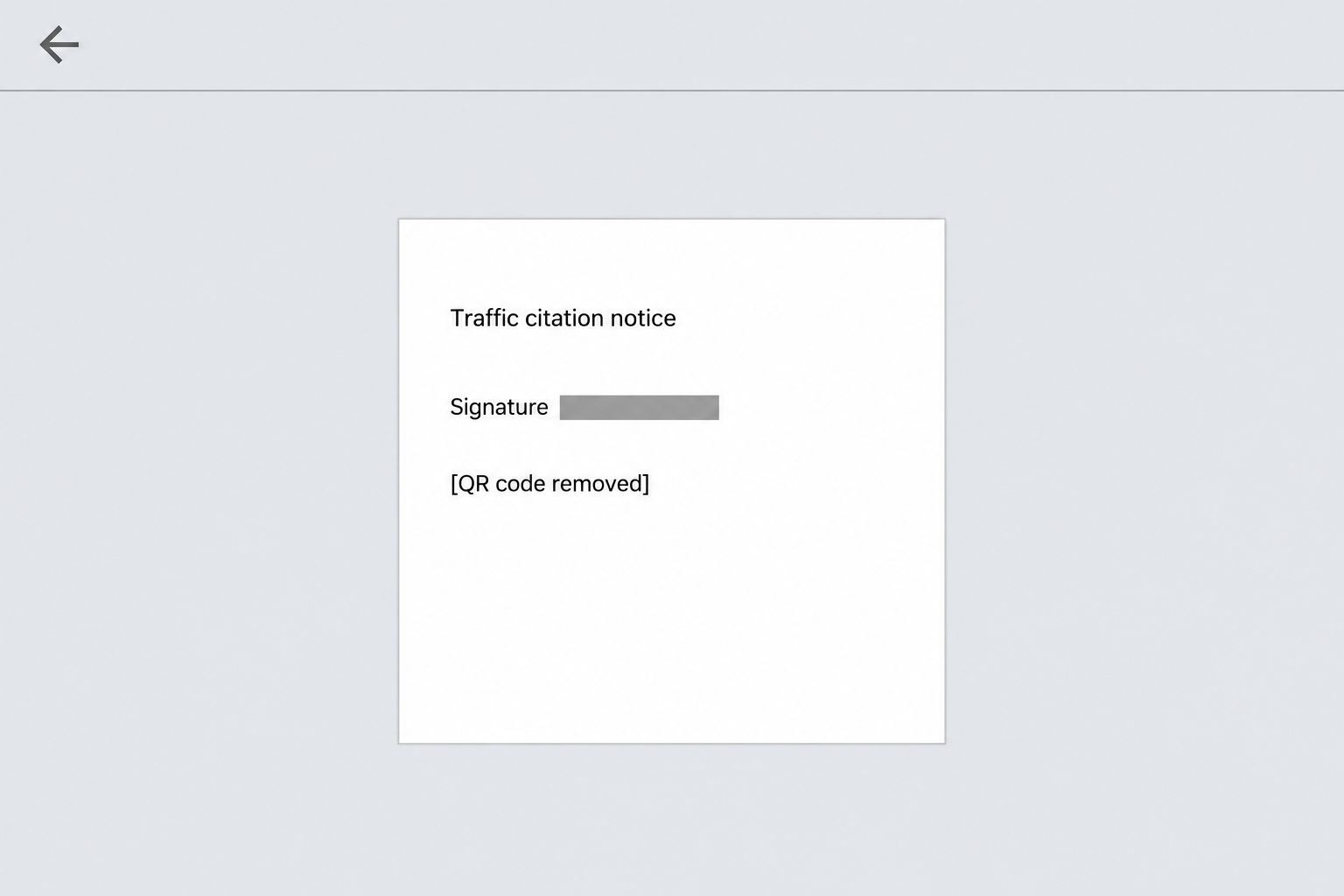
The illustration above represents the kind of notice the court described, not a copy of the original. It leaves out the signature, contact details, and machine-readable code.
The real clerk and the fake title are different things
López is Denver’s Clerk and Recorder. His office handles elections and public records. Questions about a Denver County Court traffic case go to the court instead.
The text uses a real name as if that settles the matter. It doesn’t show that the clerk issued the notice or that the court recorded a violation.
The borrowed name isn’t limited to notices labeled Colorado. Researchers examining a New York variant found it assigned to a supposed New York court role, too.
The QR code doesn’t verify the notice
The court warned readers not to scan the code. A QR code can open the sender’s chosen address. It doesn’t tell you where the document came from.
- The document’s heading tells you who the sender wants you to think is involved.
- A real official’s name can be copied into a document that official never signed.
- A genuine ticket or hearing must be checked through the appropriate agency or court reached independently.
How the Fake Paul López Court Notice Scam Works
Step 1: The text makes a routine ticket feel like an urgent court matter
The hook is an unpaid citation or a notice that a balance has gone into default. It can reach you without any earlier contact about the supposed ticket.
An image makes the message feel different from a regular payment text. You aren’t just reading a request anymore; you’re looking at something that resembles official paperwork.
People who recently parked downtown or drove a toll road may see a natural explanation for the notice. Remembering a trip doesn’t establish which agency, if any, recorded a violation.
The useful question is where the matter would be recorded if it were real. That gives you something to check without touching the image’s payment instructions.
Step 2: The notice borrows a name you can verify, then assigns it the wrong role
A search for López turns up a genuine city page. If you’re moving fast, that might seem like proof the sender knew who would handle the matter.
The same page tells you why that conclusion doesn’t follow. Denver’s elected Clerk and Recorder is different from the staff who handle traffic cases for Denver County Court.
Even a correct spelling can’t bridge that gap. Finding the person confirms a public identity, not who signed the attachment or whether the court authorized it.
The New York finding makes the point concrete. A notice bearing New York’s name can still reuse the name of a Denver official who’s not the New York case contact.
Read the name, job title, and place as separate claims. A search result that confirms one of them doesn’t make the other two accurate.
If a family member asks whether the signature is real, show them the official’s role on the city’s website. There’s no need to compare handwriting or open the QR destination.
Step 3: The document turns uncertainty into a deadline
Court language makes waiting sound risky. If you believe a case has already reached default, you might pay before working out whether any case exists in the first place.
An unfamiliar case number doesn’t settle that question. Keep it for an independent check, but don’t assume a printed number means the notice came from a real docket.
A claimed deadline isn’t a reason to postpone calling the actual court. If you also have genuine paperwork, the verified deadline on that separate record still matters.
If the image arrives on a weekend, you can save it without doing what it says. Use the published office hours and official portal to decide when someone can help.
Don’t try to resolve the fear by sending a message back to the sender. The people who supplied the notice aren’t the ones who can verify its authority.
Step 4: The payment route leaves the real court out of the process
The QR code gives readers a way to act without typing any address. That convenience is the part to question, even if the page opens without a warning.
A scam page may look like a payment portal but ask for information unrelated to checking a ticket. An unfamiliar page has no reason to get your card before verification.
The court’s warning establishes a fake notice and a deceptive QR request. It doesn’t establish which fields every version shows or how much each recipient was asked to pay.
Treat sensitive details you typed as exposed, even if the page displayed an error. Your bank can help you respond without needing a working copy of that page.
Step 5: The fake notice and the real records may tell different stories
A confirmation on a page reached through the text doesn’t prove the court received a payment. A real citation, if one exists, still needs to be handled through its issuer.
An unfamiliar charge can be a separate event from the amount printed on the notice. Give the bank the transaction it can trace, not just the total the message claimed.
If someone later offers to correct the payment or clear the case, start over through the real agency. Don’t let a follow-up caller choose where you send money next.
Keep any genuine paperwork apart from the fake notice. When you call, that makes it easier to explain what came from the issuer and what arrived unexpectedly by text.
How to Check a Denver Citation Without Using the Text
Start with the actual issuer, not the signature
Use an original ticket or another trusted record you already have to identify the agency. A municipal summons, a state penalty assessment, and a parking ticket can follow different processes.
Colorado’s ticket guidance distinguishes state penalty assessments from municipal citations and summonses. It also directs parking and photo enforcement questions to the issuing city or agency.
If the notice combines parking, tolls, and a court appearance, don’t try to guess which label is correct. Ask the institution identified independently whether it handles the alleged matter.
Check traffic cases through Denver County Court
Start from the court’s Traffic Division page and follow its information about the official portal. The court distinguishes tickets that are eligible for payment from matters that require an appearance.
Don’t pay a real ticket just to end the worry if you plan to contest it. Colorado’s guidance explains why paying a ticket and challenging one aren’t the same choice.
If you can’t verify a record online, use the court’s published contact directory. It’s a better starting point than calling a number typed into a forwarded image.
If another person was driving your vehicle, ask them about the trip before drawing conclusions. Keep their explanation separate from what the issuing agency can confirm in its records.
Consider what you are trying to check before choosing an office. A traffic case number, a parking citation, and a question about license status aren’t interchangeable.
When the court confirms a real record, write down which case it found and the next step it gave you. Use that information, not the screenshot, to follow up.
Keep out-of-state claims separate from the Denver warning
The same printed name can appear under different letterheads. If a notice names another state, use that jurisdiction’s official site and don’t assume Denver can answer for it.
You don’t need to identify the sender before reporting the notice. Explain how it reached you, what it claimed, and what it asked you to do.
You can warn a relative without forwarding a QR image. Describe the false signature and tell them where to check, especially if they’re helping someone else manage their mail.
If you drove the toll road mentioned in the text, check your toll account or the operator’s official site. The attachment doesn’t replace your account history.
What to Do if You Have Fallen Victim to This Scam
Start with what you actually did. Seeing the notice, opening a link, giving up payment information, and making a payment are different situations that call for different responses.
- Close the message and any page it opened.
Don’t try the code from a different device just to learn where it goes. If you read the notice but didn’t follow it, report or delete it without interacting.
If you opened a page without entering details, approving anything, or installing anything, the exposure is different. Check for unwanted downloads and remove any notification permission you granted.
- Call the issuer if you entered a card number.
Use the number on your card or the bank’s official app. Say your card details were entered on a page pretending to handle a court citation.
Ask about securing or replacing the card. Report any unfamiliar payment or approval separately, including what you remember seeing on the prompt and when it appeared.
- Explain any payment as precisely as you can.
Give the payment provider the amount, time, and method you actually used. Ask whether a pending payment can be stopped or a posted transaction can be disputed.
Save a bank receipt rather than making another payment to collect proof. A charge reversal request is a separate process from a report to the court.
- Protect any other sensitive information you submitted.
If you typed a password, change it on the real service. Replace it wherever you reused it, starting with the email account that receives recovery messages.
If you disclosed a Social Security number or identity document, use IdentityTheft.gov to review steps for what was exposed. Don’t send another copy to anyone who contacts you unexpectedly.
- Report the text and keep the useful records.
Save the sender, receipt time, and what the notice claimed. If you share a screenshot publicly, cover private information and the QR code before posting anything.
The Denver Sheriff’s Department provides local reporting options. Contact the police if you were threatened or lost money, and keep the reference number with your bank dispute.
Check the device only if the page prompted another action
If you opened an unexpected download, use a trusted device for banking while the affected device is checked. An updated Malwarebytes scan can help assess a downloaded file.
AdGuard can help block some known malicious sites, but it can’t tell you whether the court has a case on file. Neither tool recovers money already sent.
Make subsequent calls their own verification problem
If a new caller can quote the amount you paid, take it as information, not proof of their role. The caller may have learned it from the first interaction.
If someone claims a refund requires a new payment, end the call. Your bank can explain what it needs without making you use the person who got you there.
Keep the case report, bank dispute, and genuine ticket in separate notes. That helps you answer follow-up questions without mistaking a bank reference for a court case number.
Frequently Asked Questions
Did Paul López send these notices?
Denver County Court says its documented example used a fake signature. The actual Clerk and Recorder’s name was borrowed to lend authority to a notice he didn’t issue.
Is the Clerk and Recorder the same as the Clerk of Court?
They are different offices in Denver. Direct questions about a Denver County Court traffic case to the court using contact details found through its official site.
Could the name appear on a notice from another state?
Yes, researchers found the same name on a fake New York notice. That observation doesn’t tell us whether the same people sent both documents or how many versions exist.
Can I scan the QR code just to preview the address?
You don’t need to scan it to check the citation. An independently found court website or contact number answers the question without opening the sender’s destination.
Should I ignore every notice if I recently got a real ticket?
Keep the ticket you received through the genuine process. Confirm its status and any appearance requirement with the correct issuer, without using instructions from the suspect text.
What if my card statement shows a charge after I paid?
Contact the card issuer through an official channel and explain how the page was reached. Separately, ask the court or issuing agency whether any legitimate charge remains outstanding.
The Bottom Line
Don’t scan a court notice because it carries Paul López’s name. Denver County Court confirmed that an impersonation text used a fake signature and a QR code.
Verify any genuine citation through the issuing agency. If you entered payment details or approved a transfer, contact your bank first and save the message for reporting.

Join the discussion
0 commentsShare your experience or ask a question about this article.
Community experiences
Did this happen to you?
Your experience could help someone recognize the same scam. Submit a private report for our team to review.
I experienced this tooReports are reviewed before publication. Sharing publicly is always your choice.
Discussion
Start the conversation
Have a question or something useful to share? Add the first comment.