

Your child has found the rare color everyone seems to want. Someone online says they have it and would love to arrange a swap.
It sounds like the playground game, just with a better collection on the other side. But the conversation deserves a different set of rules.
Overview
The hobby is legitimate; dishonest offers exploit it
Fidget trading means swapping sensory toys, often based on color, popularity, condition, or what another collector wants. Trading with friends isn’t inherently a scam.
The risk changes when children negotiate online with unfamiliar traders, sellers, or supposed giveaway organizers. An attractive toy can become a reason to send money or information.
Bitdefender’s parent-safety guide highlights fake shops, unverified exchanges, giveaway fees, and privacy problems around the trend.
There isn’t one universal fidget scam
A fake seller may take payment without supplying a toy. A dishonest trader may keep what a child ships and never complete the exchange.
A false giveaway can ask for a claim fee or lead to a page collecting personal information. These are different routes, not guaranteed stages of every conversation.
Common requests worth stopping include:
- Sending a valued toy before an adult checks the trader.
- Paying a fee to collect a supposedly free prize.
- Sharing a child’s address, school, or phone number.
- Keeping the deal secret to secure the rare item.
- Signing in or installing an app through an unexpected link.
A parent should manage any exchange with an unfamiliar person
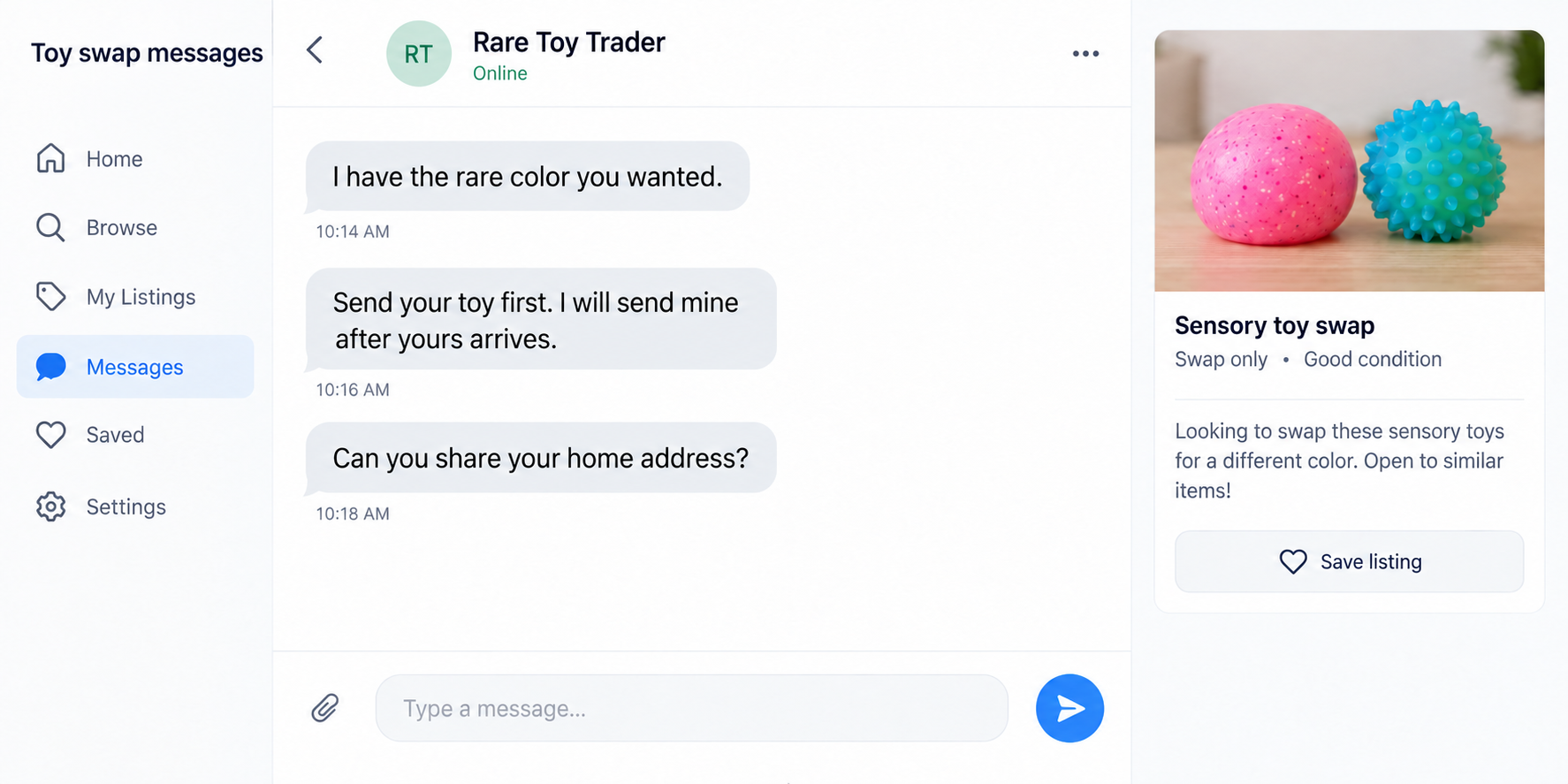
The lead image is a fictional trading conversation. It illustrates a risky request without accusing a real toy seller or platform.
Do not let a child privately send money, toys, account access, or delivery details to an unverified stranger. Adult involvement belongs before the commitment.
If a deal has already gone wrong, start calmly. Recovering the records and understanding what was shared matters more than punishing the child for asking for help.
Why a Rare Toy Can Make a Bad Deal Feel Worth It
A child may understand the toy’s value much better than the transaction’s risks. They know which color is scarce and which friend has one already.
The seller can use that excitement to make hesitation feel like losing the opportunity. Another buyer is waiting, the giveaway is ending, or this is the last one.
None of those claims proves the toy exists. They simply shorten the time available to ask an adult or check the offer.
A friendly collection video can add familiarity too. Seeing someone handle appealing toys doesn’t tell you how they treat customers or whether the account belongs to them.
The child may also confuse enthusiasm with trust. Someone who talks knowledgeably about the same hobby can feel like a friend before their identity is established.
Explain that shared interests are a reason to enjoy a conversation, not proof that an exchange is safe. The transaction still needs its own checks.
Don’t dismiss the toy as silly. If you ignore what makes it special, your child may assume you cannot understand why the offer matters.
Ask what makes this version desirable, then discuss how to obtain it safely. That keeps the conversation about protecting something they value.
How Online Fidget Trading Scams Can Work
Step 1: An appealing item attracts the collector
The hook might be a rare variation, large bundle, unusually low price, or giveaway. It matches what the child is already watching or searching for.
Real retailers and genuine collectors can offer those things too. The problem begins when the offer cannot be connected to an accountable seller or trustworthy exchange.
Keep the exact listing and account address. A disappearing story or cropped picture is a poor substitute for a record of what was promised.
Step 2: Photos and friendly messages stand in for verification
A listing photograph can be copied from somewhere else. Even a new photo establishes little about whether the person will complete a transaction.
Check whether the profile has a coherent history and whether its sales claims can be confirmed. Don’t treat follower numbers as a guarantee.
Also distinguish the toy brand from the seller. A genuine product’s popularity doesn’t authenticate everyone offering to sell or swap it.
If someone impersonates a shop, reach that shop through its established website. Don’t ask the questionable profile to supply its own verification link.
Step 3: The conversation moves somewhere with fewer safeguards
A trader may ask to continue in private messages or another app. That can make it harder for a parent to see the agreement.
It can also separate the deal from a platform’s payment or dispute process. Save the original listing before considering any change of channel.
A move to another app isn’t automatically fraud. But it shouldn’t be accepted as a reason to bypass adult oversight or lose the transaction records.
Never agree that a parent cannot be told. A genuine trade doesn’t need secrecy from the person responsible for the child’s safety.
Step 4: The child is asked to give something up first
That might be money, a prized toy, or a fee described as shipping for a free giveaway. The child commits before knowing what will return.
Postal swaps can require one participant to ship first, but that practical arrangement doesn’t guarantee either side’s honesty. Adults need to assess the whole exchange.
Don’t mistake tracked postage for protection against a dishonest trader. Tracking can show your parcel arrived without making the other person send theirs.
For a claimed prize, the FTC warns against payment to collect winnings. A fee isn’t made safe by being called handling or verification.
Step 5: A delivery or claim form asks for personal details
A real purchase needs appropriate delivery information, but a child shouldn’t negotiate disclosure privately. The adult managing the order should handle that decision.
A school name, account password, banking code, or identity document isn’t necessary for an ordinary toy swap. Don’t provide extra details to establish trust.
Photos can reveal information too: uniforms, house numbers, parcel labels, or a name visible behind the collection. Check the frame before posting.
If the page requests a download to claim the item, stop. The toy’s appeal doesn’t justify installing unknown software or granting unrelated permissions.
Step 6: Missing delivery exposes the weakness of the arrangement
The promised toy may not arrive, or contact may stop after payment. A seller might keep asking for more fees instead of resolving the order.
Don’t keep sending money because you want the original commitment to work out. Preserve what happened and use the available reporting or payment-dispute process.
A late parcel can also have an ordinary explanation. Follow the carrier and merchant records, but don’t let unverifiable excuses erase dispute deadlines.
Check the Deal Before a Toy or Payment Leaves Your Control
For a shop, identify the merchant and terms
Look for an understandable seller identity, contact route, shipping terms, and returns process. A polished product page isn’t enough by itself.
Check the full cost, including delivery and any recurring membership wording. A small price on the first screen may not be the full commitment.
Use the payment method’s actual purchase protections where applicable. Don’t send a personal gift payment to an unfamiliar seller just because they prefer it.
For a swap, decide whether the arrangement is worth the risk
An adult should know who is participating, which items are involved, their condition, and how both sides will complete the exchange.
Don’t send a cherished item your child couldn’t comfortably lose to a person you can’t verify. A rare replacement promise doesn’t remove that risk.
Consider trading within a known community instead. Familiar adults and clear rules can make disagreements easier to resolve than a private stranger-to-stranger arrangement.
For a giveaway, verify it with the real organizer
Find the promotion through the business’s existing website or established account. A message from a similarly named profile may be an impostor.
The FTC describes hijacked social-media giveaways where fake winner messages request personal or financial information.
Don’t pay a claim fee or supply account credentials to collect a toy. Report a false winner message to the platform and genuine organizer.
What to Do If Your Child Was Scammed or Shared Information
-
Thank them for telling you. Explain that you’ll work through it together. Start with what happened rather than a lecture about why they should have known.
A child who expects immediate punishment may hide the next suspicious request. Keeping communication open is part of preventing further loss.
-
Stop the exchange and additional fees. Don’t let the trader negotiate privately with your child while you investigate.
Keep the relevant account and message identifiers. Block further contact when evidence is preserved and use the platform’s reporting controls.
-
Save the agreement and transaction records. Preserve the listing, conversation, promised item, payment receipt, and any tracking information.
For a swap, record what was sent and when. Don’t publish your child’s address or private messages to shame the other participant.
-
Contact the payment provider if money was sent. Explain that the product or promised exchange wasn’t supplied and provide the records.
Ask what dispute or recovery route applies. A payment app, card purchase, and gift payment may offer different options; don’t assume a refund is automatic.
-
Check the parcel’s actual status. If your child shipped a toy, contact the carrier promptly about any available interception or return options.
Don’t promise you can retrieve it after delivery. Ask what is still possible with the specific shipment and keep the carrier’s response.
-
Address information exposure separately. Identify whether an address, school detail, password, or code was shared. Each calls for a different response.
Replace exposed passwords through the genuine service and review account access. Notify school staff if information creates a relevant safety concern.
If there are threats or attempts to approach the child, contact local authorities. Don’t have the child arrange another meeting to resolve the deal.
-
Check software only when a download or permission was involved. A lost toy doesn’t itself mean the phone is infected.
If an untrusted app was installed, use our Android malware-cleanup guide or the appropriate platform instructions.
The Malwarebytes scan guide can help with device investigation. AdGuard adds supported web filtering, not reimbursement or trader verification.
-
Agree on the next trading rule together. Make adult approval necessary before money, parcels, private details, or a meeting is committed.
Keep the rule simple enough to remember during an exciting offer. Showing a message before answering should be treated as a good decision.
A Conversation That Helps More Than Taking the Toys Away
Ask your child to explain what the trader wanted at each point. That can reveal the exact moment excitement became a risky commitment.
Then practice a short pause: show an adult the message, keep the conversation on the original platform, and don’t promise anything yet.
The FTC encourages talking with children about scam messages. Ordinary examples can teach recognition without making every online interaction sound frightening.
Use the hobby’s own language. Ask whether the toy’s condition matches the description or why an unfamiliar seller wants a bank code for a swap.
Keep ownership and privacy decisions separate from toy value. Even a cheap item can lead to an inappropriate request for a home address.
Let your child enjoy collecting. The boundary is the unsafe transaction, not the fact that they like a popular toy.
Check a platform’s age requirements before using it for trades. Don’t create an account with a false birth date to make an unsuitable service available.
If the exchange needs an adult account, the adult should actually manage it. Providing a login and then leaving the child to negotiate defeats that safeguard.
Agree on the full budget too, including postage. An exciting swap can stop being sensible when its costs exceed what everyone understood at the beginning.
Frequently Asked Questions
Is fidget trading itself a scam?
No. Swapping toys can be harmless fun. This warning concerns dishonest online offers and unsafe exchanges with unfamiliar people, not the hobby.
Does a toy photograph prove the trader owns it?
No. Photos may be copied, and ownership wouldn’t guarantee honest delivery anyway. An adult should assess the participant and exchange before committing anything.
Should my child pay shipping to collect a free prize?
Don’t pay an unexpected claim fee. Verify the promotion through the real organizer’s established channel, not the profile that sent the winner message.
Does tracked shipping make a swap safe?
It can document your shipment but cannot make the other participant send their item. Assess the arrangement before posting a valuable toy.
What if my child already shared our address?
Stop contact, preserve the messages, and assess any additional requests or threats. Keep adults involved and seek local assistance if a safety concern develops.
Can security software recover a toy or payment?
No. Device tools address relevant software exposure. Missing goods, payments, and trader misconduct require the carrier, platform, payment provider, or authorities as appropriate.
The Bottom Line
Don’t allow private trades, payments, or delivery disclosures to unverified strangers. A rare fidget isn’t worth bypassing adult supervision and basic transaction checks.
If your child already committed something, respond calmly and preserve the records. Pursue the actual loss or exposure, then establish a clear rule for future offers.








