


A Forcount presentation could make cryptocurrency investing feel surprisingly familiar, with enthusiastic promoters, community events and an account that appeared to grow every day.
If you still have a Forcount or Weltsys account, you may remember the promises clearly. Finding out what happened requires looking beyond that account’s balance.
Overview
A daily return with an extraordinary promise
Forcount, later known as Weltsys, promoted an investment opportunity supposedly powered by cryptocurrency mining and trading, with guaranteed daily returns and money doubling within six months.
The offer reached investors around the world, including Spanish-speaking communities in the United States. Promoters made a complicated investment sound accessible through familiar conversations and events.
You did not need to understand mining hardware or trading strategies to participate. You needed to trust the person explaining the opportunity and send money.
A guilty plea replaced the sales pitch
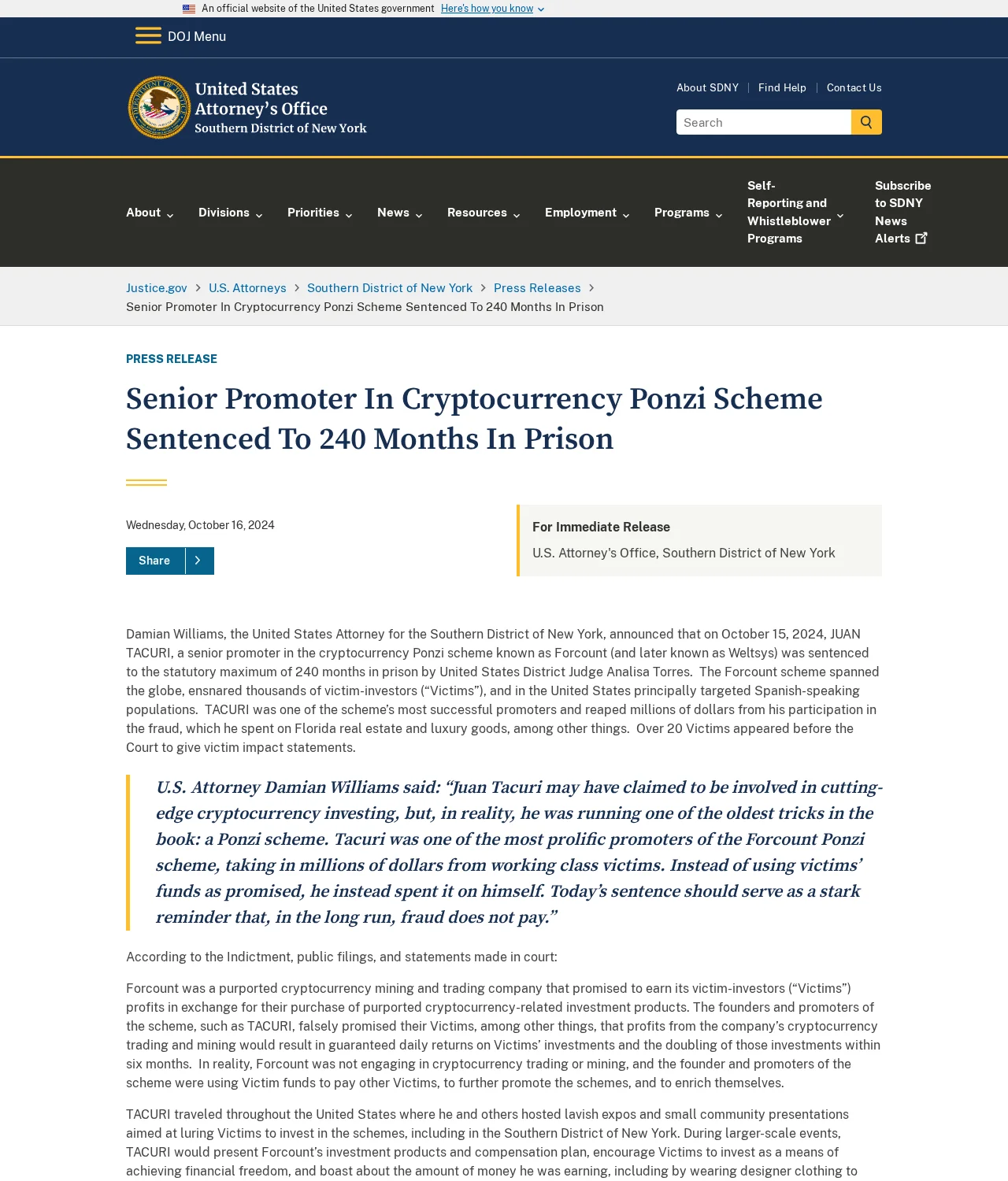
Juan Tacuri pleaded guilty to conspiracy to commit wire fraud. The Justice Department announced his 20-year sentence in October 2024.
Prosecutors described a Ponzi scheme, with incoming investor money funding payments and personal spending rather than the promised mining and trading business.
An August 2026 court order records that the Second Circuit affirmed Tacuri’s judgment in May 2026. The separate civil case still involved settlement discussions.
The clues that matter when checking your records
Someone reviewing an old account should connect the entire transaction history, rather than search only for the last brand displayed on a dashboard.
- Forcount and Weltsys were names used for the same investment scheme described by federal prosecutors.
- Account balances and supposed profits appeared online even when investors could not withdraw their money.
- Mindexcoin was later offered as a supposed solution, creating another obstacle between investors and usable funds.
- A promoter’s successful early payment did not establish that the advertised business was generating genuine investment profits.
Why Forcount Felt More Convincing Than an Anonymous Crypto Website
A website asking strangers for cryptocurrency has an obvious trust problem. Forcount’s promoters helped bridge that gap through personal contact, events and displays of apparent success.
The sales message connected the opportunity to financial freedom. That promise could carry particular weight for someone working long hours or struggling to build savings.
Designer clothing and impressive lifestyles supplied a visible answer to an invisible question: if this person had become wealthy, perhaps the investment really worked.
But a lifestyle photograph cannot tell you where the money came from. A successful recruiter can appear prosperous while the people financing that prosperity remain exposed.
Community connections also change how people judge risk. A recommendation from someone who shares your language or neighborhood can feel safer than an unfamiliar financial advertisement.
That familiarity explains the appeal without blaming the people who trusted it. The relevant failure was the false investment story, rather than an investor’s background.
Forcount combined those relationships with an online account that appeared to show progress. Together, the promoter and dashboard could reinforce each other’s credibility.
Once someone had invested, admitting doubts could become harder. Asking whether the opportunity was genuine might also mean questioning a trusted friend’s recommendation.
How the Forcount Scam Works
Step 1: Turn crypto trading into a predictable income story
The presentation offered a simple outcome from a complicated business: send funds, receive daily returns and eventually double the investment within six months.
Real mining and trading involve costs, changing prices and losses. The guarantee removed those uncomfortable variables from the sales conversation without removing them from reality.
That distinction matters because investors were buying the claimed source of returns. They were not agreeing that their payments could quietly finance earlier participants.
The official guilty-plea announcement describes the central deception behind the advertised mining and trading activity.
Step 2: Collect real money through several payment routes
Investors paid using methods including cash, checks, bank transfers and cryptocurrency. The payment format varied, while the promised investment opportunity remained essentially the same.
A conventional bank transfer could make the arrangement feel less speculative than sending coins to an unknown wallet. It still did not authenticate the underlying business.
For your own records, the method matters because each route leaves different evidence. A check image, wire confirmation and blockchain transaction identify different parts of the trail.
Preserve the recipient’s details alongside the promoter’s instructions. Otherwise, a payment receipt may show where funds went without explaining why you sent them.
Step 3: Let the account display do the reassuring
Online accounts showed purported deposits and profits. Watching the balance increase could make it seem unnecessary to ask whether those figures corresponded to money actually available.
A dashboard is controlled by whoever operates the platform. Its numbers do not become independent financial evidence simply because they update regularly or include detailed transaction labels.
Early payments can reinforce that impression. In a Ponzi scheme, returning some incoming money gives participants a persuasive story to repeat to friends.
The useful question is whether genuine business earnings funded those payments. Forcount’s criminal case established a very different source behind the apparent returns.
Step 4: Keep investors waiting when withdrawals become difficult
Withdrawal problems appeared as early as 2018, according to prosecutors. Investors encountered excuses, hidden fees and difficulty accessing funds that their accounts supposedly contained.
Waiting can feel reasonable when a balance remains visible. Someone may interpret a delay as an administrative problem instead of recognizing that the displayed money is unavailable.
However, another explanation or fee does not replace a completed withdrawal. Keep the original request, the promised payment date and every subsequent response together.
That sequence shows more than a final screenshot alone. It records what you asked for, what you were told and whether anything actually arrived.
Step 5: Offer Mindexcoin as the answer to missing money
Forcount introduced a proprietary token called Mindexcoin as a supposed way to improve liquidity. Prosecutors described it as essentially worthless and another source of investor losses.
A token conversion can change the label on an account without solving the problem that matters: whether the investor can receive spendable money outside the platform.
Accepting a new asset may also create a fresh transaction history. Save any conversion offer and the terms displayed before agreeing to a replacement payment.
Do not treat a token allocation as cash recovered. Your records should distinguish an internal balance, a received token and money you could actually use.
Step 6: Leave investors with an account instead of an investment
By about 2021, the scheme had stopped making payments. The money shown on a screen could no longer reassure people who needed an actual withdrawal.
The later criminal proceedings explain why this was more than a failed trading strategy. The promised business activity did not account for how investor money was used.
For anyone contacted about a revival, a familiar brand or former promoter should prompt questions about the original loss, rather than another deposit.
Paying again cannot repair the missing relationship between the advertised profits and the real source of funds that the criminal case exposed.
Forcount, Weltsys and the People Behind the Offer
A new brand does not create a separate payment history
Forcount and Weltsys belong together when reconstructing this case. Search your saved messages, email and payment descriptions for both names, including spelling variations.
Keep the original account identifier attached to each document. That helps connect an early purchase under one name with later withdrawal correspondence under another.
A promoter’s role can differ from your payment recipient
Tacuri was a senior promoter in the scheme. Your own funds may have passed through someone else, depending on how you joined and paid.
Identify the person who recruited you separately from the bank account holder or wallet destination. Give investigators the relationship without assuming those roles were interchangeable.
The criminal sentence and civil proceedings serve different purposes
Tacuri’s sentence followed an admitted federal offense. The August 2026 civil-court order concerns limited representation for settlement discussions.
That order does not announce a new investor payment window. A civil procedural development should not become a reason to pay an unsolicited claims broker.
An official case contact cannot promise your recovery amount
The guilty-plea announcement provides the prosecutor’s victim contact route. Use that independently sourced route when asking how to provide information about your involvement.
A case contact can explain the appropriate process. It cannot turn a screenshot balance into a guaranteed payment or replace missing evidence of your transactions.
What Counts as a Loss in Your Own Records?
Start with money actually sent and money actually received back. Keep those amounts separate from displayed profits, bonuses, reinvestments and valuations assigned to Mindexcoin.
For example, an account might display substantial growth without any corresponding withdrawal. Reporting that display as a cash deposit could confuse the financial history.
A simple spreadsheet can keep four columns: date, amount sent, amount received and supporting receipt. Add a note identifying the payment method and counterparty.
Record original currencies instead of silently converting everything into another currency. If you include an estimated conversion, label its date and keep the underlying transaction amount.
When a transaction involved cryptocurrency, include the asset and network. Similar-looking wallet addresses on different networks do not necessarily describe the same transfer.
Leave uncertain entries visibly uncertain until you find the receipt. Guessing a missing amount can create contradictions when investigators compare your account with financial records.
If you recruited someone else, preserve those communications too. They may explain what you were told, what you repeated and how additional payments entered the scheme.
If a payment left an exchange account, keep the withdrawal confirmation as well as the bank payment used to buy the cryptocurrency.
The two records explain different stages. A bank transfer to your own exchange account should not be mistaken for the later payment into Forcount.
What to Do if You Have Fallen Victim to This Scam
-
Stop paying for a withdrawal or replacement opportunity. Keep any current demand, but do not send another deposit, activation payment or token purchase to recover Forcount funds.
If a former contact offers repayment through a different program, ask for the written proposal and verify it independently before sharing additional financial information.
-
Build a transaction file before contacting anyone. Download available statements, check images and exchange receipts. Save messages showing the promised returns and your withdrawal requests.
Keep originals in a folder and work from copies. You should be able to connect each payment with a date, recipient and explanation.
-
Ask your financial provider about the specific transfer. Open its established app or use the number on your statement, then request the fraud team.
Give the transaction reference and explain the investment deception. Ask whether any recall, tracing or dispute option remains, and retain the provider’s response and case number.
Older completed payments may have no reversal route. Record that answer rather than paying someone who claims they can override the provider’s decision.
-
Use the prosecutor’s published victim contact route. Open the linked DOJ guilty-plea announcement and locate its victim-information paragraph, which lists 866-874-8900.
Before calling, prepare your name, contact details, approximate investment dates and the Forcount or Weltsys name. Ask what documentation the case team accepts.
Write down the instructions you receive. If a caller demands money instead, end the conversation and recheck the contact against the DOJ announcement.
-
Keep the account and payment evidence accessible. Retain any existing report numbers and add later communications to the same file, especially new payment promises.
Tell affected relatives what you have documented. They can compare their own records without forwarding passwords, recovery phrases or private account access to you.
-
Reject paid recovery guarantees that arrive unsolicited. Require an independently verifiable organization, written terms and a clear explanation of its actual role before discussing representation.
Never provide a wallet recovery phrase or remote computer access to someone claiming that Forcount money has been located. Those requests create a separate exposure.
Frequently Asked Questions
Were Forcount and Weltsys connected to the same scam?
Yes, federal prosecutors identify Weltsys as the later name of Forcount. Keep records under both names together when documenting an investment or withdrawal request.
Did Forcount really earn the guaranteed crypto profits?
The criminal case described promised mining and trading activity that did not generate the advertised returns. Investor money instead funded Ponzi payments and personal spending.
Does a successful early withdrawal prove the investment was legitimate?
No, a Ponzi scheme can pay early participants using later deposits. A completed payment does not establish the business source claimed in the pitch.
Was Mindexcoin the same as getting my money back?
No, an allocation of a proprietary token was different from receiving usable funds. Prosecutors described Mindexcoin as essentially worthless and another cause of losses.
Does Juan Tacuri’s prison sentence guarantee investor refunds?
No, a sentence does not establish each investor’s eligibility, payment date or recovery amount. Keep your transaction evidence and use the published case contact.
Should I pay someone offering to unlock an old Forcount account?
Do not send an unlocking payment based on an unsolicited promise. Preserve the demand and verify any claimed official role through independently published case information.
The Bottom Line
Do not put more money into a Forcount or Weltsys revival, or pay to release its displayed profits. The admitted fraud explains those broken promises.
If you already invested, organize actual payments and withdrawals, preserve the Mindexcoin records and use the prosecutor’s published contact to ask about providing victim information.

Join the discussion
0 commentsShare your experience or ask a question about this article.
Community experiences
Did this happen to you?
Your experience could help someone recognize the same scam. Submit a private report for our team to review.
I experienced this tooReports are reviewed before publication. Sharing publicly is always your choice.
Discussion
Start the conversation
Have a question or something useful to share? Add the first comment.