

Nail fungus is slow, stubborn, and embarrassing for many people. That frustration makes a fast, natural topical solution feel much more appealing than months of medical treatment.
FungiClear by Phrena enters that gap with confident promises, professional-sounding ingredients, and dramatic social proof. A closer reading reveals important questions behind the polished presentation.
Overview
What FungiClear is
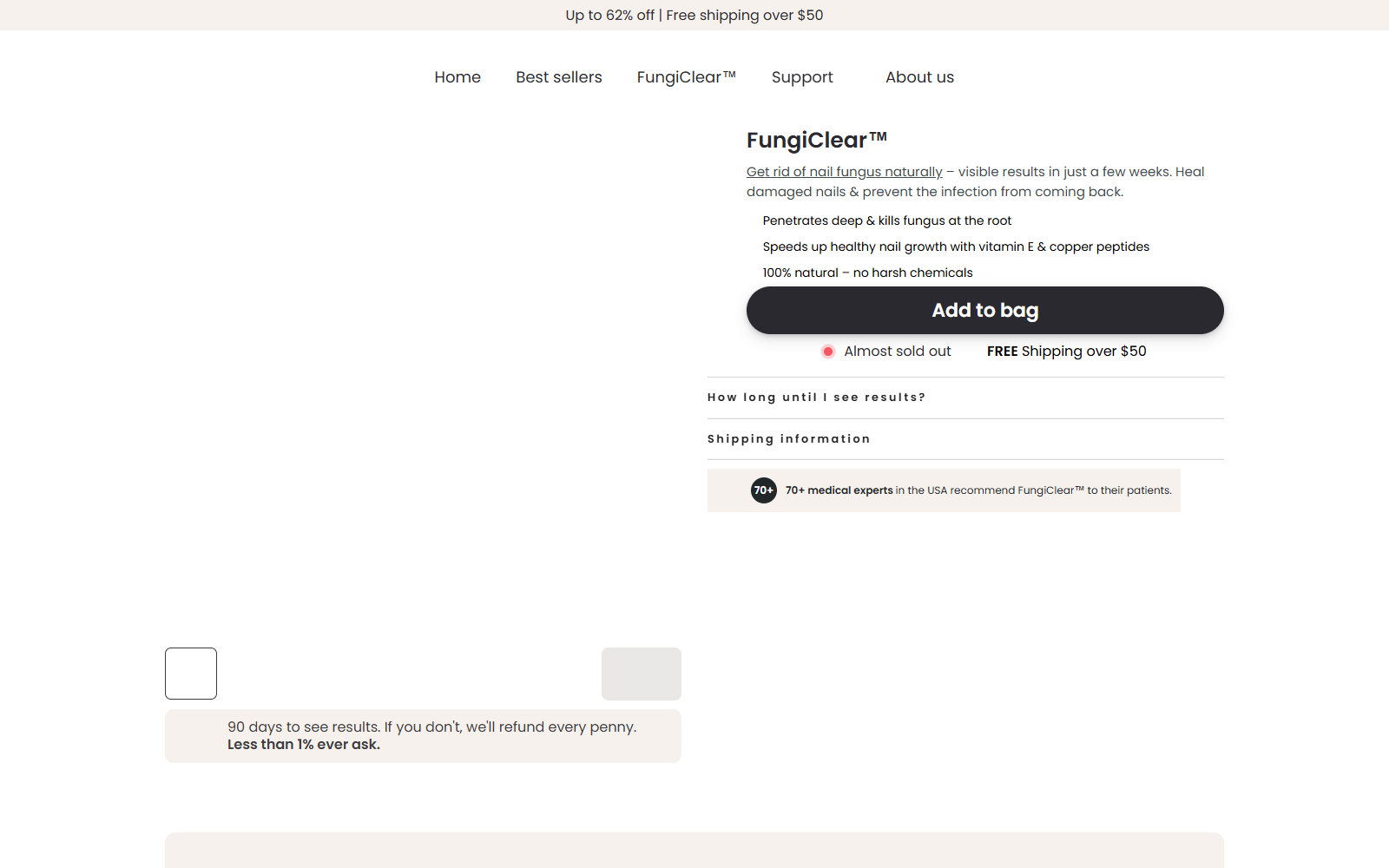
FungiClear is a topical liquid marketed for fungal nails. Phrena sells it directly through a Shopify storefront and a separate long-form sales page.
The product is presented as more than cosmetic nail care. Its pages say it penetrates deeply, kills fungus at the root, restores defense, and prevents recurrence.
Why the medical language matters
Claims to diagnose, treat, cure, mitigate, or prevent disease move a product beyond ordinary cosmetic positioning. “Natural” does not create an exemption from evidence.
Toenail changes can have several causes. Treating discoloration as confirmed fungus without proper assessment may waste time or delay suitable care.
Our finding
FungiClear appears to be a real product sold by an identified limited liability company. That fact does not validate its sweeping treatment promises.
The main concerns found during this review include:
- Strong fungus-killing and permanent-result language
- Claims involving 70 or more medical experts without accessible substantiation
- Large customer and survey figures presented by the seller
- Ingredient explanations that do not read consistently across the page
- A recommended timeline extending beyond the standard return window
- Recurring-purchase data that shoppers should inspect at checkout
Consumers should treat the page as advertising, not diagnosis. Consult a qualified clinician when nail changes persist, hurt, spread, or occur with diabetes.
The Claims Go Far Beyond Better-Looking Nails
Phrena says FungiClear can produce visible results in weeks and heal damaged nails. It also promises to prevent the infection from returning.
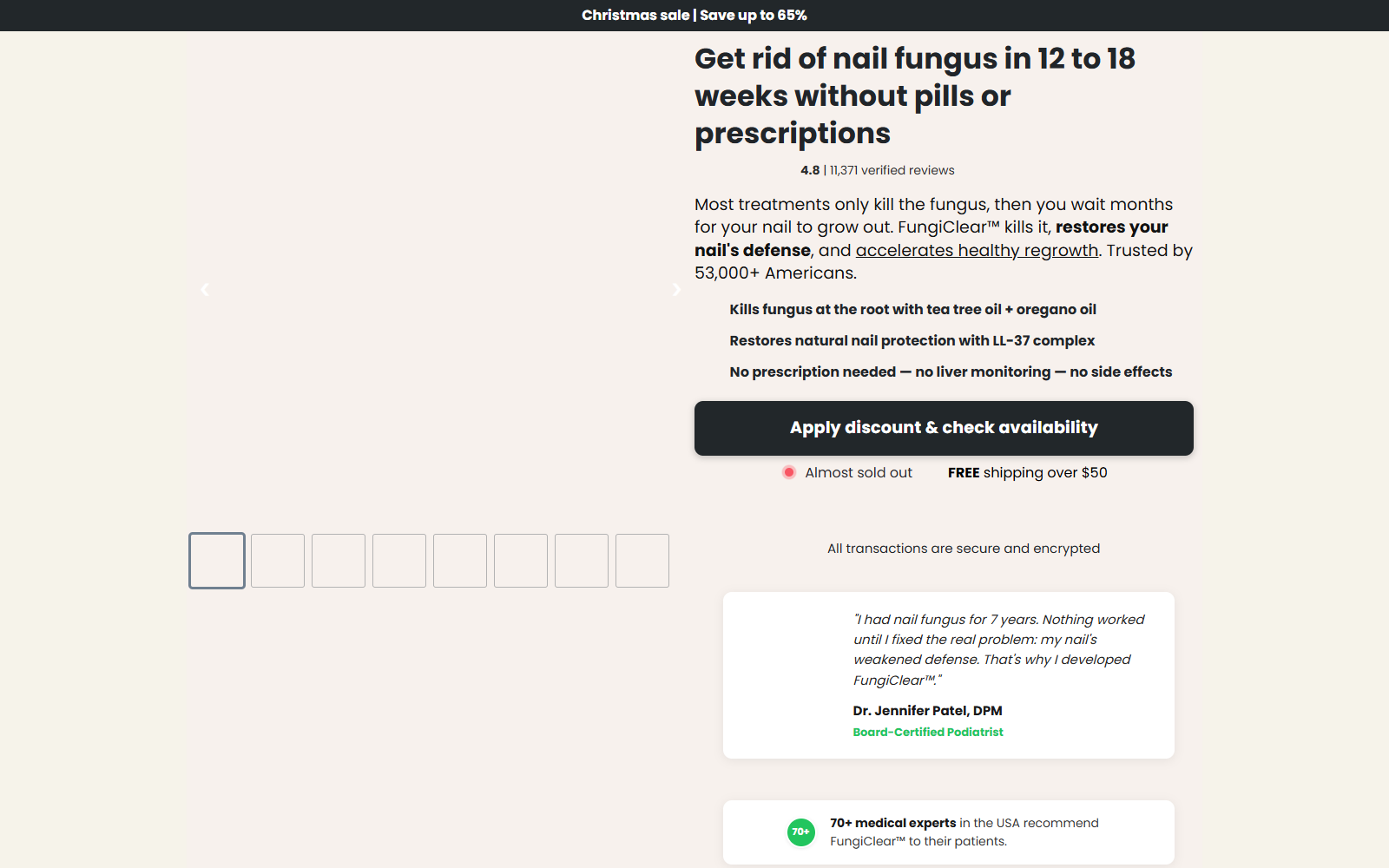
The sales page says the formula kills fungus at the root, restores natural nail protection, and accelerates regrowth without prescriptions or liver monitoring.
Those are meaningful medical outcomes. They require more support than testimonials, a branded ingredient explanation, or an internal customer survey.
The page also says more than 70 medical experts recommend the product. During this review, we did not find a public roster or verifiable endorsement documentation.
A quoted podiatrist appears within the promotion. Buyers should independently verify any professional identity, license, relationship, and compensation before relying on an endorsement.
Seller-controlled reviews can describe experiences, but they cannot establish effectiveness. Nail appearance often changes slowly, and photographs are sensitive to lighting and trimming.
What Medical Guidance Says About Nail Fungus
Dermatology guidance stresses diagnosis because trauma, psoriasis, aging, and other conditions can resemble fungal infection. Laboratory testing may be appropriate before prolonged treatment.
Confirmed nail fungus is difficult to treat because the infection can sit beneath a thick nail plate. Many topical products penetrate that barrier poorly.
Prescription options depend on severity, health history, affected nails, and organism. Oral medicines may require clinical supervision because they are not suitable for everyone.
Approved topical medicines also require patience. Healthy toenails grow slowly, so visual recovery may take many months even after the fungus stops spreading.
Tea tree and oregano oils have laboratory activity, but laboratory findings do not automatically translate into dependable treatment inside an infected human nail.
Essential oils can irritate skin, cause allergic reactions, or worsen inflammation. “No harsh chemicals” does not mean risk-free.
Anyone with diabetes, poor circulation, immune suppression, spreading redness, drainage, or pain should seek medical advice rather than experimenting with an online treatment.
Ingredient Story Raises Questions
One section describes five active ingredients: tea tree oil, oregano oil, allantoin, vitamin E, and copper peptides.
Elsewhere, the mechanism introduces urea, salicylic acid, N-acetylcysteine, and unspecified antifungals. That description reads differently from the headline ingredient list.
Ingredients may serve different purposes in a complete formula, but a buyer deserves one consistent label showing every ingredient and its role.
The phrase “LL-37 complex” sounds biomedical. Marketing terminology should not be mistaken for a published clinical trial on the finished product.
Ask for the actual Drug Facts or complete ingredient panel, net quantity, manufacturer, batch information, warnings, and directions before ordering.
If a seller claims the formula treats nail fungus, consumers should also look for the regulatory information appropriate to a drug product in their country.
How the FungiClear Sales Funnel Works
Step 1: The ad meets a painful frustration
The campaign addresses people who have already tried creams, home remedies, or pharmacy products. It suggests the familiar options fail because they attack the wrong problem.
This framing offers emotional relief before offering evidence. The buyer is invited to believe a hidden mechanism finally explains years of disappointment.
Step 2: A special mechanism creates authority
The page combines familiar oils with scientific terms involving nail defense and penetration. Complex language can make an ordinary topical formula seem clinically advanced.
Mechanistic explanations are hypotheses, not proof that the finished bottle cures infection. A controlled trial must measure real outcomes in the intended users.
Step 3: Testimonials make the result feel common
Customer stories, star ratings, expert language, and large user counts surround the offer. Together, they create the impression of broad, documented success.
However, the seller controls presentation, selection, and context. Shoppers cannot see every response, verify every identity, or evaluate excluded experiences.
Step 4: Urgency pushes the checkout
“Almost sold out” language, seasonal discounts, free-shipping thresholds, and a large action button encourage immediate purchase rather than medical comparison.
Evergreen urgency deserves skepticism. Reload the page later and note whether the supposed shortage or countdown simply resets.
Step 5: Quantity and recurring options can raise commitment
The storefront’s product data included a discounted selling-plan allocation during our review. That indicates a recurring purchase option may be available.
We did not confirm that every shopper is automatically enrolled. The practical rule is to inspect the selected option, total, frequency, and cancellation terms before payment.
Take a screenshot of the final checkout. The confirmation should clearly distinguish a one-time purchase from any subscription or automatic delivery.
Step 6: The treatment timeline outlasts easy returns
The product page says results may require around 90 days and recommends continued use. The standard refund policy provides only 30 days after delivery.
That mismatch means a customer may remain within the advertised trial period while already outside the ordinary return window.
A separate “90 days to see results” assurance appears on the product page. Ask how that promise interacts with the written 30-day policy.
The Guarantee and Return Window Do Not Align Cleanly
The product page says users have 90 days to see results and promises a refund if they do not. That sounds like a performance guarantee.
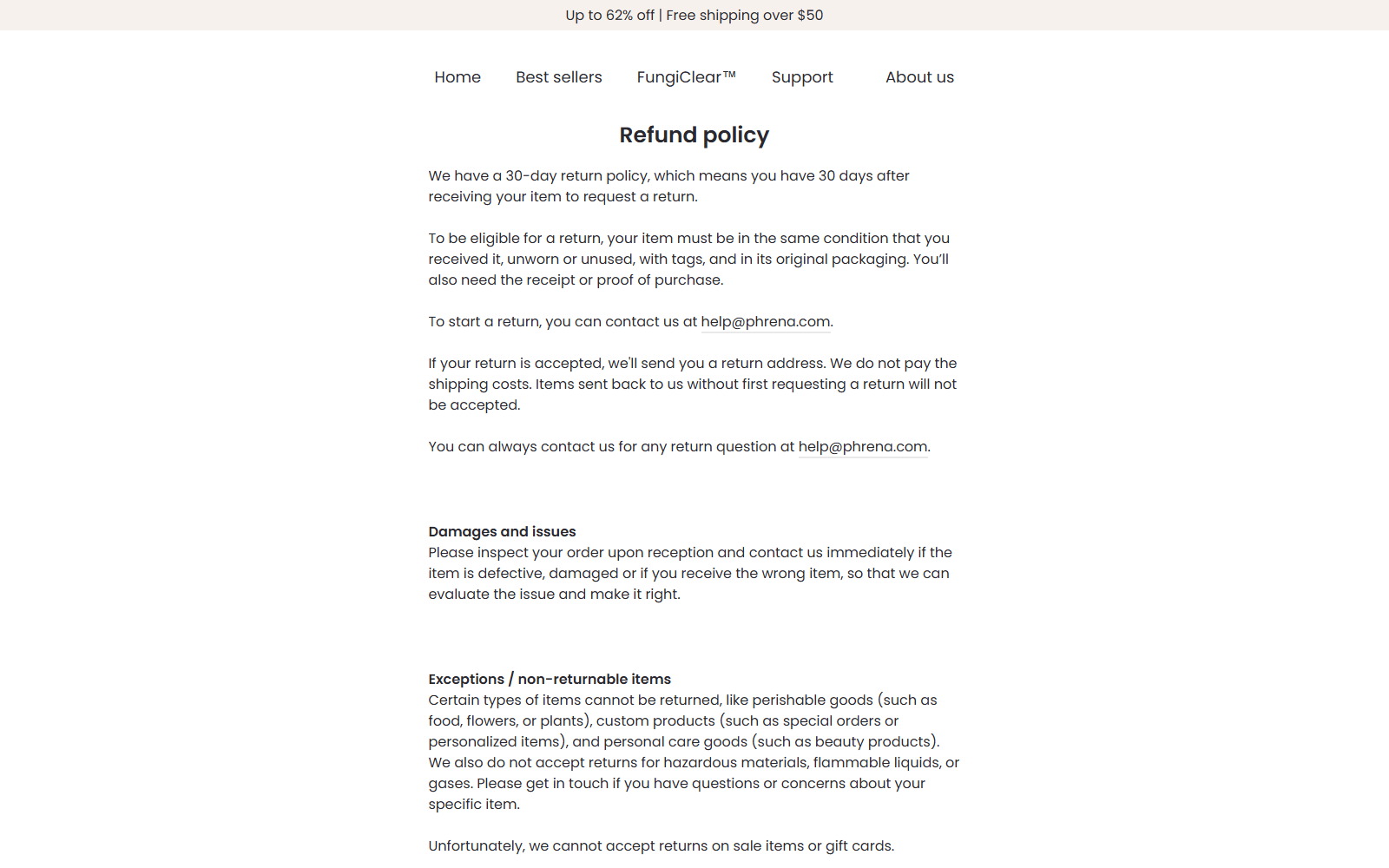
The linked refund policy instead says returns must be requested within 30 days after receipt. Items should be unused and in original condition.
A topical treatment cannot be evaluated without opening it. The unused-condition requirement therefore appears difficult to reconcile with a results-based assurance.
The policy also excludes sale items. Because the site prominently advertises discounts, buyers should determine whether their purchase becomes non-returnable.
Return shipping is not paid by the seller, and an authorized address is supplied only after approval. International postage could reduce the practical value of a refund.
Request written answers before ordering. Ask which promise controls, whether opened bottles qualify, and where the parcel must be returned.
Health Risks of Relying on the Advertisement
The largest risk is not necessarily the bottle itself. It is confidence that an unconfirmed condition has been diagnosed and permanently resolved.
Untreated infection can spread to other nails or skin. A nonfungal condition can also worsen while the buyer repeatedly applies an unsuitable product.
Stop using the formula if burning, swelling, blistering, or worsening redness develops. Photograph the reaction and speak with a healthcare professional.
Do not combine several acids, essential oils, or antifungal products without guidance. Layering irritants can damage surrounding skin and complicate assessment.
Keep the product away from children and eyes. Follow storage instructions and discard anything with a broken seal, changed odor, or missing batch information.
Medical claims should never pressure someone to abandon prescribed treatment. Discuss changes with the clinician who understands your diagnosis and health history.
How to Judge the Evidence Behind a Nail Treatment
Look first for a study on the finished formula, not isolated research about one ingredient in a laboratory dish.
A useful trial should identify participants, diagnostic method, comparison group, treatment length, missed visits, adverse reactions, and objective cure criteria.
Photographic improvement alone can be misleading. Nails may look clearer after filing, trimming, lighting changes, polish removal, or normal growth.
Researchers distinguish mycological cure from cosmetic improvement. A nail can look better while fungus remains, or remain damaged after the organism disappears.
Ask whether results were published in a reputable peer-reviewed journal. A branded PDF without authors, methods, and raw outcomes deserves little weight.
Check whether the people endorsing the product participated in research or received compensation. An expert title does not eliminate a commercial relationship.
Customer surveys answer only the questions the seller asks. Missing response rates and selection methods can transform enthusiastic volunteers into an inflated success figure.
Read the directions for realistic duration. Toenails grow slowly, so claims of complete restoration within a few weeks need especially strong proof.
Inspect warnings for pregnancy, allergies, broken skin, children, and medical conditions. A serious manufacturer anticipates who should not use the product.
Verify that ingredient concentrations are disclosed where required. Naming attractive ingredients without amounts prevents meaningful comparison with studied formulations.
Search regulatory databases using the exact company and product names. Absence from a warning list does not equal approval, but formal records provide useful context.
Ask a pharmacist or dermatologist to review the label. Their answer should address your nail condition, medicines, and health risks rather than internet popularity.
Set a stopping rule before treatment. If the condition spreads, hurts, or shows no healthy growth, seek reassessment instead of repeatedly ordering more bottles.
Evidence should make a claim clearer under scrutiny. When questions produce only testimonials and urgency, the marketing is stronger than the proof.
Company, Address, and Fulfillment Checks
The named business
The storefront identifies Phrena Commerce LLC. Save that name because it should align with the receipt, card descriptor, privacy policy, and customer-service response.
The Delaware address
The site lists 16192 Coastal Highway in Lewes, Delaware. This address is widely associated with business-registration services, not proof of manufacturing or warehousing.
The missing operational detail
A registered address does not reveal who formulates the liquid, which facility fills it, where quality testing occurs, or where returns are inspected.
The support and fulfillment test
Email help@phrena.com before buying. Ask for manufacturer information, full labeling, recurring-order terms, opened-product eligibility, and the actual return country.
What to Do if You Have Fallen Victim to This Scam
Use these steps if an ad misrepresented the treatment, checkout created unexpected recurring orders, or the seller refuses the promise shown during purchase.
- Stop and document the issue. Photograph the bottle, lot number, packaging, skin reaction, checkout, guarantee, and every charge.
- Seek medical guidance when needed. Contact a clinician promptly for pain, spreading redness, drainage, diabetes-related foot concerns, or an allergic reaction.
- Request cancellation in writing. Name the exact order, recurring frequency, disputed claim, and remedy you want. Keep all replies.
- Challenge conflicting policy language. Attach the 90-day-results statement and the 30-day refund text. Ask which written promise governed your purchase.
- Watch future statements. Check the card for repeat Phrena charges and ask the issuer to block unauthorized merchant-initiated transactions.
- Open a payment dispute when justified. Provide the ad, order confirmation, product photos, support correspondence, and proof of timely cancellation.
- Report unsafe claims or reactions. Contact the appropriate consumer and health-product regulators in your country with complete evidence.
- Scan for unwanted software. Run Malwarebytes if the funnel required a download, unusual browser extension, or remote-support application.
- Limit similar ads. AdGuard can filter many tracking and deceptive-ad destinations, but it cannot evaluate medical evidence for you.
Frequently Asked Questions
Is FungiClear an approved nail fungus treatment?
We did not find approval evidence displayed with the strong treatment claims reviewed. Ask the seller for the product’s applicable regulatory status and label.
Does tea tree oil cure toenail fungus?
Evidence for dependable nail-fungus cure is limited. Laboratory activity and small studies do not establish that this finished formula works as advertised.
Is FungiClear automatically a subscription?
The store’s technical product data showed a discounted recurring option, but automatic enrollment was not confirmed. Read the selected checkout choice carefully.
Can I test FungiClear and still return it?
The published policy requests unused goods, while the page discusses results after extended use. Obtain written clarification before opening the package.
Why should nail fungus be tested?
Several nail disorders resemble fungus. Confirming the cause helps avoid months of ineffective treatment and identifies problems needing different care.
What is the biggest red flag?
The combination of broad medical promises, unverifiable authority cues, and a guarantee that does not align neatly with the linked return policy.
The Bottom Line
FungiClear is sold as a real topical product, but its advertising asks consumers to accept major treatment claims without comparable public clinical support.
Confirm the diagnosis, study the complete label, clarify recurring billing, and obtain guarantee terms in writing. Persistent nail disease deserves evidence-based care, not checkout urgency.

Join the discussion
0 commentsShare your experience or ask a question about this article.
Discussion
Start the conversation
Have a question or something useful to share? Add the first comment.